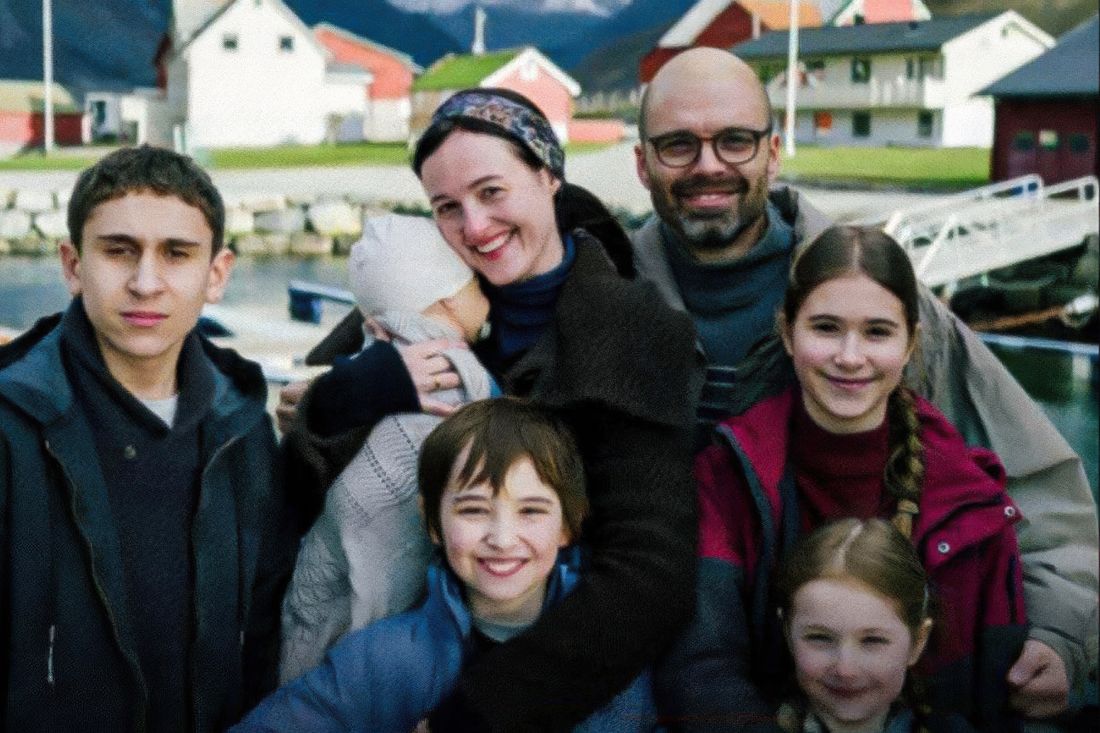
The audience member next to me audibly reacted with surprise when they realized Sebastian Stan was in Cristian Mungiu’s new film, Fjord, at the Cannes screening. While Stan isn’t completely unrecognizable, he appears more ordinary than his typical superhero roles, thanks to his glasses and shaved head. The shock came from the unexpected pairing of a Marvel star with Romania’s acclaimed director, known for realistic and often difficult films like the 2007 Palme d’Or winner, 4 Months, 3 Weeks and 2 Days. Stan, who was born in Romania and lived there for eight years, has been intentionally choosing more complex and challenging roles alongside his blockbuster work, including films like A Different Man and The Apprentice. In Fjord, Stan delivers his most ambitious performance yet, not just because he performs much of the role in Romanian, but because he skillfully portrays Mihai Gheorghiu, a character who constantly challenges the audience’s empathy as he and his family navigate a troubling situation.
I’ve been captivated by the story of the Gheorghius family. Mihai, the dad, is a Romanian aeronautical engineer, and his wife, Lisbet – you might recognize her as Renate Reinsve, the wonderful actress from Sentimental Value and A Different Man – is Norwegian. They made a big move with their five kids, including a tiny baby, from Bucharest to a breathtaking village in Norway, all to be near Lisbet’s mother. It’s a small community, and when someone tells them everyone knows everyone, it’s both welcoming and just…true. Even the school principal, Mats, lives right across the street! His daughter, Noora, quickly becomes friends with Elia, the Gheorghius’ oldest, and I found their connection really compelling. However, fitting in isn’t easy for the family. They’re devout Evangelicals with very strict rules for their children, which is quite different from how most people around there raise their kids. It creates tension, and when a teacher notices bruises on Elia during gym class, she feels she has to report it to child protective services. It’s a heartbreaking situation, and I’m deeply invested in seeing how it all unfolds.
The film Fjord follows a couple as they navigate a series of investigations and court hearings after caseworkers decide it’s best to temporarily remove their children due to suspected abuse. Director Mungiu has previously explored issues like bureaucratic overreach and prejudice, but Fjord presents a unique reversal: it’s the well-intentioned Norwegian welfare state, focused on protecting the children, that becomes the overwhelming and rigid force. Gunda (Ellen Dorrit Petersen), a calm and collected caseworker, embodies this system, arguing that biological parents aren’t automatically the best caregivers. As the process unfolds, it becomes apparent that the case isn’t simply about physical harm, but about the couple’s overall parenting style and how they’ve chosen to raise their children.
While restricting a child’s access to phones or certain music, or holding firm religious beliefs about issues like homosexuality might not be considered abusive, it definitely sets the Gheorghius family apart from their community. If this were a story about Muslim immigrants, we might anticipate certain familiar patterns in the conflicts and power struggles. However, the fact that this family is European, clashing with the prevailing cultural values, creates surprising shifts in who the audience sympathizes with as the story progresses. The director excels at building suspense from characters facing unfair situations. Even though you generally root for the Gheorghius family to get their children back, it’s strangely unsettling to watch a film where the underdog is a traditional, Christian family who believes in discipline, and they’re being challenged by well-meaning, polite people focused on emotional well-being and the idea of ‘trauma’. It could easily have become a story reinforcing right-wing viewpoints, and sometimes, particularly when the child protective services lawyer appears, it leans in that direction.
Mungiu’s film explores more than just the idea that both sides of a conflict can be flawed. While the story presents shifting political viewpoints, it subtly suggests that the core issue is simply a new, more acceptable version of old expectations around fitting in and cultural conformity. The town’s Sámi cultural celebration feels like a formality, and a character from Romania points out Norway’s problematic history of forcing its culture onto Indigenous people. Mihai, with his serious demeanor, insistence on playing a hymn during lunch, and traditional values, will never truly integrate into the town he’s trying to call home. The film thoughtfully and honestly questions how important that integration actually is.
Read More
- Netflix’s Little House On The Prairie Reboot: Release Date, Cast & Everything We Know
- Off Campus Season 1 Soundtrack Guide
- YouTuber arrested after viral AI bodycam videos spark real police complaints
- Silver Rate Forecast
- Gold Rate Forecast
- EUR ZAR PREDICTION
- Prime Video’s New R-Rated Spy Thriller Is Officially No.1 On Streaming Despite Poor Reviews
- Bulgakov’s Take: Koreans Bet the Farm on Chips, Crypto, and Chaos
- Peaky Blinders: The Immortal Man’s Tommy Shelby Is a Better Father Than Michael Corleone
- Lord Of The Flies Review: Near-Perfect Adaptation Is A Reminder Of Classic Novel’s Haunting Power
2026-05-19 19:54