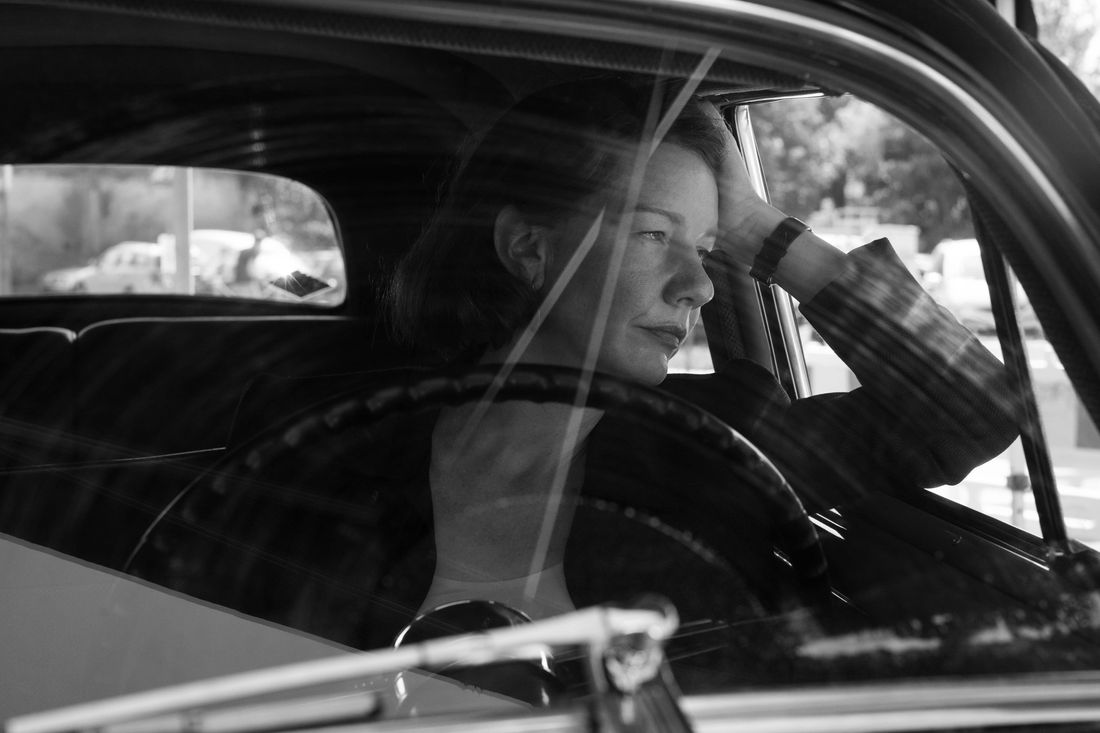
A filmmaker could approach the story of Thomas Mann’s life – or that of his wife, Erika, a fascinating figure who was an actress, war reporter, and writer in a marriage of convenience with poet W.H. Auden – from many different angles. However, Pawlikowski’s film, Fatherland, focuses on a very specific and limited timeframe, compressing events even further by placing the recent suicide of Erika’s brother, Klaus, within the narrative of a single journey. Pawlikowski is known for concise filmmaking, and at just 82 minutes, Fatherland is strikingly short and impactful. This narrow focus isn’t a mistake; it’s a deliberate choice that highlights the disorientation and unreality of trying to rebuild life after a world-shattering event. The war has left everything broken, and people are desperately trying to piece things back together into something resembling normal society. In Eastern Europe, this means erasing the recent past and starting over with communist ideals, all under increasing Soviet control. In the West, it means denying any connection to Nazism and moving forward as if nothing happened, a process subtly guided by the CIA.