On Sunday, Iran’s parliament speaker responded to U.S. statements about controlling energy supplies, stating that Iran still has options. He pointed out that oil exports through the Strait of Hormuz are currently only at 5% of their usual level.
As an analyst, I’m seeing Mohammad Bagher Ghalibaf characterize the current situation as a strategic game of balancing oil supply and demand. He’s essentially challenging the U.S., suggesting that increased gasoline demand during the summer months will likely drive up prices for American consumers, making things even more difficult domestically.
Ghalibaf Counters U.S. Bragging With Card-Counting Math
Ghalibaf, a conservative politician with a background as a commander in the Revolutionary Guards, frequently speaks to international business leaders. He recently responded to claims from U.S. officials regarding their strong position in the energy market.
He compared the resources Iran controls – like access to key waterways and pipelines – with what it needs to achieve its goals. This includes control over the Strait of Hormuz and Bab el-Mandeb, as well as regional oil and gas pipelines.
He noted that the Strait of Hormuz is experiencing some disruptions, but the Bab el-Mandeb Strait and key pipelines are still operating normally. The U.S. has already begun releasing oil from its Strategic Petroleum Reserve and has seen some decrease in demand.
Despite his dismissive remark, he suggested Americans won’t change their summer plans, and the cost will likely be felt at the gas pump.
“Add summer vacation to the right unless they want to cancel it for the US!”
Per Ghalibaf, the punchline targets U.S. peak driving demand from May through September.
They’re boasting about their card strategy. Here’s a breakdown:
What they’re supplying equals what’s being requested.
The cards already in use, plus those still available, combined with future plans, should balance out released inventory, reduced demand, and further price changes that are expected.
Unless they want to disrupt the summer season in the US, they need to stick to this plan.
— محمدباقر قالیباف | MB Ghalibaf (@mb_ghalibaf) April 26, 2026
Goldman Sachs Confirms Historic Supply Shock
According to Goldman Sachs, oil shipments through the Strait of Hormuz have drastically decreased, falling about 95% from their usual rate of around 20 million barrels per day. This indicates a significant disruption to oil transport.
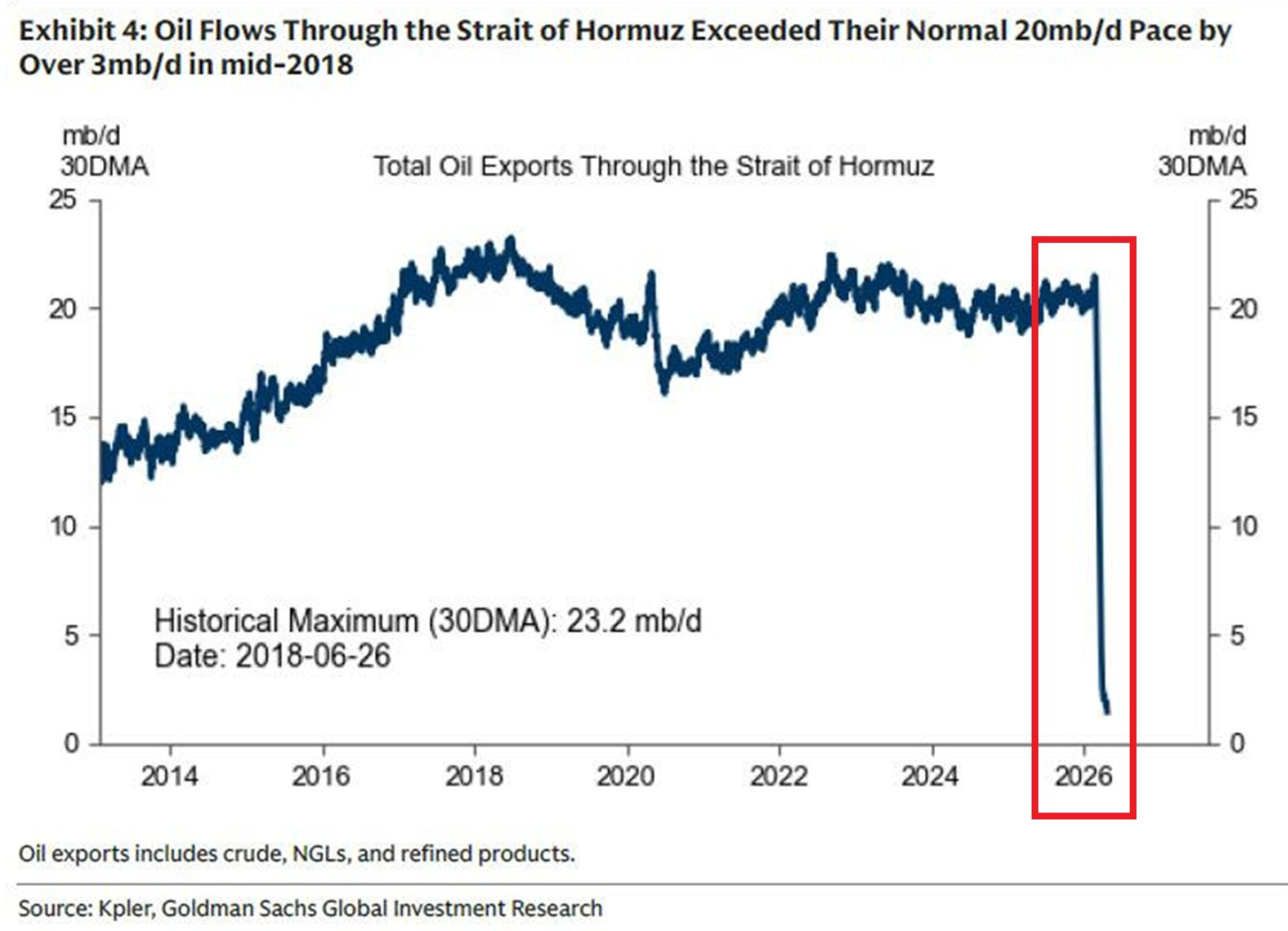
Oil production in the Gulf region has dropped significantly, by roughly 14.5 million barrels per day – that’s a 57% decrease from before the war. At the same time, there’s about half as much empty tanker space available, leaving only around 130 million barrels of extra capacity.
Goldman Sachs reports that oil production in the Gulf, currently down about 14.5 million barrels per day (a 57% decrease from before the conflict), could mostly bounce back within a few months. This recovery depends on the Strait of Hormuz being fully and safely reopened, and on preventing any further attacks. However, the bank cautions that…
— Drop Site (@DropSiteNews) April 25, 2026
Goldman Sachs analysts warn that a rebound depends on having enough pipeline space, tankers, and consistent oil flow from wells.
In my research, we’re projecting that only about 70% of the supply that was lost during disruptions will be back in place within three months of operations resuming. We anticipate that number will grow to around 88% after six months.
As an analyst, I’m seeing that prolonged well shutdowns can actually harm the underground reservoir itself. This damage means it could take multiple quarters – potentially several – to fully restore production to previous levels.
Trump Pitches U.S. Crude as Pain Drags Into Summer
President Trump disagrees with the idea that the U.S. has limited influence. He points out that America produces more oil than Russia and Saudi Arabia together, and it doesn’t often rely on shipments through the Strait of Hormuz.
A large number of empty oil tankers, including some of the world’s biggest, are currently traveling to the United States to collect oil and gas. The U.S. currently has more oil reserves than the next two largest oil-producing countries combined.
— Commentary: Trump Truth Social Posts On X (@TrumpTruthOnX) April 11, 2026
Trump has encouraged China and European countries to buy products from American companies instead. He’s also asked the U.K. to increase oil drilling in the North Sea, continuing to support his policy of expanding domestic energy production.
Unlike previous times during similar situations, he’s cautioned voters that gas prices might remain high and could even increase before the November elections.
My research indicates this message aligns with Ghalibaf’s comment about the typical increase in gasoline demand during peak season. Currently, Brent crude oil is still trading around $100 a barrel, and the market is reacting strongly to any signs of further conflict or increases in prices being passed on to consumers.
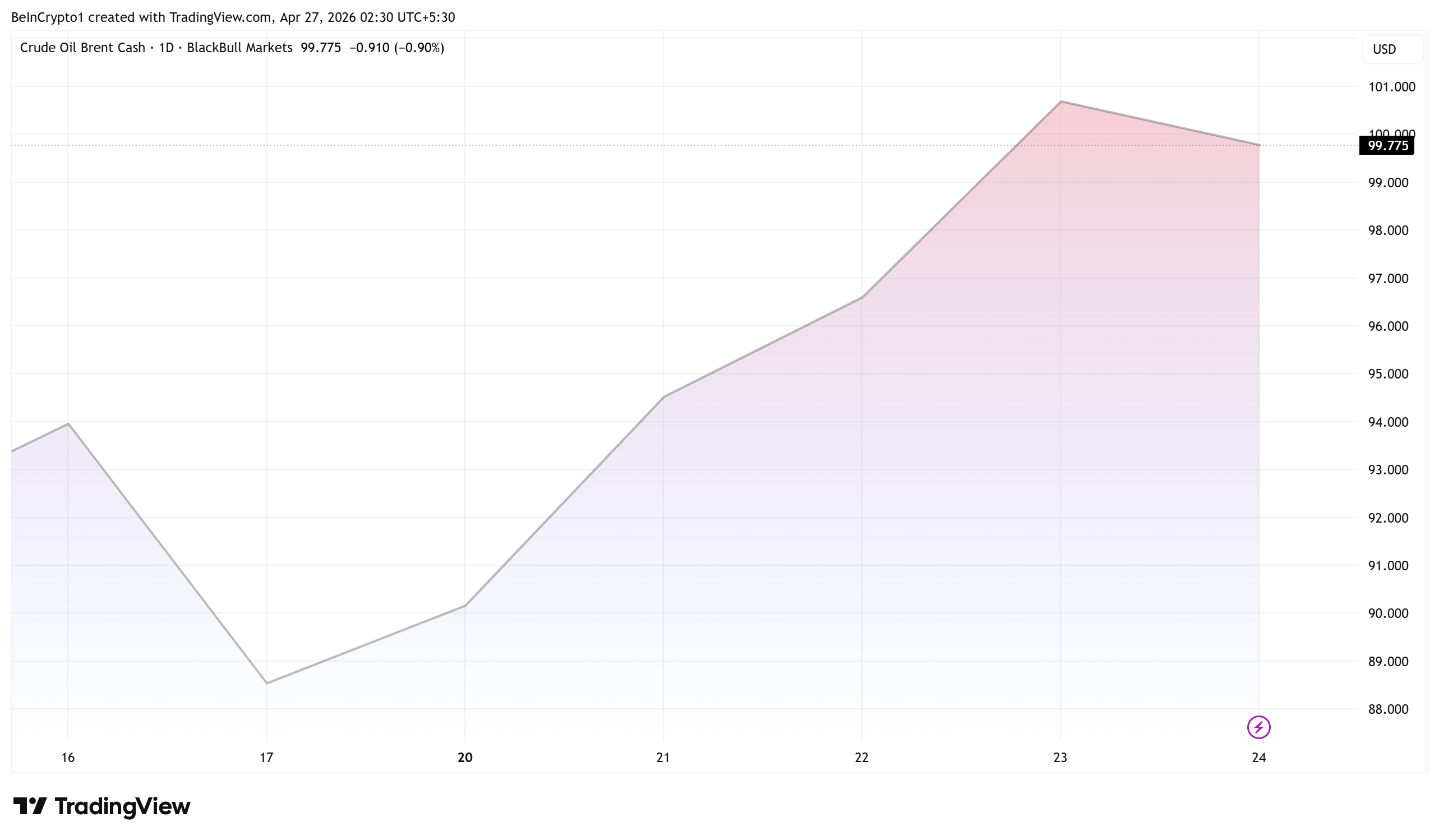
With limited oil supplies becoming more apparent, Iran’s actions are now being closely watched. Whether Iran decides to increase its oil exports now or hold back will significantly influence gas prices for American drivers in the coming weeks.
Read More
- Netflix’s Little House On The Prairie Reboot: Release Date, Cast & Everything We Know
- Off Campus Season 1 Soundtrack Guide
- Silver Rate Forecast
- Prime Video’s New R-Rated Spy Thriller Is Officially No.1 On Streaming Despite Poor Reviews
- Gold Rate Forecast
- Brent Oil Forecast
- EUR ZAR PREDICTION
- 币安人生 PREDICTION. 币安人生 cryptocurrency
- EUR USD PREDICTION
- KPop Demon Hunters Meets Avatar: The Last Airbender In Netflix’s 3-Part Fantasy Series
2026-04-27 00:07