Ah, the marvelous world of Bitcoin, where numbers dance like sugarplums and the Bank of Japan (BOJ) plays the role of a bumbling magician, pulling rabbits out of hats and rate hikes out of thin air! On the fateful day of June 16, BTC took a leisurely dip to $65,600, only to bounce back to $66,000 faster than a child grabbing a second helping of cake. Why? Because the BOJ, in all its wisdom, decided to raise its policy rate by a whopping 25 basis points to 1.0%, the highest since 1995. A move as surprising as finding a golden ticket in a chocolate bar-except this ticket doesn’t get you a tour of Willy Wonka’s factory, just a front-row seat to financial theatrics.
The market’s reaction? As calm as a cucumber in a pickle factory. No sell-off, no rally, just a collective shrug that said, “Is that all you’ve got?” But beneath this serene surface lurks a beast of structural ambiguity, like a crocodile hiding in a lily pond, waiting to snap at unsuspecting toes. Alongside the rate hike, the BOJ announced it would keep buying Japanese government bonds (JGBs) at ¥2 trillion per month from April 2027, effectively hitting the pause button on its bond-tapering plan. A dovish counterweight, if you will, that kept risk assets from drowning in a sea of panic.
The real question, my dear reader, is not whether the BOJ’s hike is a genuine shock to crypto (spoiler: it’s not). It’s whether the yen carry trade, that mischievous imp responsible for four BTC corrections since early 2024, is merely napping or has been sent to the great beyond. Derivatives data, historical patterns, and the yen’s behavior after the decision are as clear as mud-a riddle wrapped in an enigma, smothered in a layer of financial jargon.
Why Bitcoin Didn’t Sell Off: A Tale of Priced-In Expectations and Dovish Whispers
Polymarket, that oracle of odds, predicted the hike with a 98-99% certainty, leaving no room for surprise. When the inevitable happens, the market yawns and says, “Been there, done that.” Positioning had already shifted, and short-side pressure was absorbed faster than a sponge in a rainstorm. So, no sharp sell-off, just a collective “meh.”
#Bitcoin bounced after the #BOJ rate hike because markets looked beyond the headline. 🧐
A 31-year high rate sounds as hawkish as a vulture at a picnic, but the bond taper pause gave risk assets room to breathe.
Higher rates were expected-about as shocking as finding rain in April.
The bond taper pause was the real signal, like a wink from a conspirator.
Smart traders don’t…
– PropW (@PropWGlobal) June 16, 2026
The bond-taper pause added a dovish twist to the tale. By keeping JGB purchases steady, the BOJ signaled that financial tightening would be as gradual as a snail’s race. This matters for yen-funded carry positions, which care less about the rate level and more about the pace of balance-sheet normalization and yen appreciation. With the yen holding above 156 per USD, the interest rate differential remained wide enough to keep carry trades afloat, like a life raft in a stormy sea.
The crypto derivatives market saw $488 million in liquidations on June 16, with $365 million in short liquidations, according to TradingPedia. Shorts were squeezed like lemons, while longs breathed a sigh of relief. No forced selling, just a bit of financial judo.
DISCOVER: Best Meme Coins to Buy in 2026
Bitcoin’s BOJ-Linked Corrections: A Pattern as Reliable as a Broken Clock
Today’s calm price action sits in stark contrast to a pattern that’s repeated itself four times since 2024. After the BOJ’s March 2024 hike-its first in 17 years-Bitcoin fell 23%. The July 2024 hike brought a 25% drawdown, and the January 2025 hike saw a decline exceeding 30%. Bitget’s research desk pegs the range at 18-28%, a pattern as predictable as a punchline in a bad joke.
The mechanism is as mechanical as a cuckoo clock. Institutions borrow yen at low rates and invest in higher-yielding assets-equities, bonds, and crypto. When the yen appreciates rapidly, the cost of servicing those loans skyrockets, forcing deleveraging. Risk assets are sold, and Bitcoin, being the most liquid market, takes the brunt of the blow.
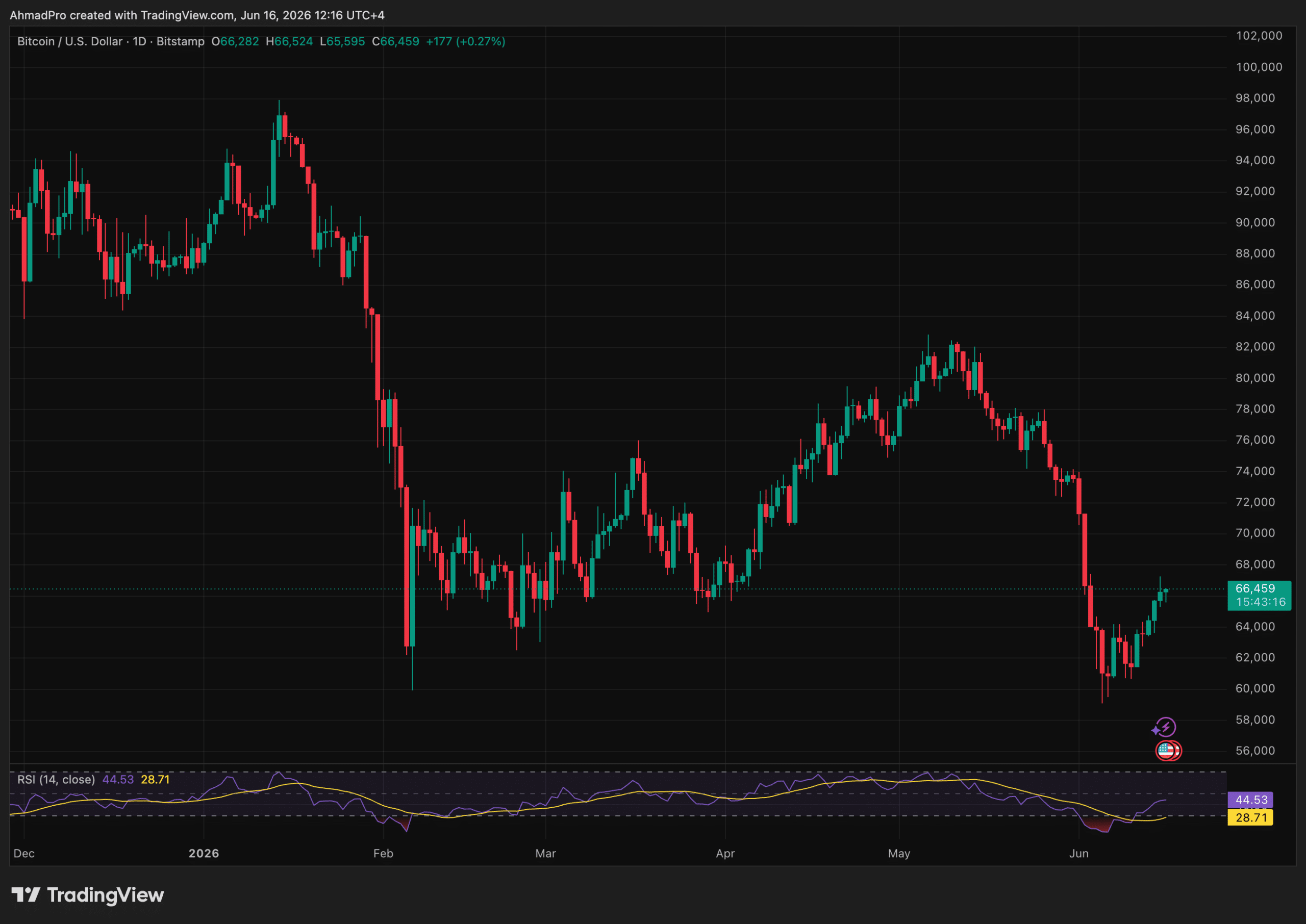
Source: BTCUSD / Tradingview
The wrinkle in this tale is that past corrections followed hikes with an element of surprise or hawkish communication. Today, the surprise is as absent as a dentist’s sense of humor. But that doesn’t eliminate the tail risk. Bitcoin’s resilience depends on continued yen weakness and gradual BOJ adjustments-conditions as stable as a house of cards in a windstorm. Past episodes began with brief stability before the yen move accelerated, triggering a cascade of carry unwinds.
EXPLORE: Next Crypto to Explode in Q2
Read More
- Off Campus Season 1 Soundtrack Guide
- Netflix’s Little House On The Prairie Reboot: Release Date, Cast & Everything We Know
- Gold Rate Forecast
- Infinity Nikki Candlelight Reverie Challenge and Rewards Guide
- Brent Oil Forecast
- Silver Rate Forecast
- Prime Video’s New R-Rated Spy Thriller Is Officially No.1 On Streaming Despite Poor Reviews
- USD CNY PREDICTION
- EUR ZAR PREDICTION
- The Boys Recap: No Room for Heresy
2026-06-16 17:24