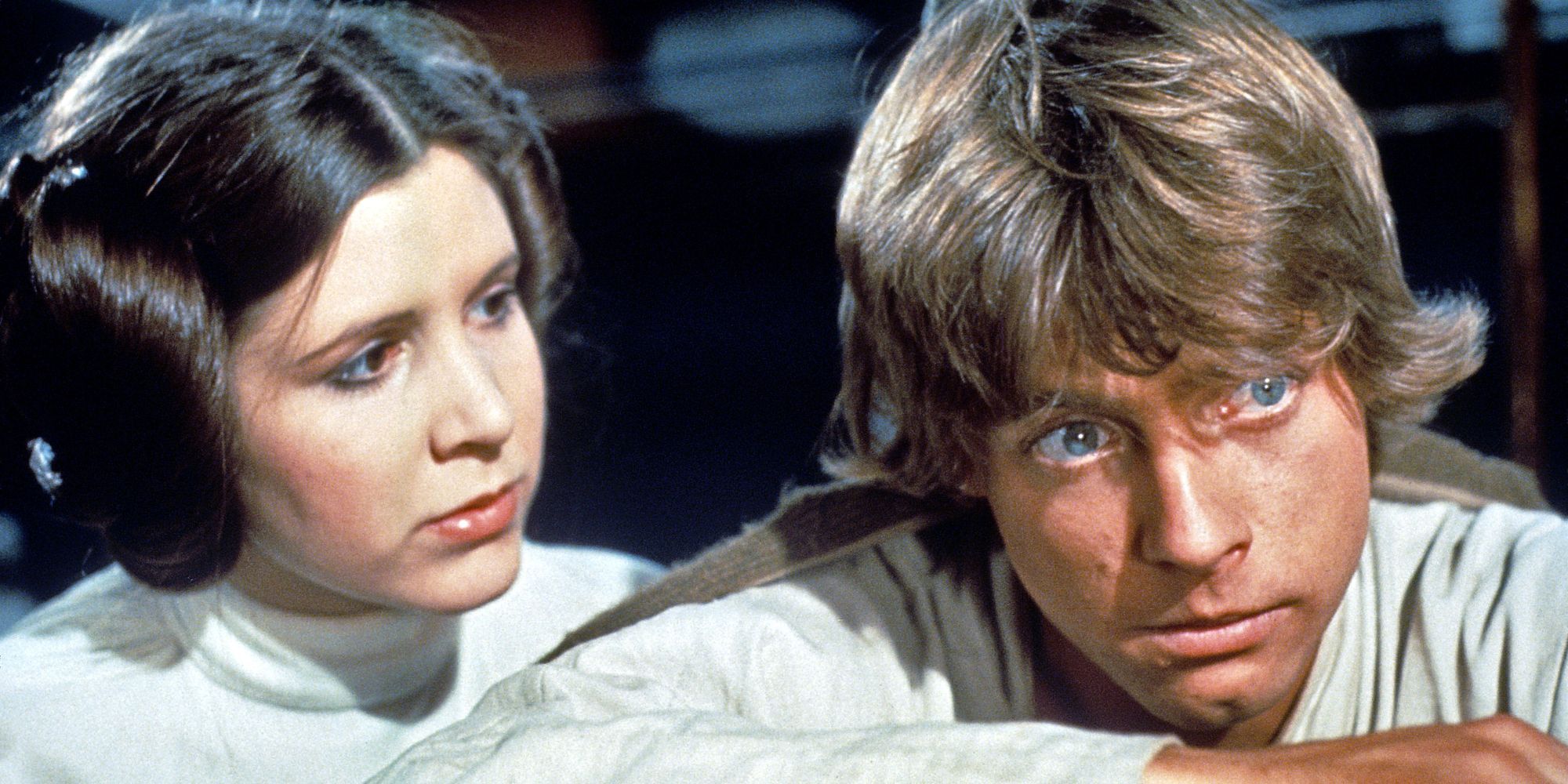
It’s one of the most popular and important science fiction movie series ever made, but it definitely built on ideas from earlier works. Creator George Lucas was heavily inspired by the classic sci-fi serials he loved as a kid, and a highly acclaimed novel series also played a big role. Now, that novel series has its own excellent movie adaptation, and it’s become a strong competitor to the famous space saga.
Denis Villeneuve’s Dune films have achieved what many thought impossible: a successful movie series based on a notoriously difficult-to-adapt novel. This makes the comparisons to Star Wars even more apparent, despite the two franchises being very different. With both Dune and Star Wars scheduled for release in 2026, these two cinematic giants are poised for a major showdown.
Dune and Star Wars Share Many Parallels
George Lucas drew a lot of inspiration from classic science fiction serials like Flash Gordon and Buck Rogers. This influence is especially noticeable in the thrilling action and narrow escapes throughout the original Star Wars trilogy. He was also openly inspired by Frank Herbert’s Dune, though the connections between the two stories are often superficial. For example, the Skywalker family’s home planet, Tatooine, is a desert world very similar to the one in Dune.
Both Darth Vader and Baron Harkonnen serve powerful emperors who are the real enemies in their respective stories. The Bene Gesserit, a group of all-female warriors, are similar to the Jedi, utilizing special abilities – like the Prana-bindu and Weirding Way – in the same way the Jedi use the Force.
The concept of elite, fanatically loyal soldiers shows up in both Dune and Star Wars. It’s much more central to Dune, where it’s a key element powering the entire universe. The Sardaukar are similar to Stormtroopers, but they actually share more traits with the earlier Clone Troopers.
The creature known as the Sarlacc in Star Wars: Episode VI – Return of the Jedi bears a striking resemblance to the massive sandworms of Dune, a similarity many viewers have observed. Beyond this visual connection, both franchises share common themes: they’re both science fiction stories set on different planets, featuring space travel, heroic figures destined for greatness, and sprawling galactic empires. However, it’s their treatment of these prophesied heroes that truly sets them apart. Ultimately, the success of the new Dune films highlights a fundamental difference in storytelling philosophy, one that contrasts sharply with the core principles of Star Wars.
Dune’s Themes Make it the Biggest Reversal of Star Wars
Although some older Star Wars novels and the series Andor have delved into more complex and mature themes, the original movies are largely known for following a classic hero’s journey. Luke Skywalker embodies this archetype – a prophesied hero destined to restore balance to the Force after his father, Darth Vader, turns to the dark side. Characters like Han Solo and Princess Leia also fit neatly into these familiar roles.
The story isn’t necessarily simple, but it generally avoids complexity, presenting a clear battle between good and evil that especially resonates with younger viewers. This straightforward approach is combined with impressive science fiction visuals, something the franchise has consistently delivered throughout its three trilogies. Although the recent Dune films also achieve spectacle, their underlying themes are quite different from those in George Lucas’s work.
While Luke Skywalker’s story follows a classic heroic pattern meant to inspire, the tale of Paul Atreides in Dune serves as a warning about blindly admiring heroes. Herbert’s novel, and the recent films based on it, don’t portray Paul or his followers as simply good. The forces he gathers, eventually becoming a powerful army against his enemies, are complex. Even the Fremen, the native people of Arrakis who have suffered under colonialism, aren’t presented as perfect or purely virtuous; they are realistically flawed individuals.
Both the first Dune film and the 2024 sequel, Dune: Part Two, show Paul refusing to participate in the Fremen practice of settling disputes through deadly combat, particularly when it would mean killing someone he respects and cares for, like Stilgar. This is a stark contrast to the Avatar movies, which have faced criticism for their increasingly simple and somewhat childish storylines. In fact, Dune‘s willingness to tackle complex themes in a direct way is something you likely wouldn’t see in many modern blockbusters, and that’s a key reason why it stands out.
Viewers today often want updated, more complex stories based on franchises they already enjoy. We’re seeing this in superhero content, which is now tackling darker and more realistic themes – a significant step beyond the often-clumsy attempts at maturity in 1990s comics. A similar desire exists for science fiction, leading to a wave of high-quality, serious sci-fi shows and movies, something that Star Wars currently struggles to provide.
Meanwhile, Dune is outshining other films with its complex story, impressive scale, and stunning visual effects. While fans will be sad to see Villeneuve’s version of Arrakis end, this highlights a key difference between Dune and Star Wars.
Dune Won’t Wear Out its Welcome With Audiences
As a huge Star Wars fan, I’ve been watching everything Disney+ and Lucasfilm have been putting out since the service launched, and honestly, it’s been a lot! Some of it has been truly fantastic – I absolutely loved the first two seasons of The Mandalorian, and it wasn’t alone. More recently, Star Wars: Skeleton Crew really impressed me too, especially because it seemed to genuinely aim for a younger audience without talking down to them, which was a nice change of pace.
Many recent Star Wars projects haven’t been well-received, with shows like The Book of Boba Fett and The Acolyte causing significant controversy. This has led to a similar situation as the Marvel Cinematic Universe, where a string of disappointing releases has made fans feel overwhelmed and overexposed.
I’ve heard there aren’t any plans right now to continue the Dune movies beyond what Denis Villeneuve has in mind. Dune: Part Three, coming out in 2026, will cover parts of both Dune: Messiah and Children of Dune, but it’s intended to be the end of his trilogy. While the story could definitely continue with one or two more films based on the later books, Villeneuve has said he won’t be directing them.
Even if more Dune movies are made, they likely won’t be released until around 2030 or later. In 2024, however, the HBO Max series Dune: Prophecy premiered, drawing loosely from novels co-written by Frank Herbert’s son, Brian Herbert, and Kevin J. Anderson. The show has been renewed for at least one more season, though its future beyond that is uncertain. There’s also a possibility of creating spin-off series, potentially focusing on the Butlerian Jihad, but no announcements have been made about those yet.
This difference is a key reason why the franchises are in different positions today, and it likely stems from one brand being more established and focused on serious science fiction. Unlike that brand, Star Wars was always designed to be flexible and offer a wide range of merchandise thanks to its varied tone.
Interestingly, by not aiming for broad, family-friendly appeal, Dune actually strengthens its position as a respected science fiction series and taps into a sense of nostalgia. This approach allows it to focus on what it does best, avoiding the pitfalls of overexposure. It’s an unconventional strategy in today’s market, but it’s proving successful, with Denis Villeneuve’s films demonstrating a different path than Star Wars.
Read More
- Netflix’s Little House On The Prairie Reboot: Release Date, Cast & Everything We Know
- Off Campus Season 1 Soundtrack Guide
- YouTuber arrested after viral AI bodycam videos spark real police complaints
- Silver Rate Forecast
- Prime Video’s New R-Rated Spy Thriller Is Officially No.1 On Streaming Despite Poor Reviews
- Brent Oil Forecast
- Gold Rate Forecast
- Peaky Blinders: The Immortal Man’s Tommy Shelby Is a Better Father Than Michael Corleone
- EUR ZAR PREDICTION
- Bulgakov’s Take: Koreans Bet the Farm on Chips, Crypto, and Chaos
2026-05-16 01:09