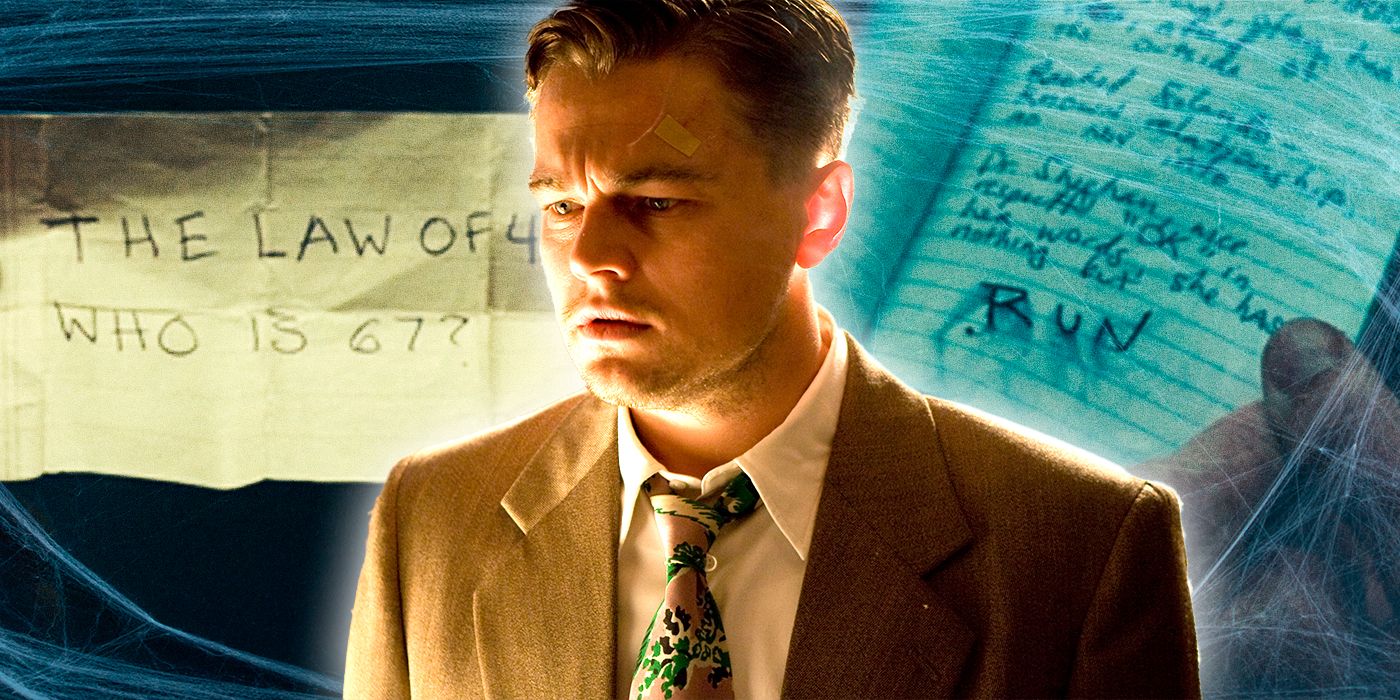
In 2010, director Martin Scorsese delivered a standout mystery thriller with his film adaptation of Dennis Lehane’s Shutter Island. The movie follows Teddy Daniels (Leonardo DiCaprio) as he travels by ferry from Boston in 1954 with another U.S. Marshal, Chuck Aule (Mark Ruffalo). They are investigating the disappearance of Rachel Solando, a patient at Ashecliffe Hospital who tragically drowned her three children.
Martin Scorsese hadn’t previously directed a neo-Noir thriller, but Shutter Island is well-known for its clever and unexpected ending. The film centers on Teddy Daniels, who believes he’s a U.S. Marshal, but has actually been a patient at Ashecliffe Hospital for two years. Careful viewers can spot hints throughout Shutter Island that reveal this twist. Scorsese continues to attract a dedicated fanbase, as evidenced by his ongoing work on projects like a new version of Cape Fear.
The film Shutter Island begins with a title card establishing the setting as the Boston Harbor Islands in 1954. The opening scene takes place on a ferry traveling through dark, foggy waters toward Ashecliffe Hospital. Even before arriving, Teddy Daniels reveals a surprising amount of knowledge about the hospital, describing it to his partner as a facility for the criminally insane.
Teddy’s familiarity with the mental hospital is immediately suspicious, and his seasickness at the beginning of the film feels like a warning sign. It’s possible his nausea isn’t from the boat, but from being a patient at the hospital. What’s even more telling is that Teddy meets his partner, Chuck Aule, while already on the ferry – in a real situation, they would have met beforehand. You only need to watch the first two minutes of Shutter Island to realize something is off.
Smoking was very common in the 1950s, and characters in the movie, like Teddy Daniels and Chuck Aule, often appear with cigarettes. Interestingly, despite the frequent smoking shown among the U.S. Marshals, Teddy is never seen lighting up himself. Considering he’s supposedly a patient at Ashecliffe Hospital, this lack of cigarettes seems unusual and hints that something isn’t quite right with his story.
The doctors leading the investigation at Shutter Island, like Dr. Cawley and Dr. Nahring, are intentionally using very little medication and avoiding typical, and sometimes harsh, psychiatric treatments common at the time, such as shock therapy. Instead, they seem to be letting Teddy’s false beliefs continue, believing it’s a path to recovery. Chuck Aule is simply being used to maintain the story Teddy has created for himself, a story Teddy relies on. This approach highlights the complex and unusual dynamic between the two men, reflecting a deeper doctor-patient relationship.
So far in the film, no one has questioned what Teddy believes. Scorsese is deliberately misleading the audience at this point. A good example of this is when Teddy and Chuck go through the gate – the guards and Teddy share quiet, meaningful looks. This shows Scorsese’s technique of hinting at multiple possibilities at the same time, leaving the audience unsure of what’s really happening.
The guards seem particularly watchful of Teddy, almost as if they’re expecting trouble. Viewers might think they dislike the Marshals being there, given the hospital’s reluctance to accept them. But the truth is, the guards are specifically monitoring Teddy for any indication he might become violent.
Teddy Daniels and Chuck Aule quickly realize that Ashecliffe Hospital is strange. Chuck points out the electrified fence surrounding the building, and Teddy replies that he’s encountered similar setups before. This seemingly small exchange is a key early clue to the shocking twist at the end of Shutter Island. In fact, the movie is full of hints about what really happens, and many of them appear right from the start.
It’s strange that Teddy Daniels mentions having seen a fence like this before, but no one ever investigates his claim. While it seems like he might be recalling his experiences with wartime concentration camps, it’s probably a memory from when he was first brought to the hospital. Immediately after he speaks, director Martin Scorsese shows us the scene from Teddy’s point of view, letting the audience experience Ashecliffe as he did upon his arrival.
The puzzling case involves Rachael Solando, who is accused of drowning her three children, and her subsequent disappearance. Shortly after she vanished, her doctor, Lester Sheehan, went on vacation. Adding to the mystery, the other doctors are not helping with the investigation, and the security guards don’t seem motivated to find her.
The film makes the audience believe there’s a large conspiracy at play, seemingly involving illegal and immoral experiments on patients, as seen through Teddy’s eyes. However, the indifferent guards suggest a conspiracy, but it’s not the one viewers anticipate. Scorsese skillfully misdirects the audience, leading them down multiple paths simultaneously, which is a key strength of the movie.
Martin Scorsese masterfully builds suspense in Shutter Island. Every detail is intentional, like the early scene where Chuck Aule offers his gun to the guard escorting him into Ashecliffe Hospital. The camera deliberately focuses on Aule’s struggle to remove the gun from his holster, emphasizing the moment.
This scene in Shutter Island hints at the film’s major twist for two key reasons. First, the character Chuck Aule appears clumsy and unsure while handling his gun – something a real U.S. Marshal wouldn’t be. He’s actually one of Teddy Daniels’ doctors in disguise. Second, the camera never shows Teddy pulling out his own gun, which makes sense because, as a patient, he wouldn’t be allowed to have one.
One of the clearest clues to the big twist in Shutter Island appears near the beginning of the film. When Teddy Daniels and Chuck Aule first meet Dr. Cawley, he explains the case of missing patient Rachel Solando, who doesn’t realize she’s in a mental institution. Dr. Cawley notes that she’s built a detailed fantasy world and assigned roles to the staff within it. Essentially, Teddy is doing the same thing – creating a false reality and pretending to be a U.S. Marshal.
During the opening moments of Shutter Island, viewers might notice a bandage over Teddy’s left eye. The reason for the bandage isn’t explained, but it could symbolize his fractured mental state and memory loss. Also in Dr. Cawley’s office, Teddy experiences his first headache – a headache that conveniently begins as Cawley describes Rachel Solando’s history. As the film unfolds, we discover that Solando’s story is actually part of Teddy’s own past, suggesting his headaches appear when his grip on reality starts to slip.
Throughout the interrogations at Ashecliffe Hospital, director Martin Scorsese subtly hints at the truth. While Detective Teddy Daniels asks routine questions about a patient named Rachael Solando, his inquiries about Dr. Sheehan draw noticeably quick and potentially misleading responses from the staff and patients.
The nurse seemed uncomfortable and quickly looked at Chuck. When patients were asked about him, they grew tense and avoided eye contact. One patient even blushed when Teddy commented on Dr. Sheehan’s good looks. While these reactions could be due to other reasons – perhaps they’re hiding something – the truth is they’re responding to Dr. Sheehan being right there with Teddy.
Throughout the film Shutter Island, Teddy Daniels repeatedly dreams of his wife, Dolores (played by Michelle Williams). These dreams are disturbing, showing her injured and revealing she says she is “just bones in a box,” hinting at a terrible tragedy. The full story isn’t revealed until the end: Dolores, who struggled with bipolar disorder, tragically drowned their three children while Teddy was away. This horrific event caused Teddy to suffer a mental breakdown, ultimately leading him to shoot her and be committed to a psychiatric facility.
Dolores plays a key role in revealing the surprise ending of Shutter Island. A major clue is her repeated insistence that Andrew Laeddis is still a patient at the hospital. When Teddy first hears the name “Laeddis,” he doesn’t react much, suggesting a hidden awareness. He tells Chuck that he thinks Laeddis was responsible for the fire that destroyed his home and that he’s searching for him at Ashecliffe.
Even after all this time, the movie’s central mystery remains captivating. Ashecliffe Hospital clearly has something unsettling about it, but it’s difficult for the audience to pinpoint exactly what’s wrong. A note found with Rachel Solando – reading “The Law of 4. Who is 67?” – only deepens the confusion. This cryptic message is a key piece of the puzzle, ultimately leading to the shocking conclusion of Shutter Island.
During a conversation with Dr. Cawley, Teddy Daniels explains the layout of Ashecliffe Hospital. He details that Ward A houses 21 men, Ward B holds 21 women, and Ward C contains 24 patients considered the most dangerous. This accounts for 66 patients, leaving the 67th patient unaccounted for. Based on clues throughout the film, viewers realize that this missing patient, number 67, is actually Teddy Daniels himself.
Read More
- Gold Rate Forecast
- Assassin’s Creed is getting a live stage spin-off with parkour and choreographed fights
- Avengers: Doomsday Spoilers & Leaks Addressed By Director Joe Russo: “It’s Over-Policed”
- Crimson Desert Guide – How to Pay Fines, Bounties & Debt
- Apple TV’s Imperfect Women Becomes No. 1 Most-Watched Show Globally
- What is Omoggle? The AI face-rating platform taking over Twitch
- Pragmata: Every Hacking Mode, Ranked
- Blake Lively & Justin Baldoni Settle It Ends With Us Lawsuit 18 Months After Bitter Feud Began
- Man pulls car with his manhood while on fire to raise awareness for prostate cancer
- The 7-Part Dystopian Series Streaming For Free This Month Deserves Its 93% Rotten Tomatoes Score
2026-05-12 04:09