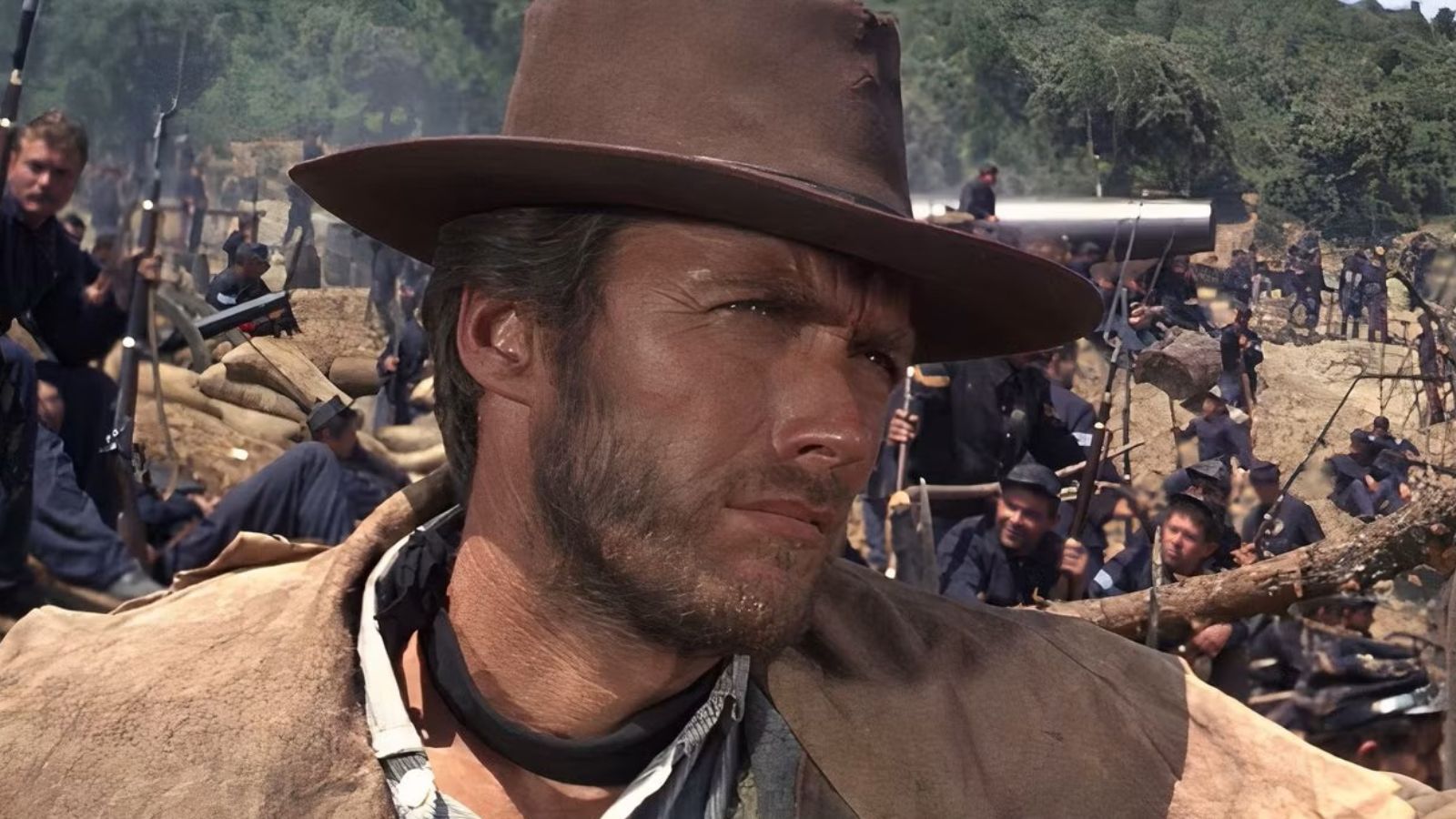
In 1964, Sergio Leone launched Clint Eastwood to superstardom by casting him as the Man With No Name in A Fistful of Dollars. Over the past six decades, Eastwood has delivered some of cinema’s most iconic films, as both an actor and filmmaker. While his work in the Dollars Trilogy was impressive, he was ultimately overshadowed by a fellow actor who took on a wide range of roles.
I remember being blown away by Clint Eastwood when I first saw him as the Man With No Name back in ’64. He really revitalized the Western, and that mysterious, incredibly skilled bounty hunter became the blueprint for so many cool, flawed heroes we see in movies today – not just in action films, but even in sci-fi like Boba Fett! Honestly, cinema’s been richer ever since. As much as I admire Eastwood, especially for the Dollars Trilogy, I think one of his co-stars actually shone a little brighter. It’s not a knock against his talent at all; it’s just that the kind of character he played – that stoic, enigmatic figure – allowed another actor to really steal some scenes.
How The Dollars Trilogy Changed Cinema
Sergio Leone gained popularity with American audiences in 1964 through his “Dollars Trilogy” of Westerns. These films offered a new take on the genre, which was then dominated by traditional heroes like John Wayne. Clint Eastwood’s character, known as the Stranger, wasn’t a typical hero; he was a morally ambiguous bounty hunter motivated by personal gain. Throughout the films, he’s driven by opportunities to make money – whether it’s manipulating rival families, collecting rewards, or searching for treasure.
Filmmaking giants like Martin Scorsese, Quentin Tarantino, and Steven Spielberg agree that Sergio Leone’s Dollars Trilogy signaled a major shift in cinema, moving away from the style of “old Hollywood” and ushering in the era of modern filmmaking. The trilogy, with its groundbreaking opening sequences, complex characters, and sweeping narratives, paved the way for more dynamic and action-packed movies. Prior to the decline of the Hays Code censorship, films had focused more on strong writing and character development. While some see this as a positive – leading to beautifully crafted stories – others argue it limited creative freedom.
For A Few Dollars More Is A Rare Buddy Western
Okay, so in this classic Western, we’re introduced to Colonel Mortimer, a stern figure who essentially holds up a town just to check for wanted posters. And wouldn’t you know it, he finds one for a particularly nasty outlaw, El Indio, and his crew. That’s when things get interesting – he runs into this mysterious gunslinger, nicknamed Monco, who’s also after the reward money. There’s some immediate friction, naturally, but after a cool little standoff – a nighttime shooting contest, no less – they grudgingly team up, agreeing to split the profits. To get close to El Indio, Monco pulls a really daring move: he goes undercover and joins the outlaw gang, planning to ride along on their next robbery. It’s a tense setup, and I was immediately hooked.
Throughout the film, viewers repeatedly see a flashback of El Indio spying on a couple, then breaking into their home and killing the man while attacking the woman. However, the woman commits suicide before he can harm her further. Later, when it’s time to defeat the gang, Monco infiltrates a robbery with them, leading them into a carefully planned ambush. It’s revealed that Mortimer isn’t after the bounty money, but seeking vengeance. Though El Indio appears to gain the upper hand against Mortimer, the Man With No Name arrives, providing Mortimer with a gun and allowing the two men to fight a final duel.
The Good, The Bad And The Ugly Has The Genre’s Best Characters
While A Fistful of Dollars and For A Few Dollars More were successful, Sergio Leone truly captivated audiences with his 1966 masterpiece, The Good, the Bad and the Ugly. The film opens with Angel Eyes arriving at the home of a former Confederate soldier, Stevens, seeking information about a man named Jackson. He discovers Jackson is now known as Carson and holds the key to a hidden treasure of Confederate gold. After killing Stevens and his son, Angel Eyes reports back to his employer, but driven by greed, he murders him and sets out to find the gold for himself.
Following Angel Eyes’ search, we meet The Man With No Name, known as Blondie, and his partner in crime, Tuco. They work a con, traveling to small towns where Blondie pretends to have captured Tuco, collects the reward money, and then ‘rescues’ him from hanging. When Blondie decides there’s no more profit, he abandons Tuco in the desert, leading Tuco to rejoin his former gang. Fueled by revenge, Tuco tracks down Blondie, resulting in a deadly showdown where Tuco’s gang is wiped out, but ultimately, Blondie prevails.
With a is marched out into the desert until the pair find the horse-drawn carriage of none other than Carson. After hearing the name of the cemetery, Tuco tries to bring the dying soldier water, only to find that, with his dying breath, he told Blondie the name on the grave with the gold. Begrudgingly reforming their partnership, the two men make their way through the West, passing through Civil War battles along the way.
While traveling across the West, Blondie and Tuco are captured by Union soldiers after pretending to be Confederates. Inside the camp, Angel Eyes, posing as a Union officer, questions them, brutally beating Tuco to find out where the gold is buried. Realizing Blondie won’t talk, Angel Eyes keeps him around. Eventually, Blondie and Tuco escape and team up to overcome a group of mercenaries, finally reaching the cemetery. There, they confront Angel Eyes, and a tense standoff begins, deciding the fate of all three men and the hidden treasure.
Lee Van Cleef Outperformed Clint Eastwood
Clint Eastwood’s Man With No Name is legendary, and I enjoy his performance, but it feels very similar to many of his other roles. Watching films like High Plains Drifter, Hang ‘Em High, or Two Mules For Sister Sara, I don’t notice a significant difference in the energy he brings to those characters compared to Blondie. Sergio Leone wasn’t focused on complex character development; his films relied on classic Western tropes – the cool, fast-drawing bounty hunter, the ruthless mercenary, and the desperate outlaw. While Lee Van Cleef and Eli Wallach had more opportunity to explore their characters, Eastwood consistently portrays a character with the same cool demeanor and attitude across his films.
Lee Van Cleef’s role in the trilogy was particularly strong because he played two distinct characters, letting him showcase a wider range of emotions. In For A Few Dollars More, he portrayed a more mature and experienced bounty hunter driven by a deeply personal vendetta. While Clint Eastwood’s character remained consistently stoic, Van Cleef’s Colonel Mortimer displayed a full spectrum of feelings during the final showdown – sadness, loss, defeat, joy, and even surprise – especially when a friend arrives to even the odds against the man who killed his sister. Though Eastwood was the main star, many would argue that For A Few Dollars More truly belongs to Van Cleef.
The film revisits Van Cleef, now portraying a ruthless mercenary motivated solely by personal gain. Though he claims to have principles, it quickly becomes clear how easily he bends them when he murders his employer after being paid – his loyalty ended once he delivered the information, not helped find the treasure. The opening interrogation scene is considered a highlight of Van Cleef’s career, so impactful that it’s been referenced by many filmmakers over the years. Despite appearing in The Good, the Bad and the Ugly and For A Few Dollars More only a year apart, Van Cleef delivers a strikingly different performance in each. While both characters are intense, Angel Eyes embodies the cold-hearted outlaw Leone envisioned, lacking the depth and compassion displayed by Mortimer.
Lee Van Cleef Was The West’s Most Underrated Star
Van Cleef truly stood out as a villain in films like Death Rides a Horse and played a key role in making the Dollars Trilogy so iconic, arguably making him the most overlooked star of the Western genre. He had a uniquely commanding presence and always looked perfectly cast as a cowboy – few actors could embody the role as convincingly. Sadly, after his death in 1989 and often being cast in supporting roles, many modern audiences have forgotten what a great actor he was.
The Western film genre has launched many legendary careers, including those of John Wayne and Henry Fonda. Filled with classic movies, it’s known for strong stories, beautiful landscapes, and exciting action. While the Dollars Trilogy cemented Clint Eastwood and Sergio Leone’s reputations, the performances of Eli Wallach and Lee Van Cleef were essential to making it a truly unforgettable series.
Found an error? Send it so it can be corrected.
Read More
- Gold Rate Forecast
- What is Omoggle? The AI face-rating platform taking over Twitch
- Elden Ring Is Back With A New Free Game, Thanks To The Fans
- Audible opens first ‘bookless bookstore’ in New York
- 10 Adorable Quotes from Diana in Pragmata
- Wartales Curse of Rigel DLC Guide – Best Tips, POIs & More
- INJ/USD
- Below Deck Down Under Recap: Battle of the Egos
- 10 Classic 2000s Anime That Aren’t As Good As You Remember
- Alix Earle vs Alex Cooper Makes It to 30 Rock
2026-05-09 00:47