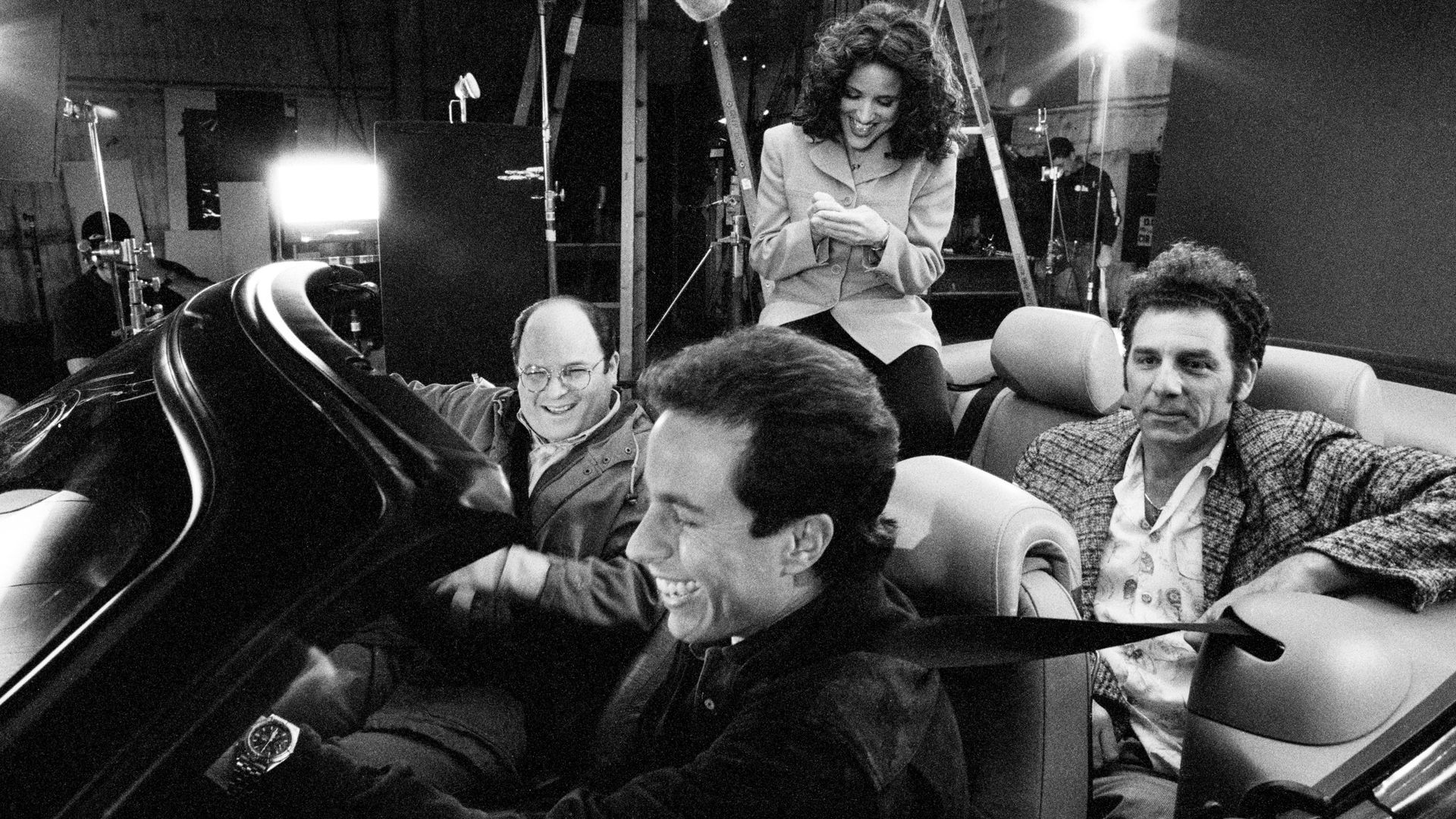
The sitcom ‘Seinfeld’ often tackled sensitive and sometimes controversial topics with its characters. While many episodes have sparked debate over the years, one in particular – Season 9, Episode 20, where Kramer mistakenly burns and steps on a Puerto Rican flag – continues to generate significant controversy.
As a film and TV buff, I’ve noticed how what we find acceptable changes over time – things that once seemed okay can feel really outdated, even offensive, by today’s standards. And comedy? It always seems to be the first thing people pick apart. Remember the uproar over that ‘Seinfeld’ episode, ‘The Puerto Rican Day’? There were protests, petitions… it was pulled from reruns for a while. Honestly, I sometimes wonder if those complaints still feel valid now, looking back.
What’s Seinfeld’s “The Puerto Rican Day” About?
The “The Puerto Rican Day” episode of Seinfeld follows the characters as they attempt to navigate New York City and avoid the congestion caused by the annual Puerto Rican Day Parade, a celebration of Puerto Rican culture. The story centers around their frustrating journey home after attending a Mets game.
Like most episodes of Seinfeld, this one doesn’t have a big climax. Instead, it’s a series of funny, random events happening to the characters as they move around New York City. We see George, Elaine, and Kramer arguing with a taxi driver, George starting a silly feud with someone shining a laser pointer at him, and Kramer, George, and Jerry pretending to be someone else to check out an apartment that’s on the market.
The Seinfeld episode “The Puerto Rican Day” brings back Art Vandelay, George Costanza’s funny made-up persona. But the episode is best remembered for a controversial scene at the very end.
As Kramer exited the apartment he’d been looking at, he accidentally ignited a Puerto Rican flag. He then tried to put it out by stepping on it, which quickly angered a crowd who began chasing him.
NBC Publicly Apologized and Then Exorcised “The Puerto Rican Day” Episode
“The Puerto Rican Day,” which aired on May 7, 1998, was the second most-watched episode of Seinfeld, attracting 38.8 million viewers on a Thursday evening. It was the last original episode before the series finale, excluding a previously aired clip show.
I remember when that Seinfeld episode aired, and while parts of it were questionable, the real uproar came when Kramer burned and stepped on a Puerto Rican flag. People were immediately furious! There were tons of letters and protests right outside NBC. Eventually, NBC actually apologized and pulled the episode from circulation. It was a pretty big deal at the time.
I’ve always been a huge Seinfeld fan, so I was really surprised to learn how much trouble the episode “The Puerto Rican Day” caused. It quietly reappeared in reruns for a bit in 2002, but it’s been largely removed from TV packages since then. Apparently, the controversy started before anyone even saw it, just from the title! The writers, Steve Koren and David Mandel, explained on the Season 9 DVD commentary that the episode wasn’t about Puerto Ricans at all. They said they could have easily set the story during any of New York City’s many parades without changing a single line or plot point.
However, a lot of people protesting felt differently. Fortunately for the show, this happened eight years before Michael Richards made his infamous racist remarks while performing on stage.
Seinfeld’s Most Controversial Episode Is Full Of Show References
It’s ironic that the Seinfeld episode “The Puerto Rican Day” isn’t shown in reruns. It’s probably because it’s one of the last original episodes before the clip shows, and it’s packed with references and inside jokes throughout the series.
Throughout the series, Jerry, Kramer, and George all frequently used fake names. Jerry went by Kel Varnson, first appearing in Season 3, while Kramer favored the name H.E. Pennypacker, introduced in Season 8. George consistently used the alias Art Vandelay, a name he’d created way back in Season 1. The episode also marks the tenth and last mention of Kramer’s elusive friend, Bob Sacamano.
Bob and Cedric, the tough guys who previously bothered Kramer, reappear one last time. The episode concludes with the line “Remember where we parked,” which fans will recognize from Season 3’s “The Parking Garage.” The fun references to movies like The Poseidon Adventure are highlights, though this episode isn’t considered one of the show’s funniest overall.
This episode falls somewhere in the middle of the Seinfeld series – it’s decent, but doesn’t reach the heights of classics like “The Soup Nazi” or “The Chinese Restaurant,” even though those titles might seem more problematic today. While much of Seinfeld could be considered insensitive by modern standards, the particularly aggressive actions in “The Puerto Rican Day” – the burning, stomping, and subsequent fallout – are what truly make it stand out.
It’s good that only one episode was removed, considering how much of the series could have offended various communities.
“The Puerto Rican Day” Is Not The Only Problematic Seinfeld Episode
While not as problematic as the earlier episode “The Puerto Rican Day,” this episode also sparked some debate. In “The Café,” Jerry tries to help a new café owner, Babu, who recently immigrated from Pakistan. Jerry suggests Babu attract more customers by adding Pakistani food to the menu.
The plan went terribly wrong, resulting in significant financial hardship for the immigrant. This echoes a storyline from the Seinfeld episode “The Visa,” where Jerry unintentionally causes Babu to be deported – a situation presented as comedic relief. Interestingly, episodes like “The Shoes” and “The Chinese Woman” faced no criticism, even though they contained scenes that were sexist.
Unlike many sitcoms of its era, Seinfeld always centered around flawed and often unlikeable characters. The show never shied away from portraying its main cast as self-absorbed and without much redeeming quality. This willingness to embrace their characters’ flaws, and even encourage their bad habits over nine seasons, is what made Seinfeld‘s humor so distinctive.
The show manages to include edgy and often controversial humor because the characters consistently face consequences for their bad behavior – they rarely get away with it. In fact, things usually backfire for them. The episode “The Puerto Rican Day” aired right before the series finale for a reason: it serves as a stark reminder of just how flawed and morally questionable these characters have been throughout the show.
In the final episode of Seinfeld, Jerry, George, Elaine, and Kramer are forced to face the consequences of their selfish behavior. They realize how their small, questionable choices negatively impacted everyone around them: Jerry’s constant complaining ruined his chances at long-term relationships, Elaine got nowhere by focusing only on herself, and Kramer consistently put his own needs before others.
It’s impossible to overstate how much Seinfeld impacted TV comedy – it really redefined the sitcom. While the show definitely included jokes that haven’t aged well – some were racist, homophobic, or sexist – its humor generally relied on poking fun at things rather than trying to be deliberately offensive. The show was self-aware and used satire more than outright insult.
The controversy surrounding “The Puerto Rican Day” episode likely fueled its high viewership – it was the second most-watched episode, only surpassed by the season finale. This increased attention also led to a larger boycott. Looking back, the episode clearly went too far, reflecting the standards of its time.
As a huge Seinfeld fan, I was really surprised – and honestly, impressed – to see Sony Pictures Television include “The Puerto Rican Day” in their streaming releases. It’s still a pretty uncomfortable episode, and it hasn’t gotten any less problematic with time. But I think the studio recognizes that audiences might finally get it differently now. It’s not about a cheap laugh anymore; it’s a stark reminder of just how awful Jerry, Elaine, George, and Kramer truly are. It solidifies their place as some of the most self-absorbed characters ever written.
Seinfeld’s Offensive Tone is Nothing Compared to Larry David’s Curb Your Enthusiasm
So, earlier this year, I was listening to this comedian talk about how ‘political correctness’ is really hurting comedy. He was saying that TV sitcoms aren’t as funny anymore because studios are so worried about upsetting people. It got me thinking, and it actually ties into the whole situation with ‘The Puerto Rican Day’ – it’s all part of this bigger conversation about what you can and can’t say these days.
Jerry Seinfeld has suggested that many episodes of his show wouldn’t be made today, but that idea doesn’t quite hold up. Shows like It’s Always Sunny in Philadelphia and Curb Your Enthusiasm continue to shape American comedy, proving that similar humor is still popular. Interestingly, Seinfeld himself even appeared in Curb Your Enthusiasm.
While Jerry Seinfeld is the public face of the show, Larry David was equally important to its success. As the co-writer and co-creator of Seinfeld, he shaped the show’s famously sarcastic humor and its knack for making jokes that were both funny and frustrating. Though he wasn’t heavily involved in the final season, he did return to write the series finale.
Even now, he’s committed to using modern ideas about political correctness to create jokes that are deliberately shocking. Compared to the famously controversial episode that was cut from Seinfeld, the incident seems tame – especially for those familiar with Larry David’s comedy Curb Your Enthusiasm on HBO.
Considering Curb Your Enthusiasm lasted 12 seasons over 24 years, it’s ironic that Larry David’s previous show, Seinfeld, feels less significant now. This is especially true considering David made many appearances on Curb, including a whole season centered around a Seinfeld reunion and the series finale, which aired this April.
The show’s greatest quality is its ability to challenge conventional norms without ignoring the importance of modern social issues. As one of the stars of Seinfeld put it, “Being mindful of sensitivities isn’t necessarily a negative thing.”
Larry David’s shows, like Curb Your Enthusiasm, often focus on the frustrating things people do. Similar to Jerry Seinfeld’s character in Seinfeld, Larry plays a version of himself and frequently complains about everyday annoyances.
The humor in the show comes from Larry’s insistence on living comfortably, even if it means making things difficult for everyone around him. It’s a uniquely realistic and satirical look at everyday life. David, the show’s creator, brilliantly understands that the best comedy comes from balancing self-mockery with jokes that push boundaries, instead of relying on just one approach.
Despite a few episodes being pulled from circulation, Seinfeld and Curb Your Enthusiasm both rely on humor that pushes boundaries. What’s great is that the shows feel consistent, no matter when they were made. Fans who remember the Seinfeld finale – where Jerry and the gang faced legal trouble – will find a similar idea in Curb Your Enthusiasm: people don’t learn from their mistakes, and certain patterns just keep repeating.
Found an error? Send it so it can be corrected.
Read More
- Gold Rate Forecast
- What is Omoggle? The AI face-rating platform taking over Twitch
- Wartales Curse of Rigel DLC Guide – Best Tips, POIs & More
- Elden Ring Is Back With A New Free Game, Thanks To The Fans
- Audible opens first ‘bookless bookstore’ in New York
- 10 Adorable Quotes from Diana in Pragmata
- The 10 Best Performances In The Star Trek Movies, Ranked
- Senate Crypto Gamble Advances: What Price Does the Soul Pay?
- 10 Superhero Games No One Remembers
- Meryl Streep Confirms “Beef” With Oscar-Winning Actor In Classic ’90s Fantasy Horror Movie
2026-05-08 23:20