In early 2019, TV producer Cian O’Clery visited Michael Theo, a 25-year-old man who shared his biggest wish: to find a husband. Theo proudly showed O’Clery his bedroom, which he playfully called his “quarters.” It was filled with charms and quotes about love, essentially a dedicated space to his search for romance. He then retrieved a heart-shaped wooden plaque from his closet, a gift he’d crafted five years prior for his future spouse.
“Wow, you really want this, Michael,” said O’Clery.
“Yes, I do,” Theo said with a serious tone. “It’s my biggest goal.”
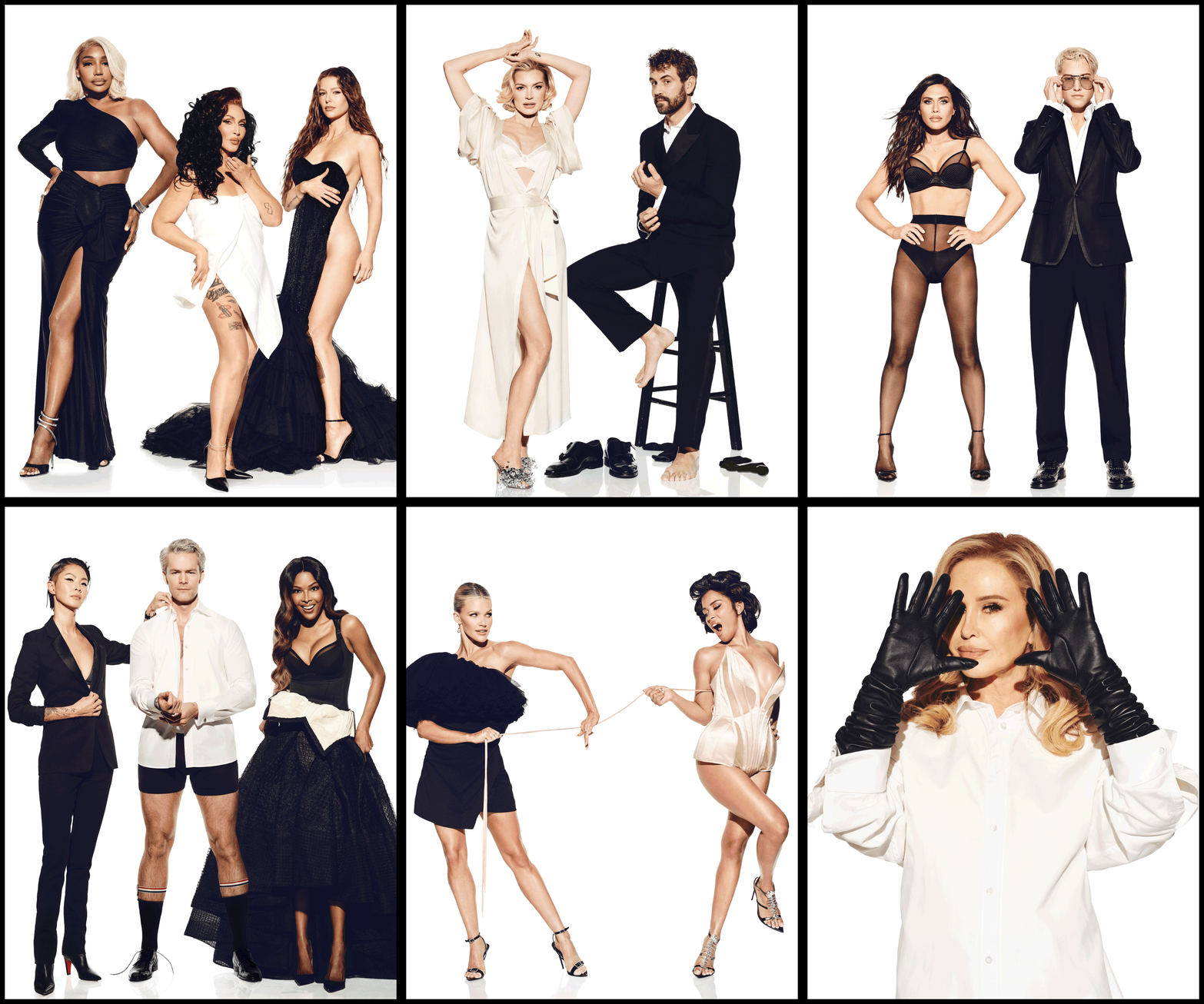
Reality Masterminds
Reality Masterminds
Our inaugural celebration of the most powerful people in unscripted television.
A special moment marked the beginning of Love on the Spectrum, an Australian series by O’Clery that authentically follows the dating lives of autistic adults. Now, seven years later, the American adaptation is a huge hit on Netflix, reaching the top spot upon its April premiere and winning seven Emmy Awards. The cast members have become well-known, with their relationships making headlines and some gaining over a million Instagram followers. Unlike many reality shows, Love on the Spectrum consistently leaves viewers feeling uplifted, with TikTok flooded with videos of people happily crying after watching episodes. Celebrities like Bradley Cooper, Ariana Grande, and Michelle Obama are all fans, with Grande even connecting with cast members directly.
It seemed risky for Love on the Spectrum U.S. to succeed, given the history of American reality TV. Shows often focus on sensationalism when dealing with disabilities or differences, as seen in programs like Body Bizarre and Hoarders. Netflix dating shows, in particular, are known for creating drama – people getting engaged sight unseen or being put in competitive dating situations. Love on the Spectrum takes a different approach, feeling more like a carefully observed documentary. Instead of actively seeking out conflict like Love Is Blind or Temptation Island, the show’s small camera crew simply observes and allows genuine moments to unfold. The most compelling scenes combine humor, vulnerability, and awkwardness – like Madison and Tyler’s passionate kiss in front of her family, Connor’s struggle with speed dating, or Dani’s navigating intimacy. The result is a show that’s comforting and surprisingly offers a new model for reality TV: one that’s calmer, more respectful, and still engaging.
When Love on the Spectrum first aired on Australian public television in November 2019, it didn’t immediately become a hit. However, viewers who started watching quickly became dedicated fans – the season finale ranked among the country’s ten most popular episodes. Less than nine months later, Netflix contacted the creator to acquire the series, a rare occurrence since reality TV usually flows from the U.S. to Australia (like with Drag Race, Below Deck, Survivor, and The Real Housewives). On Netflix, Love on the Spectrum Australia received widespread praise and built a loyal following during the early months of the pandemic. While some autistic writers initially had concerns about the show’s music and style, feeling it was overly childish, many others appreciated those same qualities. Reviews were overwhelmingly positive, with The Guardian calling it a “compassionate… celebration of difference and love,” and the L.A. Times labeling it “TV’s most honest dating show.” Molly Ebinger, Netflix’s director of unscripted series, explains that “Nothing like it existed. It created something that was somehow voyeuristic but also aspirational and relatable.” Despite some debate over viewership numbers, Netflix decided the show had built a strong enough audience to warrant an American version, and Love on the Spectrum U.S. was announced in March 2022.
O’Clery worried Netflix might want to make Love on the Spectrum U.S. feel more like typical reality TV – with large crews, dramatic drone shots, and professional lighting. He intentionally avoids those elements, preferring a simple, natural look. However, Netflix supported his vision and allowed him to keep that understated style. The only request they made was to add more cliffhangers to keep viewers engaged. The Australian version had four one-hour episodes, fitting public broadcasting standards, but Netflix edited it into five shorter episodes with suspenseful endings. According to Ebinger, O’Clery was firm about maintaining the show’s authenticity. “He was like, ‘We can tweak certain things, but I’m not adding pop music,’” she recalls. He did eventually allow a few drone shots in season three, when two cast members went on a safari in Africa.
Director O’Clery began his career in Australian reality television. Early in the 2010s, he directed Changing Minds, a groundbreaking series that offered an inside look at a mental health unit in an Australian hospital. During filming, he discovered he thrived under pressure, attributing his success to his ability to connect with people without judgment. Years later, the ABC network brought him and Changing Minds producer Karina Holden together for Employable Me, a documentary series following people with disabilities as they searched for jobs. This experience introduced O’Clery to many young adults on the autism spectrum who, while receiving support finding employment, often lacked guidance in another area of life: building relationships. Having worked on other dating shows like Married at First Sight – where drama was central – O’Clery wanted to create a dating show that felt authentic and didn’t rely on competition or eliminations, aiming for a more documentary-style approach.
The inspiration for Love on the Spectrum came from a moment in the documentary Employable Me, where two participants shared hot chocolate at a café. Creators O’Clery and Holden showed a preliminary edit to Stephen Oliver, a commissioner at the ABC, and convinced him it could become a show of its own. Oliver remembers it as a charmingly awkward date, captured with genuine pauses that allowed the natural awkwardness to shine through—a quality that became central to the show’s style. However, not everyone at the network was immediately enthusiastic. The ABC hadn’t previously produced dating shows, which were typically found on commercial channels, and there were concerns that a cast entirely comprised of autistic individuals might lead to repetitive episodes. Oliver recalls executives being hesitant about the show’s concept and even its title, fearing the phrase ‘the spectrum’ would deter viewers. O’Clery countered that the public’s lack of understanding about the diversity within the autism spectrum was precisely why the show was important. He envisioned a cast representing a wide range of support needs, from those needing significant assistance to those living independently. Oliver became a key supporter, consistently defending the show when network executives considered canceling it.
Finding people to star in the show was initially challenging. O’Clery and Holden first contacted support groups and employment organizations they’d worked with before, but many people were hesitant. They had to assure potential participants that the dating show wouldn’t exploit anyone. Ultimately, they were able to convince people to join because they were partnering with a public broadcaster, which was seen as less likely to sensationalize their stories compared to cable or streaming services. The team then expanded their search, interviewing individuals through various organizations and even attending autism-related events and dances. They were looking for relatable and likeable contestants – people who were engaging, funny, kind, and comfortable on camera, rather than those who might create drama.
Finding the right people for the show was a bit simpler for O’Clery and Holden in the U.S. because the Australian version had already given viewers an idea of what to expect. According to Ebinger, they could sometimes tell within the first few seconds if someone had star potential – like with early favorites Tanner Smith, Abbey Romeo, and Tomlinson. Others just needed more time to come out of their shell. O’Clery often spent time filming with potential cast members in their homes to get a better sense of their personalities. Ebinger explains that seeing them interact with their families – around the kitchen island, for example – helped them decide if someone was a good fit, or if they were too reserved. Interestingly, the parents and siblings of the cast often became popular with viewers as well. Bowman, 31, recalls that O’Clery contacted her directly when he began casting, having discovered her while she was teaching at an arts program for people on the autism spectrum. She had her first blind date on the show’s first season, and confessed to O’Clery that she was falling in love. Looking back, she jokes that she learned a valuable lesson: don’t kiss or declare your love on a first date!
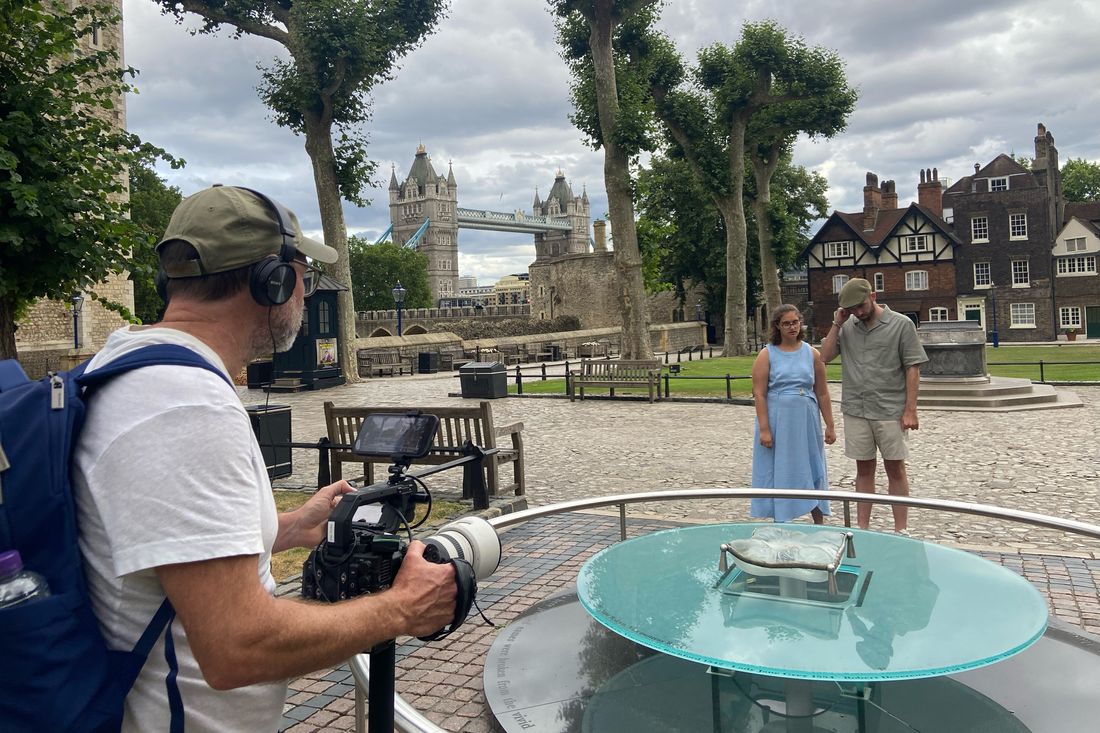
The show’s creator, Cian O’Clery, likes to film in springtime gardens filled with birds, bees, and flowers to capture beautiful supplementary footage. The show focuses on matching people based on their relationship goals, arranging blind dates, and then observing what happens with minimal intervention. O’Clery himself doesn’t appear on camera, but his voice occasionally chimes in – often to playfully correct people, like when a popular contestant, Logan Pereira, kept calling him “Sean” instead of “Kee-an.” He also occasionally asks difficult questions, as seen when he inquired whether James Jones’s girlfriend slept in his room at his parents’ house, prompting Jones to ask him to stop asking such personal questions. O’Clery describes his working relationship with Jones, a 37-year-old from Massachusetts, as “interesting” and sometimes challenging, but adds that’s part of Jones’s appeal – he’s authentically himself.
After four seasons, Love on the Spectrum U.S. continues to deliver exactly what viewers love: a heartwarming mix of empathy, humor, and awkward moments, culminating in an emotional finale. Recent episodes featured new cast members like Pereira, who jokingly endures burning breath spray before a date, and Emma Miller, who wows her date with spot-on impressions of Disney characters. Dylan Aguilar, on only his second date, anxiously hopes his companion has seen all the Despicable Me movies—and is relieved when she confirms she has, exclaiming, “Ugh, thank God.”
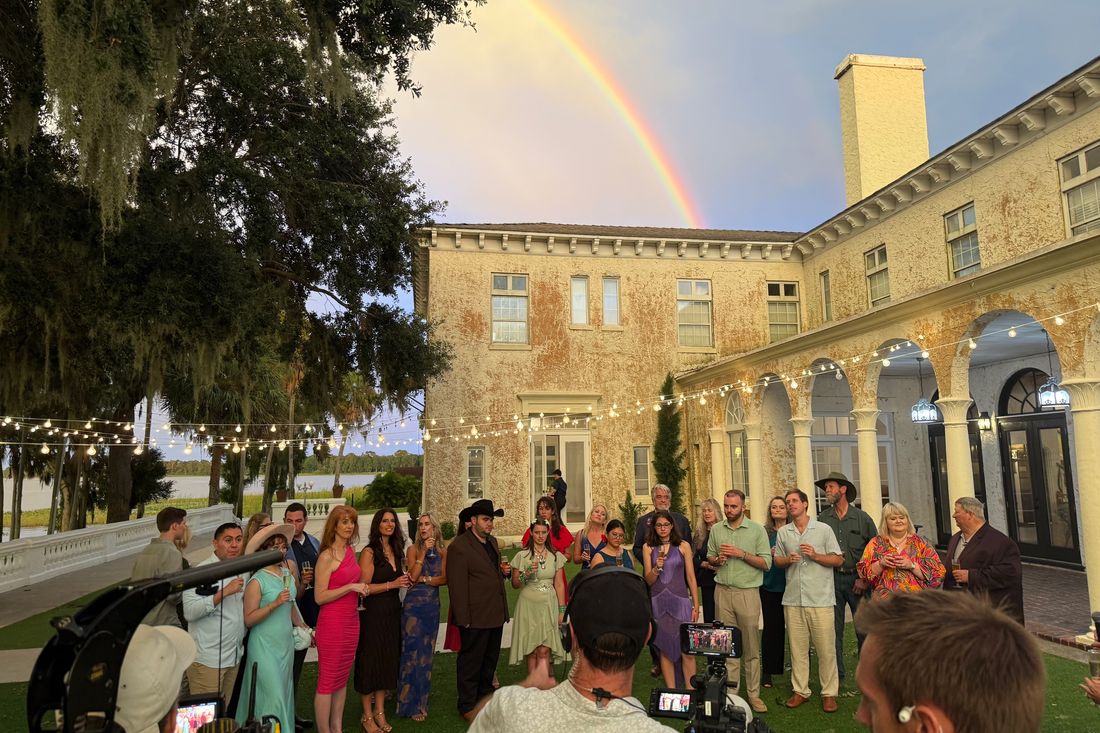
The season four finale, set at Marilla and White’s engagement party in Florida, was both incredibly special and utterly hectic. Director O’Clery describes it as the most stressful day of his career. With the cast scattered throughout the party, he and his team rushed around trying to capture everything happening at once – from lighthearted moments like Bowman playfully giving kissing lessons, to heartbreaking confessions of a recent breakup, and the looming threat of a thunderstorm. Thankfully, the rain eventually stopped, and a rainbow appeared over the water. As the cast gathered to admire it, Pari Kim began to sing “Somewhere Over the Rainbow,” and her co-stars joined in. Their families and the camera crew watched quietly. Ebinger admits to watching the scene four times during editing and crying each time – a reaction this author shares.
Sometimes, the show’s creator, O’Clery, second-guesses whether to include certain scenes – he remembers removing one where someone said something potentially hurtful. Like many popular reality shows, this one has faced increased online negativity. For example, some viewers have criticized Georgie Harris, Tomlinson’s former girlfriend, for not being considerate of his feelings, and others have accused Jones of interrupting his girlfriend. The show itself has also received criticism. When introducing new cast members with autism, the show uses a montage of their likes and dislikes, presented like a children’s program. Some autistic writers still object to this approach, as well as the montage’s focus on the families of the autistic individuals featured.
As a big fan of Love on the Spectrum, I was really surprised to hear Thomas and Ruth, one of the couples from the Australian season, say the show feels too much like typical reality TV. Apparently, producers offered to pay for their wedding if they could film it, and they think the cast should actually be paid for being on the show. The executive producer, O’Clery, sees it as somewhere between a documentary and reality TV, explaining they usually just cover expenses related to filming. But honestly, it seems like a lot of the cast is really enjoying the attention! James, especially, is thriving. And it’s cool to see people like Marilla using their newfound platform to promote her jewelry, and Romeo and White releasing their music – they sing on the show, too! Even Tom has landed some acting gigs, like an appearance on NBC’s Brilliant Minds, and is leaving the show to pursue more acting work. It feels like only a matter of time before someone from the cast jumps to another show, maybe even something like The Traitors. It’s exciting to see what happens next for them!
It’s funny, ever since Love on the Spectrum took off, I’ve noticed a ton of similar shows popping up. Producers are already pitching me ideas – it’s like, ‘Hey, let’s do a Love on the Spectrum but for people with Y!’ I actually directed a show called Better Date Than Never last year for ABC, about people who hadn’t dated before, and it’s hitting Netflix soon. Netflix also picked up a New Zealand series called Down for Love, which is pretty much the same idea as Love on the Spectrum. The creator, O’Clery, doesn’t want to call them copies, but it’s clear they’re taking notes! He’s really into the ratings, and when we talked in April, Love on the Spectrum was already number two on Netflix after the new season premiered. They’re already working on season five, and we’ll see if Marilla and White’s wedding makes the cut – they’re still planning it and aren’t sure about filming. But Bowman, who was on the show, is hoping her engagement will be featured. She actually met her fiancé outside of the show, but she gets that now it’s less about the matchmaking and more about seeing how our favorite people are doing. People just want to keep following the journeys of the people they’ve grown to love.
Read More
- Gold Rate Forecast
- What is Omoggle? The AI face-rating platform taking over Twitch
- Elden Ring Is Back With A New Free Game, Thanks To The Fans
- Audible opens first ‘bookless bookstore’ in New York
- Wartales Curse of Rigel DLC Guide – Best Tips, POIs & More
- 10 Adorable Quotes from Diana in Pragmata
- Netflix’s Remake Of R-Rated Denzel Washington Classic Carries On A Rotten Tomatoes Trend
- Man pulls car with his manhood while on fire to raise awareness for prostate cancer
- Euphoria Season 3 Trailer Confirms The Show’s Identity Has Been Lost
- The Devil Wears Prada 2 Cameos You May Have Blinked and Missed (Plus Lady Gaga)
2026-05-05 16:16