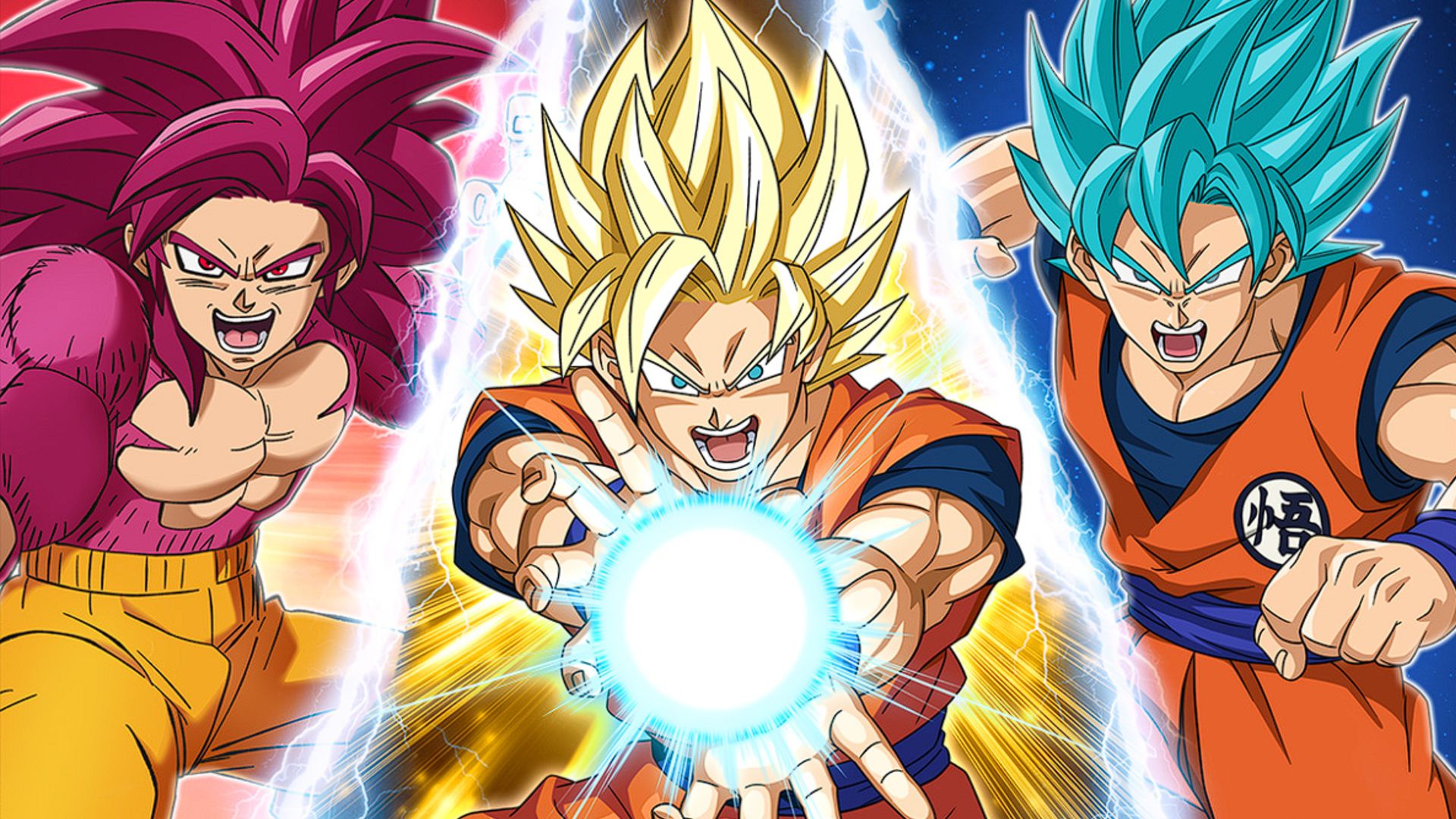
For the last forty years, Akira Toriyama’s Dragon Ball has been incredibly popular, shaping the manga and anime world, especially how action-packed stories are created. While Dragon Ball introduced many now-common characters, villains, and fighting styles, its most famous creation remains the Super Saiyan transformation – a truly iconic moment in the genre.
The Super Saiyan transformations from Dragon Ball remain a defining feature of the series even now. They also set a standard for power-ups in action-packed anime and manga, inspiring countless similar moments in shows that followed. Introduced 35 years ago, this idea has become a huge part of popular culture, extending far beyond the Dragon Ball story itself.
Dragon Ball’s Super Saiyan Transformations Are the Ultimate Power-Up
Before the Super Saiyan transformation appeared in Dragon Ball, the show’s power levels were a bit messy. Early characters had believable strength, but it wasn’t always clearly defined. While devices called Battle Scouters tried to measure power, the numbers were still open to debate and didn’t always give a clear picture.
As a huge Dragon Ball Z fan, I always loved what happened after the Frieza Saga! Suddenly, we got so many powerful Saiyans appearing, and the different Super Saiyan forms became this amazing way to measure just how strong everyone was getting – even if not everyone could reach those levels. What’s really cool is that these new transformations gave the Saiyans something to strive for. Seeing one Saiyan unlock a new level of power proved it was possible for them all, and that’s what made it so exciting to watch!
Dragon Ball Super has revitalized its fight scenes by adding the concept of godly energy to the Super Saiyan transformations. Instead of just focusing on increasing power levels, the series now uses different colors to represent new levels of strength, showcasing how adaptable the Super Saiyan idea is. Recent forms like Ultra Instinct, Ultra Ego, Orange Piccolo, and Gohan Beast all share a similar base, even if they aren’t technically Super Saiyan forms themselves.
Super Saiyan Can Match Any Dragon Ball Villain’s Strength
As Dragon Ball continued, Super Saiyan transformations became commonplace, even appearing casually among younger characters. It’s easy to forget that Goku’s initial transformation into a Super Saiyan was directly triggered by Frieza’s own series of power-ups. Early Dragon Ball battles rarely involved characters changing forms, but Dragon Ball Z leaned into this idea, starting with Frieza, who used multiple forms to reach his full strength.
Saiyans have limits in their normal state, so new Super Saiyan levels often appear when a villain reaches their strongest form. This happened with Gohan achieving Super Saiyan 2, which was key to winning his fight, just like Goku needed Super Saiyan 4 to defeat Baby Vegeta. Similarly, Goku’s Super Saiyan God transformation was essential for battling Beerus.
While Super Saiyan transformations helped our heroes get stronger, they also played a crucial role in making Dragon Ball’s villains more powerful. It wouldn’t be satisfying if Goku simply became stronger to defeat his enemies, or if his attacks suddenly did more damage for no reason. The progression of Super Saiyan forms ensures Dragon Ball can always escalate to even bigger and more exciting battles.
Dragon Ball’s Super Saiyans Belong to Pop Culture in 2026
The concept of the Super Saiyan from Dragon Ball quickly became a defining feature of the series, but its real impact is how often it’s been copied in other shows and stories. Now, sudden, dramatic transformations – often involving a change in hair color and a glowing aura – are common, showing just how much Dragon Ball influenced this trope and made it a quick way to signal a character accessing hidden power. While Dragon Ball wasn’t the first anime to use transformations, it popularized the specific visual cues of colorful hair and an energy aura that are now instantly recognizable.
The iconic Super Saiyan transformation from Dragon Ball has popped up as a reference in other anime series like Bobobo-bo Bo-Bobo, Gintama, School Rumble, and That Time I Got Reincarnated as a Slime. It’s become so well-known that it’s moved beyond being just an anime joke and is now a widely recognized concept. One of the earliest examples of this influence is Super Sonic from Sonic the Hedgehog, which debuted in 1992, just a year after the original Super Saiyan transformation.
The visual effect of characters gaining a golden power-up appears in other games too, like Legend of the Mystical Ninja and Power Stone. Super Saiyan transformations are so famous, they’ve even shown up in cartoons aimed at kids, such as The Grim Adventures of Billy and Mandy, Steven Universe, and Amphibia. While Luffy’s straw hat and Naruto’s running style are well-known anime symbols, they haven’t had quite the same lasting impact on the battle shonen genre or become as widespread in popular culture.
Found an error? Send it so it can be corrected.
Read More
- Gold Rate Forecast
- Assassin’s Creed is getting a live stage spin-off with parkour and choreographed fights
- Avengers: Doomsday Spoilers & Leaks Addressed By Director Joe Russo: “It’s Over-Policed”
- Crimson Desert Guide – How to Pay Fines, Bounties & Debt
- Apple TV’s Imperfect Women Becomes No. 1 Most-Watched Show Globally
- Pragmata: Every Hacking Mode, Ranked
- Blake Lively & Justin Baldoni Settle It Ends With Us Lawsuit 18 Months After Bitter Feud Began
- Man pulls car with his manhood while on fire to raise awareness for prostate cancer
- The 7-Part Dystopian Series Streaming For Free This Month Deserves Its 93% Rotten Tomatoes Score
- Bitcoin’s New BFF: GoMining’s GoBTC Protocol Crashes Visa’s Party
2026-03-10 16:39