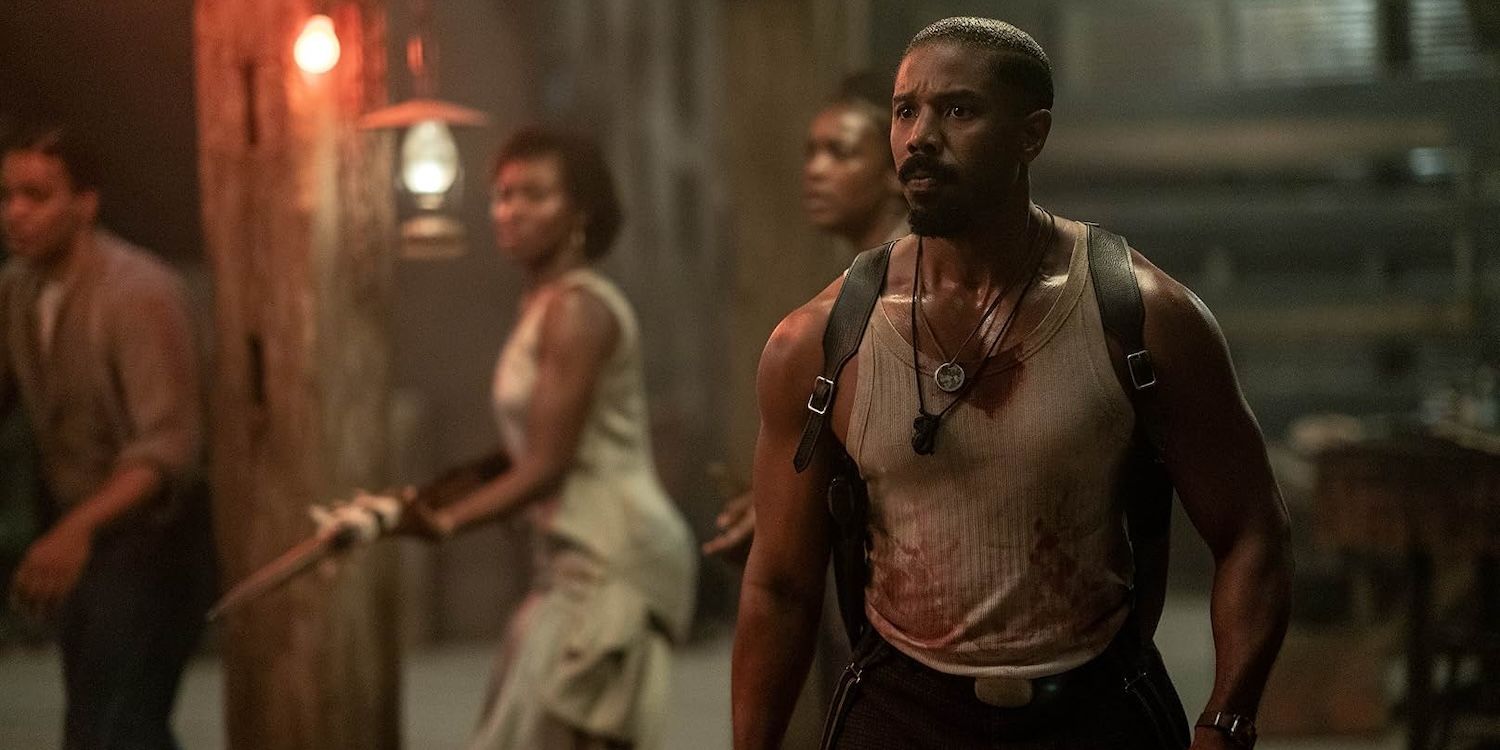
Ryan Coogler’s film received widespread praise over the past year, racking up numerous nominations for awards like the Golden Globes and BAFTAs. It even earned a remarkable sixteen Oscar nominations, including a nomination for Best Picture. However, despite its success, the film seems to have been overlooked at some awards shows, losing out to films that many considered less deserving.
As the 98th Academy Awards approach on March 16, 2025, movie fans are starting to worry about whether their favorite films will win. It’s happened before – many highly-nominated movies, including acclaimed films like The Color Purple, have gone home empty-handed. However, one scene in Sinners – an incredibly striking and memorable montage – clearly demonstrates why it deserves to win Best Picture.
The Surreal Montage Connects Generations of Black Music
American popular music has long been influenced by African American culture, a connection highlighted in the film Sinners through its dreamlike visuals. Sammie Moore embodies the many blues musicians of the 1930s whose careers were tragically cut short or faded into history. Like so many others, Sammie’s path could have gone either way – he almost let the destructive idea of “freedom” consume him, preventing him from becoming a major blues innovator.
To truly appreciate the impact of the blues, it helps to understand its origins. Most scholars believe the core elements of the genre came from Africa, carried to America by enslaved people. Over time, different African folk music traditions and rhythms blended together, eventually forming the recognizable style of the blues that began to emerge in the late 19th century.
After gaining freedom, many African Americans embraced Christianity, finding solace in gospel music and moving away from the blues. This shift is reflected in the story of Sammie and his father, Pastor Jedidiah Moore, who cautioned him against indulging in what he considered harmful influences—essentially, “dancing with the devil.” Although both the blues and gospel music had similar roots, the blues—sometimes called “the devil’s music”—had a uniquely powerful and unprecedented impact.
Like the Devil in legend, the blues broke free from constraints – this time, those of religion – and became a foundational element of modern American music. Delta Slim explains to Sammie, right before Sammie begins a journey through time and space with his audience, that the blues weren’t imposed upon them like religion; they carried it with them from their roots. Slim insists the blues were just as powerful and meaningful as religious music, urging Sammie to create his own unique style.
Many words could capture the feeling – breathtaking, legendary, eternal – but the deep, resonant sound of Delta Slim’s guitar, blending with Sammie’s passionate humming, truly defines what happens next. The scene feels both ancient and futuristic, like a dream unfolding within the walls of a 1930s blues club. Though separated by time, the past and future are connected by shared history and family ties.
The music starts with electric guitars and turntables, then explodes into a vibrant mix of percussion, driving the crowd into a wild dance. The energy is so intense it feels like the venue is about to burn, but the celebration of Black joy and strength only grows stronger. Sammie’s music creates a dreamlike experience, filled with visions of Black musical history and a sense of lasting connection. This powerful, surreal display intentionally shows African Americans as a united, unbreakable family, spanning all times – past, present, and future.
The Surreal Montage Captures the Central Themes of Sinners
The film Sinners explored more than just the Black experience, using dreamlike sequences to show the importance of chosen family alongside biological family. The inclusion of Chinese opera highlighted the common ground between people of color in America. Asian Americans, like many other minority groups, historically faced discrimination and marginalization, a pattern that continues in various fields today. This shared history of hardship is what unites the Black community with all others who have suffered under systemic oppression.
In the film Sinners, Grace and Bow Chow portray Asian Americans facing struggles remarkably similar to those experienced by African Americans. While the film primarily celebrates the African-American experience, it also highlights a powerful connection between these two groups, built on the foundation of shared hardship and trauma, despite their different backgrounds.
As the crowd gets lost in the music and dancing, imagining the old juke joint falling apart around them, a performer dressed as Sun Wukong – the famous Monkey King from Chinese legends – appears. He represents another culture that fits seamlessly into the blues, enriching the music without losing its identity. Together, these different backgrounds come together, united against shared struggles.
The film Sinners notably lacks any clear representation of ‘whiteness,’ and this seems to be its central point. The vampires and their desire to turn everyone into copies of themselves—even by force—can be seen as a metaphor for how a powerful culture often takes and reuses the art and traditions of minority groups, while ignoring or forgetting the original creators. It highlights the frustrating tendency towards cultural uniformity and appropriation.
The blues, which eventually evolved into rock ‘n’ roll, has a rich history. Pioneering African-American artists like Chuck Berry, Fats Domino, and especially Little Richard, created the groundwork that made Elvis Presley a worldwide star. As powerfully shown in the film Ma Rainey’s Black Bottom, Black culture has frequently been taken and used by others without proper recognition. This pattern also applies to Asian American culture.
Given their history, it’s understandable that the vampires in Sinners—who were originally European immigrants facing discrimination and later assimilated into the dominant white culture—sought to expand their numbers. And they were frighteningly successful. They didn’t just turn people who could ‘pass’ as white, like Mary; they also converted genuinely good characters such as Bo Chow and Stack Moore. For many facing difficult circumstances, the offer of protection and strength, even if it meant losing their humanity, seemed like a worthwhile trade.
Sammie Moore turned away from the temptation of immense power, though he always recognized he wouldn’t have made it without the courageous sacrifices of his loved ones. His passionate music and dedication to the blues – particularly his song “I Lied to You,” a tribute to the genre – proved that Black resilience would endure, and that it wasn’t about any single individual.
The power of this idea is clearest in the final scene of “Sinners.” Old Man Sammie turns down the chance to become a vampire again, realizing that the blues music he loves will continue long after he’s gone, passed down through the generations we see in a dreamlike sequence. By rejecting immortality, Sammie shows that lasting connections and the power of music are far more meaningful than living forever.
Ultimately, the film Sinners truly shows its grand vision through a dreamlike montage. This sequence brilliantly packs centuries of music, protest, and culture into one electrifying scene. The incredibly diverse imagery actively fights against the idea of everything becoming the same, celebrating artistic heritage, resisting forced conformity, and proving that cultural preservation is a strong statement in itself.
Found an error? Send it so it can be corrected.
Read More
- Gold Rate Forecast
- Avengers: Doomsday Spoilers & Leaks Addressed By Director Joe Russo: “It’s Over-Policed”
- Assassin’s Creed is getting a live stage spin-off with parkour and choreographed fights
- INJ/USD
- STX/USD
- Detonate codes (December 2025)
- Crimson Desert Guide – How to Pay Fines, Bounties & Debt
- Apple TV’s Imperfect Women Becomes No. 1 Most-Watched Show Globally
- What is Omoggle? The AI face-rating platform taking over Twitch
- Pragmata: Every Hacking Mode, Ranked
2026-03-09 00:07