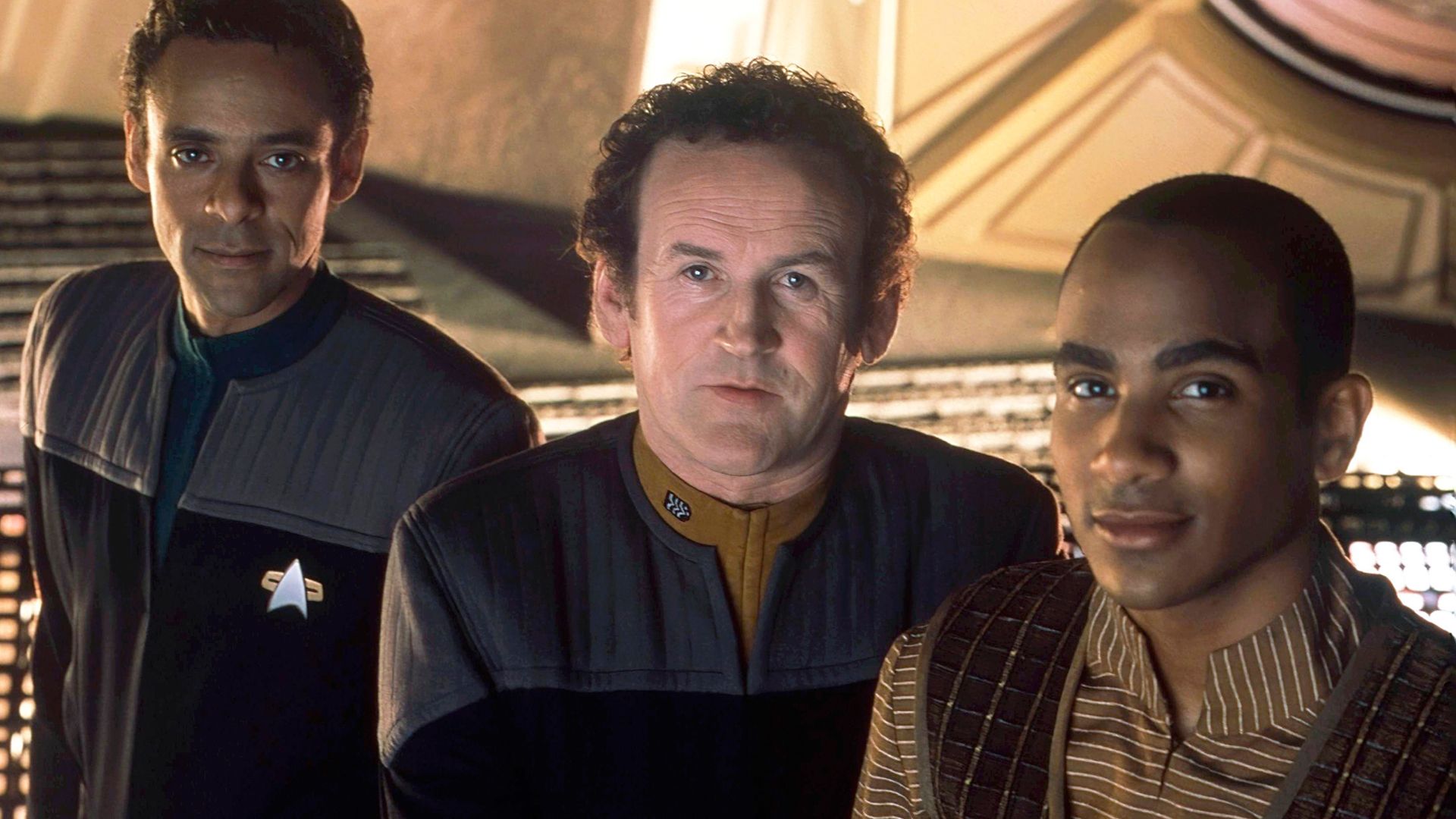
The finale of ‘Star Trek: Deep Space Nine,’ often called ‘Far Beyond the Stars,’ is considered one of the most impactful endings in the entire Star Trek universe. The show, which followed Captain Benjamin Sisko (Avery Brooks) and his crew on the Deep Space Nine space station, explored more complex and mature themes than previous Star Trek series. Especially with its intense Dominion War arc, ‘DS9’ continues to be praised for its compelling storytelling.
Certain Star Trek episodes stand out as truly iconic, and “Far Beyond the Stars” is a prime example. The episode’s central story follows Sisko, who unexpectedly finds himself living as a science fiction writer named Benny Russell in 1950s New York. As Benny, he experiences the racism of the time, facing harassment from the police and difficulties getting his work published.
“Far Beyond the Stars” Sticks The Landing With an Ending to Remember
At the start of the episode, Captain Sisko feels defeated, noting that whenever he wins a battle, something awful follows, leaving him feeling like everything falls apart. He confides in his father that he’s reached his limit and is even thinking about stepping down as commander of Deep Space Nine.
Feeling lost and unsure, Sisko experiences a vivid vision where he’s living a completely different life. In this vision, he’s a writer named Benny who comes up with a fantastic story about a Black captain in charge of a space station called Deep Space Nine. Everyone he shares it with loves the idea, but his publisher worries people won’t be interested in reading it.
Benny was thrilled when the magazine editor approved his story and went out to celebrate. However, his celebration was cut short by gunfire – he witnessed two police officers shoot a local con artist, Jimmy (Cirroc Lofton), who was attempting to break into a car. It seemed that for Benny, every moment of good fortune was inevitably followed by something awful.
After Benny confronts the officers responsible for Jimmy’s death, they assault him. He then returns to work, only to find he’s been fired and his story won’t be published. This understandably devastates Benny, and Avery Brooks delivers a powerful performance as Benny insists the truth about what happened will live on in his memory.
Following his intense experience, Sisko finds himself back on Deep Space Nine, recalling his time as Benny Russell as if it were just a dream. The episode circles back to its opening scene, with Sisko having a conversation with his father. He chooses to remain on DS9, determined to complete the work he began, and the episode concludes with Sisko’s final words.
Perhaps Benny isn’t the one who’s real – maybe we are. It’s possible we’re all just creations of his mind, and right now, somewhere out there, Benny Russell is dreaming us into existence. The story doesn’t offer a simple resolution, leaving the audience with questions and a sense of mystery.
Looking at the bigger picture, the finale also feels like a reflection on the art of storytelling itself. Just as Sisko and his crew are creations of imagination within the show, so is the character Benny Russell. It’s a truly captivating conclusion that stays with you long after it’s over.
“Far Beyond the Stars” Remains More Relevant Than Ever
Written by Ira Steven Behr and Hans Beimler, with a story by Marc Scott Zicree, the episode “Far Beyond the Stars” fits nicely into the larger Dominion War arc, but it’s also a strong story on its own. Episodes like this demonstrate why Star Trek continues to be so beloved after six decades.
The issues discussed in this episode still feel important and current, even years after it originally aired. Directed by Avery Brooks, it’s often considered one of the greatest episodes of Star Trek ever made, and its distinctive ending is a major reason why.
While most Star Trek episodes offer clear resolutions, “Far Beyond the Stars” is different – it doesn’t provide easy answers. Star Trek usually ends its stories on a hopeful note, giving viewers a feeling of closure and the sense that things will be okay.
“Far Beyond the Stars” stands out by telling a subtle yet impactful story about a Black man named Benny Russell, unfolding over multiple episodes. Unlike many recent Star Trek seasons, which are too short to allow for this kind of in-depth storytelling, and with shows now often avoiding unclear endings, this episode remains a highlight of the Star Trek franchise, even after nearly three decades.
Found an error? Send it so it can be corrected.
Read More
- Netflix’s Little House On The Prairie Reboot: Release Date, Cast & Everything We Know
- Off Campus Season 1 Soundtrack Guide
- YouTuber arrested after viral AI bodycam videos spark real police complaints
- Silver Rate Forecast
- Prime Video’s New R-Rated Spy Thriller Is Officially No.1 On Streaming Despite Poor Reviews
- Brent Oil Forecast
- Peaky Blinders: The Immortal Man’s Tommy Shelby Is a Better Father Than Michael Corleone
- Bulgakov’s Take: Koreans Bet the Farm on Chips, Crypto, and Chaos
- EUR ZAR PREDICTION
- Gold Rate Forecast
2026-04-22 13:07