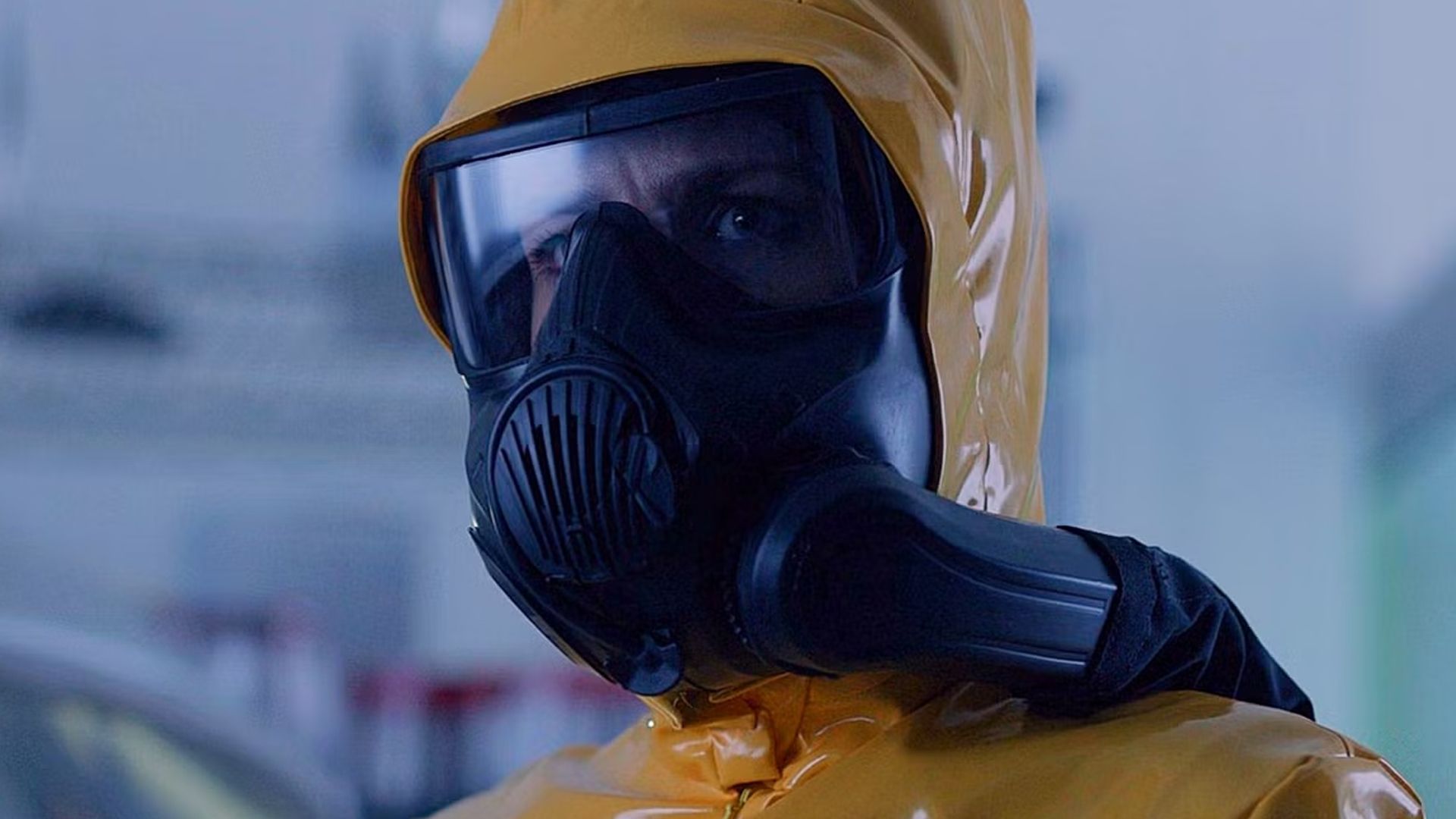
The first season of the SyFy series, developed by Terry Matalas and Travis Fickett, is heavily inspired by the 1995 film by Terry Gilliam, though it also takes significant liberties with the source material. Starting halfway through the second season, the show introduces a time loop—similar to the movie Groundhog Day—to heighten the tension and focus on its three main female characters. While each character’s storyline follows the familiar pattern of a time loop, the series keeps things interesting with unexpected twists, cleverly transforming a circular concept into something more complex.
In Season 2, Episode 8, “Lullaby,” the show reaches a critical point where two of the main characters are feeling defeated and have lost hope – both in their overall goal and in themselves. James Cole, the time traveler, needs to find his colleague, Cassandra Railly, and stop her from harming Dr. Katarina Jones, the creator of time travel technology. However, things quickly become complicated, and the characters find themselves reliving the same day repeatedly until they discover a solution that involves acting while appearing to do nothing at all.
12 Monkeys’ ‘Lullaby’ Is a Time-Loop Episode That Examines Its Best Female Characters
Matalas and Fickett initially created the series pilot as an original time-travel story titled Splinter. When Universal expressed interest in reviving 12 Monkeys, they reworked their concept to fit into that existing franchise. A positive outcome of this change was the ability to include a version of the Brad Pitt character, played by Emily Hampshire.
Jennifer is the most compelling character in the show, and she’s not simply erratic – she uniquely understands and can manipulate time. She acts as a guide for the others, and right now, Cassandra Railly is the most lost of them all. Cassandra, a scientist who sent a message into the future, is the reason Cole is trying to prevent the deadly plague.
Following several failures, including one where a young boy was lost in time, Cassie decides to take drastic action to stop everything. She goes back to 2020 with the goal of killing Dr. Jones shortly after the doctor’s daughter, Hannah, dies from the plague. The timeline only corrects itself when Cassie is successful.
He saved Hannah’s life, but it was surprisingly Jones who sent Cassie on the mission. This is because Cassie’s initial attempt to rescue her daughter is what actually triggered the time travel conflict with the 12 Monkeys.
You know, there’s this one scene that really gets me. If Cole and I just…did nothing, we end up having this huge talk about whether things are pre-determined or if we actually have a choice. Cole’s beating himself up because Cassie went from being a doctor, saving people, to being right in the middle of our fight against the 12 Monkeys. But the real gut punch is when Cassie finally stands up and says she made her own decisions. It’s a powerful moment – she’s taking control of her own story, and it totally changes how you see everything.
She explains to Cole that her future self will be shaped by her own decisions, not by his or anyone else’s. The show 12 Monkeys empowers all of its female characters, letting them be heroes, villains, or realistically flawed individuals just doing their best.
Women’s Place in Sci-Fi, Among the Stories and the Fandom, Is Too Often Overlooked
Strong female characters often face unfair criticism. They might be labeled as unrealistic or perfect “Mary Sues,” or even be judged on trivial details, like the way an actress sits – as happened with Holly Hunter’s character at Starfleet Academy.
Even though women like Bjo Trimble were crucial in rescuing Star Trek and starting traditions like cosplay, fan conventions, and fan magazines, some people still think that popular universes like Star Trek, Star Wars, DC, and Marvel are mainly ‘for’ men. This idea is simply untrue. And it’s not just a science fiction issue; this kind of thinking happens with all sorts of films and TV shows, even dramas.
She described the online reaction as harshly critical, unfair, and sexist. She explained that fans were confusing the actress, Schull, with the character she played. Matalas also shared that both he and Schull were deeply affected by the negativity, and he understood why the character, Cassie, would react as she did.
The tension reached its peak in the episode “Lullaby,” where Cole finally apologized to Cassie for what he thought he’d done to her. However, Cassie made it clear that her own decisions – both positive and negative – were what had made her who she was. Beyond simply sharing a story about fate and free will, Cole’s role in this moment is to reaffirm his belief in Cassie’s fundamentally good nature. He reminds her that, despite carrying so much responsibility, her own life and well-being matter too.
12 Monkeys Used Time Loops Like No Other Series
Cassie’s flaws made her a compelling character, and the same goes for Jones, who was known as “Dr. Grim” due to her harsh methods after the world fell apart. Jennifer appeared unstable, but she was the emotional center of the show and, as a seasoned veteran, served as a wise mentor, much like Yoda in 12 Monkeys.
For a long time, it was unusual to see complex female characters on screen. Now, we’re seeing more women portrayed as strong heroes, complete with flaws and the ability to make their own choices. The episode “Lullaby” is a good example of a story that feels real because the character’s growth comes from her struggles, failures, and experiences throughout the series – both before and after that specific episode.
Cole, the main character, isn’t overshadowed by the strengths of those around him. Jennifer offers him unique and helpful guidance, and Jones’s belief in him inspired Cole to reciprocate. Similarly, when Cassie started seeing herself as Cole did, she found it easier to come to terms with her past mistakes and embrace who she was becoming.
The show 12 Monkeys consistently delivered a high-quality story. It stood out for its clever use of time travel, with a carefully constructed logic and effective foreshadowing – especially impressive considering it wasn’t confirmed for a full season until later on. Beyond the complex plot, the show also excelled at developing relatable characters, like Cole, and even turning villains, such as Deacon, into compelling heroes.
What really struck me about this show is how strong the female characters are – they’re genuinely heroic, and some are terrifyingly effective villains. The time-loop episode, “Lullaby,” is a fun trope we all enjoy, but it’s brilliantly used here. It wasn’t just a gimmick; it allowed the writers to really develop these characters and give them arcs that felt earned and satisfying. I was genuinely invested in their journeys.
The complete 12 Monkeys is available on DVD, Blu-ray, digital and streams on Prime Video.
Read More
- Netflix’s Little House On The Prairie Reboot: Release Date, Cast & Everything We Know
- Off Campus Season 1 Soundtrack Guide
- YouTuber arrested after viral AI bodycam videos spark real police complaints
- Silver Rate Forecast
- Prime Video’s New R-Rated Spy Thriller Is Officially No.1 On Streaming Despite Poor Reviews
- EUR ZAR PREDICTION
- Gold Rate Forecast
- Peaky Blinders: The Immortal Man’s Tommy Shelby Is a Better Father Than Michael Corleone
- Brent Oil Forecast
- Bulgakov’s Take: Koreans Bet the Farm on Chips, Crypto, and Chaos
2026-05-21 23:39