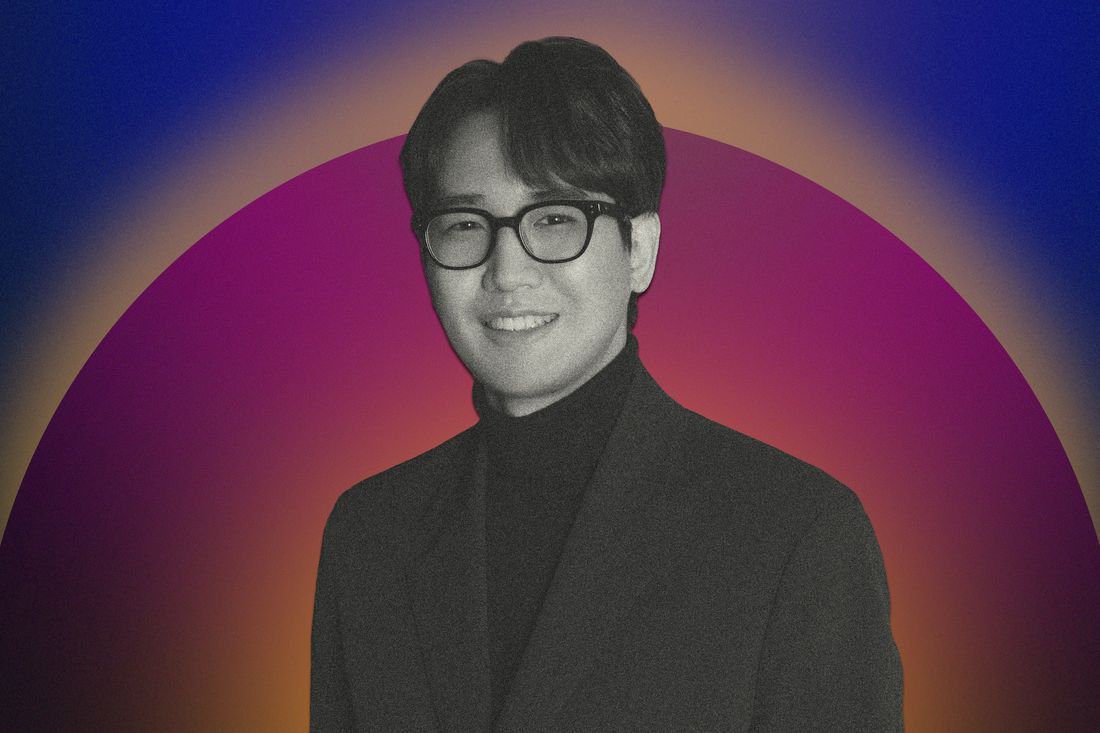
If you ask Kihwan Yoo about the show Survivor, he’ll give you a friendly smile. As Netflix’s head of K-reality, speaking from Seoul with the help of an interpreter, he explains that Korean competition and survival shows are, in his opinion, superior. He quickly adds that he doesn’t mean to sound boastful.
It’s a source of national pride for South Korea. At Netflix, Yoo is responsible for a growing collection of unscripted shows that are becoming increasingly important to the platform’s worldwide offerings. Brandon Riegg, Netflix’s head of nonfiction and sports, notes, “Korea has been incredibly successful for us in recent years, starting with shows like Singles Inferno. They’ve consistently delivered hits.”
Reality Masterminds
Reality Masterminds
Our inaugural celebration of the most powerful people in unscripted television.

I was so impressed with what Netflix did with K-reality shows last year! They really hit their stride. I especially loved seeing the second season of Culinary Class Wars – the idea of 80 unknown chefs going up against established masters was fantastic, and it even seemed to boost tourism in South Korea! Physical: 100 was another win, and I’m excited they’re expanding it with Physical 100: Asia and even an American version. But honestly, Singles Inferno still holds a special place – five seasons is amazing, making it their longest-running K-reality show! They released six other titles too, and while none were quite as huge as those flagship shows, they still did incredibly well. The team seems really pleased, and honestly, they deserve it – they’ve said everything they launched last year surpassed what they were hoping for, and I think they got lucky with a winning formula!
Yoo, now 41, spent his childhood in the countryside, lovingly recording his favorite TV shows on VHS. Watching a sitcom about college life inspired him to pursue a career in television – specifically, he was influenced by a character who studied broadcast journalism, which he decided to study as well. He began his career in 2011 at JTBC, a Korean broadcasting company, as an unscripted production director. He describes this role as the first step in a demanding learning process – similar to the training system for pop idols – where he gained experience in filming, scheduling, and budgeting. After seven years of hard work, he finally had the chance to direct his own show.
In 2020, Netflix recruited Yoo as its first unscripted content executive in South Korea, giving him a challenging start with limited support and no established guidelines. According to Netflix’s Riegg, Yoo’s background as a producer gives him a practical understanding of how shows are made, and he’s willing to take risks with new formats. Within a year, he successfully launched Singles Inferno. It was a bold move, as dating shows hadn’t been popular with Korean audiences previously, and the director he chose was a relatively unknown former coworker. However, Singles Inferno became the first K-reality show to reach Netflix’s global top ten. Yoo learned from this experience that taking chances can pay off, and that trusting his own instincts is often the best approach.
Yoo’s programs are now popular with viewers around the world. He believes that 60 to 70 percent of his audience is in South Korea, with most of the rest located in the Asia-Pacific area. Netflix hasn’t released exact numbers for U.S. viewers, but confirms that viewership there is increasing. However, Yoo emphasizes that the shows are still primarily made for a Korean audience, created by a local team within the Korean office.
The increasing popularity of Korean reality TV on Netflix stems from its unique qualities. It’s an oversimplification to assume a country’s TV shows reflect its national personality – for example, suggesting American reality TV’s exaggerated drama reveals something fundamental about Americans. However, a key appeal of watching international shows is seeing how different cultures adapt familiar formats. Compared to American reality TV, many K-reality shows emphasize subtle interactions and explore deeper themes. They also often feature complex and challenging game structures, creating a different pace and level of suspense than what American viewers are used to.
While competition and dating shows have broad appeal, they quickly reveal uniquely Korean characteristics, creating a fascinating tension for viewers, according to Yoo. For example, on Singles Inferno, couples who connect are taken to a luxurious hotel, but even then, physical touch is minimal – they’re more focused on discovering basic details like each other’s age and job, information deliberately withheld while on the island to emphasize its importance. This restraint is contrasted by intense physical challenges, like a tug-of-war in season five where competitors brutally pulled at each other, resulting in scraped knees. Similarly, Culinary Class Wars features a late-stage challenge called “Infinite Cooking Hell,” which relentlessly pushes seven chefs through 30-minute rounds focusing on single ingredients, eliminating one chef per round until only one remains to advance to the finale.
Many reality shows are now focusing on themes of class and inequality. For example, on Culinary Class Wars, the 80 competing chefs aren’t allowed to reveal their identities until they reach the final round. Similarly, The Devil’s Plan features a competition where players must earn and maintain a certain amount of money to avoid being relegated to uncomfortable living conditions – essentially a ‘poverty line’ that forces them to stay in a rundown basement.
As a huge fan of Korean reality TV, I’ve been following its growing international success, and it’s really interesting to hear why it’s traveling so well. One producer, Yoo, believes it’s because Korean shows historically prioritize broad appeal over catering to niche tastes – a show is considered good if everyone is watching it, not just a select few. That’s why he aims for simple premises – he wants you to be able to explain a show in just two sentences. But simple doesn’t mean shallow; he believes you can still have incredibly complex game play within that framework, like the ten-minute rule explanations on The Devil’s Plan, which at its core asks a very basic question: who’s the smartest?
What’s even more exciting is that Netflix is now seeing K-reality formats expand beyond just viewership numbers. Physical: 100 has already spawned a Pan-Asian version, and Sweden and Italy are getting their own adaptations soon, mirroring the success of shows like Love Is Blind, which has been adapted in Brazil and Japan. Netflix is noticing a real shift in the usual flow of unscripted formats. Historically, the UK and US have been the originators, but now, within the Netflix ecosystem, K-reality is starting to lead the way, with regional teams picking up formats before they even air in Korea.
The influence is subtle too. Take Squid Game: The Challenge – it’s based on a K-drama, and the core concept of a deadly game already feels familiar if you’ve been watching K-reality, with its large cast sizes, focus on social class, and underlying harshness. It’s a fascinating cycle of cross-cultural inspiration. Yoo himself is curious to see how Love Is Blind would do in Korea, because the idea of marrying someone without ever seeing them is almost unthinkable in Korean culture…though he points out it was pretty radical in the US too!
Yoo is wondering how far he can go with his approach to creating shows that aren’t focused on very specific interests. When asked about Siren: Survive the Island – a popular but short-lived Korean reality show where groups like stunt performers, police officers, soldiers, and Olympians competed in an extended version of Capture the Flag – he admitted it had a dedicated fanbase, but still appealed to a limited audience. He then explained that if Korean viewers continue to prefer mainstream shows with participants who represent widely accepted values, the future of Korean reality TV could be uncertain. He hopes the industry and viewers will embrace a wider range of content over time.
This explains why his interests are a bit different than expected. He doesn’t focus much on typical Western reality TV. When asked what he admires, he mentions a Korean dating show called Exchange, where former couples live together to see if they can find new love or get back together. He also points to Love on the Spectrum, an Australian series about people with autism finding romance, which Netflix brought to the U.S. in 2022. He wants to create shows that are genuinely touching and deeply relatable. He feels a Korean version of Love on the Spectrum would be particularly impactful. This is interesting because Love on the Spectrum—kind, sincere, and focused on genuine connection rather than drama—represents a new direction in reality TV. It would fit well with the kinds of shows Yoo is creating. While K-reality is becoming increasingly popular around the world, it’s also fascinating to see what ideas and formats it might adopt from other cultures.
Read More
- Off Campus Season 1 Soundtrack Guide
- X-Men ’97 Finally Gave Gambit the Hero Moment He Deserved
- Chainsaw Man Volume 24’s Cover Art Reveals a Brand-New Denji
- 46 Years Later, The Mandalorian & Grogu Answers A Major Empire Strikes Back Question
- 10 Worst End-Game Couples In Sitcom History
- HoI4 fans harsh reactions to the announcement of another DLC pack
- DoorDash responds after customer uses AI to make food look bad and get a refund
- Gold Rate Forecast
- Emily Henry Says to ‘Trust the Vision’ For Beach Read Adaptation
- Dragon Quest II HD-2D Remake: Where to get the Magic Key
2026-05-07 15:59