Before Steven Spielberg’s Disclosure Day came out, there was buzz it might actually be a sequel to Close Encounters of the Third Kind, which I totally got why people thought that! It turned out not to be a direct sequel, but honestly, the connection is still there. You could easily imagine Disclosure Day happening in the same universe as Close Encounters, where everything from the earlier film was kept secret. Both stories follow a similar path: a man and woman get pulled into this crazy chase after proof of aliens that someone powerful is trying to hide. It all builds up to one big location where things come to a head, and we finally see the aliens. In Close Encounters, it’s Devils Tower in Wyoming with scientists making contact. With Disclosure Day, it’s a TV studio in Kansas City where decades of alien evidence goes live for everyone to see. And hey, did anyone else catch what looked like a quick shot of Devils Tower during that footage? It definitely made me think!
Before reaching the news studio, the story revisits a crucial event. Daniel Kellner and Margaret Fairchild visit a warehouse where Hugo Wakefield has painstakingly rebuilt Margaret’s childhood home. Hugo believes this recreation will help Margaret remember a forgotten part of her past. When she was ten, Margaret experienced something magical in a house in the woods – an event that gave her the abilities seen throughout the film, abilities that had remained hidden for years. It was also where she first met Daniel, another frightened child who received powers at the same time. He’s also blocked out the memory, but together, they might be able to unlock it.
The scene plays out like a typical alien abduction, but Spielberg’s direction is captivating. He blends flashbacks with a dreamlike, almost out-of-body experience, shifting the tone from fantastical and dreamy to frightening and sterile. It starts with young Margaret singing “Someday my prince will come” from Snow White – a nod to the Pinocchio reference in Close Encounters – before she’s drawn outside into the snow by a group of animals. These animals – a deer, fox, raccoon, and cardinal – look a bit unnaturally smooth due to the special effects, maybe intentionally so. According to Hugo, the aliens appear as animals to reassure people, but it’s hard to imagine anyone feeling calm seeing a deer looking in their window!
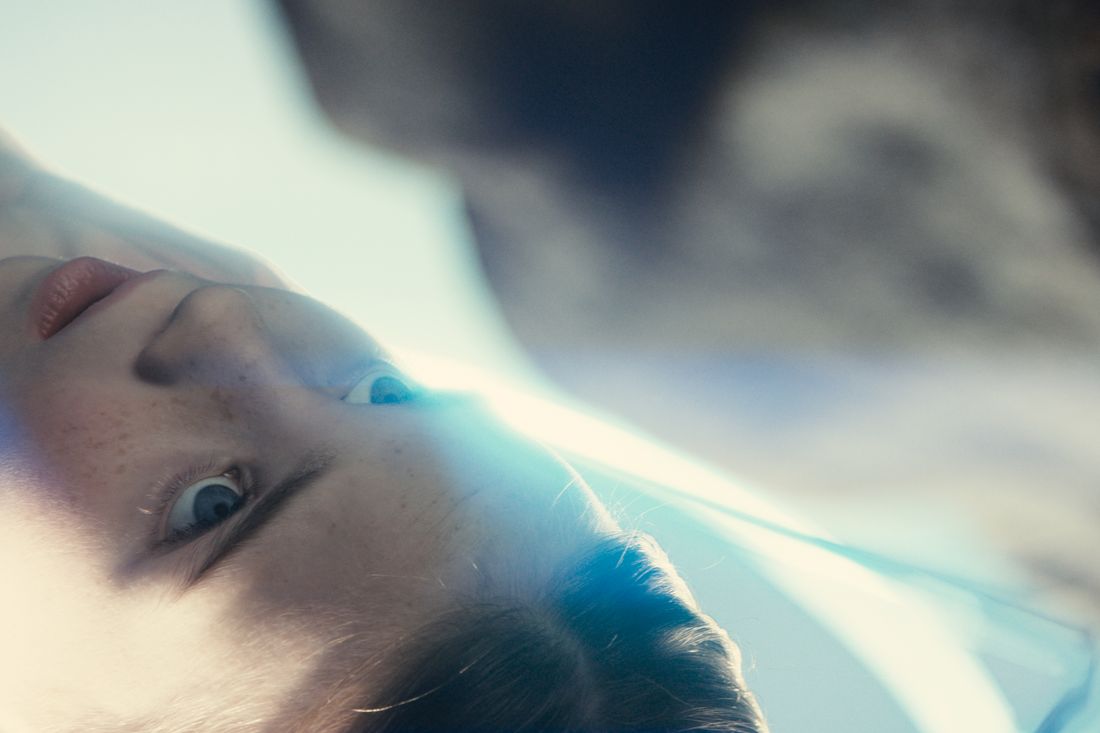
Young Margaret follows creatures in the snow, leading her to a strange house that looks like something from a fairy tale. Inside, she finds herself on an examination table, facing a deer that seems to be studying her. The scene quickly shifts from whimsical to terrifying as the camera focuses on the deer’s eye, revealing it belongs to an alien. We hear the familiar clicking sounds, which are established as the alien’s way of communicating through a complex, mathematical language. Spielberg masterfully changes the mood of the scene, creating a stark contrast between the idyllic setting and the frightening reality. This tonal shift is deliberate, as Spielberg is portraying a childhood trauma – a past event briefly mentioned earlier in the film when Margaret was at the hospital. He deliberately aims to make us feel uneasy and disturbed. By forcing Margaret to confront this memory, the film shows her regaining control over it. The scene ends with a shot of the examination table, but this time Margaret is an adult and no longer afraid, signifying her newfound power. This sequence echoes a similar theme in Spielberg’s film The Fabelmans, where young Sammy Fabelman recreates a frightening train crash to cope with his fear, as his mother explains, “He’s trying to get some kind of control over it.”
But what’s the purpose of all this? Hugo explains to Margaret and Daniel that the aliens gave them these hidden abilities so they could work together to relay messages to humanity. Daniel’s encounter made him incredibly gifted in mathematics – essentially, he can understand the fundamental language of the universe. Meanwhile, Margaret was given heightened empathy, allowing her to understand people on a deeper level. As I noted in my review, this pairing of a tech expert (Daniel) and an empath (Margaret) is reminiscent of Steven Spielberg’s portrayal of his parents in The Fabelmans: a scientist and an artist whose divorce profoundly impacted him and inspired much of his work. It’s genuinely moving to me that Spielberg chose characters based on his own parents to be the ones who decipher the mysteries of the universe in Disclosure Day.
Steven Spielberg has long been fascinated by UFOs. He consulted with famous ufologist J. Allen Hynek while making Close Encounters, and the movie E.T. was partially inspired by a well-known alleged alien encounter in Hopkinsville, Kentucky, from 1955. The film footage presented as evidence at the end of Disclosure Day – spanning 79 years – isn’t just fictional. It’s based on actual UFO stories, including the reported 1947 crash near Roswell, New Mexico, and claims that President Richard Nixon secretly showed comedian Jackie Gleason four recovered alien bodies in 1973.
As the footage is shown on televisions worldwide, a CNN anchor narrates with clear emotion. The performance by Courtney Grace, though understated, is essential, and she deserves recognition. In his film, Disclosure Day, Spielberg proposes that a world facing nuclear war might actually come together when confronted with proof of alien life. He suggests humanity could respond to the unknown not with fear or hostility, but with hope and compassion. The anchor’s voice, filled with empathy and vulnerability, is key to conveying this message, as she represents this hopeful reaction within the scene.
Steven Spielberg’s interest in aliens isn’t simply about beings from outer space. While many of his films are set in the past, his alien movies consistently address contemporary issues. They capture the spirit of their time – Close Encounters reflected post-Watergate distrust, E.T. explored family struggles, and War of the Worlds echoed anxieties surrounding 9/11 and the Iraq War. His latest film, Disclosure Day, follows this pattern. The movie depicts a world dominated by constant surveillance, with villains like Noah Scanlon (Colin Firth) monitoring citizens through data gathered from work attendance, locations, social media, AI tracking, and even heat signatures. This isn’t about unfounded fear; it mirrors our current reality where widespread monitoring is commonplace. In the film, the protagonist flips this power dynamic by using technology to broadcast evidence of alien contact directly to everyone, turning surveillance tools against those who wield them. It’s a hopeful idea, though perhaps unrealistic – recent declassified alien evidence barely caused a stir, and we often seem more focused on conflict than unity. Still, Spielberg continues to explore these themes, offering a vision where acknowledging something larger than ourselves might unite us.
The aliens in Disclosure Day aren’t designed to be flashy or cutting-edge. They deliberately look old-fashioned, like the ones you’d find in classic 1950s sci-fi movies. At the film’s climax, Hugo introduces the actual alien, nicknamed “In Vivo 17,” who is hinted to be the driving force behind everything. Now appearing elderly and weak (though surprisingly large), In Vivo 17 embodies the traditional alien image: a large head, huge black eyes, and long, thin fingers. It’s interesting to consider that in 2026, Steven Spielberg could have easily created a completely bizarre alien with modern visual effects for this big reveal. However, he chose not to. If the UFO stories and rumors over the years are true, Spielberg seems to suggest, the aliens themselves would likely resemble the ones that captured our imaginations throughout the 20th century.
The film ends with a mysterious exchange. In Vivo whispers to Daniel and Margaret, who then whispers to her, seemingly translating. Margaret then steps in front of the cameras and simply says, “Listen…” before the movie cuts to credits. It’s left unclear whether this is the start of a longer message – perhaps a warning about aliens, a peaceful greeting, or even a quirky reason for not invading. Or maybe “Listen” is the entire message, a plea to connect with each other and the world around us. We’ll never know for sure. Ultimately, this film isn’t really about UFOs; it’s an expression of an elderly filmmaker’s faith in humanity. It’s admittedly a bit sentimental and idealistic, but if you share that belief, it’s genuinely touching. And even if you don’t, it’s powerfully moving – a reminder of the human connection we may have lost.
Read More
- Netflix’s Little House On The Prairie Reboot: Release Date, Cast & Everything We Know
- Off Campus Season 1 Soundtrack Guide
- YouTuber arrested after viral AI bodycam videos spark real police complaints
- Silver Rate Forecast
- Prime Video’s New R-Rated Spy Thriller Is Officially No.1 On Streaming Despite Poor Reviews
- Brent Oil Forecast
- Peaky Blinders: The Immortal Man’s Tommy Shelby Is a Better Father Than Michael Corleone
- EUR ZAR PREDICTION
- Gold Rate Forecast
- Bulgakov’s Take: Koreans Bet the Farm on Chips, Crypto, and Chaos
2026-06-13 01:59