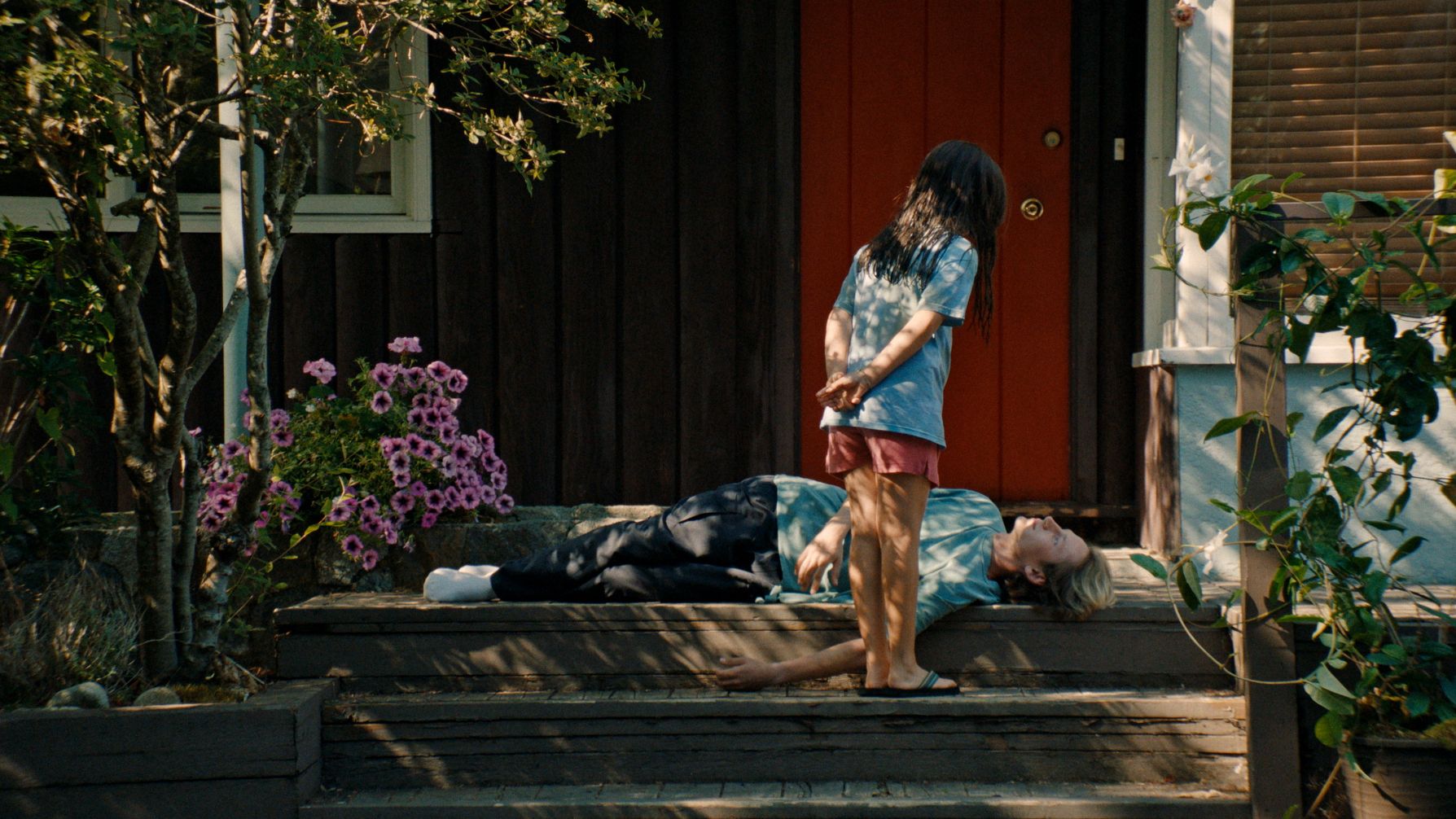
Movies rarely directly address the audience; usually, the story unfolds through what the characters say and do. But when a movie does speak directly to us, even briefly, it’s a powerful experience. Every visual and audio detail comes together to convey a feeling or idea that’s hard to articulate. It feels like understanding a message in a language you instinctively know. These moments are what movie lovers truly cherish.
It’s truly special when a movie finds its unique voice right from the beginning and maintains it throughout. I believe some directors are naturally gifted storytellers, able to connect with audiences effortlessly – it’s remarkable how easily they do what often seems so challenging. Think of filmmakers like David Lynch, Stanley Kubrick, and Céline Sciamma. With her first feature film, Sophy Romvari proves she’s part of that rare group.
Blue Heron Is As Intelligently Crafted As It Is Profoundly Moving
Trying to explain Blue Heron feels tricky. Saying it’s ‘about memory’ isn’t wrong, but it feels way too simple for a film this subtle. Instead of spelling everything out, the director, Romvari, really trusts you to figure things out as you watch. What’s amazing is how naturally you do understand what’s going on, even without a lot of direct explanation. It starts with a quick voiceover hinting this is a look back at something, and then we’re just thrown into this family moving into a new house. Honestly, going in knowing as little as possible, like I did, is the best way to experience it – it’s all about slowly putting the pieces together.
The parents alternate between speaking Hungarian and English, suggesting they are immigrants who have lived in Canada for a while – their accents are different from their four children’s. The technology used in the film indicates the story is likely set in the late 1990s, and it quickly becomes clear that the movie centers around the family’s young daughter. There also seems to be some underlying tension involving the oldest son, who appears older and different from his siblings.
Blue Heron isn’t just a film; it teaches us how to watch a film. This focus on observation is central to the story. We see the summer Sasha (as a child, played by Eylul Guven) moved to Vancouver Island, when she was eight years old and didn’t fully understand what was happening with her brother, Jeremy (Edik Beddoes). The film then jumps to the present day, where adult Sasha (Amy Zimmer) looks back on that time, trying to piece together what she didn’t understand then.

We sense the story’s truth even before we fully understand it. Each moment feels deeply real, brought to life through vivid sights and sounds that resonate like memories. The camera doesn’t simply observe; it feels like a point of view that’s slowly expanding, allowing us to intimately experience the story. We witness Sasha’s mother’s increasing worry and her father’s efforts to maintain calm. We share their disappointment in Jeremy’s actions and their helplessness with a social services system that offers no real help. It’s as if Sasha, looking back on her childhood, is re-examining her memories, focusing on details she might have missed before and piecing together a fuller picture.
Despite learning more about the events, Jeremy remains a mysterious figure at the heart of the story. The film draws from the director’s own life, but she avoids simplifying the truth or creating easy explanations. Through her filmmaking, Sasha – who mirrors the director herself – connects with her brother in a way she never has before. Each new detail feels like a significant breakthrough, bringing her closer to understanding the full picture. However, simply recalling memories has its limits, and Jeremy ultimately remains a complex and somewhat unknowable person.

The real strength of Blue Heron comes from its understanding that sometimes, we can’t fully understand things, and the film’s director, Romvari, shows that empathy is the best we can offer instead. Film is a powerful medium for creating empathy, and this movie does it exceptionally well. While the film is meticulously crafted – every line of dialogue, camera angle, and sound feels perfectly placed – it’s more than just a collection of details. Blue Heron takes bold creative risks, particularly in its ending, that are truly stunning. These choices make complex emotions feel surprisingly clear, and the resulting emotional impact is deeply moving.
I’m practically bursting to tell you everything about Blue Heron, but I don’t want to spoil the experience of discovering it for yourself. It’s the kind of film that just demands to be discussed, analyzed, and celebrated! For now, I’ll just say this: it’s easily one of the best movies I’ve seen all year. Seriously, if it comes to a theater near you, please, do not miss it.
I’m really excited that Blue Heron is expanding! It started showing in New York on April 17th, and now it’s coming to Los Angeles on April 24th. Even better, they’re planning a full release across the country in May, so hopefully everyone will get a chance to see it.
Read More
- Netflix’s Little House On The Prairie Reboot: Release Date, Cast & Everything We Know
- Off Campus Season 1 Soundtrack Guide
- YouTuber arrested after viral AI bodycam videos spark real police complaints
- Silver Rate Forecast
- Prime Video’s New R-Rated Spy Thriller Is Officially No.1 On Streaming Despite Poor Reviews
- Brent Oil Forecast
- Peaky Blinders: The Immortal Man’s Tommy Shelby Is a Better Father Than Michael Corleone
- Gold Rate Forecast
- EUR ZAR PREDICTION
- Bulgakov’s Take: Koreans Bet the Farm on Chips, Crypto, and Chaos
2026-04-23 16:14