
This week sees the release of Tales of Arise – Beyond the Dawn Edition on the Nintendo Switch 2. I’ve been testing the new port and also revisiting the game on PlayStation 5, PlayStation 5 Pro, PlayStation 4, and Steam Deck. Previous Tales of games on Switch have varied greatly in quality, so I was eager to see how this version would perform. While the Switch 2 port is good in some areas, it falls short in others. Here’s a comparison of how it feels to play compared to the PlayStation and PC versions.
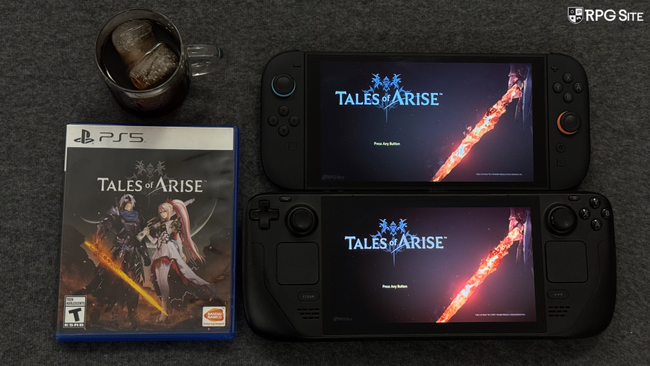
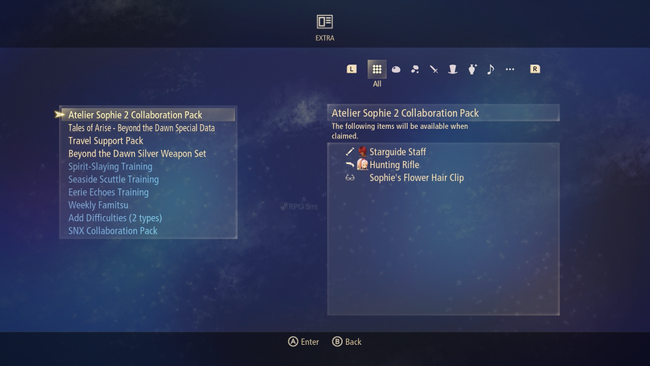
The Tales of Arise Beyond the Dawn Edition for Switch 2 includes both the original game and the Beyond the Dawn expansion. It comes with some bonus cosmetic items, but not all of them. For $20 more, you can get the Premium Edition bundle, which adds even more cosmetic items and helpful in-game consumables. If you already own the base game, you can upgrade to the Premium Edition with the Premium Upgrade Pack for $24.99. Aside from these different editions, the Switch 2 version of Tales of Arise Beyond the Dawn Edition features the same content as other versions, and has been specifically ported to the Switch 2 by Software.Advanced.Research Co., Ltd.
I consider Tales of Arise one of the best Tales games ever made, ranking it alongside Graces f and Berseria. I loved it so much I bought it on both Xbox and PC after initially playing it on PlayStation 5. Although the story weakens a bit towards the end, I thoroughly enjoyed the world, combat, music, and overall look of the game. The Beyond the Dawn expansion wasn’t particularly appealing to me. After its release in 2021, I didn’t revisit Tales of Arise until I got a Steam Deck and wanted to test how well it played on a handheld device. It ran well, but I didn’t spend much time with it beyond loading old saves. If Tales of Arise were released on a Switch 2, it would be the first console version truly designed for handheld play, and I was hoping the port would be better than Bandai Namco’s previous Tales games on the Switch. Thankfully, this port is good, though a few more updates would make it even better for portable gaming.
Let’s talk about how Tales of Arise performed on different consoles before diving into its performance on the Switch 2. On most platforms, the game didn’t have a frame rate limit. The PlayStation 5 and Xbox Series versions also included a performance mode that aimed for 60 frames per second. While the PS5 and Xbox Series X quality mode offered a variable frame rate, the PS4 and Xbox One versions only had one mode, typically running around 30 frames per second. The Xbox Series X quality mode was the most playable, especially with VRR enabled, but it wasn’t perfect without it. When I first played it, the PS5 quality mode felt quite rough. Digital Foundry reported that the quality mode ran at native 4K on both PS5 and Xbox Series X, while the performance mode was rendered at 1620p.
I don’t have a standard PS4 to test the game on, but when I played Tales of Arise on the PS4 Pro, the resolution was between 1080p and the quality of the PS5. While the PS5 and Xbox Series X versions ran smoothly, the PS4 Pro version felt unstable due to its fluctuating frame rate, which often stayed in the 30s. I also tested it on the PS5. Since there aren’t any specific improvements for the PS5, it uses a boost mode. The quality mode aims for 4K resolution and now consistently hits a smooth 60 frames per second, making the PS5 the best console to play Tales of Arise on.

Tales of Arise had visual problems across all platforms, specifically with shadows appearing low-quality and distant objects like trees and scenery loading in slowly or appearing suddenly. These issues were most noticeable on older PlayStation 4 and Xbox One consoles, but they occurred on PC and current-generation consoles as well, unless players used modifications to improve the graphics.
When Tales of Arise was announced for the new Switch 2, the official details stated it would aim for a resolution of 1080p and a frame rate of 30 frames per second during regular gameplay and most cutscenes, whether played handheld or docked. Some cinematic scenes were expected to run at a smoother 60 frames per second. However, Bandai Namco’s published specifications on Japanese websites haven’t always been completely accurate in the past. Previous Tales games have sometimes offered frame rates higher than advertised, and others that claimed 30fps have actually run at lower speeds.
After playing around seven hours of Tales of Arise Beyond the Dawn Edition on the Switch 2, it’s a good way to play on the go, though occasional frame rate dips and pauses can be noticeable. However, it doesn’t look as good when played on a TV compared to the PlayStation 5 and Xbox Series X versions.
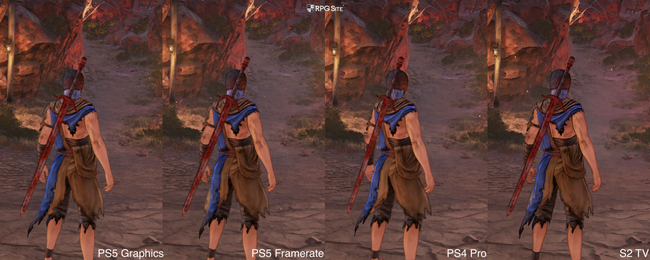
Just to clarify, the image comparison uses 4K recordings captured directly from each gaming platform and mode. I cropped the images to highlight the differences. For the clearest view, I suggest opening the image in fullscreen and ensuring you’re looking at the PNG version to see how the visual quality changes between the PS5 and Switch 2.
Tales of Arise Switch 2 vs PS5 and PS4
Currently, the Switch 2 version of Tales of Arise performs more like the original PS4 than the enhanced PS4 Pro or PS5. While it loads slightly faster than the PS4 Pro version, the difference isn’t significant. It seems the developers focused on making the game great for handheld play, and didn’t push the graphics as much for playing on a TV. I actually prefer how smoothly the game runs on Switch 2 compared to the PS4 and PS4 Pro versions, though it doesn’t quite reach the consistently smooth 60 frames per second you get on the standard PS5. If you have a PS5 Pro, you can even enjoy the game in full 4K resolution at 60fps, but that’s another story.
Visually, Tales of Arise on the Switch 2 has some differences compared to the PS5 version. Textures aren’t as detailed, objects appear at a shorter distance, and the resolution is significantly lower, even when played while docked. The PS4 Pro version also sees some visual downgrades, including a lower resolution and less detail in environments and textures.
Tales of Arise Switch 2 vs Steam Deck
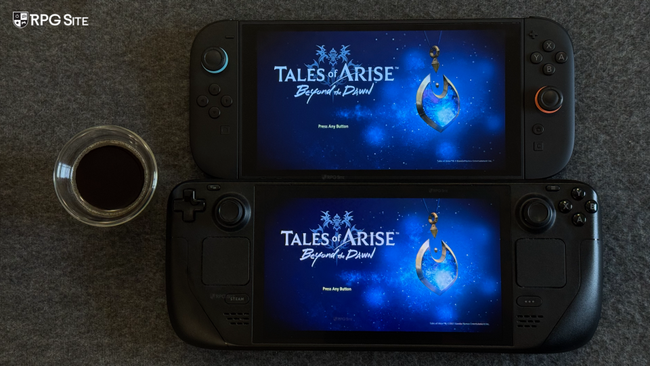
It’s been interesting comparing Tales of Arise on the Switch 2 and Steam Deck. Neither version consistently reaches 60 frames per second, but the Steam Deck offers a more stable framerate, often hitting around 40fps. When played as handhelds, the Switch 2 version looks a bit sharper, though it has noticeably reduced graphical settings compared to the Steam Deck’s default options, especially when it comes to things like trees and plants in open areas. Both versions have issues with objects appearing too late in the distance, but it’s puzzling why the developers didn’t aim for a consistent 40fps at 120hz on the Switch 2, considering the Steam Deck can achieve higher settings at that rate.

Just to clarify how the screenshots were taken: I used the Switch 2’s built-in screenshot feature for handheld mode, as that’s the only way to capture images in handheld right now. For the Steam Deck, I used Steam’s screenshot tool. I then cropped both images to clearly show the differences between them.
Tales of Arise load times on Switch 2, PS5, PS4, and Steam Deck
To check how quickly the game loads, I timed how long it took to reach the title screen from each platform’s main menu. I also timed loading an early save file and a short cutscene on each. I pressed the confirm button repeatedly to skip through loading screens as fast as possible. I tested the PS5 version of Tales of Arise on both a standard PS5 and a PS5 Pro, both using their internal storage. I tested the Switch 2 version on the Switch 2’s internal storage, the PC version on the Steam Deck’s internal storage, and the PS4 version on a PS4 Pro hard drive. The loading times below are measured in seconds.
| Platform | Dashboard to title | Load save | Skits |
| PS5 | 19-20 | 5-6 | 0-1 |
| PS5 Pro | 16-18 | 5 | 0-1 |
| PS4 Pro | 57 | 14-16 | 2-3 |
| Steam Deck | 32-34 | 10 | 1-2 |
| Switch 2 | 45-48 | 12-14 | 2 |
I’m having fun replaying Tales of Arise on the Switch 2’s handheld mode, but the loading times are noticeably slower than on other modern consoles. Considering how fast the Switch 2’s storage is, it shouldn’t load as slowly as a PS4 Pro with a traditional hard drive.

Okay, so I finally got Tales of Arise running on the Switch 2, and if you missed it the first time and really wanted to play on the go, this port does the trick. It’s not perfect – there are some performance hiccups – but it’s way better than how Persona 3 Reload launched on handheld, and the graphics aren’t a blurry disaster like some other Switch 2 ports I’ve seen. Honestly, considering the game also came out on older consoles like the PS4 and Xbox One, I expected it to look a little sharper. Playing it on my TV wasn’t great, the image quality just wasn’t there, and they really should have aimed for 1440p even with the 30fps limit. Hopefully, they can fix the frame rate issues and loading times with some updates. But if you’re like me and mostly care about playing Tales of Arise on the go, I’d say it’s worth picking up.
Read More
- Off Campus Season 1 Soundtrack Guide
- Euphoria Season 3’s New R-Rated Sydney Sweeney Scene Proves The Show Is Trolling Us
- DoorDash responds after customer uses AI to make food look bad and get a refund
- Gold Rate Forecast
- All Golden Ball Locations in Yakuza Kiwami 3 & Dark Ties
- Jon Bernthal Explains Why Marvel Let Him Make The Darkest Punisher Story Ever
- Dutton Ranch Review: Paramount+’s New Western Takes All The Best Parts Of Yellowstone & Makes Them Better
- Taco Bell combines two fan-favorite menu items in new Cantina Chicken Mexican Pizza
- YouTuber arrested after viral AI bodycam videos spark real police complaints
- 10 Most Universally Beloved Sci-Fi Movie Villains, Ranked
2026-05-20 18:58