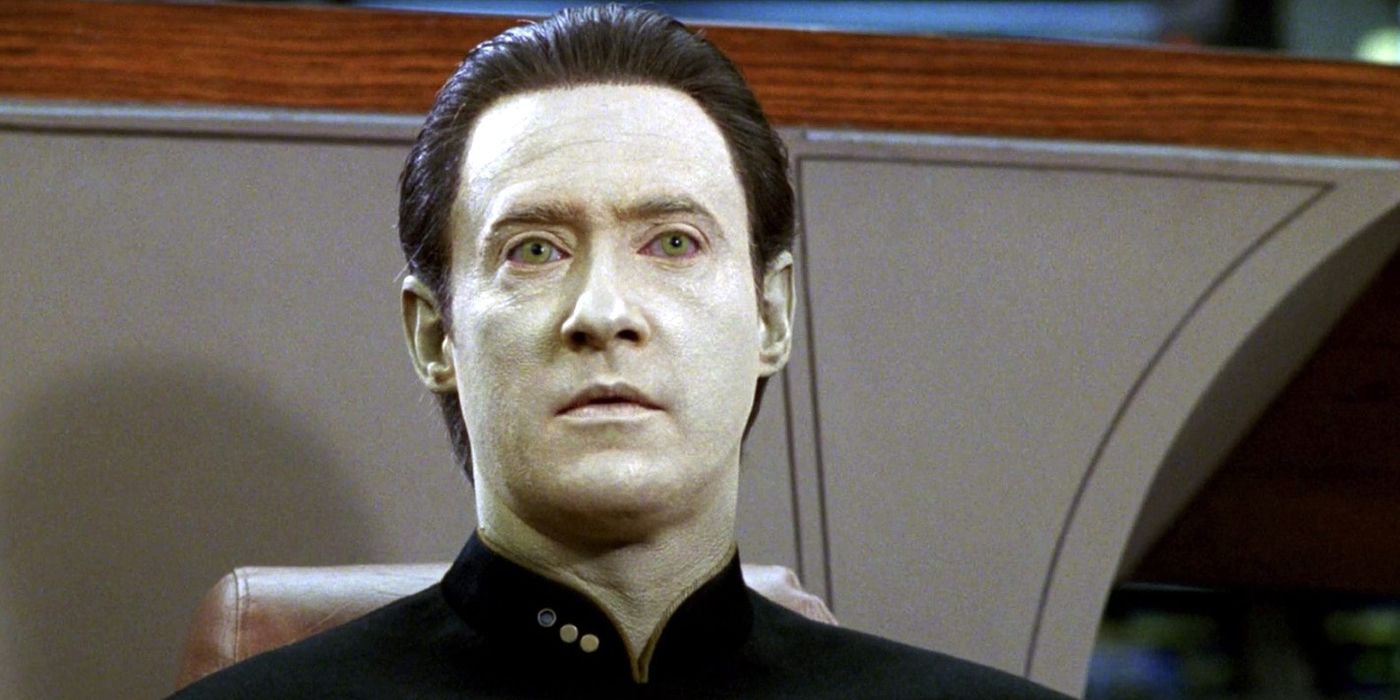
Data, played by Brent Spinner, is a fascinating and endearing character in Star Trek. As an android, he’s sincerely trying to learn what it means to be human and to feel emotions. He often shares insightful observations, helping himself and the crew understand compassion from a uniquely logical and objective point of view.
I always get emotional remembering the episode “The Offspring” from Star Trek. Data’s conversation with his daughter, Lal, really hit home for me. He beautifully explained how prejudice isn’t strength, but a flaw in being human. It perfectly embodies everything Star Trek stands for – celebrating differences and showing us the importance of kindness and acceptance. It wasn’t just a plot point; it was a powerful lesson.
Data’s Line in “The Offspring” Is One of His Most Inspiring Quotes
Okay, so “The Offspring” is seriously heartwarming. It’s about Data, the android from Star Trek, and his wish to experience parenthood. He actually builds a daughter, an android named Lal! The movie really focuses on their relationship as Lal tries to figure out what it means to be human, learning all about emotions and those weird little things people do from Data’s perspective. It’s a really touching story.
Near the beginning of the episode, after a day at school, Lal asks Data what laughter means. When Data explains it’s a reaction to something funny, Lal proudly says she’s already good at making her classmates laugh, even though she doesn’t understand why. Data then gently explains that the children weren’t laughing with her, but at her, saying, “They were laughing because you are different. People sometimes get scared of differences, and they might use humor to cover up that fear.”
Even though Data doesn’t feel emotions and can’t truly sympathize with Lal, their scene together is still moving. Throughout the episode, Data largely encouraged Lal to embrace what made her unique, and this continues until the episode’s sad conclusion.
He equipped her with an advanced artificial brain capable of feeling emotions he’d always wished he could, and allowed her to decide her own gender and how she looked. When she asked to resemble Counselor Troi, he gently explained the importance of forging her own identity instead of simply copying someone else. He wanted her to live the life she chose and celebrate her uniqueness, much like any loving parent would.
Okay, so Data’s delivery to Lal – predictably – feels a little detached, given he’s, well, Data. But honestly, it struck me as surprisingly poignant when you consider his whole journey to help Lal develop into her own person. It’s a really clever nod to Starfleet’s core idea of celebrating differences. The brilliance is that it frames prejudice not as a natural response, but as a sign of someone else’s inner incompleteness. It’s not the ‘other’ who’s flawed, it’s the person reacting with fear or hatred. It’s a really thought-provoking moment, and it totally landed for me.
This scene teaches Lal that embracing what makes you different is actually a strength, not a weakness. Even though Data previously said he couldn’t experience love, his words show he’s protecting his daughter’s individuality and letting her be herself, instead of trying to make her fit in. It’s a really moving and relevant message for anyone who’s ever felt like they don’t belong, reminding them that other people’s prejudices say more about them than about you.
Data’s Line Represents Star Trek’s Value of Diversity
Sixty years ago, Gene Roddenberry envisioned a future built on the idea of IDIC – infinite diversity in infinite combinations. He believed that the universe’s variety should be celebrated, and this became a core principle of The Original Series. The show focuses on the crew of the Enterprise accepting different species and cultures as they explore new worlds.
This focus on exploration and understanding continued throughout the series, with The Next Generation often considered the best. Captain Picard is known as one of the most thoughtful leaders in Star Trek history, sharing the knowledge he gained at Starfleet Academy to guide and motivate those around him. It’s therefore no surprise that the show featured a wide range of stories, like the episode in Season 2, Episode 9, and the storyline where Riker develops feelings for someone from a gender-neutral species in “The Outcast” (Season 5, Episode 17).
“The Offspring” explores similar ideas, particularly because it focuses on Lal’s ability to choose her own gender and identity. While the episode doesn’t directly address gender identity in the way we might today, given when it was made, its themes remain significant. Lal’s choice is just one part of a larger story about individuality, and the episode ultimately emphasizes the importance of accepting who people are.
Lal and Data are both unique individuals, sharing traits like immunity to illness, agelessness, and the ability to function without food or sleep. However, the key difference is that Lal experiences emotions, something Data desires. While this allows her to feel deeply, it also causes her pain, as she’s easily affected by how others react to her, leading to her poignant statement, “I do not wish to be different.”
Data’s statement is so impactful because it goes beyond just one episode – it’s central to the entire Star Trek franchise. The show’s message about diversity isn’t simply about including different characters; it’s about how those differences are perceived and handled by everyone else.
Data embodies Starfleet’s core belief, which emphasizes understanding the biases of those who judge, rather than focusing on the individual being judged. The episode “The Offspring” transforms a basic parent-child conversation into a powerful exploration of individuality and the importance of embracing all kinds of differences.
Read More
- Off Campus Season 1 Soundtrack Guide
- Euphoria Season 3’s New R-Rated Sydney Sweeney Scene Proves The Show Is Trolling Us
- Gold Rate Forecast
- How to Get to the Undercoast in Esoteric Ebb
- Brent Oil Forecast
- Olympian Says Heated Rivalry Tugged At His Heartstrings
- Why is there no Jujutsu Kaisen this week? Missing Season 3 Episode 8 explained
- Jailbreak codes (April 2026)
- What is Omoggle? The AI face-rating platform taking over Twitch
- Popeye Slasher Horror Film Officially Kicks Off Production on ‘Bigger & Bloodier’ Sequel
2026-05-17 17:41