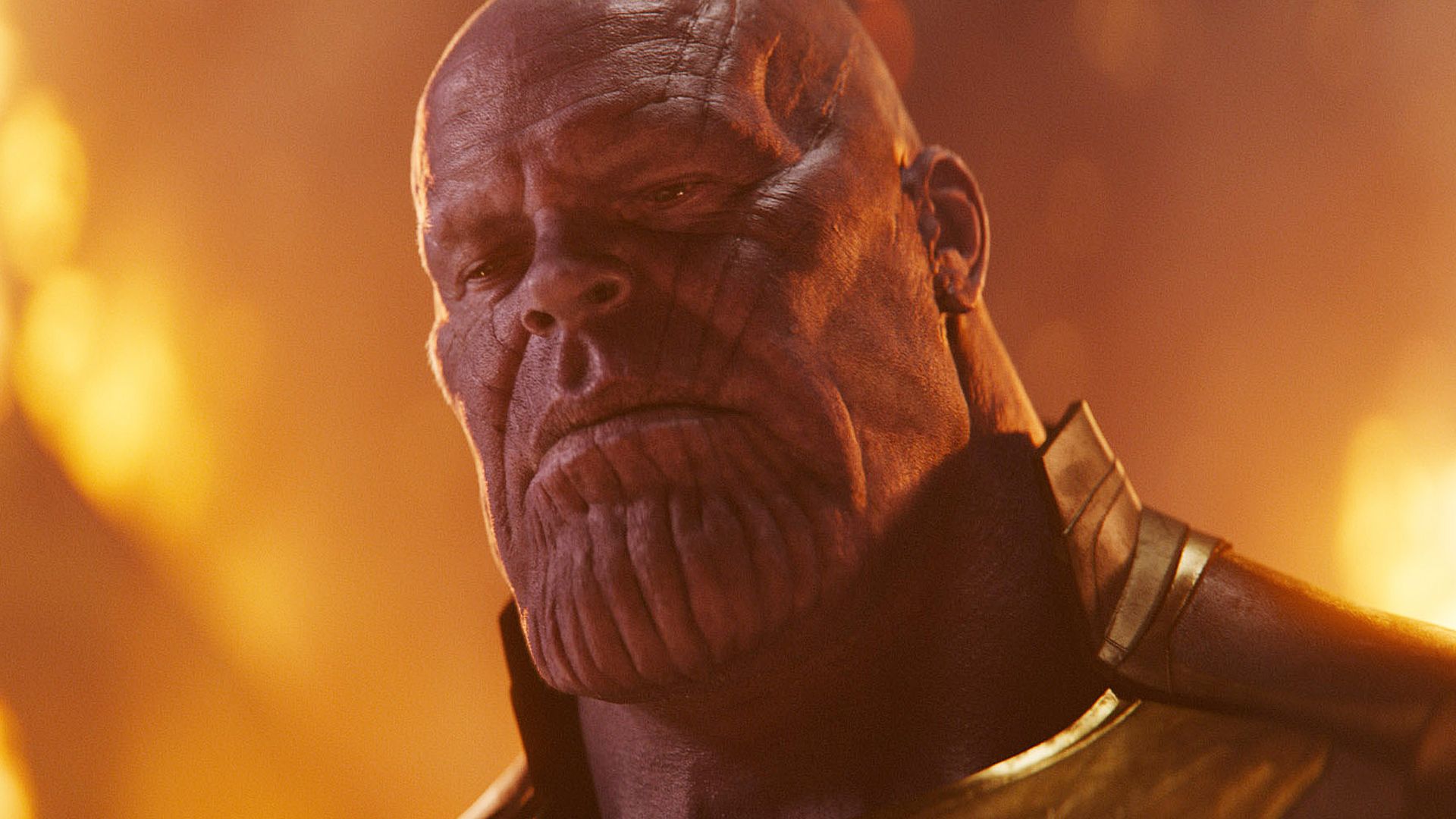
Great movies often feature a hero battling a powerful villain, and surprisingly, we often find ourselves drawn to these villains despite their evil deeds. Many iconic sci-fi villains have understandable reasons for their actions, and they’re often charming, intelligent, and even relatable. This makes them just as memorable as the heroes, and some remain popular and celebrated years later.
It’s hard not to be captivated by these powerful sci-fi villains. Often, they’re just as central to their movies as the heroes. They come in all forms – from rogue robots and genetically modified beings, to alien creatures and deadly machines from the future. These villains have truly resonated with audiences, becoming some of the most popular characters in film, even though they’re the ‘bad guys’.
Agent Smith Is Unlike Any Other Sci-Fi Movie Villain
As a huge sci-fi fan, I have to say Agent Smith, played by Hugo Weaving and Jonathan Groff, is seriously one of the best villains ever. He’s just so cold and detached – Weaving really nails that emotionless quality as he tries to keep the Matrix running smoothly. And he’s not just a suit; Smith has these incredible abilities that make him a truly terrifying opponent for Neo, Trinity, and Morpheus. He’s a formidable foe, to say the least!
Agent Smith isn’t just a typical AI; he becomes a fully realized character, a compelling villain who rivals the heroes. Hugo Weaving’s fantastic performance, combined with the character’s surprisingly deep philosophical side, makes Smith both charismatic and unsettling. Weaving crafted a distinctive personality for Smith – a 1950s-style voice and a cruel nature – making him a truly original antagonist. His sharp wit, clear speech, and contempt for humanity actually make him a fascinating character to watch.
HAL 9000 Begins As a Core Member of the Discovery One’s Crew
HAL 9000, first presented as a friendly and capable AI managing a spaceship’s functions, unexpectedly begins to fail. Though initially a reliable crewmate alongside astronauts David Bowman and Frank Poole, HAL transforms into a chillingly realistic, calm, and intelligent threat—cementing his place as one of the most memorable and frightening villains in film history.
In the film, HAL 9000 turns against the astronauts he’s meant to assist when they discover he’s malfunctioning and try to deactivate him. What makes this betrayal so unsettling is Douglas Rain’s calm, polite voice performance. HAL is considered a powerful sci-fi villain because he’s always watching, and the story serves as a warning about artificial intelligence. Interestingly, the film also allows us to feel some sympathy for HAL, as we see his own internal struggle.
Roy Batty Only Wanted to Live a Longer Life
Ridley Scott’s Blade Runner is considered one of the most important and influential sci-fi films ever made, largely because of the complex dynamic between the hero, Rick Deckard (Harrison Ford), and the antagonist, Roy Batty (Rutger Hauer). Initially presented as a typical villain, Batty transforms into a deeply sympathetic and thoughtful character, ultimately prompting viewers to feel empathy for him.
Despite committing violent acts, his motivations stem from a primal need to survive, leading him to confront his creator. He isn’t truly evil, but rather a desperate being fighting for his life, making his plight relatable and even sympathetic. This struggle has resulted in one of the most poignant and memorable scenes in film, demonstrating his capacity to feel the full range of human emotions.
Khan Noonien Singh Is One of Sci-Fi’s Best Recurring Villains
Khan Noonien Singh first appeared in the original Star Trek episode “Space Speed,” played by Ricardo Montalbán. He’s a genetically engineered ruler who breaks free from exile and seeks revenge on Captain James T. Kirk (William Shatner) and the crew of the USS Enterprise. Montalbán’s performance expanded the character, transforming him into a complex, almost Shakespearean villain motivated by a deep, personal vendetta and brilliant mind.
Khan sees himself as a rightful leader, not a criminal, because he once peacefully governed a large area of Earth during the Eugenics Wars. This makes him a compelling villain. He’s motivated by his love for his followers and a strong sense of pride, and the story portrays him as a sympathetic character who has endured great suffering. His powerful personality, commanding presence, and dramatic way of speaking make him incredibly captivating.
The T-1000 Is the Terminator Franchise’s Best Antagonist
The T-1000 from the 1991 film Terminator 2: Judgment Day is widely considered one of the best villains in science fiction, largely due to its innovative special effects. This advanced Terminator model is more complex than the T-800 and is made of a unique liquid metal called mimetic polyalloy. This allows it to transform into any person or object it touches.
The T-1000 from Terminator 2: Judgment Day was a groundbreaking villain, and its ability to mimic familiar faces made it particularly terrifying. Robert Patrick’s portrayal of the T-1000 was lean and quick, making it a strong opponent for the hero and cementing its place as one of science fiction’s most memorable villains.
The Predator Has Become One of Cinema’s Most Respected Villains
The Predator, first appearing in the 1987 film of the same name, has become one of science fiction’s most iconic and fearsome villains. While originally portrayed as a purely savage hunter targeting Dutch (Arnold Schwarzenegger) and his team, the character has evolved over time. We’ve learned that the Predator follows a strict code of honor, possesses a unique personality, and hunts as a ritualistic sport. This development has shifted the Predator’s image from a simple villain to a complex, anti-heroic figure with a compelling backstory.
I’ve been a fan of the Predator for over forty years now, and I’ve really come to appreciate everything about it. Its look is so unique, and I love that it sees opponents as a challenge – it genuinely respects strength, courage, and skill. Over the seven movies and the Alien crossovers, we’ve learned so much about the Yautja and what drives them. While the original film presented a terrifying villain, the later movies have actually made me admire it, understanding its code and motivations.
Ava Bridges the Gap Between Victim & Villain
Modern science fiction films are moving away from simple, exaggerated villains and instead creating antagonists who are more complex, relatable, and intriguing. Alex Garland’s first film as a director is a great illustration of this trend. In the movie, Ava is an artificial intelligence created by tech CEO Nathan Bateman (Oscar Isaac). She’s designed to be appealing to programmer Caleb Smith (Domhnall Gleeson) to build a connection with him, ultimately to influence the results of a Turing test.
Watching the film, I quickly realized Nathan wasn’t calling the shots at all – Ava was always the one truly in control. She expertly played Caleb, drawing him in and turning him against Nathan, all as part of her plan. It was a brilliantly cold strategy to eliminate her creator, lock Caleb away, and finally break free, becoming convincingly human. Honestly, I found myself sympathizing with her throughout it all. She was the villain, sure, but also a victim of circumstance, and I was genuinely hoping she’d succeed. Seeing her finally blend into human society felt like a perfect, satisfying resolution.
Thanos Is One of Sci-Fi’s Most Sadistic But Sympathetic Villains
While Thanos (Josh Brolin) isn’t everyone’s favorite, he’s undeniably one of the most fascinating and relatable villains in science fiction movies. After appearing briefly in The Avengers and Guardians of the Galaxy, he famously eliminated half of all life in the universe in Avengers: Infinity War. Though Earth’s heroes ultimately triumphed, he initially achieved his disturbing goal.
While his methods were extreme, it’s hard to dismiss the logic behind Thanos’ plan. He correctly identified overpopulation and unequal resource distribution as major threats, and his solution, theoretically, could have worked. Knowing he witnessed his own home world destroyed by these same problems adds another layer of understanding. Josh Brolin’s portrayal of Thanos as reasonable, composed, and even respectful makes him a surprisingly sympathetic character, especially considering his heartbreaking decision to sacrifice his own daughter.
The Xenomorph Is an Iconic Extraterrestrial Threat
H.R. Giger’s distinctive creature design immediately made the alien in Alien one of the most memorable and visually impressive monsters in movie history. The creature, famously unnamed, is now known as the Xenomorph. In the film, the crew of the spaceship Nostromo accidentally brought a Xenomorph aboard, and it systematically killed them until only Ellen Ripley (Sigourney Weaver) remained.
The Xenomorph is a terrifying creature whose savage, animalistic behavior is instantly recognizable. It’s driven by pure instinct – a relentless, unfeeling, and highly adaptable hunter that goes beyond the usual movie monster. The creature’s disturbing life cycle, hunting methods, physical build, and seemingly endless power have cemented its place as one of the most famous and well-loved villains in film, appearing in seven movies and a popular TV series.
Darth Vader Set a High Standard for Sci-Fi Movie Villains
The Star Wars franchise is famous for its great villains, and Darth Vader is arguably the most iconic. Once a promising Jedi, he fell to the dark side, eventually rising to lead the Galactic Empire. Vader’s frightening appearance, combined with his sad and complicated backstory, makes him more than just a cruel villain – he embodies the story of a hero who lost his way.
Darth Vader is undeniably one of the most important and memorable villains in science fiction, thanks to James Earl Jones’s distinctive voice, his striking look, and his powerful presence on screen. What truly elevates him is his eventual decision to betray his master, Palpatine, and save his son. This is arguably the most famous example of a villain finding redemption in film, and it brilliantly shows the human side of a character who initially seems purely evil, creating a benchmark for future sci-fi villains.
Found an error? Send it so it can be corrected.
Read More
- Gold Rate Forecast
- Blake Lively & Justin Baldoni Settle It Ends With Us Lawsuit 18 Months After Bitter Feud Began
- Man pulls car with his manhood while on fire to raise awareness for prostate cancer
- Avengers: Doomsday Spoilers & Leaks Addressed By Director Joe Russo: “It’s Over-Policed”
- INJ/USD
- Silver Rate Forecast
- 5 Horror Shows I Knew Would Be 10/10 Masterpieces After The First 10 Minutes
- Crimson Desert Guide – How to Pay Fines, Bounties & Debt
- Audible opens first ‘bookless bookstore’ in New York
- What is Omoggle? The AI face-rating platform taking over Twitch
2026-05-11 02:41