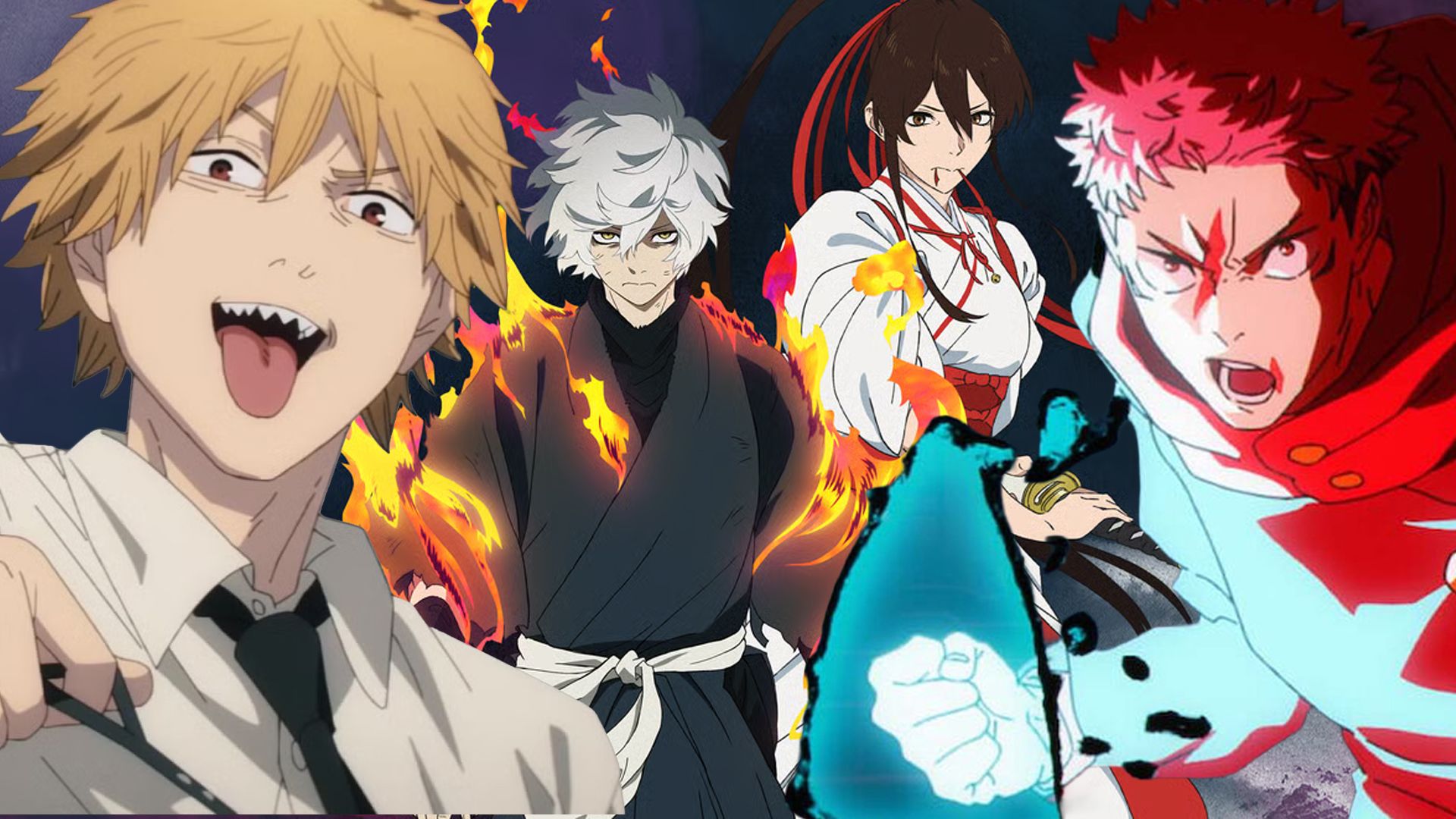
Looking at how shonen manga and anime have changed over the years offers a fascinating glimpse into both the art form itself and broader societal shifts. Three currently popular shonen anime – Jujutsu Kaisen, Chainsaw Man, and Hell’s Paradise – are often called the “Dark Trio.” This nickname arose because all three series first appeared in Weekly Shonen Jump in 2018, and the “Dark Trio” label became widely used around 2020.
These three series became incredibly popular and sparked a trend towards darker, more mature stories in Weekly Shonen Jump. While many modern shonen anime still have a similar gritty feel because of this influence, there are also other highly-regarded shonen anime from the 2000s that are considered even better.
Fullmetal Alchemist: Brotherhood Finds Levity & Hope To Balance Its Dark World
Fullmetal Alchemist: Brotherhood is a stronger version of the original series, staying true to the source material and avoiding an unsatisfying ending. The story follows two brothers who search for a powerful artifact hoping to undo a tragic event and bring balance to a chaotic world. The way Brotherhood tells its story, creates its world, and portrays its villains shares noticeable similarities with the approach taken by the Dark Trio.
While the storylines involving the Dark Trio certainly present world-ending threats, Fullmetal Alchemist: Brotherhood consistently delivers thrills, heartfelt moments, and intense challenges for its main characters. What really sets Brotherhood apart is its ability to effectively blend serious, dramatic moments with fun adventures and gripping action, creating a well-rounded experience.
The show isn’t mean-spirited, and its generally positive tone is a welcome change from all the negativity you often see. It’s also easier to appreciate the story of Fullmetal Alchemist: Brotherhood now that it’s finished and we can see how all the themes and character journeys come together.
Katekyo Hitman Reborn! Pairs An Unconventional Assassin & A Kind-Hearted Contract Killer
It’s surprising how forgotten Katekyo Hitman Reborn! has become. Released in the 2000s with over 200 episodes, it was a major shonen anime and manga series of that decade. The show uses classic shonen elements – everyday life scenes, exciting battles with a developing power system, and strong bonds of friendship – to tell its story.
This anime is generally upbeat and energetic, but it doesn’t shy away from serious themes like death, crime, and corruption. The main character, Reborn, is a hitman with a quirky design that makes him more funny than scary. Despite the lighthearted moments, the story has a darker side that deeply affects the protagonist, Tsunayoshi Sawada.
While Katekyo Hitman Reborn! doesn’t focus on the intense violence and emotional distress seen in some other series, that kind of darkness wouldn’t really fit its overall tone. It’s a consistently strong and engaging shonen anime that balances excitement with a surprisingly optimistic outlook, offering a different approach than shows that heavily emphasize suffering.
D. Gray-Man Is A Formative Gothic Horror Shonen Assault Against Apocalyptic Creatures
D. Gray-man is a thrilling, yet dark, anime aimed at young adults that blends gothic horror, fantasy, and science fiction. It shares similarities with later shows known as the Dark Trio. The story takes place in an alternate 19th century and follows Allen Walker, who joins a group of exorcists called the Black Order to fight against a powerful villain, the Millennium Earl, and his army of demons called Akuma. The series was known for its intense darkness and violence when it first aired.
These challenging problems actually make Allen’s growth as a hero even more rewarding. Like the main characters in the Dark Trio, he bravely fights against a system that appears determined to wipe out humanity. The series allows for deeper world-building and character development than the faster-paced anime adaptations of the Dark Trio, which often feel rushed.
The original D. Gray-man series and its follow-up, D. Gray-man Hallow, tell a more complete story compared to the recent anime adaptation of the Dark Trio arc. It’s a shame, then, that this exciting shonen anime has largely been overlooked by many anime fans today.
Mob Psycho 100 Combines Psychic Supremacy With A Pure Heart
Mob Psycho 100 was a fantastic anime with three seasons, showcasing amazing psychic battles and, just as importantly, the personal growth of a very shy character. It’s refreshing to see a teenager with incredibly powerful abilities who doesn’t want to be a hero – he just wants a normal life. The show beautifully balances action with relatable, emotional struggles.
Mob Psycho 100 features a world filled with dishonest and corrupt people who misuse their psychic abilities. Mob, as a character, stands out as a genuinely good influence, demonstrating that having power doesn’t mean you have to be cruel or take advantage of others.
What makes Mob Psycho 100 so interesting is that the main character, Mob, has incredible power and a difficult past, which could have easily led him down a much more troubled path, similar to heroes often seen in darker anime. It’s almost as if he’s a traditionally heroic character placed in a world filled with those darker themes, and he’s working to overcome them. While the Dark Trio anime are known for their beautiful animation, Mob Psycho 100’s action sequences, created by Studio Bones, are just as visually stunning.
Gintama Uses Self-Aware Absurdist Satire To Subvert Shonen Stereotypes
Gintama is a highly-regarded action anime, but it’s unique because it often feels like several different shows rolled into one. While it starts as a story about a samurai, Gintoki Sakata, who does odd jobs to get by after swords were outlawed, it quickly becomes known for its clever and consistent parodies of other anime series.
What sets Gintama apart is its ability to masterfully balance several different elements. It’s known for its clever, self-aware humor and breaking the fourth wall, but it also delivers intense action, explores complex political themes, and portrays heartbreaking tragedies with real emotional impact. While some series, like those focusing on the Dark Trio, offer quick, action-packed stories, Gintama takes a more relaxed approach, allowing viewers to fully immerse themselves in its world and appreciate carefully developed storylines.
Interestingly, Gintama occasionally uses storytelling that jumps around in time and impactful flashbacks to give villains new depth – similar to what’s seen in the Dark Trio arc. While both anime fall into the shonen genre, they have different goals. Gintama delivers a consistently engaging experience with realistic fights and a well-developed world that’s been built over 360+ episodes, focusing more on skill than supernatural abilities.
Zatch Bell! Builds To An Epic Duel To Take Over The Demon World
Zatch Bell! is a thrilling 150-episode anime series about a massive tournament held every thousand years. The goal? To find the next king of the demon world! It features intense battles between 100 powerful demons, and fits right in with the exciting style of shows from Studio Pierrot (often called the ‘Dark Trio’).
Certain scenes from Zatch Bell! feel like they’d be right at home in the brutal world of Jujutsu Kaisen‘s Culling Game, or even among the dangers of Hell’s Paradise‘s cursed Jusenkyo.
Even though Zatch Bell! features a lot of powerful creatures called Mamodo, the show focuses on lighthearted humor and characters you genuinely care about, rather than dark themes or upsetting events.
What makes Zatch Bell! truly special is that every character feels important and contributes to the overall story. While some battles rely on themes of friendship and love, these moments feel earned and fit within the show’s established style. The series starts with simple, self-contained fights, but gradually develops into a more complex and satisfying narrative.
Death Note Spreads Pain & Punishment Through Its Problematic Protagonist
Although Death Note debuted 15 years before the Weekly Shonen Jump‘s “Dark Trio,” its style feels very similar and it easily could have been included with those series. Many people actually think Death Note is a seinen manga due to its dark and serious tone, but it was originally published in Weekly Shonen Jump.
Death Note features plenty of death and sadness, and the character Ryuuk visually resembles a Devil from Chainsaw Man or a Cursed Spirit from Jujutsu Kaisen. However, at its core, Death Note is a story that begins with a supernatural element and evolves into an intense battle of wits between a killer and the detective trying to stop him.
The Dark Trio series also features psychological twists and manipulation, but Death Note presents these elements in a much more intense and gritty way. Especially as Light Yagami’s character darkens and it becomes obvious he can’t be saved, the series leans into his descent. While the Dark Trio anime try to portray similarly unstable protagonists, Death Note fully embraces Light’s corruption and uses his story to emphasize bleak and pessimistic ideas.
Found an error? Send it so it can be corrected.
Read More
- Gold Rate Forecast
- What is Omoggle? The AI face-rating platform taking over Twitch
- Wartales Curse of Rigel DLC Guide – Best Tips, POIs & More
- Elden Ring Is Back With A New Free Game, Thanks To The Fans
- Audible opens first ‘bookless bookstore’ in New York
- Shocking Fed Decisions: What Powell’s Remarks Mean for Bitcoin and the Crypto Circus!
- The 1990 Spy Thriller That Launched A Major Action Franchise Is Finally On Streaming
- Will James Blunt and Bella Ramsey Be Faithfuls or Traitors?
- XRP Predictions: AI’s Wild Guesses or Cold, Hard Truth?
- The Audacity Recap: Bribe To Be
2026-05-08 21:41