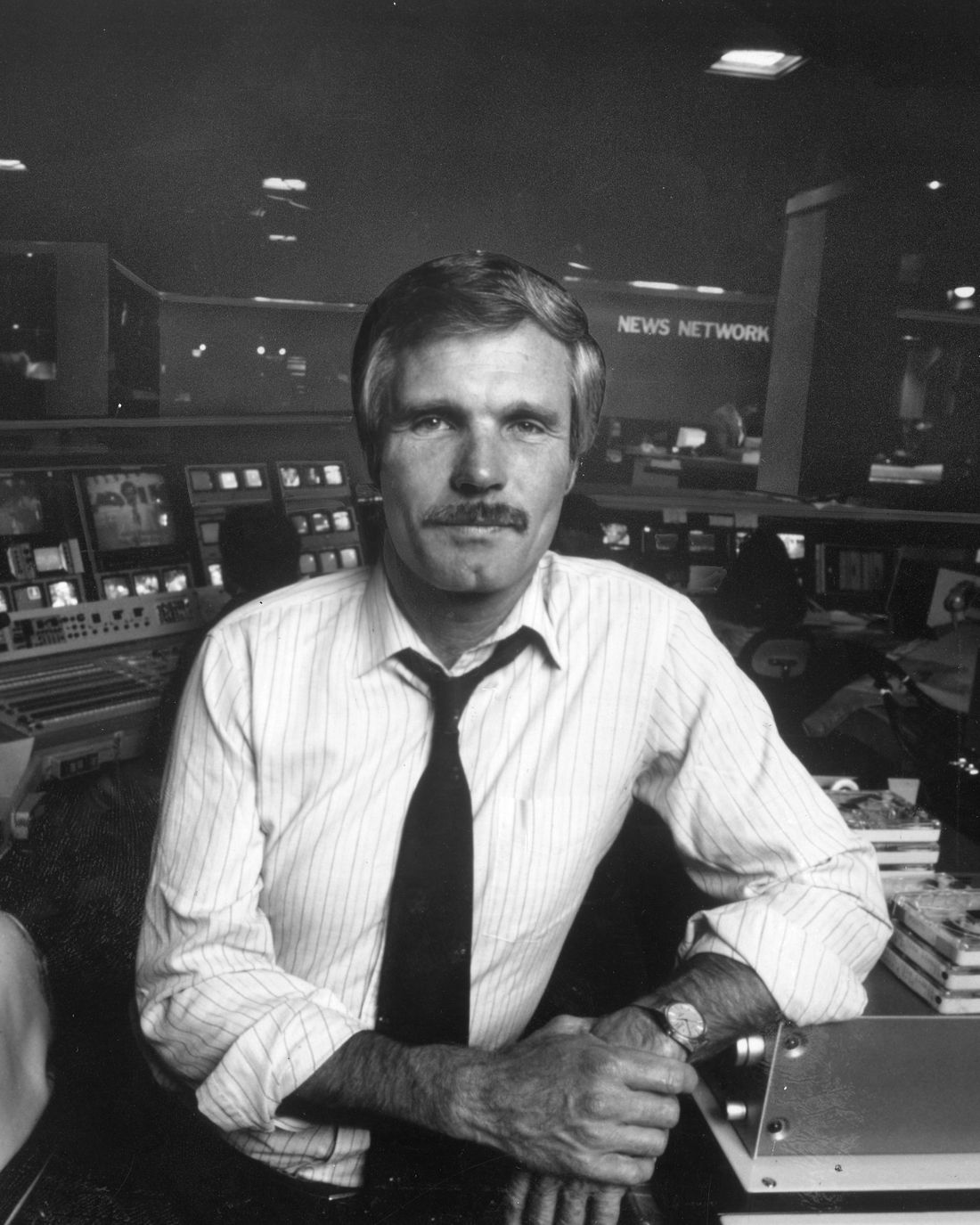
Ted Turner, who lived to be 87, earned many nicknames – “cable pioneer,” “Mouth of the South,” “Captain Courageous,” and “CNN founder” among them. While all these titles fit and appeared in his recent obituaries, Turner’s impact goes beyond just building a media empire. Though creating CNN and other well-known channels was significant, he should also be remembered for how he and his networks influenced American culture at the end of the 20th century.
Ted Turner didn’t invent cable TV, and HBO was the first major cable network, but Turner was a key figure in changing the television landscape. Building his media empire from Atlanta, rather than the traditional hubs of New York or Hollywood, he strongly believed cable could break the control the major networks – ABC, CBS, and NBC – had held for decades. In 1976, he invested heavily in the idea of broadcasting an Atlanta-based independent station, WTBS, showing reruns and baseball. Through smart programming and effective branding, WTBS became incredibly popular. Though not as flashy as networks like MTV or ESPN, or even his later creation CNN, it proved that general entertainment, funded by advertising, didn’t need to be limited to the Big Three networks to reach a large audience.
TBS, originally known as The Superstation, isn’t often mentioned alongside other major cable networks, but it had a big impact, especially on kids growing up in the 80s – the first generation to be raised with cable. Before networks like Nick at Nite and TV Land focused on classic TV, TBS consistently showed reruns of popular sitcoms all morning and afternoon. While local channels also aired reruns, TBS was the first to really make it a main attraction, with long blocks of shows enhanced by promotions and a distinct brand. For baby boomers, it was a nostalgic trip, but for 80s kids and teens, shows like Gilligan’s Island, Get Smart, and The Andy Griffith Show were often first discovered on TBS.
TBS marked the beginning of Ted Turner’s innovations in television, but he didn’t stop there. In 1985, Turner purchased the MGM film library, even though it stretched his finances, and needed a way to profit from his investment. He created TNT, which, while not as revolutionary as TBS or CNN, played a key role in making films like The Shawshank Redemption enduring classics. Initially focused on showing MGM movies, TNT broadened its programming to include more recent releases – often re-airing films from a few years prior, and adding titles from studios beyond MGM (like Shawshank). This made TNT a popular choice for viewers casually flipping through channels, seeking a good movie to watch in the evenings or on weekends. Over time, TNT incorporated more sports programming and, around the year 2000, attempted to compete with USA Network by producing its own dramas. These shows, while not entirely original, were mildly provocative and became reliably enjoyable favorites, such as The Closer, Rizzoli & Isles, and Franklin & Bash.
Cartoon Network launched in 1992 after Ted Turner purchased the extensive collection of classic cartoons from Hanna-Barbera. It quickly became a hit, appealing to baby boomers and older Gen X viewers with a nostalgic return to the Saturday morning cartoons of their childhoods—much like TV Land did with classic sitcoms. The network’s reach expanded in 1996 when Turner merged with Warner Bros., gaining access to even more beloved animated content. Later, Cartoon Network spawned Adult Swim, a late-night block that became known for its innovative and often unconventional comedy and animation.
The purchase of MGM not only sparked ideas for TNT, but also led Turner to consider colorizing the studio’s classic black-and-white films, hoping to attract more viewers. This idea was widely criticized by film enthusiasts and didn’t gain much traction. Fortunately, Turner also had a much better idea: he used the MGM library to launch Turner Classic Movies (TCM) in 1994. TCM became a unique channel dedicated to preserving and showcasing classic films, and its focus on carefully selected programming feels especially valuable in today’s world of automated recommendations.
CNN revolutionized how we get news. Before its launch, national TV news was limited to short reports in the evenings, quick updates on morning shows, and some analysis on Sunday mornings. ABC’s Nightline was a recent addition trying something different. CNN didn’t just offer news all day and night; it provided detailed, live coverage of events, both major and minor. It also stood out by focusing more on international news than traditional broadcast networks, especially as it expanded its reach worldwide.
CNN, while innovative, also contributed to the 24/7 news environment, which sometimes exaggerated events. The increasing reach of the internet would have likely led to more constant and detailed news coverage anyway. In its early years, CNN also gave a platform to conservative voices like Pat Buchanan and Lou Dobbs, allowing them to present their views as mainstream. After Ted Turner lost control of CNN following the 1996 merger with Warner Bros., the network shifted its focus from public service to maximizing profits and ratings.
Looking at all the channels Ted Turner created, it’s clear he consistently took major risks on the early cable TV industry, particularly from the mid-1970s to the early 1990s. Some ventures didn’t succeed – his Cable Music Channel, for example, only lasted 35 days before being sold to MTV. However, a lot of Turner’s success came down to good timing. As Netflix demonstrates today, being first to market is a huge benefit. Back then, simply getting channels on cable systems in large cities was enough to ensure some level of success. Before the advent of digital cable in the late 90s, most systems only had room for a few dozen channels. This made it much easier to reach a significant audience if your channel was included in the basic, cheaper packages and placed near the main broadcast networks, which still got the most viewers. Because Turner acted quickly to establish a presence, TBS and CNN were available in almost every cable home, and TBS was often shown right alongside the traditional broadcast channels.
https://youtube.com/watch?v=watch?v=EWui7EFc48c
I always admired how Ted Turner made decisions – kind of like Steve Jobs at Apple. He didn’t really rely on studies or what experts said. He just went with his instincts, which is what a song from 1982 perfectly captured about him!
He was cable when cable wasn’t cool
When he went cable they called that boy a fool
He mortgaged his home, he sold his yacht, and he sure had to fight a lot
But he won out, and cable now is cool
Ted Turner was a bold visionary with a matching ego. This led to a celebratory song, written by a band called the Turnstyles, specifically at his request. He wanted to flaunt the early achievements of CNN and TBS and prove wrong those in New York and Hollywood who doubted his success in the new cable industry. While he was certainly boastful, Turner differed from many modern tech leaders and established media executives. Unlike them, he genuinely deserved the credit he took, and his accomplishments are being rightfully celebrated again now that he’s passed away. It’s a pretty impressive legacy.
Read More
- Gold Rate Forecast
- What is Omoggle? The AI face-rating platform taking over Twitch
- Scientology speedrun trend escalates as viewers map out Hollywood facility
- Japanese Coast Guard rescue a “lone flamingo” that was lost at sea
- Man pulls car with his manhood while on fire to raise awareness for prostate cancer
- Beyond Traditional Risk Metrics: Forecasting Market Volatility with Bayesian Networks
- How To Grow Money Trees In Animal Crossing: New Horizons
- Crimson Desert Guide – How to Pay Fines, Bounties & Debt
- The Boys Confirm Why People Still Look Up to Homelander
- Audible opens first ‘bookless bookstore’ in New York
2026-05-07 18:55