
What to know:
- Bitcoin’s roughly 30% rebound over the past three months has been driven mainly by trading during Asia-Pacific and U.S. hours, with Europe lagging.
- The single strongest hour for returns has been the 00:00–01:00 UTC window.
- Mondays have delivered by far the best average performance.
If you’re interested in trading Bitcoin as its price goes up, it’s helpful to look at a recent price pattern. Data from Velo over the last three months shows that the price hasn’t increased steadily throughout the day. Instead, the recovery from around $63,000 in early February to over $80,000 has happened unevenly, with price changes varying at different times of the day.
Certain times of day and days of the week consistently show better trading results, and understanding these peak periods can help traders improve their strategies.
Velo divides each trading day into three main periods. The first, APAC, runs from midnight to 8:00 AM UTC and includes trading activity in Tokyo, Singapore, Seoul, and Sydney. Next, the European session covers London and Frankfurt from 8:00 AM to 4:00 PM UTC. Finally, the U.S. session, covering New York, runs from 4:00 PM to midnight UTC.
The session picture: APAC and the U.S. are leading the rally
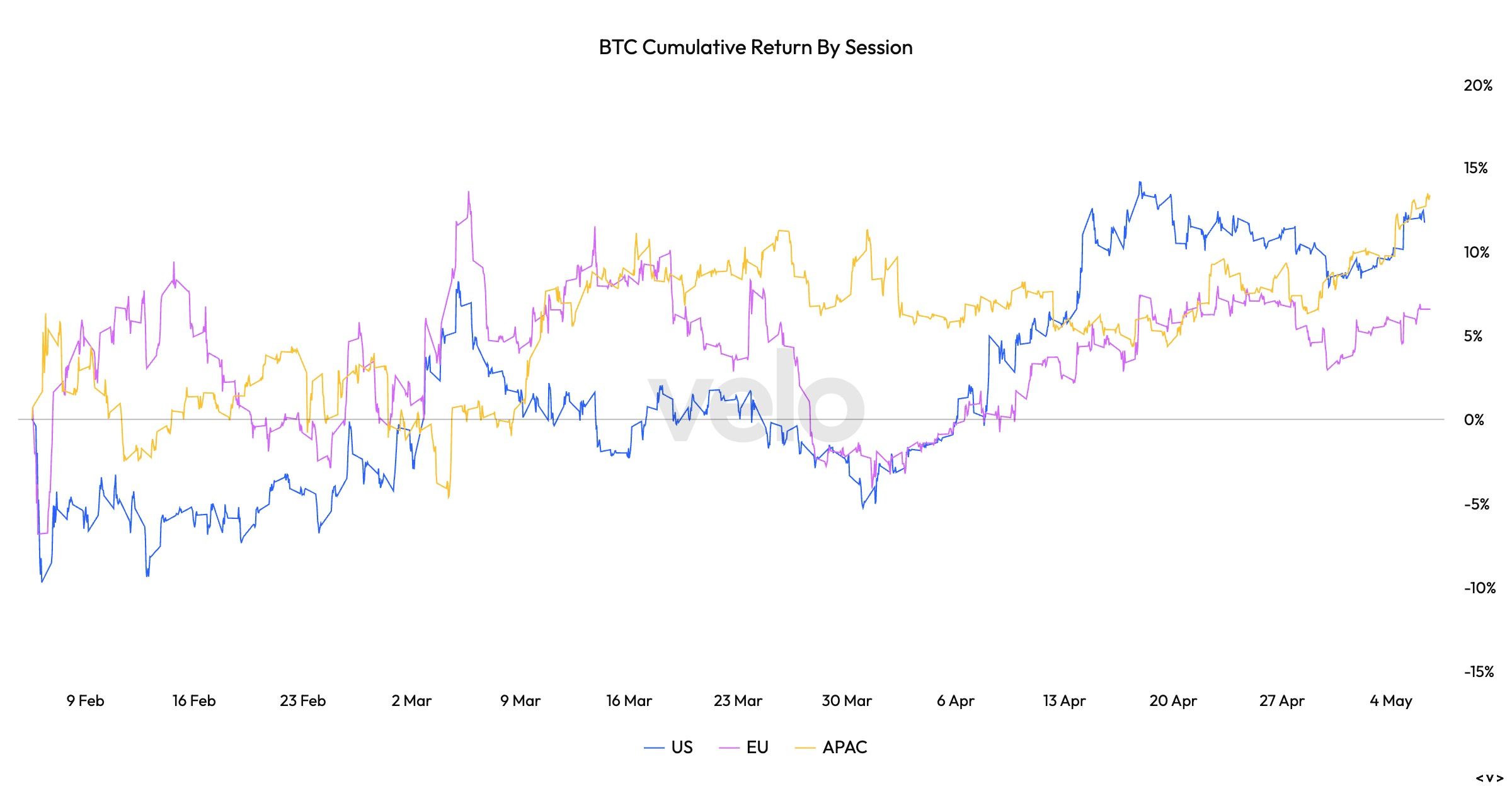
As a researcher tracking recent price movements, I’ve found that the Asia-Pacific region and the U.S. markets have been the primary drivers of the approximately 31% price increase we’ve seen since February 6th. APAC has contributed a 13% return, while the U.S. has added 11.5%. European markets, unfortunately, haven’t kept pace, only contributing a 6.5% return.
As a crypto investor, I’ve been watching the market closely, and it’s been interesting to see how different trading sessions have performed. For a while there, the Asian Pacific (APAC) session was really driving the recovery, while the U.S. market was pretty much flat or even losing value. But things shifted dramatically in early April – the U.S. session suddenly became the leader, showing strong positive returns. It’s a big change from how things were just a month or two ago.
The data indicates that trading activity and price trends are currently strongest in the Asia-Pacific region and the United States. This doesn’t necessarily mean these trends will continue, but it does show where price changes have been most significant during this market cycle, which could help traders make decisions about when to buy or sell and manage their risks.
Best and worst hours
Now, the key question is: what time of day is best to trade within these high-performing periods?
The best time to trade has been during the midnight UTC candle – the hour between 12:00 AM and 1:00 AM UTC. Over the past three months, it’s averaged a return of 0.10%.
This time period is especially noteworthy because it overlaps with the end of U.S. trading and the beginning of trading in the Asia-Pacific region, bringing new money into the market.
The hour with the second-highest trading volume is 3:00 PM UTC, during the peak of European trading. The lowest volume consistently occurs at 6:00 AM UTC.
The best day to place a bullish bet: Monday
Looking at performance by day of the week, Mondays have consistently been the best, averaging about a 1.5% return over the last three months. Wednesdays come in second place with around 0.65%, and Fridays are slightly positive at about 0.3%.
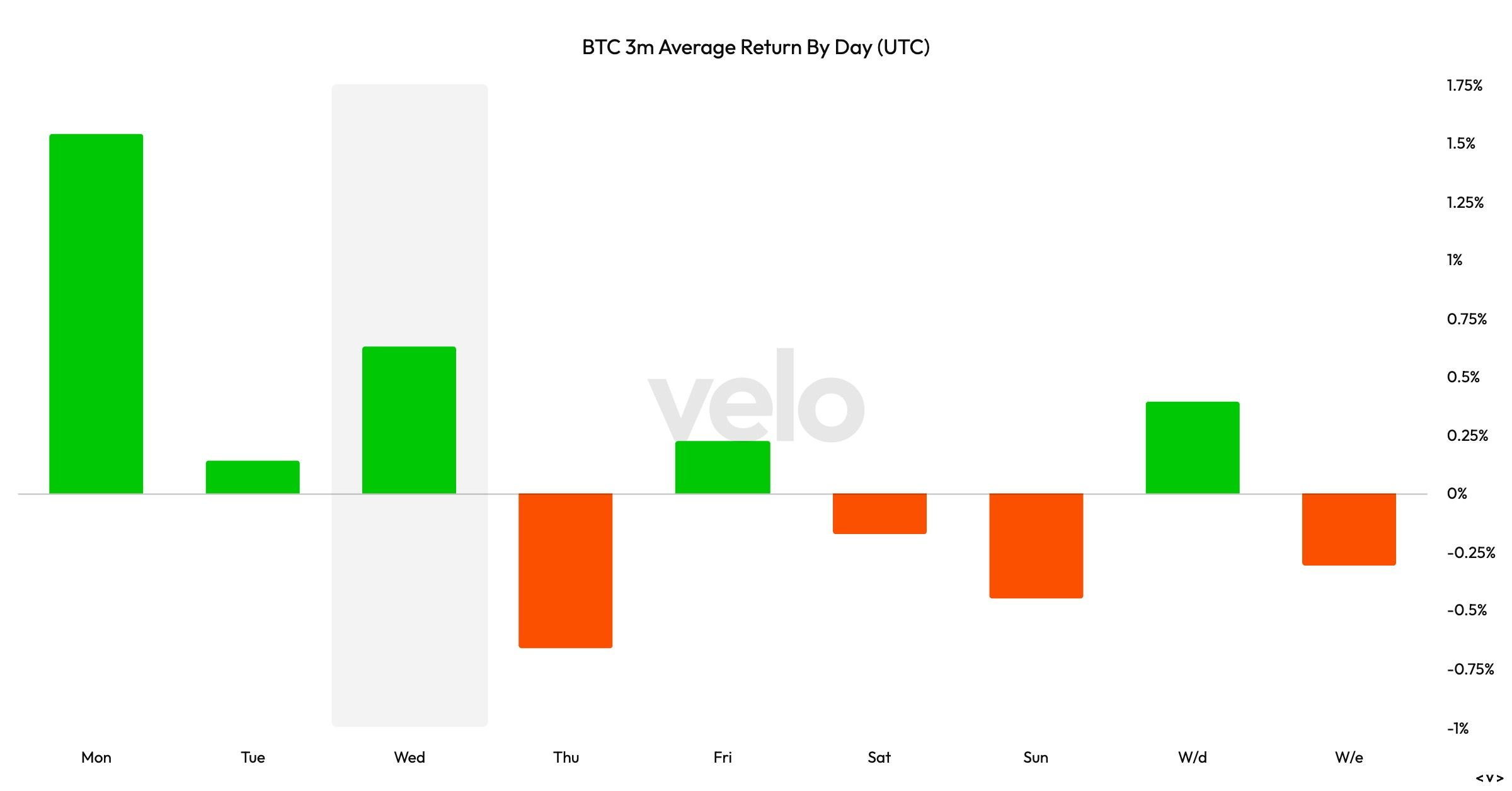
Thursdays tend to be the weakest day for the market, typically dropping around 0.55%. Looking at the past three months, weekdays generally show a slight gain of about 0.4%, while weekends usually see a small decrease of 0.25%.
In summary, if you’re hoping to buy when the market is low, Monday has historically been the best day to do so, according to the data.
Read More
- Gold Rate Forecast
- What is Omoggle? The AI face-rating platform taking over Twitch
- Elden Ring Is Back With A New Free Game, Thanks To The Fans
- Audible opens first ‘bookless bookstore’ in New York
- Wartales Curse of Rigel DLC Guide – Best Tips, POIs & More
- 10 Adorable Quotes from Diana in Pragmata
- Netflix’s Remake Of R-Rated Denzel Washington Classic Carries On A Rotten Tomatoes Trend
- Man pulls car with his manhood while on fire to raise awareness for prostate cancer
- Euphoria Season 3 Trailer Confirms The Show’s Identity Has Been Lost
- The Devil Wears Prada 2 Cameos You May Have Blinked and Missed (Plus Lady Gaga)
2026-05-06 11:52