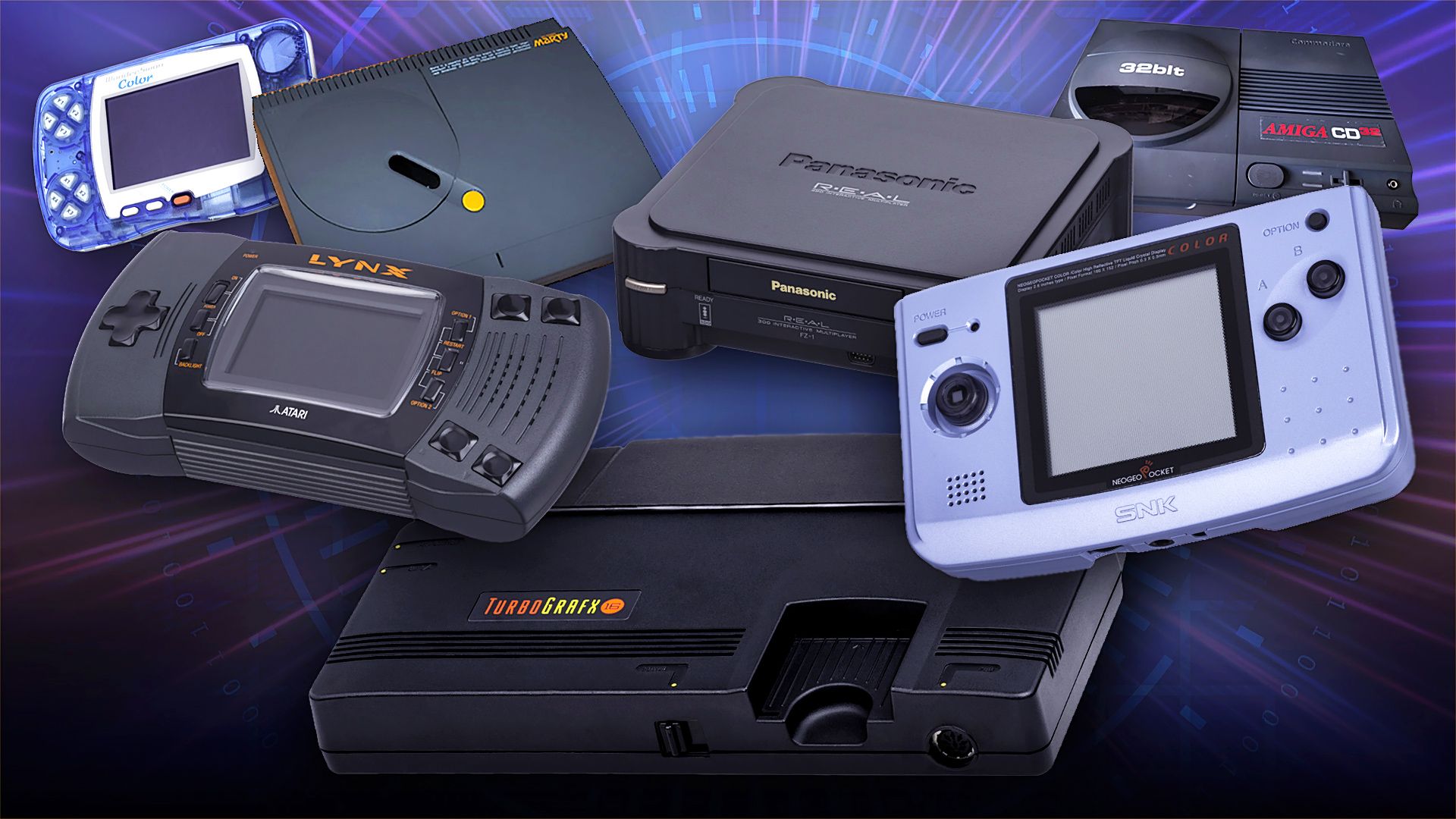
Most people enjoy playing games on consoles like the PlayStation 5, Nintendo Switch 2, or Xbox Series X/S. While gaming PCs are more powerful, consoles provide a more convenient and relaxing experience, perfect for unwinding after work or before going to sleep.
It’s tough to think of consoles with fewer players than the PS5, the upcoming Switch 2, or the Xbox Series X/S. There have been plenty of consoles that didn’t become popular—some are really hard to remember, like the 3DO and TurboGrafx-16.
The Lynx Was the Perfect Game Boy Competitor
Okay, so I’ve been digging into retro handhelds, and the Atari Lynx was seriously impressive for its time. It came out around the same time as the Game Boy, but honestly, it blew it away in terms of power. We’re talking 64KB of memory and a 6502 processor – that’s basically the kind of hardware you’d find in a home console back then! And the biggest thing? It had a backlit color screen, which was a huge deal. It really set it apart.
As expected, developers really pushed the limits of the system’s hardware, resulting in some incredibly innovative games for its time. Two notable examples are BattleWheels, a fast-paced first-person game where you battle in vehicles, and Chip’s Challenge, a clever puzzle game that later became popular on other consoles and computers.
Despite being more powerful and offering genuinely fun, innovative games, the Lynx handheld console didn’t sell well. At $179.99, it was significantly more expensive than the Game Boy, which cost only $89.99. While the Game Boy had popular games like Tetris and Pokémon, the Lynx, even with a smaller game library, offered a superior experience.
The WonderSwan Is Better in Color
The WonderSwan was a handheld gaming console created by Bandai, a long-established game company that eventually became part of Namco. It was more powerful than other handhelds of its time, like the Game Boy. The WonderSwan featured a fast 16-bit NEC V30 processor – a significant upgrade from the 8-bit processors used in many competing devices – and the color version boasted a full-color screen.
The WonderSwan Color really stood out because its games looked surprisingly similar to those on the more powerful Game Boy Advance. Games like Final Fantasy IV and Golden Axe actually looked better on the WonderSwan than they did on other handheld systems of the time.
The Game Boy Advance was released, largely due to the success of the Game Boy Color and the fear that another competitor would take over the handheld market. However, the GBA quickly became incredibly popular, and because the WonderSwan and its different versions never launched outside of Japan, the Game Boy Color was soon seen as outdated by most players.
The TurboGrafx-16 Has Maybe Too Much Going for It
The TurboGrafx-16 (known as the PC Engine outside of the United States) was created through a partnership between NEC and Hudson Soft. Despite its name suggesting a 16-bit system, the console actually used an 8-bit processor similar to the one in the Nintendo Entertainment System (NES). However, it featured a 16-bit graphics processor, which allowed its games to have superior visuals compared to other consoles of that era.
Alongside its innovative features, the TurboGrafx-16 built up a solid collection of games that really showcased the console’s power. Notable titles include Fighting Street, the only way to play the original Street Fighter at home, and Bonk’s Adventure, a lively platformer with arcade-quality music.
The TurboGrafx-16 did well in Japan, even outselling the NES for a period. However, it didn’t achieve the same success in the United States. It faced strong competition from the incredibly popular NES and, even more challenging, the rising popularity of the Genesis. While the TurboGrafx-16 had some technically impressive games, it couldn’t overcome the dominance of these established gaming giants.
The Neo Geo Pocket Is a Portable Arcade Machine
As a huge fan of retro gaming, I’ve always been fascinated by the Neo Geo Pocket. It was made by SNK, the same company behind the awesome Neo Geo arcade machines and home console. They really tried to push the boundaries with this handheld, aiming to make it the most advanced experience you could get on the go. What’s cool is that it used a 16-bit processor – the TLCS-900 – which was actually faster than the 8-bit processor in the Game Boy at the time! It was seriously ahead of its time.
As you’d expect, the Neo Geo Pocket and its Color version featured some of the most impressive handheld games of their time. Games like Pac-Man, originally found in arcades, looked and sounded fantastic on the system, offering a similar experience to playing the real arcade game. Plus, titles like Sonic the Hedgehog Pocket Adventures really showed off the console’s colorful graphics and fast gameplay.
The Neo Geo Pocket, particularly the Neo Geo Pocket Color, was a much more advanced handheld system than the Game Boy and Game Boy Color. Unfortunately, when Nintendo released the Game Boy Color, it effectively ended the Neo Geo Pocket Color’s chances of becoming a major player in the handheld gaming world. Like the original Neo Geo console, the Neo Geo Pocket is no longer made, but it deserves to be remembered for its innovation.
The Amiga CD32 Was a European Gaming Powerhouse
While the Amiga CD32 wasn’t Commodore’s first attempt at a gaming console – the C64GS and CDTV came before it – it was definitely their most popular. Selling over 100,000 units, primarily in Europe, the CD32 was designed for Amiga fans who wanted a smaller, dedicated gaming machine. It built upon the technology of the A1200 and A4000 computers, featuring advanced AGA graphics.
I loved how the CD32 didn’t just rehash old games! Sure, it had some awesome ports of Amiga classics like Lemmings and Worms, but they weren’t just simple copies. They really used the CD32’s power and the CD format to add things like new music and extra features. But what really excited me were the games you couldn’t get anywhere else. Defender of the Crown II was a beautiful sequel to an already great game, and Microcosm was just a blast – a really impressive 3D rail shooter that showed what the CD32 could do!
It’s really disappointing that this happened and stopped the system from coming to the US. As a fan, it means if I want to experience the Amiga and its games, I’m stuck having to track down an actual computer and a bunch of floppy disks. Honestly, it would have been so much easier if they’d released a CD32 here – just one disc per game would have been perfect!
The FM Towns Marty Is Literally a Gaming PC
The FM Towns Marty, created by Fujitsu, was essentially a home console version of their FM Towns personal computer. The original FM Towns computer and the Marty console used many of the same components, like the 32-bit 386 processor and Ricoh-Yamaha sound chips. Crucially, the Marty also supported CD-ROMs, just like the original FM Towns, making it both the first 32-bit console and the first capable of playing CDs directly.
Games created for the FM Towns console also worked on the Marty, and sometimes even ran better. A prime example is Alone in the Dark; using the Marty’s controller gives it a feel surprisingly similar to playing Resident Evil on the PlayStation.
It’s true that many games for the FM Towns Marty were also available on PCs, which led some players to see the console as unnecessary. However, the Marty deserves recognition for being an early adopter of high-end home gaming, even before consoles like the 3DO and PlayStation. It’s unfortunate that it remained exclusive to Japan.
The 3DO Was Done Dirty
3DO represents a company, a type of disc, and most notably, the gaming consoles that played those discs. Several companies, like Panasonic, Sanyo, and GoldStar, created different 3DO console models. Despite being made by different manufacturers, all 3DO consoles boasted cutting-edge technology for their time. They featured a strong 32-bit processor and a powerful graphics chip called the FZ-1.
The 3DO had a lot of processing power, putting it far ahead of other consoles like the SNES and Genesis that were marketed towards children. A great example of this was The Need for Speed, the first game in a very popular racing series. It really showed off what the 3DO could do graphically, and looked almost as good as racing games on the PlayStation 1.
The 3DO was a remarkably inventive console that boasted some truly creative games. However, its steep price tag of $699.99 at launch, combined with issues with game quality – famously exemplified by the game Plumbers Don’t Wear Ties – caused it to lose ground quickly. By the time more powerful consoles like the PlayStation and Saturn arrived, the 3DO had largely been forgotten, and time wasn’t kind to it.
Read More
- Scientology speedrun trend escalates as viewers map out Hollywood facility
- Noah Beck’s mom suspended from teaching duties after “inappropriate” TikTok with son resurfaces
- What Fast Mode is in Bannerlord and how to turn it on
- How to Get to the Undercoast in Esoteric Ebb
- Streamer crushes MrBeast charity record with $55M fundraiser for kids with cancer
- Untangling Cause and Effect in Complex Networks
- Insider Trading? Not on Our Watch! Governors Crack Down on Prediction Market Shenanigans
- Jenna Ortega’s Jurassic World Series On Netflix Is The Franchise’s Best Since 1993
- Gold Rate Forecast
- Amazon’s Ambitious Crime Thriller Cross: A Reacher-CSI Hybrid Show
2026-05-02 06:42