In the quiet chaos of Seoul, where dreams are sold in coffee shops and remittances feel like a bureaucratic ballet, South Korea’s internet-only lender K bank has tied the knot with Ripple. Their vows? To test blockchain-based overseas remittances, because nothing says “forever” like digitizing money transfers.
The ceremony, held Monday at K bank’s headquarters, featured CEO Choi Woo-hyung and Ripple’s Fiona Murray, both looking as if they’d just survived a family dinner. Officials from both sides clinked glasses of optimism, though one wonders if the real toast was to the 2024 RLUSD launch-Ripple’s stablecoin, which smells faintly of desperation and ambition.
K Bank Taps Ripple For Blockchain Remittance Tests
The partnership, a delicate dance of speed, cost efficiency, and transparency, is less about love and more about survival. For Ripple, it’s another conquest in Asia’s digital banking arena. For K bank, it’s an excuse to play with blockchain toys while pretending to care about cross-border settlements. Both parties agree: stablecoins are now serious business, even if the rest of us still think they’re just crypto’s version of Monopoly money.
Murray declared this union would “strengthen K bank’s competitiveness,” a phrase that has survived every revolution, including the one that gave us smartphones and microwaves. Choi, meanwhile, promised innovation, though his definition clearly involves less dancing and more spreadsheets.
K bank’s proof of concept is already underway, though it reads like a sitcom. Phase one: a separate app, because nothing says “trust” like an extra layer of bureaucracy. Phase two: linking customer accounts to internal systems, which sounds suspiciously like a midlife crisis for a bank’s IT department. The real drama? Whether blockchain can actually interact with account architecture, or if this is just a fancy way to say “we’re still figuring it out.”
Phase two also tests on-chain transfers with UAE and Thai partners, because regional politics are best left to diplomats and accountants. K bank’s memorandums of understanding (read: “we’ll pretend to care”) in those markets suggest this isn’t just about Korea. It’s a geopolitical chess game where the pawns are stablecoins and the king is compliance.
The wallet subplot is equally gripping. K bank used an in-house wallet in phase one, which is like cooking at home before realizing you hate chopping onions. Now, they’re switching to Ripple’s Palisade, a SaaS wallet that promises “faster, more scalable compliance.” One wonders if “scalable” means “less likely to crash during a global crisis.”
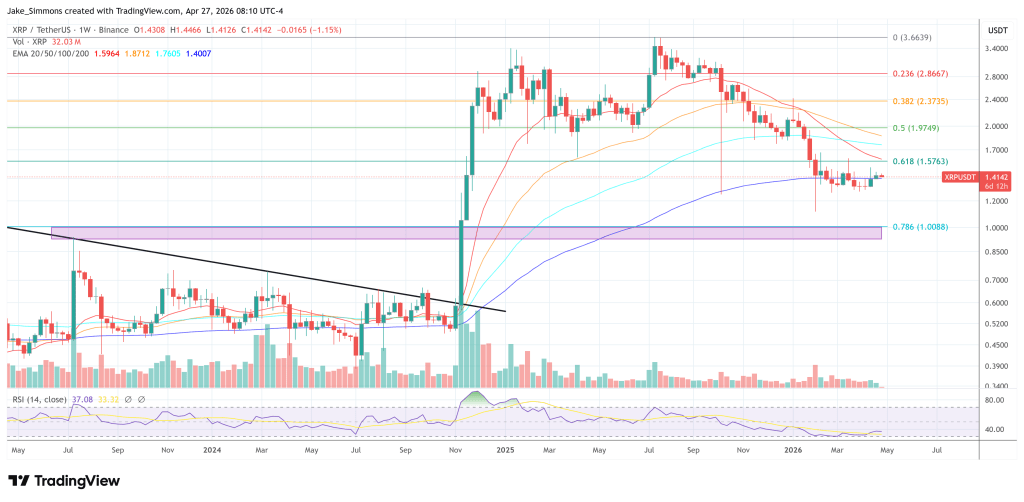
Ripple, ever the romantic, has applied for a US trust bank charter, because nothing says “trust” like a regulatory maze. Meanwhile, XRP trades at $1.41, a price so modest it could fit in a teacup. Perhaps that’s the point: blockchain as tea ceremony, where the real action is in the steam.
Read More
- Netflix’s Little House On The Prairie Reboot: Release Date, Cast & Everything We Know
- Off Campus Season 1 Soundtrack Guide
- Silver Rate Forecast
- Prime Video’s New R-Rated Spy Thriller Is Officially No.1 On Streaming Despite Poor Reviews
- Gold Rate Forecast
- Brent Oil Forecast
- EUR ZAR PREDICTION
- Amazon Primes new GenAI cartoon looks like K-Pop Demon Hunters with aliens
- Inkford Hermitage Chest Locations In HSR (Honkai: Star Rail)
- KPop Demon Hunters Meets Avatar: The Last Airbender In Netflix’s 3-Part Fantasy Series
2026-04-28 01:56