Following his start in stand-up and on Saturday Night Live, Adam Sandler became a surprising comedy superstar in Hollywood from the late 1990s through the 2000s, thanks to popular movies like Happy Gilmore and Click. Many millennials and Gen Z viewers especially remember him fondly from their childhoods, as he embodied a type of funny, relatable movie that’s become rare. However, a well-regarded film in 2006 unexpectedly signaled the end of his run of successful comedies.
As a huge movie fan, I think it’s safe to say Adam Sandler defined comedy for a lot of us over the last thirty years. But let’s be real, his run of blockbuster hits definitely started to fade after the 2000s. Everyone’s got a different opinion on when things changed, but there’s one movie that really feels like the moment things shifted for him – a real turning point in his career.
How The Adam Sandler Formula Captivated Comedy Fans
As a huge movie fan, I’ve noticed Adam Sandler really hit his stride in the late ’90s with films like Happy Gilmore and The Wedding Singer, and he pretty much stuck with a formula that worked for him. He’d play this lovable, but kinda clumsy, guy, and there was always a beautiful woman involved in a slightly crazy romance. But he wasn’t just doing standard rom-coms. He always threw in something unique – whether it was an angry golfer, a spoiled kid pretending to be a student, or a wedding singer searching for his own happy ending. Seriously, each one of those movies was a hit!
He built his career on a funny contradiction – putting himself down while also playing up a larger-than-life persona, often as an unlikely romantic lead. From films like Happy Gilmore to Anger Management, he wasn’t afraid to poke fun at himself, even inviting criticism. Though reviewers often dismissed his style of humor, audiences consistently loved it, and his films were successful partly because they weren’t expensive to make. Between 1995 and 2006, his movies earned roughly $1.7 billion worldwide, establishing him as a major Hollywood star.
Adam Sandler became known for his relatable, everyday-guy humor, making his movies appealing to a wide audience. While some criticized this as being overly simple, his fans appreciated that he focused on making people laugh rather than creating prestige films. Sandler consistently worked with a core group of actors, like Allen Covert, who became beloved characters in his comedies.
Click Marked an Inflection Point For Sandler’s Career
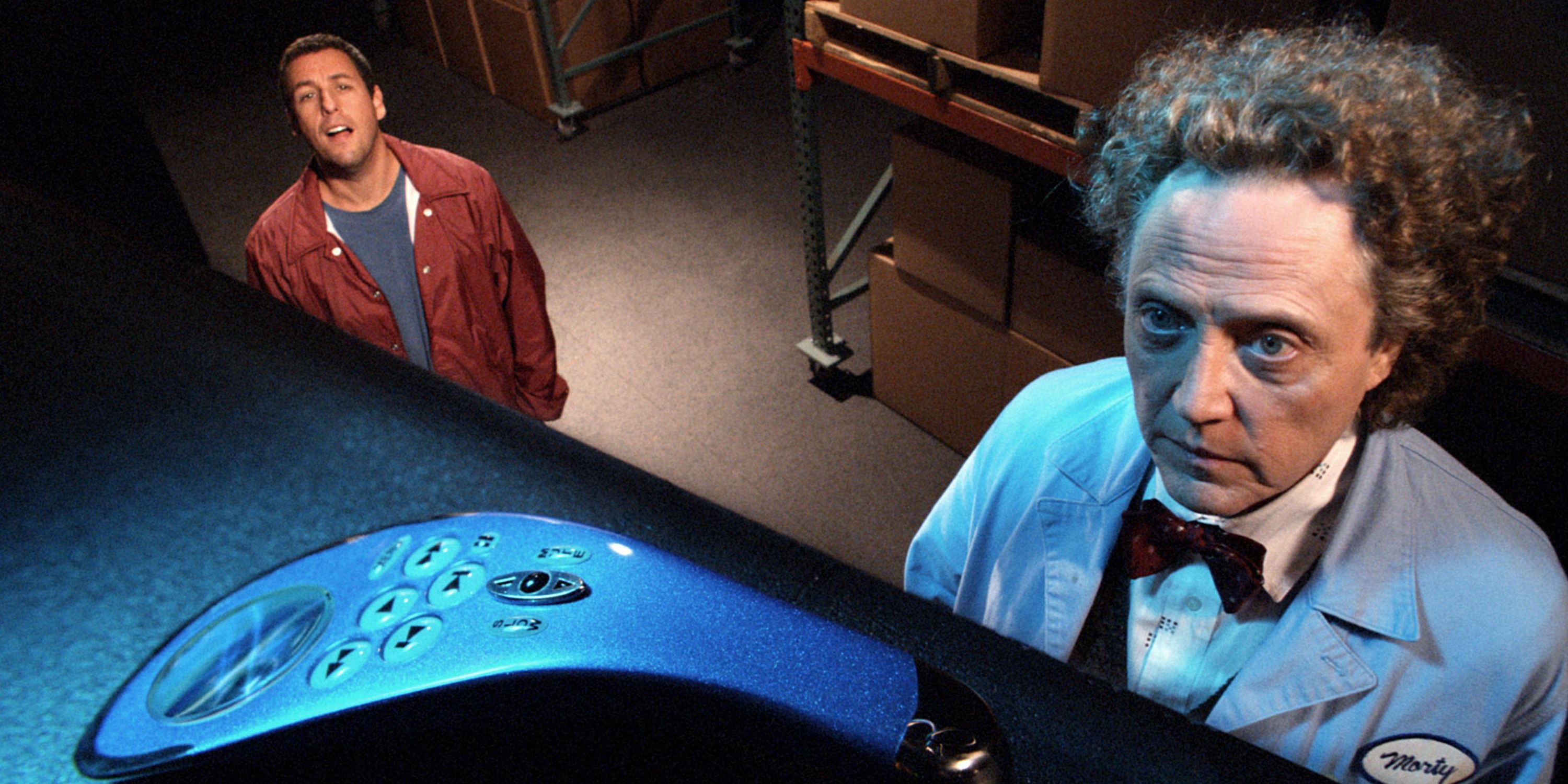
In 2006, Adam Sandler starred in Click, a particularly ambitious comedy for him at the time. The film follows Michael Newman, a work-focused dad who doesn’t have enough time for his children. His life takes a turn when he meets a strange man named Morty at Bed, Bath & Beyond, who gives him a universal remote control. Michael soon discovers the remote is incredibly powerful, letting him skip over unwanted moments, fast-forward through life, and even revisit the past.
This film was different for Adam Sandler, featuring a less charming character than audiences were used to. Despite this change, it was a financial success, earning $268 million on an $85 million budget. However, it unexpectedly signaled the beginning of a downturn in Sandler’s typically reliable comedic box office performance, followed by a series of films that didn’t resonate with audiences. Unlike the emotionally powerful ending of Click, this period between Click and his more dramatic roles didn’t achieve the same level of success as his earlier work from 1995 to 2006.
Following unsuccessful films like Jack & Jill and That’s My Boy, Adam Sandler’s popularity declined, and he became known as one of the most critically disliked comedic actors. He quickly went from being a guaranteed box office success to a risky investment. While critics hadn’t always loved his work, these failures led him to move away from the silly, over-the-top style that had made him famous. He began to experiment with dramedy, as demonstrated in films like The Meyerowitz Stories and Sandy Wexler. A major turning point came with his performance in [film name], where he showed both audiences and critics that he was capable of leading a serious dramatic role.
Adam Sandler hasn’t completely left comedy, but his movies became increasingly predictable or poorly received, leading many to believe he was better suited for more dramatic or blended comedic-dramatic roles. Recently, he acknowledged this feedback and began taking on roles that are more thoughtful and complex, moving away from purely silly humor. However, his films released directly on streaming services haven’t matched the success of his earlier box office hits like Billy Madison and Click. Over time, it’s his more grounded characters, such as Barry Egan, Robbie Hart, and Sonny Koufax, that audiences remember most fondly.
Sandler’s Post-Click Career Pushed Him Into Drama
As a big fan of Click, what always gets me is how the movie pulls a total 180. It starts out as this really silly, over-the-top comedy, but then the ending gets surprisingly deep. It completely ditches the goofy jokes and suddenly starts exploring some really heavy stuff about making the most of your life and figuring out what really matters. It reminded me of how Michael Newman, the main character, kept chasing after bigger and better things, missing out on all the small, everyday moments. He was so focused on the future he didn’t realize those were the things that made life worthwhile. Honestly, even before he got the universal remote, he was kind of just going through the motions, stuck on autopilot, dealing with one crisis after another – divorce, health scares, you name it. It’s a powerful message hidden inside a pretty funny movie.
Following the success of Click, Adam Sandler’s films, such as I Now Pronounce You Chuck and Larry and You Don’t Mess With the Zohan, marked a downturn in quality. Though still popular, these movies had bigger budgets but earned less at the box office, and their increasingly silly plots began to turn away even longtime fans. Sandler also shifted from playing relatable characters to more annoying ones, and his stories became more like parodies than his earlier work. Funny People felt like an attempt to reflect on the kind of comedy he wanted to create.
With viewers wondering why funny, slightly edgy comedies have become rare, it’s important to remember Adam Sandler’s role in their decline. While he tried to keep them alive, Hollywood decided audiences simply wanted different things. As big-budget superhero movies became dominant, there wasn’t enough money left to support comedies that were considered risky investments.
With Click, Adam Sandler showcased the full range of his comedic talent. The film included everything fans loved – romantic comedy, physical humor, goofy voices and faces, and even heartfelt drama. It was such a complete package that it left limited opportunities for Sandler to evolve, unless he leaned more heavily into dramatic roles. And that’s precisely what he began to do as the 2010s started.
Sandler’s Departure From Comedy Affected the Whole Genre
For those who remember when Adam Sandler was most popular, seeing the Happy Madison Productions logo at the start of a movie meant you were about to watch a reliably funny comedy. These films weren’t aiming for critical acclaim, but they were much more creative and enjoyable than typical, formulaic studio comedies like the later American Pie sequels. They offered simple, lighthearted entertainment for everyday audiences, and that approach consistently worked well for Sandler.
Early in his career, the comedian found success playing a down-to-earth, imperfect, and humorous character who grew and learned from life’s challenges – essentially a classic sitcom dad, but lighter in tone. However, after the film Click, he started moving away from this winning formula. This shift led him towards more dramatic roles, like in Uncut Gems, and a decline in the kind of funny, mid-budget comedies he was once known for.
Found an error? Send it so it can be corrected.
Read More
- Gold Rate Forecast
- 5 Horror Shows I Knew Would Be 10/10 Masterpieces After The First 10 Minutes
- The Best Switch RPGs to Play Using Switch 2 Handheld Boost Mode
- What is Omoggle? The AI face-rating platform taking over Twitch
- Why is there no Jujutsu Kaisen this week? Missing Season 3 Episode 8 explained
- Crimson Desert Guide – How to Pay Fines, Bounties & Debt
- Lord Of The Flies Review: Near-Perfect Adaptation Is A Reminder Of Classic Novel’s Haunting Power
- Man pulls car with his manhood while on fire to raise awareness for prostate cancer
- Euphoria Season 3’s New R-Rated Sydney Sweeney Scene Proves The Show Is Trolling Us
- EUR ZAR PREDICTION
2026-03-12 07:16