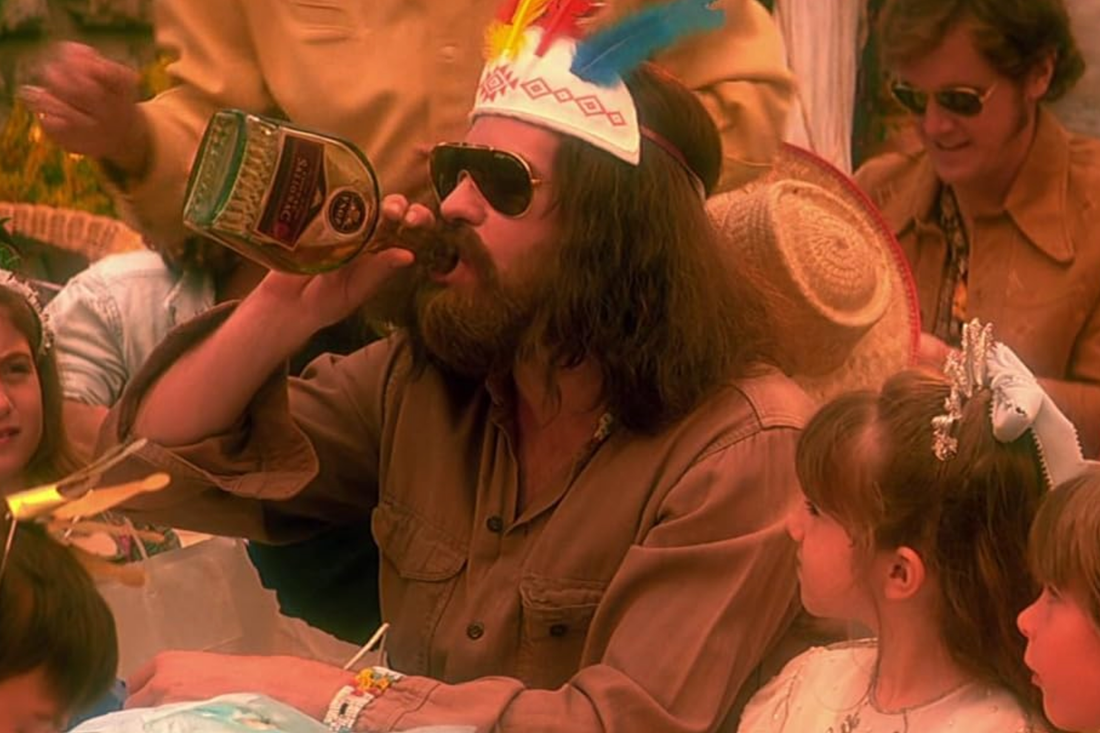
I have a complicated relationship with Oliver Stone’s The Doors (1991)—I both dislike and admire it. It’s a film intentionally designed to be both off-putting and alluring, mirroring the chaotic energy of its subject, Jim Morrison. When I first saw it, I leaned towards disliking it. Now, with the release of a beautifully restored 4K version celebrating its 35th anniversary, I revisited it and found myself simultaneously cringing and completely engrossed. Stone’s portrayal of Morrison as a visionary, truth-telling rock god feels naive and uninspired. While the film is full of some of Stone’s most tired tropes, it’s also surprisingly personal and raw. Ultimately, you don’t necessarily learn more about Jim Morrison, but you definitely learn a lot about Oliver Stone himself, and perhaps that’s precisely what the film is about.
Similarly, The Doors pairs well with Oliver Stone’s JFK (1991), the film he made right after—and was actually developing concurrently with The Doors. It’s striking that these two large-scale movies came out in the same year. While JFK’s exploration of conspiracy theories might not be historically accurate, it’s a brilliant depiction of a man deeply affected by the 1960s, both personally and emotionally. The Doors, in contrast, offers another side of that same coin. The film’s portrayal of Morrison—constantly intoxicated, unmoored, unstable, and almost absent—feels like the only way to truly understand that turbulent time.
Val Kilmer’s portrayal of the rebellious poet Jim Morrison perfectly captures the film’s central conflicts. It’s a remarkably accurate, yet exaggerated, performance that lets Kilmer lean into his more theatrical tendencies. (While Kilmer sometimes struggled as a leading man, he was exceptionally talented in supporting roles, always stealing the scene.) He doesn’t just play Morrison; he embodies a very particular, and somewhat unflattering, interpretation of him. Stone, the director, seems to admire Morrison, but the film doesn’t necessarily ask us to. This Morrison seems completely disconnected from reality. He’s constantly unsteady on his feet, moving with a fluid, wave-like motion. When he tries to impress Pamela Courson (Meg Ryan), he playfully chases her along the boardwalk and then climbs a tree to reach her window. (“You have a problem with doors?” “Waste of time.” He chuckles.) Trying to have a normal conversation with this version of Morrison, or even just sharing a coffee, would be impossible.
When Morrison appears on screen, everything clicks into place. To truly understand the film, you need to recognize how deliberately staged each scene is. As director Oliver Stone explained to Matt Zoller Seitz, he built the story around The Doors’ music. Many scenes directly correspond to the lyrics – moments in Morrison’s life are literally set to the songs. For example, as young Jim witnesses a truck accident with injured Native Americans, Morrison sings, “There’s a killer on the road.” Later, when he first sees Pamela, we hear “Hello, I love you/ Won’t you tell me your name?” But Stone’s approach goes deeper than just matching scenes to songs. The film portrays Morrison’s life not just with these songs, but as a quest for them. He’s a wandering soul searching for inspiration, a kind of modern-day Romantic artist.
Honestly, as a fan, it’s when Jim Morrison gets on stage that everything clicks. He truly lived as if he was a legend, and that energy just explodes when he’s performing. His movements become almost hypnotic, and his voice… it’s like we’re all part of something bigger. The movie really captures that, too. At first, the filmmaking style feels a little much – shaky cameras and dreamy effects – but once the concert scenes hit, it’s incredible. You especially see it in the recreation of the 1969 Miami show where he got arrested. Stone films it like a wild fight, a religious experience, and a massive party all rolled into one. Morrison gets thrown off stage, but instead of stopping, he leads the crowd in a conga line while everything around them falls apart. It should feel like a low point – he’s clearly spiraling, pushing everyone around him to excess – but Stone doesn’t treat it that way. He turns this disaster into a celebration of letting go, a moment where self-destruction somehow feels… empowering. It’s a fantastic, if slightly chaotic, portrayal of the band’s energy.
Oliver Stone’s description of filming The Doors reveals a lot about the movie’s energy. He recounts shooting five full concerts – around fourteen to fifteen songs each – in unique locations, meticulously filled with extras dressed for the era. He even amusingly recalls unknowingly dealing with volunteers who were experiencing the ‘seventies vibe’ a little too authentically, thanks to LSD. Stone clearly enjoyed making the film, feeling more in control and creatively free than ever before, and that passion comes through on screen. The Doors showcases Stone at his best, following the success of his Vietnam war films Platoon and Born on the Fourth of July, and before he made JFK and Nixon. It captures a strange, idealistic moment of music, rebellion, and freedom, made all the more powerful by its inherent absurdity. It’s a film that shouldn’t have worked, but we’re lucky it exists.
Read More
- Gold Rate Forecast
- Assassin’s Creed is getting a live stage spin-off with parkour and choreographed fights
- Avengers: Doomsday Spoilers & Leaks Addressed By Director Joe Russo: “It’s Over-Policed”
- Crimson Desert Guide – How to Pay Fines, Bounties & Debt
- Apple TV’s Imperfect Women Becomes No. 1 Most-Watched Show Globally
- Pragmata: Every Hacking Mode, Ranked
- Blake Lively & Justin Baldoni Settle It Ends With Us Lawsuit 18 Months After Bitter Feud Began
- The 7-Part Dystopian Series Streaming For Free This Month Deserves Its 93% Rotten Tomatoes Score
- Bitcoin’s New BFF: GoMining’s GoBTC Protocol Crashes Visa’s Party
- Star Wars Confirms Mandalorian and Grogu Return After Upcoming Movie Event
2026-03-10 15:55