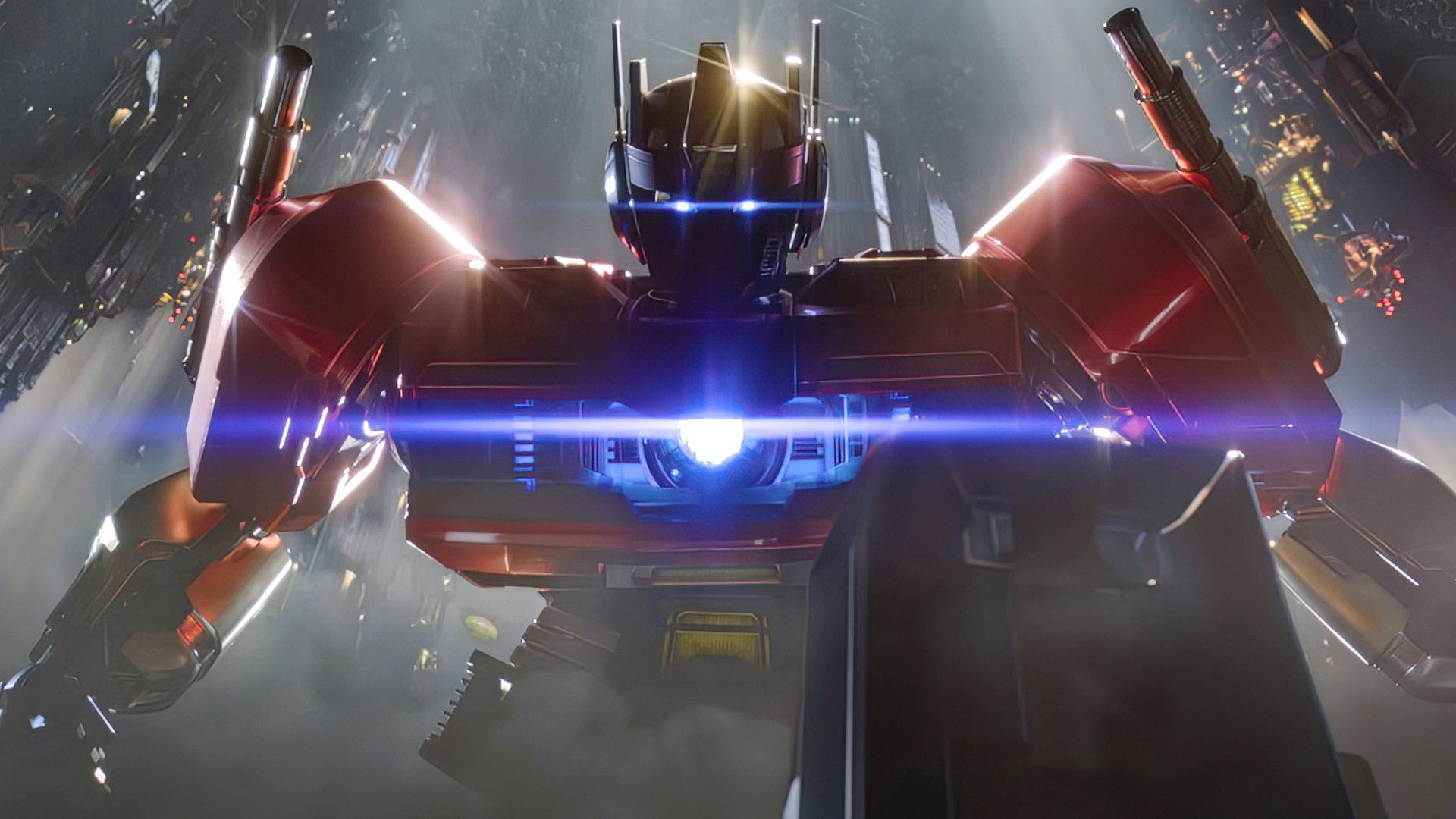
While Transformers is arguably Hasbro’s most famous brand, it was just one of many popular toy lines that emerged in the 1980s. Several other companies competed to create the next big hit with transforming vehicles and robots, both in stores and on television. Interestingly, Hasbro now owns one of those former competitors, but it hasn’t achieved the same lasting success as the Transformers.
M.A.S.K. was a popular toy line in the mid-1980s, blending ideas from G.I. Joe and Transformers. However, it didn’t stay popular for as long, particularly after a disappointing second season. Now, it’s being reintroduced as part of the same shared universe that brought those other two brands back, which some see as a sign that it wasn’t quite as memorable a franchise.
M.A.S.K. Was Working Overtime to Copy the Competition’s Homework
The 1980s saw a surge in toy lines with accompanying cartoons, and M.A.S.K. was a prime example. Despite a clunky name – it stood for “Mobile Armored Strike Kommand” – the brand cleverly used relaxed TV rules to promote its toys through an animated series. The toys themselves were based around characters who wore masks and helmets that granted them special powers, adding another layer to the concept.
Okay, so M.A.S.K. was basically the good guys, fighting this totally over-the-top villainous organization called V.E.N.O.M. They weren’t after world domination or anything, mostly just trying to swipe cash and valuable objects – pretty silly stuff, honestly. The leader of M.A.S.K., Matt Trakker, felt a lot like Duke from G.I. Joe – the all-American hero type. But what really made M.A.S.K. cool was their vehicles! They weren’t just cars and trucks; they could transform into these incredible ‘assault modes’ – a car sprouting wings and taking to the sky, or a truck becoming a mobile weapons platform. It was seriously awesome stuff.
The M.A.S.K. toys were made by Kenner, the company famous for its Star Wars toys from a few years earlier. Kenner was later bought by Hasbro in the 1990s and given the job of completely updating the struggling Transformers franchise. Interestingly, M.A.S.K. may have been too similar to two very popular Hasbro brands that were already dominating the toy market in the 1980s.
As a big fan of transforming robots, I remember being pretty excited about these toys at first. The idea of vehicles changing into robots was cool, but honestly, the transformations weren’t nearly as satisfying as those in Transformers. They didn’t really become robots, and they never got those classic humanoid robot forms. They sold well initially, but there were so many similar toys coming out at the time. By the fourth wave, they were fading fast, and I think it was a mix of the cartoon getting cancelled and the fact that these toys were just really expensive. The series never had a standout character or moment like Transformers did to keep people hooked.
However, the show’s core idea felt very similar to G.I. Joe: A Real American Hero, with the villainous group V.E.N.O.M. clearly inspired by Cobra. These villains just didn’t have enough unique qualities to stand out, and that was a major problem. This was a time when truly memorable villains like Megatron, Cobra Commander, Skeletor, The Shredder, and Mumm-Ra were becoming popular, so failing to create a compelling antagonist was almost certain doom for the show.
The main idea behind M.A.S.K. – the transforming vehicles – made the heroes and villains look too much alike. This is similar to how Gobots was always seen as a cheaper version of Transformers, and it’s likely why M.A.S.K. has also been largely forgotten, particularly because of its unsatisfying ending.
M.A.S.K.’s Final Season Made One of the Worst Possible Changes
The last season of the original Transformers cartoon was famously brief and a bit ambitious. Despite only having three episodes, it attempted to feature a large number of new characters – dozens of Autobots and Decepticons – that had recently been released as toys.
The series concluded weakly, and although another show had a longer final season, it wasn’t a significant improvement. Created by DIC Entertainment (who would later produce a G.I. Joe sequel cartoon), M.A.S.K. aired 75 episodes over two seasons. However, the final 10 episodes took a strange turn that still puzzles fans today.
Okay, so Season 2 of M.A.S.K. took a really weird turn. They completely abandoned the whole good-versus-evil, stopping-bad-guys vibe of the first season and decided to focus on… racing? Now, the show was always about cool vehicles, so in some ways it made sense, but honestly, it sucked all the tension out of everything. It felt like watching G.I. Joe and Cobra settle their differences with a volleyball tournament – just a bunch of silly, low-stakes episodes. It really highlighted how quickly and poorly this final season was put together.
Honestly, this installment felt really different from what fans loved about the series up until that point, and it just lost its spark. While Transformers still had some life left in it after 1986, it was clear the magic was fading. Especially when you consider that M.A.S.K. wrapped up completely the same year – it just couldn’t compete, and sadly, this entry didn’t fare much better.
Some fans believe M.A.S.K. excelled where Transformers didn’t, specifically in how realistic its vehicles appeared. However, the original Transformers cartoon also featured many realistic vehicle modes, often using licensed car designs. While M.A.S.K. had action figures that piloted the vehicles, Transformers offered a different kind of play: the vehicles were the action figures, effectively giving you two toys in one.
A show called Vor-Tech: Undercover Conversion Squad tried a similar idea in the 1990s, but it wasn’t successful. This was surprising, as it happened during a time when a show focused on animals – like Beast Wars – could have become as popular as Transformers. Meanwhile, Bionicle in the early 2000s successfully used collectible, superpowered masks. Because of this, it’s difficult to say that the cartoon or the toys themselves left a lasting impact.
M.A.S.K. Is Being Revived as an Add-On to Its Biggest Rivals
As we’ve discussed, Hasbro now owns M.A.S.K., having purchased Kenner years ago. In the 2010s, IDW Publishing capitalized on this by creating comic books featuring both G.I. Joe and Transformers. Hasbro then aimed to build a larger, interconnected universe through these comics, and M.A.S.K. was included as part of that expansion.
The comic book series naturally expanded the world of M.A.S.K., incorporating technology from Transformers and connecting it to G.I. Joe. They even updated the character Matt Trakker, making him African-American to differentiate him from the G.I. Joe character Duke. Although this shared universe didn’t last, and IDW Publishing eventually lost the rights to these franchises, a similar approach is being tried again, and it could be M.A.S.K.’s best opportunity to become popular with modern audiences.
Skybound Entertainment is expanding its popular Energon Universe comic line. This universe already includes the Transformers and G.I. Joe comics, plus the original series Void Rivals. While Transformers are central to the universe’s appeal, the entire line has been incredibly successful – it’s the biggest win for G.I. Joe in years, possibly even decades.
These books share a common thread through the technology of Cybertron, which Cobra used to build their advanced B.A.T. androids. This connection suggests similar tech could have inspired the transforming vehicles in M.A.S.K., and the V.E.N.O.M. organization might even have originated from Cobra. The Energon Universe is currently very popular and has become one of the most successful independent comic series of the 2020s.
Although well-known properties were already part of the mix, this new attention could significantly boost M.A.S.K. However, it also risks being overshadowed by the more popular G.I. Joe and Transformers brands. The shared universe concept, as the name suggests, positions G.I. Joe as secondary to Transformers, which creates a difficult balance. This is especially challenging because M.A.S.K. hasn’t seen a major revival effort since the 1980s.
Hasbro probably avoids competing with its own Transformers line with another transforming vehicle toy. Bringing back M.A.S.K. would likely highlight its weaknesses compared to the more established Transformers. Still, M.A.S.K. has a chance to succeed on its own, and Skybound Entertainment, the team behind the reboot, is unlikely to make the same creative errors that plagued the original cartoon’s second season.
Found an error? Send it so it can be corrected.
Read More
- Gold Rate Forecast
- What is Omoggle? The AI face-rating platform taking over Twitch
- Scientology speedrun trend escalates as viewers map out Hollywood facility
- Japanese Coast Guard rescue a “lone flamingo” that was lost at sea
- Man pulls car with his manhood while on fire to raise awareness for prostate cancer
- INJ/USD
- Beyond Traditional Risk Metrics: Forecasting Market Volatility with Bayesian Networks
- Detonate codes (December 2025)
- Wartales Curse of Rigel DLC Guide – Best Tips, POIs & More
- How To Grow Money Trees In Animal Crossing: New Horizons
2026-03-07 16:11