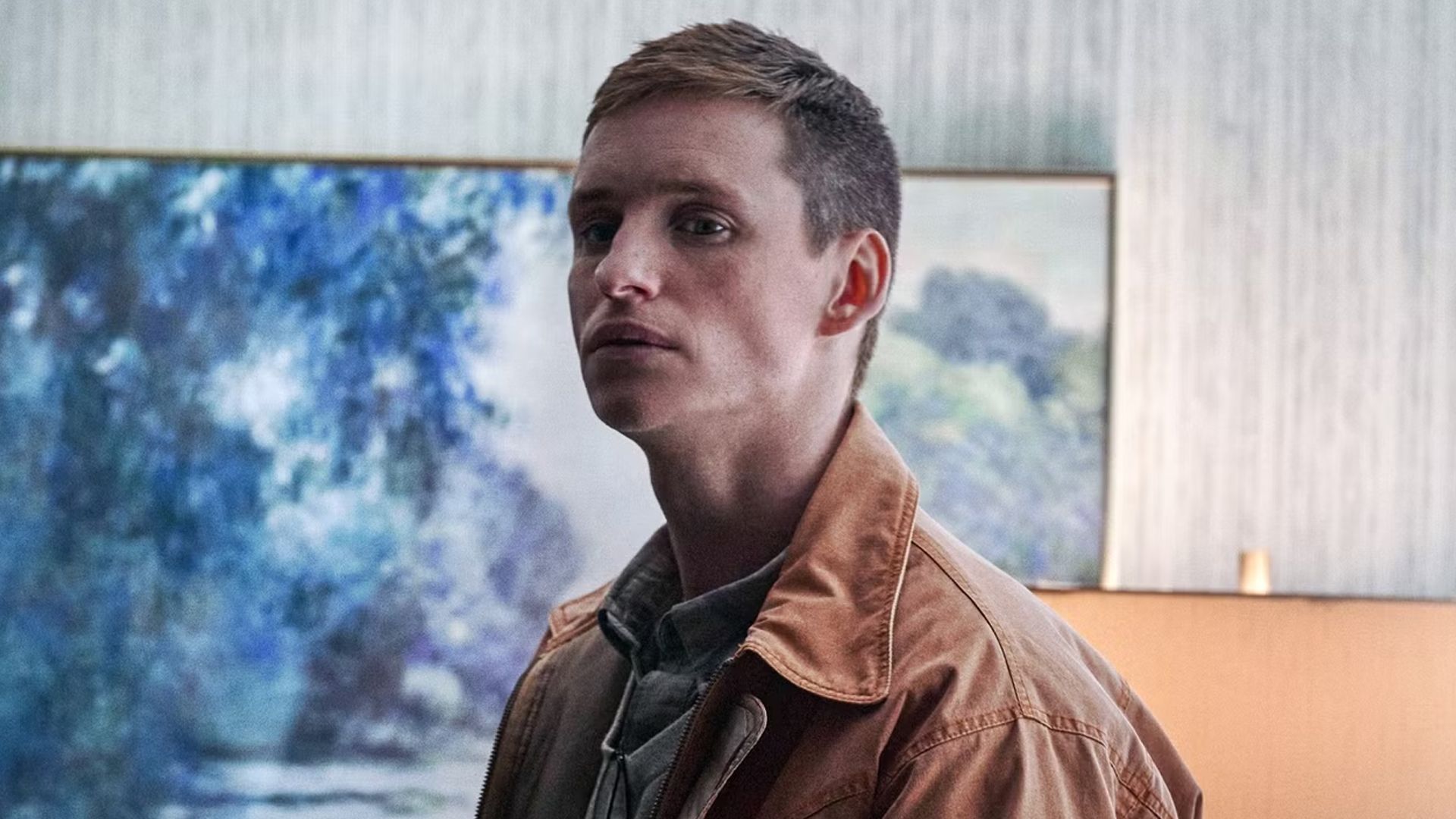
True crime is a hugely popular genre in film, appealing to both audiences and creators. However, what’s really benefiting from this trend are well-made stories that move away from excessive gore and sensationalism. Viewers are now turning away from overly dramatic depictions of serial killers and demanding more nuanced narratives, and streaming services are largely responding to this shift. A great example of this new approach is Netflix’s The Good Nurse.
The movie The Good Nurse, featuring Eddie Redmayne as the notorious killer Charlie Cullen and Jessica Chastain as Nurse Amy, has received positive reviews, with a 74% Fresh rating on Rotten Tomatoes and a 6.5/10 score on IMDb. Unlike typical crime stories, the film avoids sensationalism and instead focuses on the unsettling performances of its lead actors, Redmayne and Chastain, to tell the story of one of America’s most prolific serial killers.
A Chilling Shift in the True-Crime Formula
The film tells the story of Amy Loughren (Jessica Chastain), a hardworking ICU nurse who is secretly struggling with a serious heart problem. She gets help from Charlie Cullen (Eddie Redmayne), a quiet and kind new nurse who starts working the tough night shift with her. But when patients unexpectedly begin dying, a police investigation starts, and Amy gradually discovers that the friend she trusted is actually a murderer.
Tobias Lindholm, the director, cleverly recognized that this case was already widely known and reported, and some viewers might even recognize what Cullen looked like and his past actions. However, what remained largely unknown was the experience of those closest to him – and Amy was uniquely positioned to share that perspective, as she was near him when he was finally apprehended.
Lindholm primarily tells the story through Amy’s perspective, but cleverly uses the audience’s knowledge of Cullen’s crimes to create a sense of unease around Edmayne, making him appear suspicious without revealing his guilt too soon. The ordinary hospital environment becomes intensely suspenseful. Lindholm avoids common tropes, like giving the killer a sympathetic past or dramatic flair.
Unlike many thrillers, we don’t see Charlie acting suspiciously or preparing elaborate schemes. He comes across as just a regular, exhausted man starting another difficult day at the hospital. This realistic portrayal sets the movie apart from the many over-the-top dramatic series out there. The suspense comes from watching someone who seems completely normal enter the high-pressure environment of an intensive care unit.
The movie creates a truly unsettling fear by showing the villain expertly manipulate a seemingly safe and familiar setting. Eddie Redmayne adds to this by portraying the character with a subtle, humble kindness that makes everyone trust him, which is deeply disturbing.
Charlie is a good friend to Amy, getting along with her children and helping her keep her serious illness a secret from the strict hospital staff. Even in their everyday conversations outside of the hospital, there’s a noticeable tension between them.
One particularly unsettling moment shows him happily helping Amy’s young daughters practice for a school play at her kitchen table. The contrast of this normal scene with the knowledge that he’s a dangerous killer is deeply disturbing, leaving viewers feeling anxious and uneasy. It powerfully demonstrates how easily he can switch between being a seemingly ordinary person and a violent criminal, keeping those two sides of himself completely separate.
Redmayne’s Chilling Performance Holds The Key To Thrill
When evaluating stories like this, critics need to recognize that pacing is crucial. Not every scene needs to lead up to a shocking murder. The Good Nurse intentionally uses a slow pace and shows deaths as simply medical events, keeping the violence itself off-screen.
Even though this situation is very particular, the way someone is killed is presented as a cold, procedural act. The camera focuses on the slow, deliberate process of altering standard IV bags in a hospital storage room. We see only gloved hands carefully injecting a clear, deadly liquid into a bag of saline, with no dramatic flair.
The simplicity of this act is deeply unsettling, as it starkly reveals how helpless a patient is while unconscious in a hospital. The film didn’t need any gruesome imagery because Charlie’s method was remarkably clean – just a few needles or medications were all it took.
During the hectic moments when a patient’s condition deteriorates and the medical team springs into action, the camera often focuses on Redmayne as he distances himself. While his colleagues desperately try to save the patient, he quietly retreats into the background, becoming emotionally detached. He simply watches with a cold, empty expression as the patient’s heart monitor stops showing a heartbeat.
The show expertly builds tension during the intense questioning scenes with detectives Baldwin and Braun. They relentlessly push Charlie in a cold, impersonal room, hoping to catch him making a mistake that would reveal he’s guilty like a typical criminal.
Redmayne doesn’t yell, show any sign of stress, or behave like a typical villain when confronted. He just sits calmly in his medical scrubs, giving polite but meaningless answers with a disturbingly empty look. It’s this complete absence of dramatic flair that makes his performance so chilling.
As detectives pressed him for answers, Charlie became increasingly withdrawn, refusing to react to the terrible things he was accused of. He had a way of making a situation feel suffocating just by refusing to acknowledge the gravity of his actions.
Director Lindholm intentionally held back the film’s biggest reveal until the very end, wanting to first establish the character as a reserved and unassuming man. When the detectives intensely question him about why he did it, this carefully constructed facade quickly crumbles. Instead of offering a rational explanation or legal defense, Charlie unexpectedly descends into a deeply disturbed and childlike state.
When questioned about why he killed the patients, Redmayne unleashes a powerful, physical outburst. He repeatedly shouts, “I can’t!” while violently hitting his cuffed arms and head against the table. This intense display is especially shocking because he’d been remarkably subdued for the previous ninety minutes. The film still doesn’t reveal his reasons, even as he seemingly breaks down.
An Antidote to the Viral True-Crime Era
The film The Good Nurse requires viewers to be patient, as it challenges our tendency to quickly move past real-life tragedies. This approach is effective because it compels us to confront a disturbing aspect of human behavior.
Redmayne portrays a chilling predator who convincingly masked his true nature with politeness and a doctor’s uniform for sixteen years. The unsettling feeling created by his flawless disguise lingers long after the film ends. This project demonstrates that filmmakers don’t need to sensationalize suffering or manufacture drama to be impactful.
The film wisely focuses on the strength of a working-class mother, steering clear of any attempt to glorify the perpetrator. It portrays the crimes with the coldness they deserve. Chastain’s performance as Amy keeps the story grounded, highlighting that the true heroes are everyday people who are brave enough to speak out and do what’s right.
The film is a strong condemnation of the healthcare industry, arguing that it enabled these crimes to occur. The true antagonist isn’t the individual killer, but rather the hospital administrators who valued profits and avoided legal trouble more than patient safety. The killer was repeatedly employed by different hospitals because they feared the negative publicity that would come with reporting him to the police.
The story reveals a deeply troubling and frustrating reality: a flawed system prioritizes cost savings over patient safety, effectively shielding those who harm others. Instead of dwelling on the horrific acts themselves, it highlights a critical issue of public safety. Charlie Cullen took advantage of significant weaknesses within a healthcare system that was already inclined to ignore warning signs, and his chilling explanation – ‘They didn’t stop me’ – underscores this systemic failure.
The documentary The Good Nurse excels at avoiding simple explanations, especially considering the disturbing nature of Charlie Cullen’s crimes and the fact that those meant to prevent his actions often prioritized their own self-preservation.
Found an error? Send it so it can be corrected.
Read More
- Scientology speedrun trend escalates as viewers map out Hollywood facility
- How to Get to the Undercoast in Esoteric Ebb
- Noah Beck’s mom suspended from teaching duties after “inappropriate” TikTok with son resurfaces
- What Fast Mode is in Bannerlord and how to turn it on
- Gold Rate Forecast
- Insider Trading? Not on Our Watch! Governors Crack Down on Prediction Market Shenanigans
- Streamer crushes MrBeast charity record with $55M fundraiser for kids with cancer
- Untangling Cause and Effect in Complex Networks
- Jenna Ortega’s Jurassic World Series On Netflix Is The Franchise’s Best Since 1993
- The Best Horror Show Of The Decade Devours The Competition On MGM+
2026-03-01 07:08