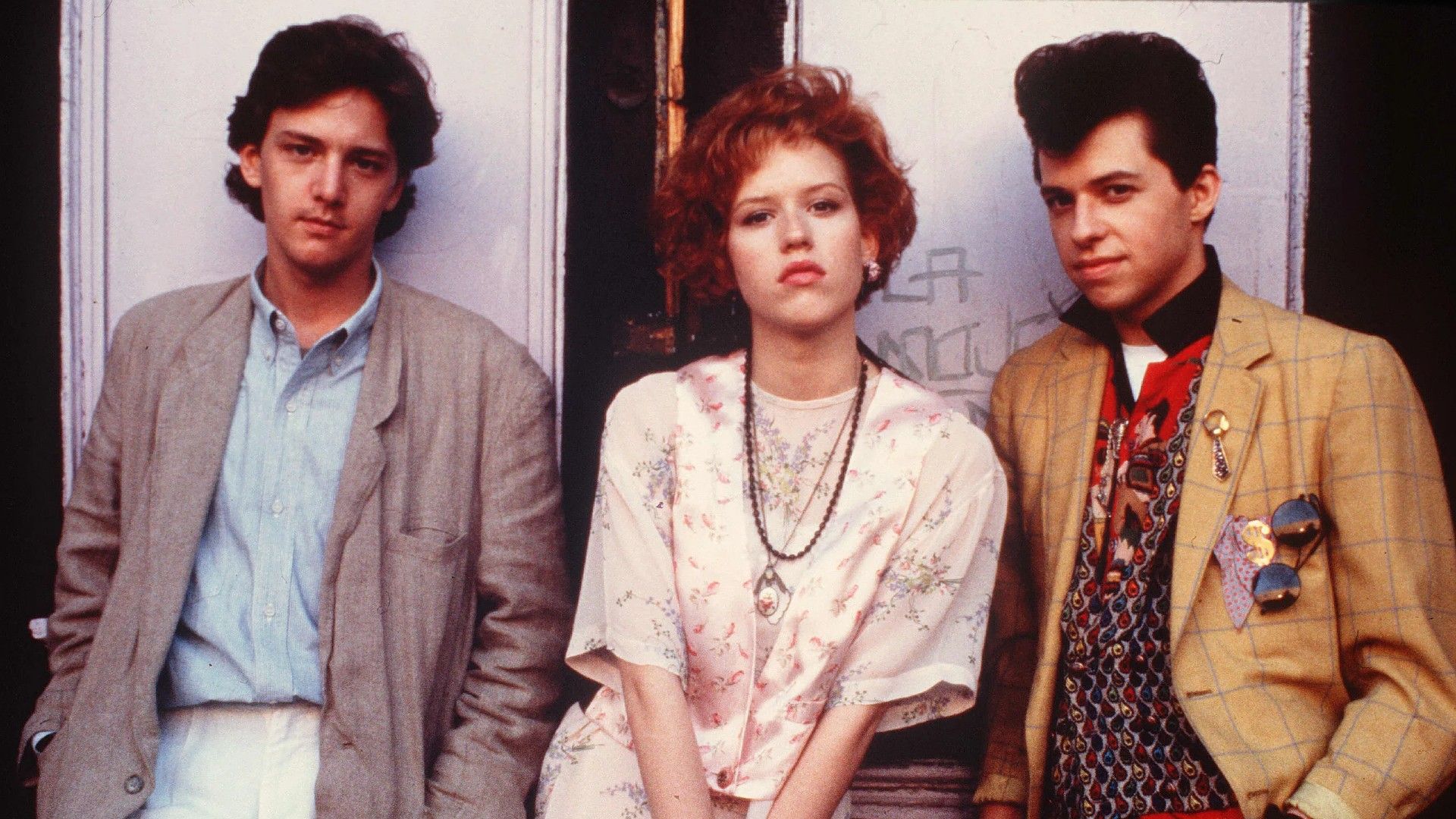
Pretty in Pink follows a classic love story – two people from different social classes falling for each other. Like many stories before it, it explores themes of pride, misunderstandings, and putting on a show, all leading to a genuine connection. The fact that it was written by the talented John Hughes, a defining voice in 1980s teen movies, immediately makes it a beloved classic.
Howard Deutch’s Pretty in Pink is packed with 80s nostalgia – from its famous soundtrack, including Otis Redding’s “Try a Little Tenderness,” to the unforgettable fashion – making it enjoyable even for younger audiences. As the film marks its 40th anniversary, revisiting it reveals a story as much about social class as it is a reflection of the decade. It arrived during a time of increased political awareness, when pop culture often carried underlying messages and class differences were hard to miss. While John Hughes created stronger films, Pretty in Pink is refreshingly honest about its goals, even if it occasionally feels a bit predictable or overdone, despite its ambition.
Pretty in Pink is a Quintessential Teen Love Tale

The love story in Pretty in Pink is a classic one, full of the excitement and uncertainty of first love. Two people are attracted to each other, but neither wants to fully admit or commit to their feelings. The reason? They come from different social classes. One is wealthy and worried about what their friends will think, while the other comes from a working-class background and fears rejection from both their own friends and the wealthy person’s circle. And, as often happens, there’s a third person involved – someone from the same background as the working-class individual, who feels intimidated by the wealth and popularity of the other love interest.
The movie Pretty in Pink centers around Andie Walsh (Molly Ringwald), a confident and stylish teenager who creates her own looks from thrift store finds while attending a high school filled with wealthy, often snobby, students. She’s a true icon of 80s fashion, known for her red hair and love of pink. Blane McDonnagh (Andrew McCarthy), a handsome and seemingly kind rich boy, is also a key character, but his tendency to give in to what his friends think often gets in the way of his genuine feelings.
Duckie (played by Jon Cryer) is arguably the most compelling character. While he’s not portrayed as particularly intelligent – he once mistakenly believes the Warsaw Pact happened in Germany – and his attempts at humor don’t always succeed with potential romantic interests, Jon Cryer’s performance earns the audience’s sympathy. This connection feels stronger than the chemistry between Ringwald and McCarthy’s characters.
Characters in Pretty in Pink Cope With Denial

When Duckie observes that Andie Walsh is deeply hurting, he’s wrong about why she’s in pain, but right that she is suffering. Andie understands this pain firsthand – she comes home daily to her father, who is unemployed and still struggling to accept that her mother left. She knows what happens when difficult truths are avoided, whether it’s the lasting shame of poverty or the pain of lost love. She tells her father, “You can’t keep dwelling on the past,” speaking not just as a daughter, but as someone who’s emotionally further along trying to reach someone stuck in denial.
That experience subtly influences Andie’s own love story. She hopes love can overcome social differences and that Blane’s wealthy world won’t ultimately push her away. However, a brief falling out quickly shows her that’s not realistic. Rather than dwell on the disappointment, Andie chooses to prioritize her own self-worth and move on. Even Duckie eventually realizes that things don’t always work out as you hope. It’s not just Duckie, Andie, and her father who are struggling to accept reality; Blane’s friend Steff also can’t understand why Andie wasn’t impressed by his wealth and arrogant attitude, which usually got him what he wanted.
Pretty in Pink Stands Out in John Hughes’ Filmography

If you grew up in the 1980s, you probably know the name John Hughes. He captured the spirit of that decade’s teen experience much like Stephenie Meyer (author of the Twilight series) did for the 2000s. Hughes directed iconic films like Sixteen Candles (1984), The Breakfast Club (1985), and Pretty in Pink, all of which prominently featured Molly Ringwald. While his earlier films focused more on universal teen issues, Pretty in Pink really highlighted differences in social class and the intense emotions that come with being a teenager. Some critics even argue it overemphasizes class divisions.
Honestly, I’m so glad John Hughes scrapped his original ending! It was supposed to be a pretty standard love triangle, and it just wouldn’t have landed with audiences back then, or even now. It would have totally missed the point of the film and probably led to a lot of unfair criticism about the kind of relationships it portrayed. He was upset about the change, but I think it was the right call.
Read More
- Netflix’s Little House On The Prairie Reboot: Release Date, Cast & Everything We Know
- Off Campus Season 1 Soundtrack Guide
- Silver Rate Forecast
- Prime Video’s New R-Rated Spy Thriller Is Officially No.1 On Streaming Despite Poor Reviews
- Gold Rate Forecast
- Brent Oil Forecast
- EUR ZAR PREDICTION
- 币安人生 PREDICTION. 币安人生 cryptocurrency
- EUR USD PREDICTION
- KPop Demon Hunters Meets Avatar: The Last Airbender In Netflix’s 3-Part Fantasy Series
2026-02-25 21:18