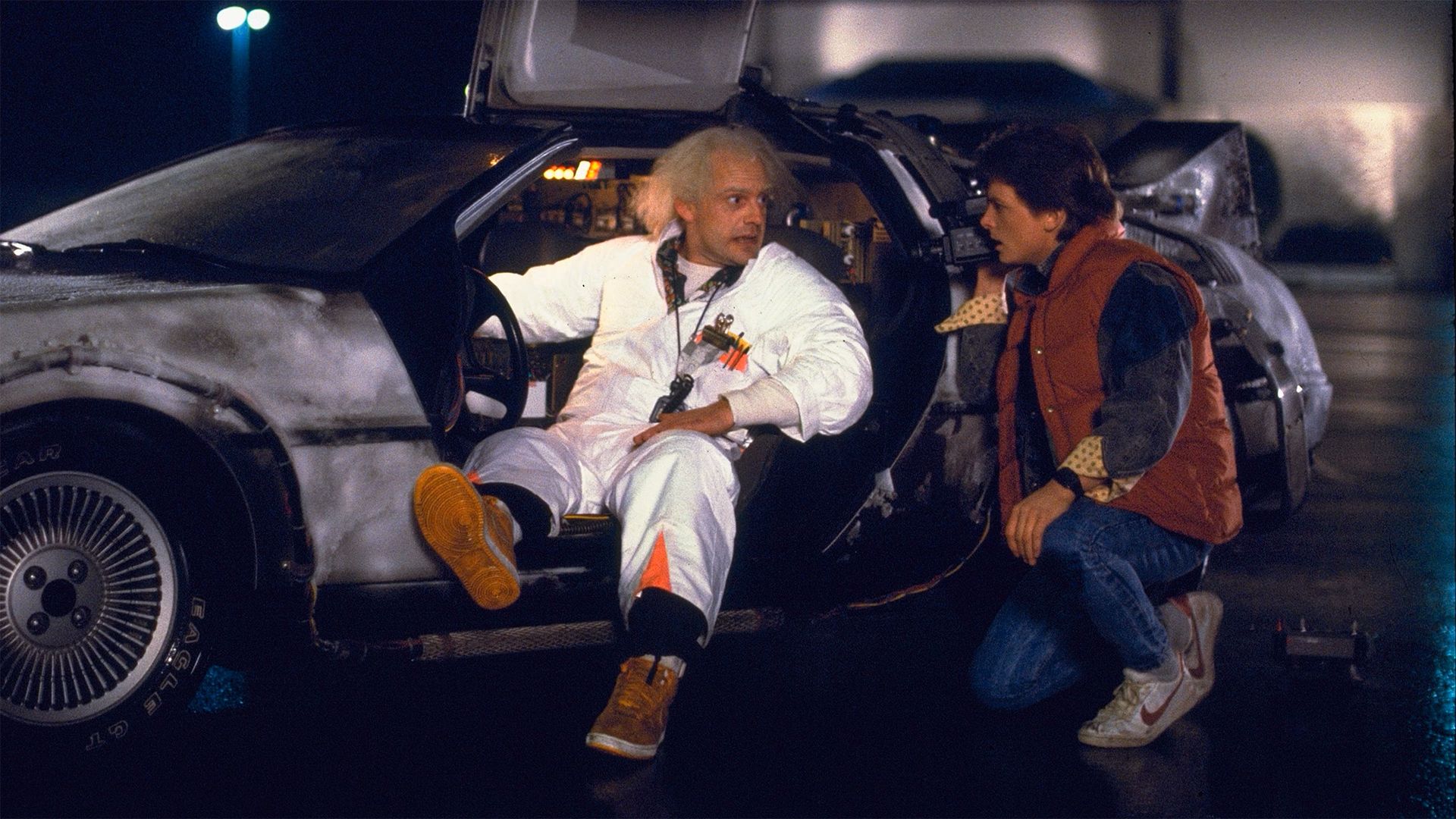
Back to the Future is a beloved classic that continues to captivate fans over four decades after its release. The enthusiasm for the film has extended to the stage, with the musical version proving popular since its 2020 debut in Manchester, followed by a successful run in London’s West End. Now, after receiving two Tony Award nominations on Broadway, Back to the Future: The Musical is thrilling audiences across North America on tour.
Bob Gale, who co-wrote the original Back to the Future movies, wrote the book for the musical, even though he’d never written for the stage before. His deep understanding of the story allowed him to create a stage version that captured the spirit of the first film without simply recreating it scene-by-scene. However, bringing this beloved story to life as a brand-new Broadway musical proved challenging, and the struggles are now detailed in Nacelle’s documentary, A Future on Stage: The Making of a Broadway Musical.
I recently spoke with Gale about the incredible story of how Back to the Future made the leap from the big screen to the stage. It was a surprisingly long process – a full decade in the making! – and he shared some really insightful things about the entertainment industry and just how passionate the Back to the Future fans truly are. If you’re eager to learn even more, I highly recommend checking out A Future on Stage, which you can find digitally, or even better, catch the musical live if the U.S. tour comes to a city near you.
The Genesis Of The Back To The Future Musical

It’s incredible to see a story you worked on take on so many different forms. What sparked the idea to turn Back to the Future into a musical?
The Back to the Future musical came about unexpectedly. Bob Zemeckis and his wife, Leslie, were in New York in 2005 and saw the show The Producers. As they left the theater, Leslie suggested that Back to the Future could be a great stage musical, and Bob agreed it was worth considering. He then called me, Bob Gale, when they returned to California to get my thoughts. I was open to the idea and suggested we look into it further.
Ever since we finished the third movie, people have constantly asked about a fourth installment. Our answer has always been either we weren’t making one, or a pretty strong refusal. We ended Part 3 with “The End” because we meant it to be the final film. Then, when Michael J. Fox revealed his Parkinson’s diagnosis, it made us realize a Back to the Future movie without him didn’t make sense. So, whenever anyone asks me about a Part 4, I point that out, and they usually realize it’s probably best left alone.
We avoided making another film because it’s hard to recapture the magic of the original three, and past sequels have proven that. Once you revisit an idea too often, the results usually aren’t as good. However, this project offered a fresh take – retelling the story of the first movie as a musical. It’s not meant to be a remake, and we weren’t trying to cast Michael J. Fox or Christopher Lloyd – let’s be realistic, they’re not known for their singing and dancing!
ScreenRant: This was your first time writing a musical, so how did you get the ball rolling?
Bob Gale and his writing partner, Bob Zemeckis, had a unique benefit: they owned the rights to the original screenplay. The Writers Guild allows original screenwriters to maintain control over adapting their work for the stage. This meant they could freely experiment with a theatrical version and abandon the project if it wasn’t working, because there wasn’t strong demand for a ‘Back to the Future’ musical at the time – in fact, the opposite was true.
When we first revealed our plans, we received a lot of criticism. Many people expressed strong negative opinions, calling it a bad idea and accusing us of simply trying to profit from a beloved film. While that reaction was understandable, we appreciate how passionate our fans are about the franchise and the original source material. Our goal was to ensure any continuation lived up to the quality of Back to the Future. We easily could have decided against it, but we wanted to do it right.
For the music, we brought back Alan Silvestri, who composed the score for the original film, and Glen Ballard, a Grammy-winning songwriter known for his work with Alanis Morissette. Bob Zemeckis suggested Glen because he’d previously collaborated with Alan and Bob on The Polar Express. We met to discuss the musical’s direction, and our goal was to create something that felt like a classic American musical – think Rogers and Hammerstein – but with a modern update. We wanted to use impressive stagecraft and effects, but the core of the show needed the same emotional depth and heart as timeless musicals like My Fair Lady, The King and I, and The Sound of Music. That was the feeling we were aiming for.
Around three weeks after meeting Alan and Glen, they contacted us wanting to share some of their songs. We were really impressed with the three or four songs they played – they’re still part of the show, though they’ve evolved since then. We then asked our agents to arrange meetings with Broadway producers. However, we consistently faced skepticism – producers would ask what made us think we could pull off a musical, pointing out our lack of experience. We always replied that while we hadn’t done a musical before, we had successfully worked on ‘Back to the Future’.
The Broadway team wasn’t interested in our creative input. They offered to buy the rights to our work and produce it themselves, letting us simply be audience members. However, we felt it was crucial to be involved in the entire process, from start to finish.
A Long Decade’s Journey Onto The Stage

ScreenRant asked about the challenges the team faced while getting the musical production off the ground. Could you share some of those difficulties?
Initially, producers dismissed Alan and Glen because they hadn’t worked on a musical before, which led us to believe the project was off. However, when Gordon Ballard began co-writing the music for Ghost the Musical with producer Colin Ingram—a big Back to the Future fan—everything changed. Colin was thrilled at the prospect of working with us, and quickly embraced the idea.
We had a great meeting with Colin – he was positive and really excited about the project. As a British producer, he had strong connections in London, making it much simpler to stage the show there compared to New York. We liked this approach because the UK was a key market for the Back to the Future film franchise. Just like The Wizard of Oz traditionally aired after Thanksgiving in the US, Back to the Future was a Boxing Day staple in England – almost everyone there knew the story. It felt perfect, almost meant to be, that we were launching the musical in the UK.
We started searching for a director, and Colin suggested Jamie Lloyd, who was becoming well-known for his innovative and unconventional interpretations of classic plays. We weren’t entirely sure what we wanted in a director, so we explored his ideas for a while, but they were completely different from our vision. He didn’t connect with Alan and Glen or their music. As often happens with this show, we ended up having to let someone go. [Laughs] So, we had to start the director search all over again.
ScreenRant: What lessons did you take from that to help the second attempt go more smoothly?
Bob Gale explained that he first came up with the idea for Back to the Future in the summer of 1980, and by the summer of 1990, all three films were completed, with the third one currently playing in theaters. Later, in February 2006, they began developing a musical adaptation. However, after ten years, the project hadn’t progressed much – they hadn’t found a director or a writer, and the producer’s contract had even expired.
Producer Glen Ballard realized no one had ever heard the songs we were writing, so he suggested a small concert to showcase them. In 2016 or 2017, we performed eight or nine songs – including “Power Love” and “Back in Time” – at a venue in North Hollywood. We invited around 80 dedicated fans of Back to the Future and musical theater, and showed them stills from the movie to illustrate how the songs fit into the story. The audience loved it!
Colin Ingram realized what we needed and immediately wanted to work with an American director. A few months later, he introduced me to John Rando, a Tony Award winner for Urinetown who had also directed many successful revivals of classic American musicals. Glen and I met with John, and he impressed us immediately. We hired him, and it was the best decision we could have made – he was perfect for the job, and everything worked out wonderfully.
We initially hoped to have the show running by its 30th anniversary in 2015, but weren’t able to make that happen. We finally launched it for the 35th anniversary, but the COVID-19 pandemic forced us to close. Thankfully, we brought it back in 2021. The years between allowed us to significantly upgrade the technology, creating amazing stage illusions that make it feel like the DeLorean is actually traveling at 88 miles per hour. Our technical team was instrumental in making it all work.
Bob and I were so touched by the passion of everyone involved in bringing Back to the Future to the stage. They were all huge fans of the movie, and that meant they were determined to do it justice. Everyone brought their best work, set aside any personal pride, and collaborated beautifully. It was a truly wonderful creative experience – the kind we hope everyone gets to have.
What Back To The Future Taught Bob Gale About Staging A Musical

The story of ‘Back to the Future’ and seeing the DeLorean on stage are compelling enough for a behind-the-scenes documentary. But what did you learn from the interviews you conducted for the film? Did talking to everyone involved give you any new insights into how the show was created?
I heard some interesting stories from the crew that I hadn’t known before. [Laughs] But the documentary really shows just how difficult putting on a Broadway musical is. Making a movie is tough, but a live theatrical show – especially one this large – is even more challenging. Unless you’re working with a very small cast, it’s a huge undertaking.
What really surprised me was the negative reaction we received. When I first discussed this with my wife, she was certain people would be eager to work with us. We were shocked that wasn’t the case! It felt like we were trying to break into a very exclusive club. Broadway seems to operate with the same familiar faces – the same composers, writers, and directors moving between shows. They didn’t seem to welcome outsiders like us from Hollywood, viewing us as disruptive to their established system.
So, you did eventually write the book, which is great! Was writing it a completely new experience for you?
I was determined to write the script myself. I learned a lot about writing for musical theater – what’s different and what we needed to focus on – thanks to John Rando, who knew everything about it. When we needed to convey important details, like the time of the lightning strike at the clock tower, we initially tried to include it in the song lyrics. But John pointed out that it was better to have a character state it directly. He explained that audiences are more likely to remember information delivered that way, as they might not always focus on the lyrics while enjoying the music.
I remember one time, he was going over my script and stopped me about Marty’s clothes. He said, ‘Bob, we need to show Marty changing. We can’t just have him appear in a different outfit from one scene to the next – he needs to actually go offstage and change!’ It was a really simple thing, but it showed me how much attention to detail mattered. Honestly, there was so much I had to learn about filmmaking, but I picked it up quickly, thanks to his guidance.
ScreenRant asked about the Back to the Future musical, noting it’s enjoyable because it presents a fresh take on the classic story. They were curious about the reasons behind some of the changes made to the original plot and how the musical was structured.
Bob Gale explained that a key goal was to ensure audiences didn’t feel they’d have been better off simply re-watching the film at home. The stage show couldn’t just be a copy of the movie; it needed to be adapted to work effectively as a live performance.
One of the first things we had to cut was the skateboard chase. It just wouldn’t work on stage – you need the main actor to do it, and you can’t use a stunt double. We needed someone who could act, be funny, sing, and dance as Marty McFly, and asking them to also do skateboard stunts was too risky. Every night, there was a real chance he could fall, injure himself, and be unable to perform for weeks. It was a bad idea, so we replaced it with a chase in the lunchroom, using illusions to give the impression of a skateboard without actually having one.
A chase scene with terrorists at the mall wouldn’t work – it’s just not feasible with only one moving vehicle, the DeLorean, and we wanted to focus on that. Instead of terrorists harming Doc, we decided he’d collapse from the effects of Plutonium exposure. It achieves a similar dramatic effect. This forces Marty to race to get help in the DeLorean, and he unintentionally hits 88 miles per hour. We always aimed for scenes that would translate well to a stage production, and this idea fit that goal.
One of the coolest things we figured out was how to handle the time displays. We really didn’t want to use video screens – that would have just turned it into another movie! So, I remembered the old Knight Rider show, where K.I.T.T. the car could talk. We decided to have the DeLorean talk too, and Doc Brown invented some voice-activated circuits to make it happen. It worked brilliantly! Like, Doc would ask, “Want to see the signing of the Declaration of Independence?” and then speak the date, “July 4th, 1776,” into a microphone, and the DeLorean would instantly respond, “July 4th, 1776.” It sounds a bit like Siri now, which is awesome. We did a bunch of stuff like that, just playing with what the audience expected to see and hear.
ScreenRant asked if I had a favorite song written specifically for the musical, as opposed to one that was already in the movie.
Bob Gale explained that Doc Brown has a song called “For the Dreamers.” It’s a simple, solo performance about the joys of being creative, and Gale describes it as a beautiful song with a fascinating backstory.
Glen Ballard called me with a song he’d written, originally intended for the character Doc Brown. He felt it would be perfect for our musical, but wasn’t sure where it fit. After hearing him sing it, I was immediately impressed. We played it for John Rando, and everyone agreed it was great, but we had to rework the second act to give the song the attention it deserved.
We worked through some challenges and finally found a solution. That’s the wonderful thing about musical theater – you get to perform in front of an audience every night and immediately see what works and what doesn’t. It’s similar to a movie preview, but unlike a film where changes require costly reshoots, theater allows for adjustments to be made instantly during the performance.
You can now rent or buy the behind-the-scenes documentary, A Future on Stage: The Making of a Broadway Musical, on platforms like Amazon Prime Video, Apple TV, YouTube, and Fandango at Home. Plus, Back to the Future: The Musical is continuing its tour across the U.S., and tickets are available for purchase now.
Read More
- Off Campus Season 1 Soundtrack Guide
- X-Men ’97 Finally Gave Gambit the Hero Moment He Deserved
- Chainsaw Man Volume 24’s Cover Art Reveals a Brand-New Denji
- 46 Years Later, The Mandalorian & Grogu Answers A Major Empire Strikes Back Question
- HoI4 fans harsh reactions to the announcement of another DLC pack
- 10 Worst End-Game Couples In Sitcom History
- Gold Rate Forecast
- DoorDash responds after customer uses AI to make food look bad and get a refund
- Emily Henry Says to ‘Trust the Vision’ For Beach Read Adaptation
- Dragon Quest II HD-2D Remake: Where to get the Magic Key
2026-04-16 17:39