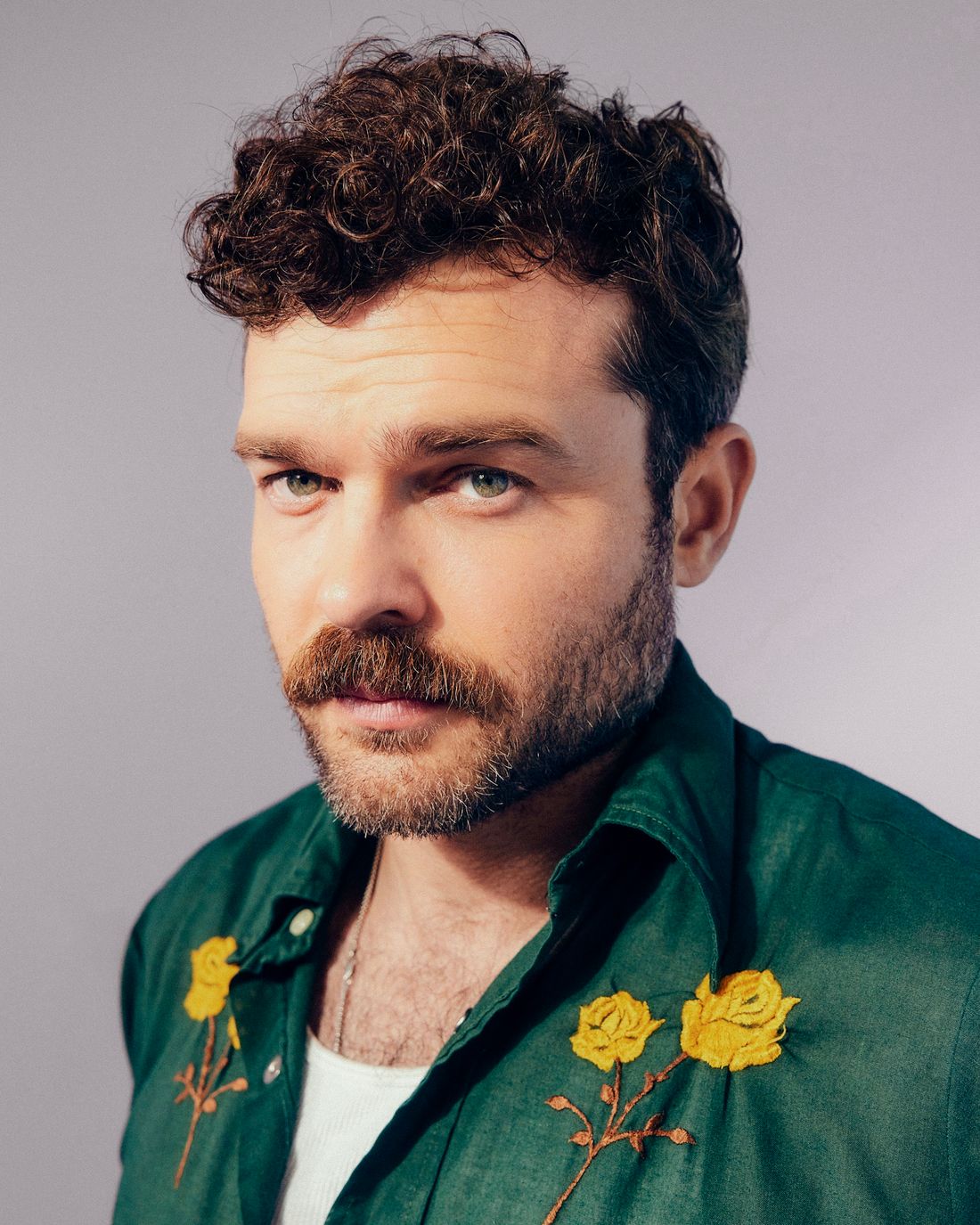
Alden Ehrenreich remembers going to the Los Angeles County Museum of Art as a child with his mother, where she’d play a clever game with him. They’d walk through the galleries and point out the artwork they disliked. Ehrenreich says he’d start by listing all the pieces he, as a typical teenager, found silly or uninteresting. This process of elimination would eventually lead him to discover the art he actually enjoyed. His mother would then ask him to explain why he liked those pieces, forcing him to articulate his feelings about art.
The actor, dressed casually in jeans, a baseball cap from the Explorer’s Club, and a simple watch, is explaining his growing interest in art and history as we walk through the Neue Galerie on the Upper East Side. He grew up in Los Angeles, where his mother was an interior designer and his father an accountant, but he recalls a visit to the gallery at age 13 that had a profound impact. He describes it as a moment of realization. With Jewish roots and family history in Germany and Austria, he hadn’t previously explored that side of his background, but the gallery’s collection sparked his fascination. He even bought books from the gallery store and plans to buy more before leaving. “I just felt a connection to all of this,” Ehrenreich says.
If you’ve seen Alden Ehrenreich in movies or on stage, perhaps in the comedy Becky Shaw on Broadway, you likely remember his often serious expression and dry wit. At 36, he has a youthful appearance with curly hair and clear skin, but carries himself with the thoughtfulness of someone who’s experienced a lot in the film industry. He’s best known for playing Han Solo in a Star Wars prequel released in 2018, a film that had a difficult production and wasn’t well-received, ultimately leading to no further installments. Since then, Ehrenreich has focused on a more low-key but satisfying career, delivering strong supporting performances in films like Oppenheimer, where he played a questioning assistant, and Weapons, as a police officer with a mustache. While looking at drawings by Egon Schiele, known for their distorted figures and red tones, he spots a plaster cast of the artist’s face. He jokes about how glad he is that practice is no longer common, comparing it to the process of getting your face molded for a Marvel TV show, like Disney+’s Ironheart, which he also appeared in. “They cover you in a mold,” he recalls, “and some people really don’t like it.”
The play Becky Shaw features a darkly humorous look at relationships and ambition, and is currently receiving rave reviews thanks to a blistering revival and standout performances. Actor Alden Ehrenreich, known for his film work, is particularly impressive as Max, a cynical and often cruel character. He delivers sharp, shocking lines with skill, hinting at a painful past beneath the surface. Critics are surprised and delighted by Ehrenreich’s stage presence, with some wondering why he hadn’t been seen on Broadway sooner. The play itself, a Pulitzer finalist in 2009, feels especially relevant now, offering a frankness that resonates with today’s audiences. It centers on a quartet of young people – Max, his adopted sister Suzanna, and their interconnected relationships – and a disastrous date between Max and the enigmatic Becky. The production, directed by Trip Cullman, is not only well-acted but also feels like a jolt of energy to the New York theater scene, especially given its star’s unexpected talent for the stage and the play’s refreshingly honest portrayal of human connection.
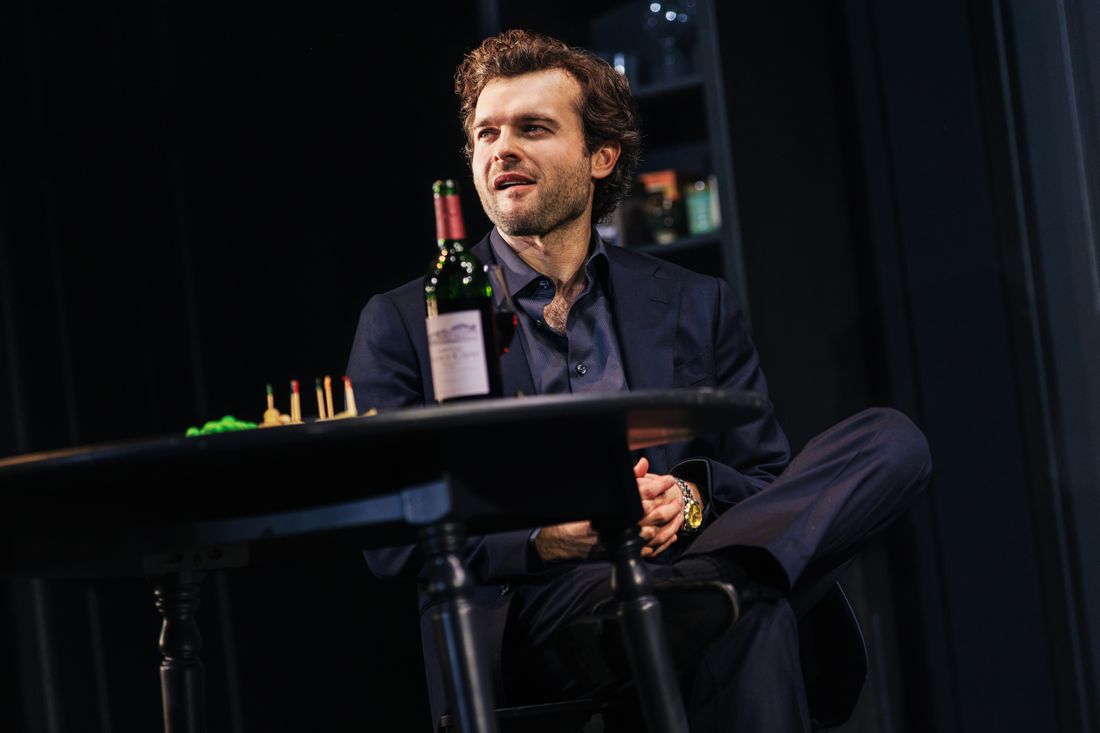
Ehrenreich admits he hasn’t even read the positive reviews of his performance, and finds it strange to be doing interviews while still on stage. Usually, actors discuss a film after it’s finished, not while still performing it. However, he’s really enjoying the immediate reaction from the audience. What’s particularly interesting is how the audience’s support shifts between characters in Becky Shaw with each show – the cast even discusses backstage who they think the audience favors each night. He recalls a recent performance where the audience was having fun and laughing along with his character, Max, until he made a playful comment about Becky’s pink dress. A single voice sharply responded with “Jesus Christ,” and the entire theater fell silent, as if people regretted laughing with Max. Ehrenreich finds this dynamic fascinating, noting that some nights he’s clearly seen as the villain, while other nights the audience is on his side. He suggests scientists could study this phenomenon.
While discussing the relationship between performers and audiences, Ehrenreich paused to order soup and then decided he wanted what I was having – a bratwurst. He’s always loved theater, though he doesn’t have professional acting experience. He studied acting at NYU for three years and even started a theater group with classmates. During the pandemic, in 2021, he bought an old trolley station in Los Angeles and is transforming it into a nonprofit theater called Huron Station Playhouse. They’re currently offering acting classes and workshops for playwrights, with established writers like Clare Barron and Agnes Borinsky involved, and plan to produce two plays each year. Ehrenreich hopes the theater will be a place where artists, who may have felt pressured to compromise their vision in the film industry, can create without worrying about commercial concerns – to simply “make better work,” as he puts it. Interestingly, he spotted Alia Shawkat, who’s currently starring in a play by Clare Barron, at the same café; she had also participated in a reading at Huron Station.
Ehrenreich acknowledges the risk of letting commercial considerations influence creative choices, prompting the question of whether he’s faced this dilemma himself. He maintains he’s never taken a role solely for financial reasons, always finding a character he connected with, even in more mainstream projects. He admits, though, that the pressure to succeed commercially has sometimes rushed him. Currently, he focuses only on projects he’s genuinely passionate about. He wrestled with the decision to play a young Han Solo, initially excited by the character’s portrayal. However, the film faced turmoil when the original directors were replaced by Ron Howard. Kathleen Kennedy, the former head of Lucasfilm, later expressed some regret over Solo, admitting it was difficult to recapture the magic of Harrison Ford’s performance. She acknowledged putting Ehrenreich in a challenging position. When asked if he felt that way, Ehrenreich paused, carefully choosing his words. He diplomatically stated he doesn’t share that perspective, implying a different understanding of the situation.
Before starring in Solo, Alden Ehrenreich had already built a successful acting career, helped along by working with several well-known directors. This likely contributed to his ability to handle fame and public attention. His talent was first noticed by Steven Spielberg when he was a teenager, after seeing a funny video Alden made for a friend’s bar mitzvah. This led to an agent and, near the end of high school, a role in Francis Ford Coppola’s Tetro. (Coppola was known for extensive rehearsals, which Alden compared to preparing for a play.) From ages 19 to 24, Alden met regularly with Warren Beatty while the actor and director worked on Rules Don’t Apply, and Beatty shared stories about Hollywood legends like Noël Coward and Lillian Hellman over dinner. He gained wider recognition with a standout performance in the Coen brothers’ Hail, Caesar! in 2016, playing a naive singing cowboy forced into a sophisticated comedy. (A particularly funny scene involves him repeatedly messing up the line “Would that it were so simple” while a frustrated director, played by Ralph Fiennes, tries to help.) For the role, Alden learned to ride horses, do rope tricks, and handle a gun – skills he’d always dreamed of learning after watching classic movies as a child. He says being in Hail, Caesar! was exactly what he’d imagined Hollywood would be like.
Ehrenreich reflects on Hollywood and acting with a mix of fond memories – he learned from some of the best filmmakers – and a sense of being jaded. He deeply admires figures like John Cassavetes and enjoys reading biographies, recently finishing one about John Steinbeck. He intentionally stays away from the internet, preferring a simple flip phone, though he briefly used a smartphone during a theater renovation before losing it. He acknowledges this makes him seem like an old millennial stuck in his ways, but he’s firm in his preferences. When the conversation turns to books, he expresses excitement about reading Ben Lerner’s Transcription and believes the humor in Leaving the Atocha Station didn’t get enough attention, sheepishly admitting he also found Infinite Jest very funny. He considers the pressures artists face to market themselves, wondering if these pressures are timeless or unique to our current age of corporate power and technology. He muses that it might also just be a feeling that comes with being in your thirties, ultimately concluding, “Probably both.”
Following his work on Becky Shaw, Alden Ehrenreich is dedicating his summer to finishing a feature film screenplay. He enjoyed making a short film last year and is eager to direct more projects. While he jokes about actors wanting to direct, his passion is clear. He feels fortunate to have learned from talented filmmakers, and now wants to apply those lessons to his own work. This drive mirrors his character Max in Becky Shaw, who deeply cares for the family that took him in, despite his unusual approach. Ehrenreich describes finding his artistic voice as a process of elimination, similar to discovering what art truly resonates with you. He often finds that even the most critical characters have a vulnerable side, and this seems to be a theme in his work. Reflecting on the current anxieties in Los Angeles – stemming from industry changes and recent wildfires – Ehrenreich emphasizes the need for hope and the possibility of rebuilding. He sees believing in renewal as a personal guiding principle.
Read More
- Netflix’s Little House On The Prairie Reboot: Release Date, Cast & Everything We Know
- Off Campus Season 1 Soundtrack Guide
- Silver Rate Forecast
- Prime Video’s New R-Rated Spy Thriller Is Officially No.1 On Streaming Despite Poor Reviews
- Gold Rate Forecast
- Brent Oil Forecast
- EUR ZAR PREDICTION
- EUR USD PREDICTION
- 币安人生 PREDICTION. 币安人生 cryptocurrency
- Amazon Primes new GenAI cartoon looks like K-Pop Demon Hunters with aliens
2026-04-29 20:56