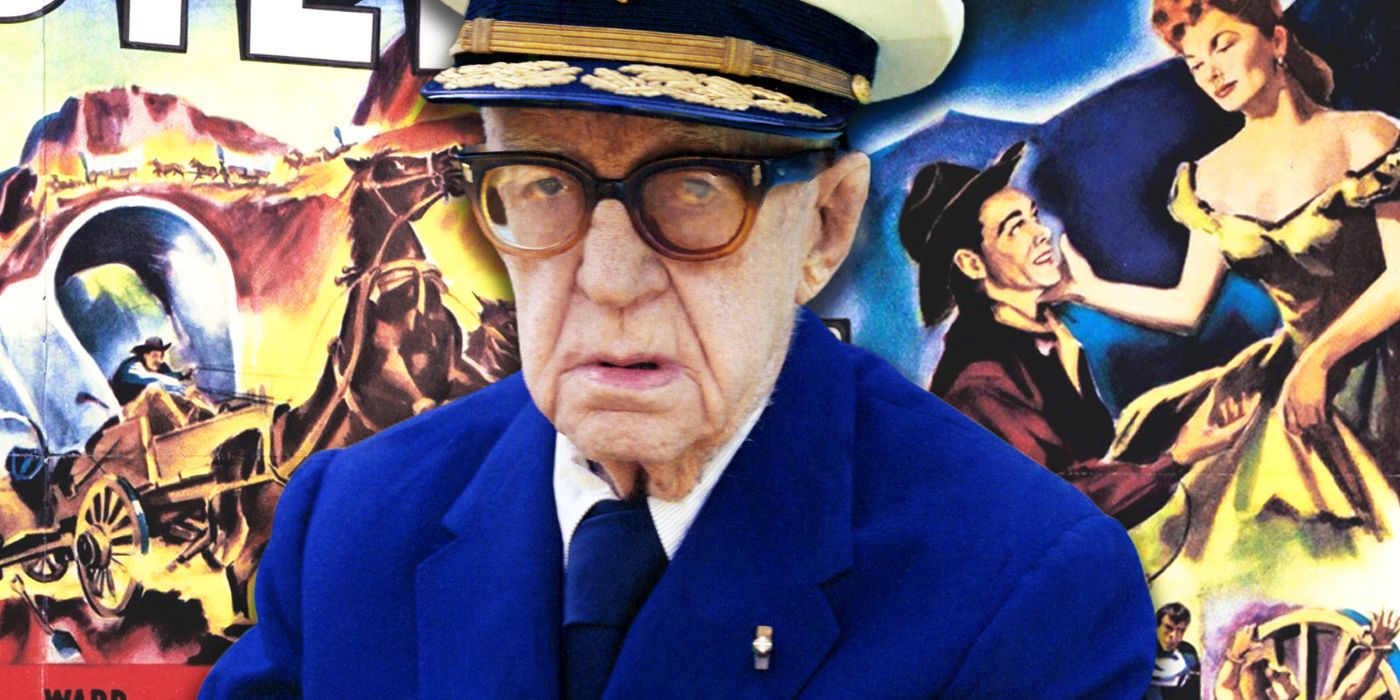
Although John Ford is best known for films like The Searchers and Stagecoach, his 1950 movie Wagon Master is actually one of his finest, despite often being overlooked. By 1950, Ford was already a highly successful and acclaimed Western director, having won three Academy Awards. When Wagon Master was released, many people dismissed it as just another typical Western from the famous filmmaker.
The film Wagon Master first gained recognition in 1957 as the inspiration for the popular television series Wagon Train, which aired until 1965. Later, in a 1967 interview, director John Ford revealed that Wagon Master, along with The Fugitive and The Sun Shines Bright, were his most cherished films because they best reflected his original artistic intentions. Over time, critics and scholars have come to share Ford’s view, recognizing Wagon Master as a classic Western. The film is celebrated for its beautiful imagery and its exploration of timeless themes like humanity’s relationship with nature, the formation of communities in the American West, and the ongoing quest for progress and civilization.
Wagon Master Started To Take Shape During the Filming of She Wore a Yellow Ribbon
Director John Ford often filmed in Utah, including his 1949 film, She Wore a Yellow Ribbon. While working on the movie, Ford’s son, Patrick, a frequent collaborator and screenwriter, spoke with local people and discovered the story of the San Juan Expedition – also known as the Hole in the Rock Expedition. This group of Mormon settlers, stranded by a snowstorm and unable to return home, devised a clever and desperate plan to widen a narrow crevice – “Hole in the Rock” – just enough to get their wagons through. As one of the settlers remembered:
It took around six weeks to get everything ready, especially waiting for the right blasting powder, but we finally started moving the wagons down into the canyon. Luckily, I had a really reliable team of horses, so I hooked them up to B. Perkins’ wagon and carefully drove it down. We had long ropes and about twenty of us – men and boys – holding onto the wagons as they went, just in case the brakes failed or the horses got spooked after being rested for so long. Thankfully, everything went smoothly and safely! By the 28th, most of the wagons were across the river, and we were already starting work on the next challenge: Cottonwood Canyon, which looked like another really tough job.
Another settler through the crevice was:
Looking down into the canyon is terrifying. It’s nearly a mile straight down to the river, with 500-foot cliffs on either side. The path is so narrow that only a wagon can fit, and it’s a really dangerous descent. I was incredibly frightened when I first saw a wagon go down – they had to use the brakes, lock the back wheels, and have ten men holding onto a rope to control it. It looked like everything was going to break. I’ll never forget it. While we were walking down, Willie turned around and started crying, asking how we would ever get back home.
Ford was captivated when his son described the expedition, and it sparked a new idea for a film – something he hadn’t done in twenty years, since writing the stories for his early Westerns like Men Without Women. He collaborated with his son and Frank Nugent to develop a screenplay, though Ford famously made changes to the story even as he filmed. He playfully admitted to only using a few pages of their original script. Remarkably, Ford completed the entire movie in just one month.
Wagon Master Is All About Community
The film Wagon Master follows two horse traders who help a Mormon wagon train travel across the challenging terrain of the San Juan River and into Southeastern Utah. The group faces dangers from outlaws and encounters with Navajo people. They also befriend performers with a traveling medicine show, sharing evenings filled with music and dancing. Notably, Wagon Master doesn’t feature traditional lead actors; instead, the entire cast is made up of character actors frequently used by director John Ford – known as the John Ford Stock Company. This talented group includes Ben Johnson, Harry Carey Jr., Ward Bond, and many others. While the lack of a major star likely impacted the film’s commercial success, Ford used this approach to emphasize the importance of community in settling the American West.
Throughout his films, and especially his Westerns, John Ford often showed how communities came together as the Old West became more civilized. He explored this idea in films like Drums Along the Mohawk and The Grapes of Wrath. However, even though these are great movies, it’s hard to fully develop the theme of community when the main focus is on big stars like John Wayne and Henry Fonda. While they are part of the community, their celebrity status draws attention to themselves, shifting the focus from the group as a whole to the individual. In Wagon Master, Ford does something different: every character is equally important. Each person has a fully developed story, and everyone contributes to the journey’s success. As he first showed in Stagecoach, the strongest communities are built from diverse people who learn to live together peacefully. Wagon Master’s wagon train includes cowboys, Mormons, doctors, and dancers, all working toward a shared goal. What’s particularly interesting about Wagon Master is that it also includes Native Americans as part of this community.
Community and Civilization Is a Vital Motif in John Ford’s Filmography
As a lifelong movie fan, I’ve always been aware of how Native Americans were often portrayed negatively in films. It’s interesting to see how things started to shift in the late 40s and early 50s, with Westerns slowly trying to show a more positive side. John Ford, a director who made a lot of Westerns with the typical ‘Indian as the enemy’ trope, actually played a big role in changing that. People often point to his film Fort Apache as one of the first to really show Native Americans with some sympathy and respect – it was a real turning point, considering his earlier work.
In Wagon Master, Ford continued to portray Native Americans with depth and complexity. When Ben Johnson’s character, Travis Blue, comes across a group of Navajo Indians, he initially expects trouble and rushes back to the wagon train, seemingly preparing for a fight. However, Ford surprises viewers by showing the Mormons and Navajos engaging in peaceful conversation instead of violence. The two groups deeply respect each other, and the Navajos even invite the wagon train to join a traditional dance at their camp. These community dances are a common theme in Ford’s films, representing civility and often contrasting with scenes of violence. The dances suggest the possibility of progress and civilization, while violence serves as a reminder of the harsh realities of the Old West. The dance sequence in Wagon Master, shared between the wagon train and the Navajos, is particularly moving, demonstrating Ford’s vision of true American civilization as one built on peace and understanding between all people.
Music is especially important in Ford’s Wagon Master. Unlike most films, it doesn’t follow a typical three-part story. Instead, it’s built around short, connected scenes showing the everyday experiences of the wagon train and the people they encounter. These scenes are mixed with lively dance numbers that highlight the group’s strong sense of community. The film’s journey is further emphasized by music, featuring original songs and hymns performed by the Sons of the Pioneers. This approach makes Wagon Master feel more like a road movie than a traditional Western – structurally, it’s closer to a film like Easy Rider. While the music is wonderful, it’s perfectly matched by Bert Glennon’s stunning on-location filming. Ford’s focus on combining visuals and sound gives Wagon Master a beautiful, poetic quality.
Wagon Master Is a Grueling Tale of Man Versus Nature
When people talk about the beautiful visuals in John Ford’s films, they often mention his work with Winton C. Hoch and the use of Technicolor. However, Ford’s partnership with Bert Glennon produced equally impressive black-and-white cinematography. They collaborated on seven films, starting with The Hurricane in 1937 and ending with Sergeant Rutledge in 1960. While Glennon received an Academy Award, Wagon Master is widely considered their best work together. The film presents the American landscape in a stunning way, perhaps even more beautifully in black-and-white than many color films. Shot in Arizona and Utah, Wagon Master truly feels like a series of breathtaking paintings. Unlike most Westerns that focus on gunfights, Wagon Master‘s most captivating moments are its sweeping travel sequences, offering one gorgeous image after another. The way Glennon captures the light on the Colorado River gives the film an almost magical quality. Monument Valley, a favorite location for Ford, looks especially beautiful, with long shots emphasizing the grandeur of nature.
The conflict between humans and the natural world is a common thread in Western films. Early settlers heading west faced immense challenges from the environment – from treacherous rivers and harsh deserts to towering mountains, unpredictable weather, and dangerous wildlife. The film Wagon Master explores this theme not through what characters say, but through the stunning visuals created by Glennon’s cinematography. The beautiful, sweeping shots of Arizona and Utah aren’t just visually appealing; they highlight the contrast between the immense power of nature and the smallness and vulnerability of humans. Many scenes in Wagon Master focus on the hardships of the westward journey – fording rivers, climbing rocky hills, and simply the exhausting act of walking. These sequences emphasize that it’s through teamwork and community spirit that the travelers overcome each obstacle and continue their journey. The film demonstrates that what a single person can achieve is insignificant compared to the strength of a united group.
Wagon Master Uses Violence Intentionally
Classic Westerns often end with a dramatic shootout where the heroes win. Director John Ford was famous for these scenes, especially in films like Stagecoach and My Darling Clementine. However, starting in the late 1940s, Ford began to change how he presented these climactic gunfights. In Fort Apache, the final shootout isn’t a victory for good; instead, it shows how poor leadership led to a disastrous and deadly mission. The next year, in She Wore a Yellow Ribbon, Ford broke the typical Western formula even further. The film builds to a potential battle between the U.S. Cavalry and Native American tribes, but surprisingly, the conflict is avoided, and a peaceful solution is found. With Wagon Master, Ford used violence not to celebrate victory, but to highlight his ideas about the difficult path towards building a civilized society.
As I watched Wagon Master, I really saw the Clegg gang – Shiloh and his sons – as the main threat. They crashed one of the wagon train’s dances, and that moment felt like a clear sign of the trouble they would bring. It wasn’t just about stopping a party; it felt like they were trying to hold everyone back from building a better life. Soon enough, they took over the wagon train, and you just knew a fight was coming. When the shooting finally happened, it wasn’t exciting or glorified at all. It was quick, messy, and honestly, pretty upsetting. Afterward, Travis Blue looked truly disgusted that he had to resort to violence, even to get rid of the Cleggs. The way he threw his gun away felt like a statement – like a civilized group shouldn’t need guns. In the end, with the outlaws gone, the community could finally move forward, and it was a powerful moment.
Although it’s hard to believe now, the 1950 film Wagon Master was a box office failure, losing $65,000. In fact, it did so poorly that it ended the partnership between Ford’s Argosy Productions and RKO Radio Pictures. It likely suffered because Ford’s more famous “Cavalry Trilogy” came out around the same time and overshadowed it, both commercially and with critics. However, many now consider Wagon Master to be just as good, or even better, than those films. Today, Wagon Master feels deeply personal for Ford, and it brings together many of his common themes in what is arguably his most beautiful and moving style.
Read More
- Off Campus Season 1 Soundtrack Guide
- 46 Years Later, The Mandalorian & Grogu Answers A Major Empire Strikes Back Question
- X-Men ’97 Finally Gave Gambit the Hero Moment He Deserved
- HoI4 fans harsh reactions to the announcement of another DLC pack
- Chainsaw Man Volume 24’s Cover Art Reveals a Brand-New Denji
- 10 Worst End-Game Couples In Sitcom History
- Emily Henry Says to ‘Trust the Vision’ For Beach Read Adaptation
- Hatsune Miku cosplayer goes viral selling $15 cups of “foot juice” to thirsty anime fans
- DoorDash responds after customer uses AI to make food look bad and get a refund
- Katanire’s Yae Miko Cosplay: Genshin Impact Masterpiece
2026-04-21 03:42