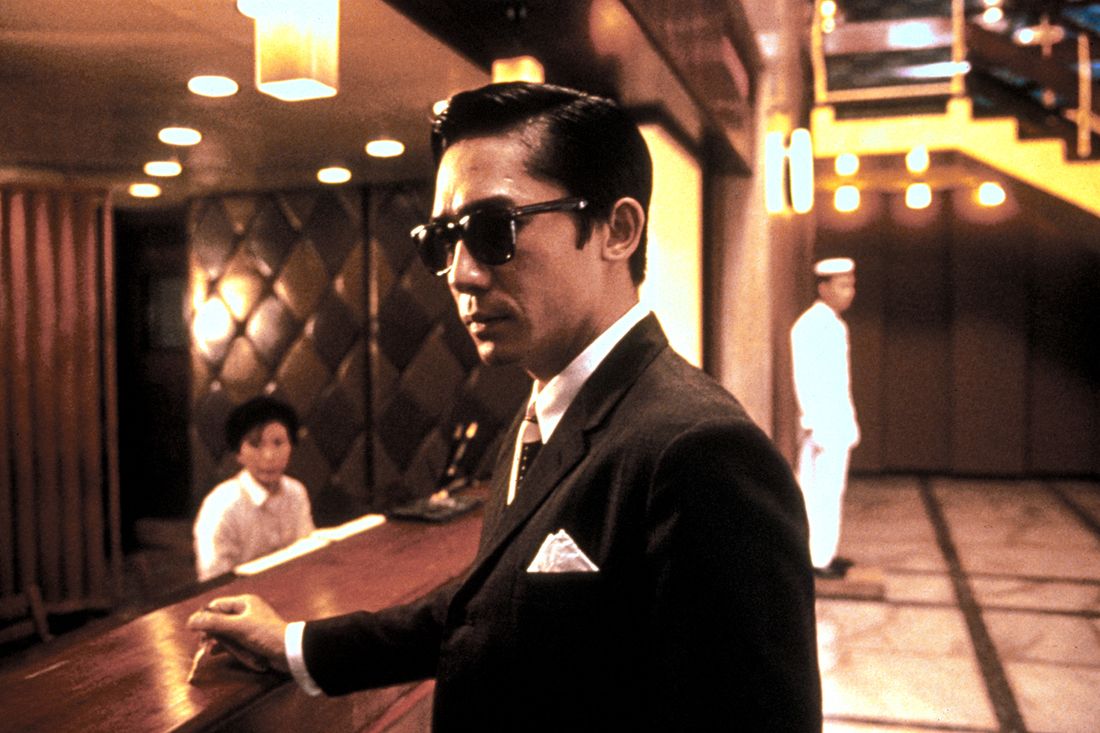
It’s remarkable that, after four decades as an actor, Tony Leung is only now starring in his first European film, the captivating drama Silent Friend. He only entered Hollywood five years ago, playing the villain in Shang-Chi and the Legend of the Ten Rings. A star from Hong Kong, known for his roles in Wong Kar-wai’s acclaimed films like In the Mood for Love and Chungking Express, as well as action classics from John Woo such as Hard Boiled and Bullet in the Head, Leung is a truly iconic figure in cinema. He often plays reserved characters, but conveys a wealth of emotion and meaning through subtle expressions. He can portray vulnerability and sensitivity (In the Mood for Love), mystery and sadness (2046), or a dangerous coolness (Lust, Caution). He embodies a unique and captivating style – elegant, observant, and with a hint of sadness. This is especially true in Silent Friend, where he plays a Chinese neurologist fascinated by a ginkgo tree in a German botanical garden during the pandemic lockdown. The film is slow-paced and quiet, but Leung’s compelling performance elevates it into something truly beautiful. He recently visited New York to discuss the film and reflect on his impressive career.
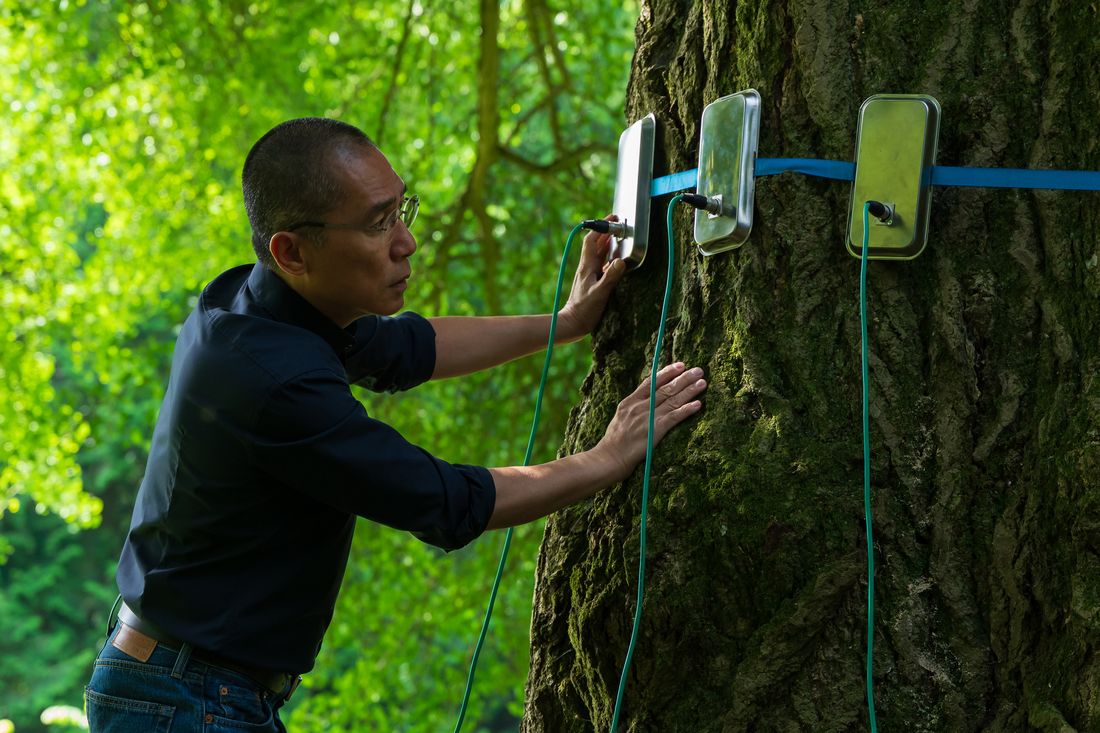
It was incredible acting alongside a tree. After researching plant and tree intelligence for this film, my perspective completely changed. I used to see plants and trees as just that – plants and trees. Now, I view them as almost living, conscious beings. That shift dramatically altered my connection to them. Filming scenes alone in nature felt incredibly peaceful and calming, not lonely at all. I felt a strong connection to the natural world and a heightened sense of awareness. Being completely immersed in nature, with just me and the tree, created a feeling of deeper understanding.
You clearly did a lot of research for your role in Silent Friend. What aspects of that research really stayed with you? I began by studying how minds develop in early childhood, as that’s my character’s area of expertise. From there, I delved into consciousness, plant intelligence, and various Eastern and Western philosophies. I dedicated each day to learning these subjects, and I also visited universities to speak with neuroscientists and even try out EEG technology. I wanted to feel like a true neuroscientist, especially because I have a scene where I deliver a lecture. It’s challenging to convincingly play a role like that in front of a large group without solid knowledge and confidence. Through consistent study and the director’s materials, I eventually found myself embodying the character naturally.
People often comment on your quiet nature and how expressive your eyes are. You’ve played many roles with minimal dialogue, yet each character feels unique – like the dangerous silence of your character in Hard Boiled versus the sensitive quietness in In the Mood for Love. Despite the lack of words, you make these characters incredibly believable. Do you think your preparation helps you fully embody these roles and bring them to life?
I think it’s a combination of preparation and my own personality. I’ve always been comfortable with solitude and don’t have a large circle of friends. I’m naturally reserved and tend to keep my thoughts to myself. I also strive for perfection in my work, which is why I rarely watch my own films – I always see areas for improvement. However, the director of Silent Friend, Ildikó Enyedi, once pointed out that film isn’t about flawless execution. She told me it’s about creating an honest connection with the audience, something that happens within their hearts and emotions. She reminded me that I had already achieved that, and that chasing perfection wasn’t necessary.
You know, it’s funny how I got into acting. I was around 19 or 20, and my friend Stephen Chow – he always wanted to be a director – was constantly talking about movies and how cool filmmaking was. He was really into Japanese manga too. Honestly, I wasn’t super passionate about what I was doing with my life at the time. So, on a whim, we both decided to apply to the acting school at TVB. And I fell in love with it! It was amazing to finally be able to express my feelings without feeling self-conscious. I think it really stemmed from a bit of an unhappy childhood. I used to be really shy and withdrawn in school, just kept everything bottled up inside. I had a lot of suppressed emotions, and acting became my outlet. It was like therapy, honestly – a way to finally let it all out.
I had a difficult childhood. When I was very young, around three or four, my parents fought constantly because my father struggled with alcohol. It was a scary time, and I had trouble concentrating in school. Then, when I was about six or seven, my father simply disappeared, and no one ever talked about it. It made me feel very insecure. He didn’t say goodbye or anything. My mother worked incredibly hard to provide for my sister and me, but she sometimes shared her own feelings with me. My father would reappear unexpectedly a few times over the years, and everyone would pretend nothing had changed. He reminded me of the character Leslie Cheung played in the film Days of Being Wild. I never felt a real connection with him, and even fun outings like trips to the circus didn’t make me happy. I felt like I had to hide my true feelings and pretend I had a normal, happy family, and I carried that with me even as I grew older.
After that event, did you have any further contact with your father? No, I don’t recall the last time I saw him. It might have been when I was around 12 or 13 years old.
I wasn’t a naturally gifted actor, so I trained very intensely, basically nine-to-five. The program covered everything – singing, dancing, acting techniques, scriptwriting, and even physical expression, including a bit of kung fu. We also spent a lot of time analyzing classic films and discussing them each week.
Hou Hsiao-hsien had a significant impact on my career, especially because he cast me in A City of Sadness early on. He was truly inspiring. I’d never been involved in a film quite like it – the static camera, actors moving naturally, sometimes even off-screen but still audible – and the performances of the non-professional actors felt incredibly authentic. There was no trace of forced acting, particularly from Hsin Shu-fen, who I greatly admired. I even told Hou Hsiao-hsien that I hoped to achieve her naturalness, letting go of my usual acting techniques. I tended to stay in after work, spending a lot of time reading in my hotel room. Knowing I loved to read, Hou Hsiao-hsien gave me a wealth of Japanese and other literature, which really broadened my perspective on acting and sparked my imagination.
Hou Hsiao-hsien is known for his very deliberate filmmaking. You mentioned the camera in A City of Sadness barely moves. Does that level of control make acting more or less challenging? Do actors need to be constantly aware of their positioning?
Actually, I found it incredibly freeing. It allowed for more natural movement and a different approach to filming compared to my previous experiences. He never gave me specific acting directions. He’s particularly skilled at working with non-actors, and I noticed he doesn’t tend to direct professional actors as much as create a genuinely realistic environment for each scene. It felt like a wonderful, open space for actors to explore.
Years later, you collaborated with him again on Flowers of Shanghai, a film very different in style from A City of Sadness. He worked with a new cinematographer and started incorporating camera movement, which was a new creative challenge for him. This film also involved working with professional actors, which presented a different set of difficulties than working with non-professionals. It’s easier to guide or direct non-actors, but professionals have established acting habits that are harder to change. Flowers of Shanghai featured a large cast, and we used real wine and fresh food during filming. Surprisingly, after finishing the entire shoot, Hou Hsiao-hsien asked us to return and reshoot everything after three months! I believe he felt the actors had finally reached the perfect mindset for the film.
Following A City of Sadness, you then worked with John Woo on Bullet in the Head and Wong Kar-wai on Days of Being Wild. These were quite different from City of Sadness, and from each other. Bullet in the Head was a really ambitious and personal film for Woo. What was that experience like? John is a wonderful person and director, and he consistently explores the theme of brotherhood. He’s also excellent at blending romance and action. Bullet in the Head seemed like a long-held dream for him, though I never asked why. Perhaps it was connected to his childhood. When he directs, he has a clear vision, but he also relies on actors to help build the emotional depth of the story. Filmmaking in Hong Kong was very adaptable; we had a lot of freedom to improvise, not just with the action sequences, but with the dramatic scenes too. We sometimes even changed the fundamental plot while filming. I remember working with Peter Chan and occasionally hitting creative roadblocks, forcing us to collaborate and find solutions.
Hong Kong cinema experienced a remarkably innovative era, with directors like Tsui Hark, John Woo, and Ringo Lam producing their most celebrated works. What fueled this golden age? A strong demand for Hong Kong films, both locally and from Asian communities worldwide, led to widespread exports. This influx of revenue allowed for the production of around 300 films annually, providing ample opportunities for actors and directors to express their creativity. This environment fostered a great deal of freedom and flexibility in filmmaking.
John Woo mentioned they didn’t really use a script while filming Hard Boiled. Do you recall what he told you about the character I played? I don’t remember a formal script either. He just explained that my character was a lone undercover cop in a really tough situation, sometimes even having to kill other police officers. He described Woo himself as a solitary man living on a yacht, and said my character was deeply conflicted about the morality of his actions, making it a very stressful role.
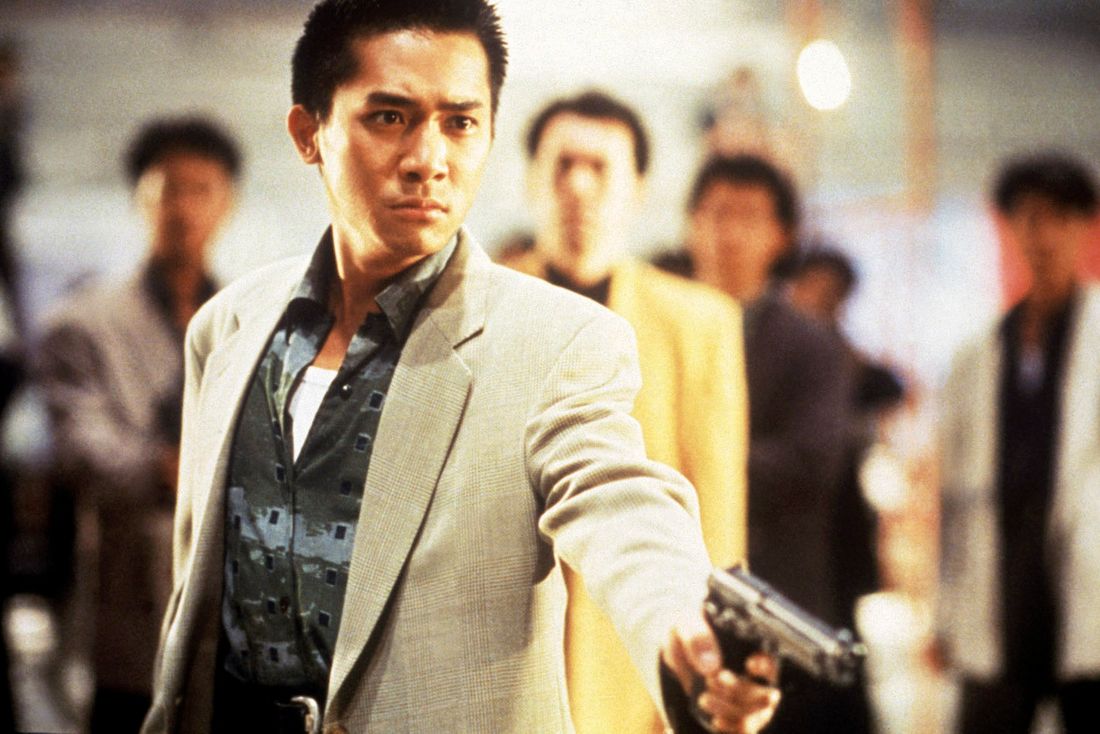
You also joined Wong Kar-wai for your first film with him, Days of Being Wild. It’s interesting because you appear very briefly at the end, almost silently, and then the movie ends! I understand there were plans for a second film – what was the story going to be? It would have started with my character. I was juggling two projects at the time, working with Johnnie To during the day and Wong Kar-wai at night. I was always falling asleep on set, but Wong Kar-wai would just let me rest. The story would have focused on my character, Maggie, and my sister; I was supposed to play a gambler and a con man. However, after a month or two, a family matter came up, and I had to stop filming to be with them. Wong Kar-wai said he’d wait, but I told him to continue without me. That’s when they shifted the story to Leslie’s character. We had already filmed a lot with me. I remember shooting my final scene – only three takes – on my last day. I didn’t think any of my footage would make the final cut of Days of Being Wild. But at the premiere, with my wife who was the lead actress, I was shocked to see myself appear at the very end. That moment made me realize, This is the kind of acting I want to do – similar to what you get from non-professional actors. Without saying a word, the character was conveyed through small details like the poker cards, his preparations, and his nighttime habits. It was about establishing a routine. After that experience, I knew Wong Kar-wai and I shared a similar vision, and I dedicated the next 20 years to developing my acting style with him. It’s challenging, though. When you try to do something different, others need to be on board, and if they don’t understand your approach, it can be difficult.
How did your working relationship with him grow? To help a director understand how to film you effectively, you need to be completely open with them. I spent a lot of time with him outside of work, visiting his office nearly every day. He was constantly writing, and I’d often bring wine to share while we talked. We bonded over music and movies, and he introduced me to filmmakers I hadn’t known before, like Jim Jarmusch. For almost a year, it was just the two of us spending four or five hours each night in his office, which is how we developed a strong level of trust.
When Wong Kar-wai approached you with the idea for In the Mood for Love, had you collaborated on it beforehand, or discussed it before he offered you the role? He drew inspiration from short stories by Liu Yichang. Like with previous projects, he didn’t have a complete script, but we had worked together before. Those stories focused on a couple having an affair and ultimately committing suicide in a hotel. This served as the basis for In the Mood for Love, which explores a different couple navigating a similar situation – trying to understand why their spouses are unfaithful.
Because he often improvises and doesn’t use a typical script, I was wondering if, while making the movie, you ever considered that your characters might end up dying? Not at all. When I work with Wong Kar-wai, I don’t plan ahead. We usually get one or two scenes each night, and I just focus on developing my character within those scenes. It’s a really unpredictable experience – you don’t know where the story is going, you just trust his vision and follow along.
It’s interesting that you often play characters who don’t speak much, yet convey such strong emotions. Can you tell us about your process for getting into that headspace? Do you feel a personal connection, like being in love, is necessary to portray those feelings authentically?
Well, a connection with your scene partner is definitely important for those kinds of feelings. But honestly, I’m not sure how I do it. I really rely on my instincts and what I’m feeling in the moment on set, rather than drawing on past experiences.
When we were filming In the Mood for Love, did you have any idea that a sequel, 2046, was planned?
Not at all. Wong Kar-wai told me midway through filming that my character was acting out of spite towards Maggie’s character. He said I wasn’t genuinely interested in a relationship with her, but wanted to make her fall in love with me only to hurt her. That’s what sparked the idea for 2046. I think my character felt a lot of regret and truly loved Maggie, but he desperately wanted to escape his past. He attempted to reinvent himself and start over, but it didn’t work, and that’s where 2046 begins. I don’t recall exactly how long we filmed it, but it was a lengthy process, shot intermittently over time.
It took about four or five years to make the film, and from what I gather, they’d shoot additional scenes for 2046 in between other projects. It was challenging to get back into the character after those breaks. It usually takes a week or two to reconnect with the role – it doesn’t happen immediately. Wong Kar-wai was aware of this, but he often used the actual filming sessions as a way to rehearse and get back into character.
I love the story of 2046’s premiere at Cannes. Everyone was worried Wong Kar-wai wouldn’t finish the film on time! There’s a rumor he was still editing it while it was being shown, which is likely exaggerated. When did you first see the movie? I only saw it at that premiere, and I was actually looking for scenes that seemed to be missing. We filmed so much footage in Macau, I knew he had options for how to put it all together. Honestly, even after watching it the first time, I didn’t really understand the plot – I was too focused on my own performance. It took me three or four viewings to finally get it.
You signed with an American agent back in 2005, but you didn’t pursue any roles in American productions afterward. Were there any projects you thought about taking?
You know, I’ve always been impressed by their confidence. When asked if they ever turned down a movie and then wished they hadn’t after seeing it, they simply said they trust their gut. It’s amazing – they really stand by their initial reactions and haven’t regretted a single decision. I admire that level of conviction!
It was amazing to finally work on a Hollywood film with Marvel’s Shang-Chi! It was a totally different experience from the Hong Kong action movies I was used to. Everything was much larger in scale, and incredibly professional – we had to hit our deadlines every single day. It was super efficient, but honestly, there wasn’t much room for creativity. I actually had a discussion with the director about how a warrior who’s lived for a thousand years would realistically fight. I thought it should be a mix of everything, like modern MMA, reflecting all the styles he’d have seen. But he explained it wasn’t possible – this was Marvel, and they had a specific vision. After that, I realized it was best to just go with it and trust the process.
Your role in Shang-Chi was really interesting because even though you played a villain, there was a surprising romantic side to the character. People weren’t expecting that in a Marvel movie. I remember the director asking me a simple question – ‘Do you love your kids?’ – and I replied that I didn’t really know how to show it. That became the core of my character’s relationship with his children in the film. He was completely consumed by grief over his wife’s death and didn’t prioritize anything else, which I think contributed to the character’s romantic qualities. He was really stuck in the past.
Ildikó Enyedi, the director, said she wrote the script for ‘Silent Friend’ specifically with me in mind, even though it was my first European film. She explained that she’d seen something unique in some of my interviews – a kind of innocence and purity she hadn’t seen in other actors. Honestly, I’m not sure why she thought that! We never really discussed the character. What really struck me when we first met was a quote she included with the script from a neuroscientist: ‘We’re all hallucinating constantly, but when we agree on the hallucinations, we call it reality.’ I asked if the script had philosophical themes, noting it felt similar to the Buddhist idea that life is an illusion. She then showed me a picture of Buddha on her laptop.
She mentioned the script she initially wrote didn’t capture the final feel of the movie, and I didn’t realize that at the time. Honestly, when I first read it, I wasn’t very impressed. I couldn’t envision what the story would become – I only knew the tree was the main character and that it would show different time periods, but the script felt like a series of events without a strong connection. However, after seeing two of her other films, On Body and Soul and The Story of My Wife, I became eager to collaborate with her. I usually go with my gut feeling when choosing directors – I don’t overthink it, I just try to get to know them. She’s intelligent and modest, yet incredibly self-assured. She’s grounded and knows exactly what she wants. I enjoyed meeting her, and I trust my instincts.
In the United States, the script is often considered crucial. Actors and filmmakers frequently base their decisions on it – they might reject a project if they dislike the script, or demand changes to their character. However, having worked with directors like Wong Kar-wai and John Woo, who often discard or even forgo scripts altogether, one realizes a script isn’t necessarily the final product. Personally, I find the director far more important than the script. They bring their own unique vision to the story. A good story in the hands of a talented director will be compelling, but the same story with a less inspired director might not succeed.
Read More
- Netflix’s Little House On The Prairie Reboot: Release Date, Cast & Everything We Know
- Off Campus Season 1 Soundtrack Guide
- YouTuber arrested after viral AI bodycam videos spark real police complaints
- Silver Rate Forecast
- Prime Video’s New R-Rated Spy Thriller Is Officially No.1 On Streaming Despite Poor Reviews
- Brent Oil Forecast
- Peaky Blinders: The Immortal Man’s Tommy Shelby Is a Better Father Than Michael Corleone
- Gold Rate Forecast
- EUR ZAR PREDICTION
- Bulgakov’s Take: Koreans Bet the Farm on Chips, Crypto, and Chaos
2026-05-14 20:58