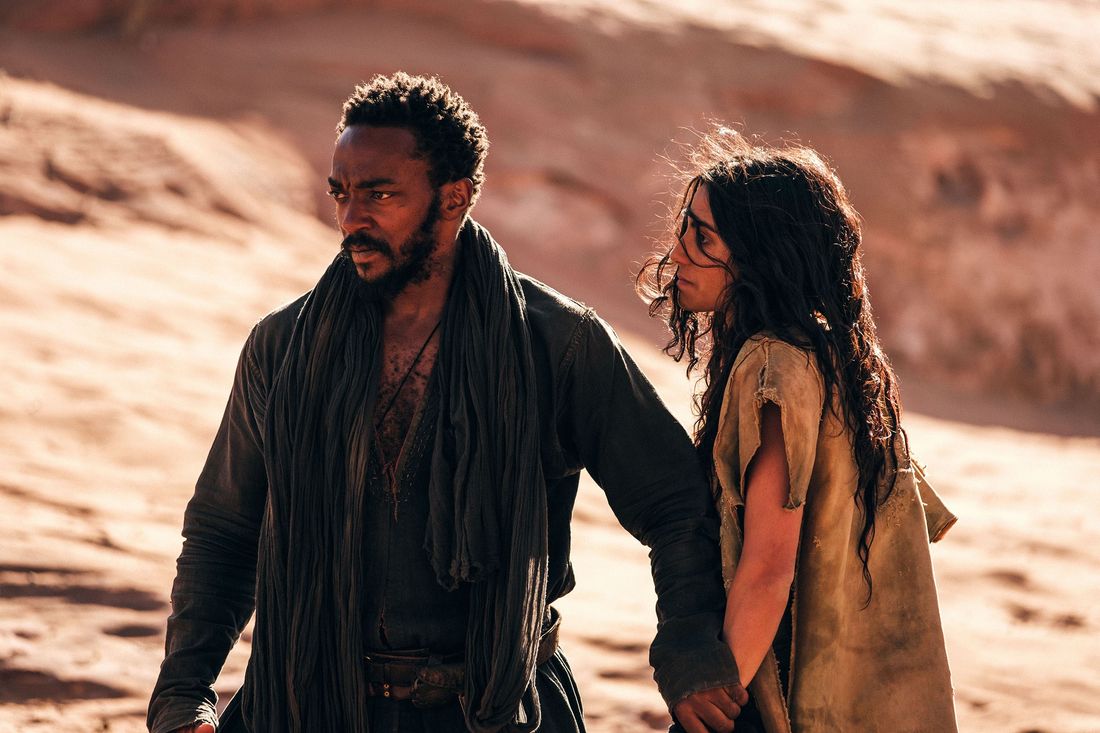
The historical epic Desert Warrior was planned as a pioneering film in several ways. It would be the first major Hollywood production filmed entirely in Saudi Arabia, supported by Crown Prince Mohammed bin Salman’s Vision 2030 – an initiative to diversify the Saudi economy away from oil by investing in areas like tourism and entertainment. Directed by Rupert Wyatt (known for Rise of the Planet of the Apes) and starring Anthony Mackie (from the Marvel Cinematic Universe’s The Falcon and the Winter Soldier and Captain America: Civil War), the film would also be the first project to utilize Neom Media, a massive, cutting-edge media complex and studio built as part of the new city of Neom on the Red Sea.
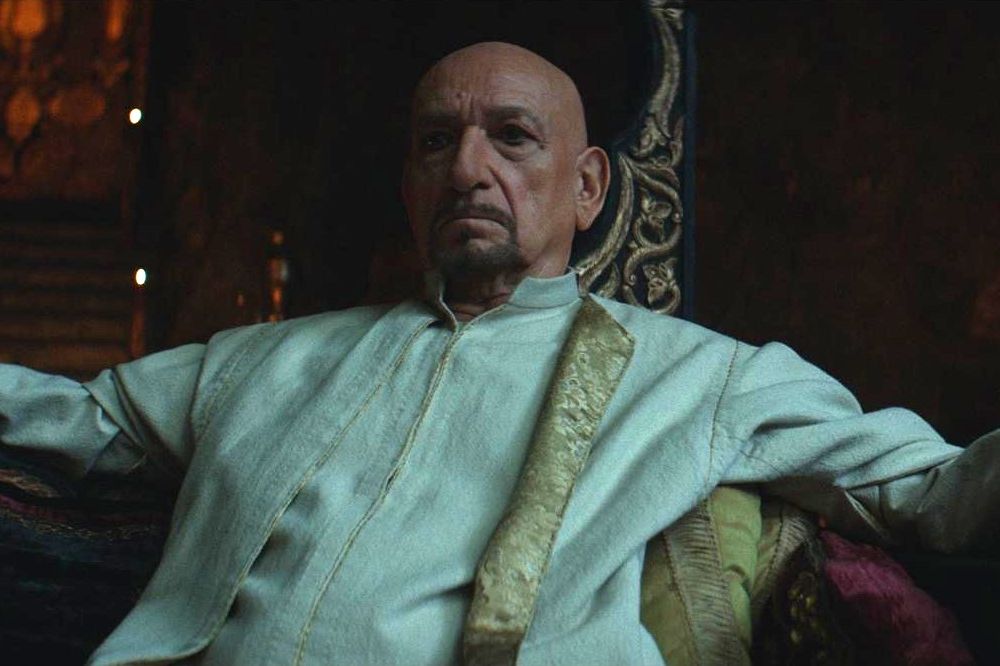
When filming for Desert Warrior began in September 2021, Saudi Arabia and its film facilities weren’t fully prepared. The planned studio space – 130,000 square feet – was still under construction, forcing the production team to get creative. A key set, the enormous throne room for Sir Ben Kingsley’s character, required a space large enough for gladiator fights, torture scenes, and even elephants. To create it, the crew built a temporary soundstage in the parking lot of the Grand Millennium Hotel in Tabuk, using large fans to combat the intense desert heat. One crew member described it as “like an inflatable stadium,” adding that the film essentially paved the way for the development of actual studios in the region.
As a lifelong movie fan, I’ve seen projects struggle, but Desert Warrior took it to another level. It felt like they were building the entire film while simultaneously trying to launch it! A crazy mix of problems – from lacking basic resources and overly optimistic planning, to actual warfare and disagreements about the film’s direction – kept delaying the final cut and threatened any potential international sales. Honestly, the word around town was that it would be a disaster long before anyone saw a frame. And this weekend, after four years and seven months of filming, it limped into just over a thousand American theaters with almost no promotion. The results? A measly $472,000. It was, unfortunately, an absolute flop – a film destined to be quickly forgotten.
Speaking with over a dozen people involved with the film, a clear pattern emerged. Desert Warrior is the most ambitious movie ever made in Saudi Arabia – a visually stunning, epic historical action film inspired by Westerns and movies like Braveheart. It was originally intended to be a landmark achievement for Saudi and Arab cinema, prioritizing real sets and practical effects over computer-generated imagery. However, according to internal financial records from MBC Group, the parent company of the studio backing the film, the budget unexpectedly ballooned from an initial $70 million to at least $150 million – and possibly as high as $170 million, according to one source.
Despite incredibly challenging conditions – including extreme heat, sandstorms, and a remote location with no roads – filming managed to stay on schedule. Everything needed for the production, from 12,500 extras (some traveling from as far as Georgia) to a large international crew and equipment, had to be transported in. Even COVID-19 safety measures, which sometimes caused delays, couldn’t stop the movie from finishing on time. Looking back, cast and crew members now fondly remember the unique experience. “It’s truly amazing we were able to complete this film,” says production designer Paki Smith.
Sharlto Copley stars as the villain in Desert Warrior, a ruthless warlord determined to kidnap Hind, an Arabian princess who is held as a concubine by a Persian emperor (played by Kingsley). In an interview with Vulture, Copley addressed reports that the film’s production was difficult. While acknowledging the challenges they faced while filming Desert Warrior, he strongly objected to the characterization of it as “chaotic” or “dysfunctional,” calling those descriptions inaccurate and overly simplistic.
I’ve been following the saga of Desert Warrior with a lot of concern. After filming wrapped in December 2021, it’s been stuck in post-production for ages. The story gets really messy when you hear different accounts of early cuts – some say MBC liked what they saw, others claim it was a total mess that needed a complete re-work. Apparently, they even considered spending $2 million to get Morgan Freeman to do voice-over, but that idea didn’t go anywhere. A source on the production told me the studio just didn’t have the experience to pull off a film of this scale. What’s even more baffling is that there seems to have been almost no market research done on a $70 million movie! The big question is, who was this film even for? Apparently, audiences in the Arab world don’t feel it’s authentic, and Western viewers just don’t seem interested in the story of Princess Hind. It’s a real head-scratcher.
Soon after production wrapped, MBC Group faced internal problems. A lengthy 2022 audit – over 50 pages long – uncovered excessive spending, a lack of clear direction, general disorganization, and weak internal oversight. This chaos hindered MBC Studios’ goal of becoming a leader in Saudi Arabia’s growing film and television industry. The studio also removed the editor, Richard Mettler, from the project and took away the director’s control over the final cut. A series of staff changes led to the director leaving the film, with some sources saying he was fired, others claiming he took a break, or simply wouldn’t implement the requested changes and stopped attending meetings. (The director declined to comment.) Additional test screenings of the revised version were unsuccessful. Following the Hamas attack on Israel on October 7th, no film distributors or streaming services were willing to acquire Desert Warrior.
Everyone agrees that after the studio executives at MBC, who wanted changes, were removed, Wyatt finished making and editing the film. In February 2026, Desert Warrior was sold to Vertical, a smaller American distributor known for films like the recent Hamlet starring Riz Ahmed, the Sundance winner Atropia, and Liam Neeson’s Ice Road: Vengeance.
In an unbelievable turn of events, the movie Desert Warrior – featuring Arab heroes battling a Persian empire – was released in North American theaters at a time when audiences are weary of war films, especially those set in desert landscapes. Considering the ongoing conflict involving Iran following two and a half years of the Israel-Hamas war, many viewers have already seen enough. Ali Jaafar, head of film and global series at MBC, notes the ironic timing, saying, “It’s a reminder that even the best-laid plans can be overturned by fate. The film’s release in these geopolitical circumstances is a delicious twist of irony.”
Jaafar explained that the idea behind Desert Warrior was straightforward: tell a story rooted in their culture, partner with talented filmmakers, and share it with a global audience while preserving its local traditions and myths. To bring this to life, MBC brought on Jeremy Bolt, known for producing the Resident Evil films, to manage the production. They also hired David Self, the screenwriter behind acclaimed movies like Road to Perdition and Thirteen Days, to write a story set in seventh-century Arabia before the rise of Islam.
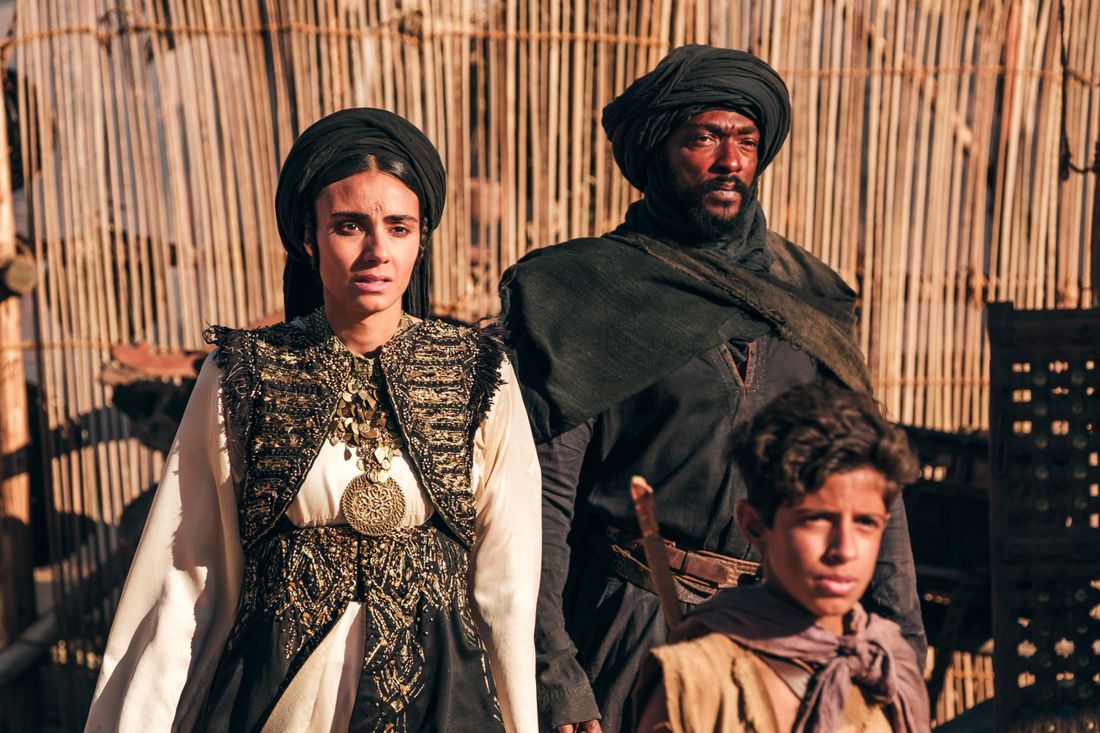
In 2019, Bolt hired British director Wyatt, known for successfully reviving the Planet of the Apes franchise with a film that earned nearly $482 million worldwide. Wyatt originally envisioned his film, Desert Warrior, as a blend of Lawrence of Arabia and Mad Max. After an uncredited rewrite by Gary Ross (The Hunger Games), Wyatt and his wife, Erica Beeney (with whom he co-wrote the 2019 thriller Captive State), revised the script to center on a female lead. The final story follows Princess Hind as she constantly escapes capture and grows into a strong resistance leader – ultimately becoming the ‘desert warrior’ of the title. She reluctantly teams up with the charming but honorable Bandit (Mackie) to unite various Arab tribes and fight against the invading Persian army.
According to someone involved in making Desert Warrior, executives at MBC Group, the studio’s parent company, strongly wanted to cast an American or British star in the lead role. However, some members of the Saudi royal court – a powerful and secretive group that approves all cultural projects and investments, including Desert Warrior – were surprised by the choice of Mackie. One source recalls them questioning why a Black actor was cast as the lead in a Saudi Arabian film. However, Jaafar disputes this account, stating he’s never heard that quote and that the reaction to Mackie’s casting was actually positive.
Filming quickly became much more difficult than expected. Because there wasn’t enough local crew available, we had to bring in over 600 people from all over the world – including Jordan, Lebanon, Syria, Canada, Italy, Serbia, South Africa, and the U.K. The director repeatedly got sunstroke, even while wearing hats and other protection. To keep the sandy scenes looking pristine, a large team constantly erased footprints between each take. Then, when Saudi Arabia closed its borders for six weeks because of COVID-19, vital equipment was delayed. Because the local team wasn’t familiar with typical Hollywood practices, sets often had to be built, torn down, and rebuilt, adding significant costs.
One of the biggest hurdles was assembling a massive army of extras – thousands of people came from Georgia to play the Persian-Sasanian forces. The director carefully selected background performers based on their regional origins – Arabic speakers from Francophone countries, and Alawites from Syria – to accurately represent the diverse Arabian tribes in the film. However, he specifically chose Caucasian actors to play the villains, both to stay true to historical details and to make it easy for the audience to follow the action during the large battle scenes, clearly showing who was on which side. According to one crew member, who has worked on almost 50 films over 38 years, each day felt like learning filmmaking all over again. They constantly had to remind their team not to make assumptions and to approach every task with a fresh perspective, acknowledging that they didn’t have all the answers.
MBC’s internal review claims the movie Desert Warrior started with a $70 million budget, but someone working with the director says the actual cost was closer to $100 million from the beginning. However, the production faced unexpected expenses. According to producer Bolt, a COVID-related shutdown and a border closure by Saudi Arabia added $20 million to the cost. Filming in a location with limited infrastructure then added another estimated $20 million, bringing the total to around $140 million – which Bolt says is typical for a movie of this scale.
Wyatt quickly put together a director’s cut of the film, though one important scene filmed at a desert location had to be cut due to a sandstorm. In the summer of 2022, he showed this version to executives at MBC in Dubai, and they reportedly responded very positively, approving additional filming for February 2023. However, things became difficult when the studio executive in charge of the project was replaced. The new executive, formerly with Amazon Studios, identified several issues with Desert Warrior. This led to disagreements between Wyatt and the studio regarding the film’s overall feel, how easy it was to follow, the characters’ emotional depth, and the length of the movie. According to multiple sources, Wyatt strongly opposed a suggestion to hire Morgan Freeman for voice-over work.
When Wyatt’s editor was fired by MBC, the studio brought in Kelley Dixon (known for her work on Breaking Bad and Black Panther: Wakanda Forever) to re-edit the film without Wyatt’s involvement. This upset Wyatt considerably, according to someone familiar with the production. Test screenings of this new version of Desert Warrior in Las Vegas were poorly received. Feeling he had no creative control, Wyatt considered asking the Directors Guild of America to remove his name from the film. However, Bolt convinced him that doing so would create damaging publicity for a project Wyatt was, at heart, proud of, a source said. Both Bolt and MBC’s Jaafar declined to comment on the situation surrounding Wyatt’s exit from Desert Warrior. In a statement to Variety, Wyatt explained, “The studio wanted to make changes that shifted the film away from my original vision and the footage I had already shot. I disagreed with these changes and was ultimately removed from the project for a significant period.”
In February 2024, AGC International showed the film Desert Warrior to potential buyers at Netflix, Amazon, and all the major movie studios. Surprisingly, none of them were interested in purchasing the rights to distribute it. According to someone involved in the screenings, the feedback was consistent: everyone praised the film’s visuals and action, but felt there wasn’t an audience for it given the ongoing conflict between Israel and Hamas.
When the head of MBC left in the spring, the studio asked Wyatt to come back and complete the film. They agreed to give him complete creative control, and he restarted post-production in September 2024, submitting a new director’s cut in March 2025. Finally, in September of that year, Desert Warrior premiered at the Zurich Film Festival, where reviews were mixed but generally positive. Like many critics, Screen Daily called the film “visually stunning” but criticized its story as being slow and potentially difficult for international viewers to enjoy.
Last February, Vertical Entertainment acquired the U.S. and U.K. distribution rights to Desert Warrior for an undisclosed amount. The company typically offers relatively small initial payments for independent films, then packages and licenses them to streaming services for a larger profit. According to MBC’s Jaafar, the released version of the film stays true to the director’s original vision, and they supported that vision wholeheartedly. He adds that the project was a collaborative effort from beginning to end.
The film Desert Warrior is unlikely to earn back its production costs in theaters. However, for a large company like MBC – which became publicly traded in 2024 with an initial value of $2.2 billion – an $80 million budget increase is a relatively small amount that can be easily absorbed into their overall finances.
According to someone closely involved in the film’s creation, figuring out who’s to blame for the long production isn’t important. They believe the entire process highlights what happens when a large company with good intentions tries something beyond its expertise. While MBC had the resources, they made numerous mistakes – not out of malice, but due to a lack of experience. They envisioned an epic adventure similar to films like Last of the Mohicans or The Last Samurai, but the director created a very different film – a striking, culturally rich movie in the style of Sergio Leone. Essentially, there was a significant mismatch between what MBC expected and the artistic vision of the filmmaker.
Read More
- Netflix’s Little House On The Prairie Reboot: Release Date, Cast & Everything We Know
- Off Campus Season 1 Soundtrack Guide
- Silver Rate Forecast
- Prime Video’s New R-Rated Spy Thriller Is Officially No.1 On Streaming Despite Poor Reviews
- Gold Rate Forecast
- Brent Oil Forecast
- EUR ZAR PREDICTION
- Amazon Primes new GenAI cartoon looks like K-Pop Demon Hunters with aliens
- Inkford Hermitage Chest Locations In HSR (Honkai: Star Rail)
- KPop Demon Hunters Meets Avatar: The Last Airbender In Netflix’s 3-Part Fantasy Series
2026-04-27 23:58