It finally became clear what the season had been leading up to: the creation of a national church, dubbed the “Democratic Church of America.” And why not, the team wondered during a marketing session. Firecracker pointed out that traditional Christian values weren’t resonating with audiences anymore. While only a small percentage of Americans might embrace Homelander as a deity, his message could attract deeply prejudiced Christians who prioritize their biases over biblical teachings of kindness. It seemed the separation of church and state was over.
Firecracker is now tasked with promoting Homelander, and it’s a significant role for her. It’s intriguing to see her struggle with this, as it seems to clash with her personal faith. This could be a compelling development for her character, especially since she hasn’t been very prominent this season. Throughout the season, I’ve been curious about the experiences of ordinary people who are genuinely conflicted about living under Homelander’s rule and how they navigate daily life.
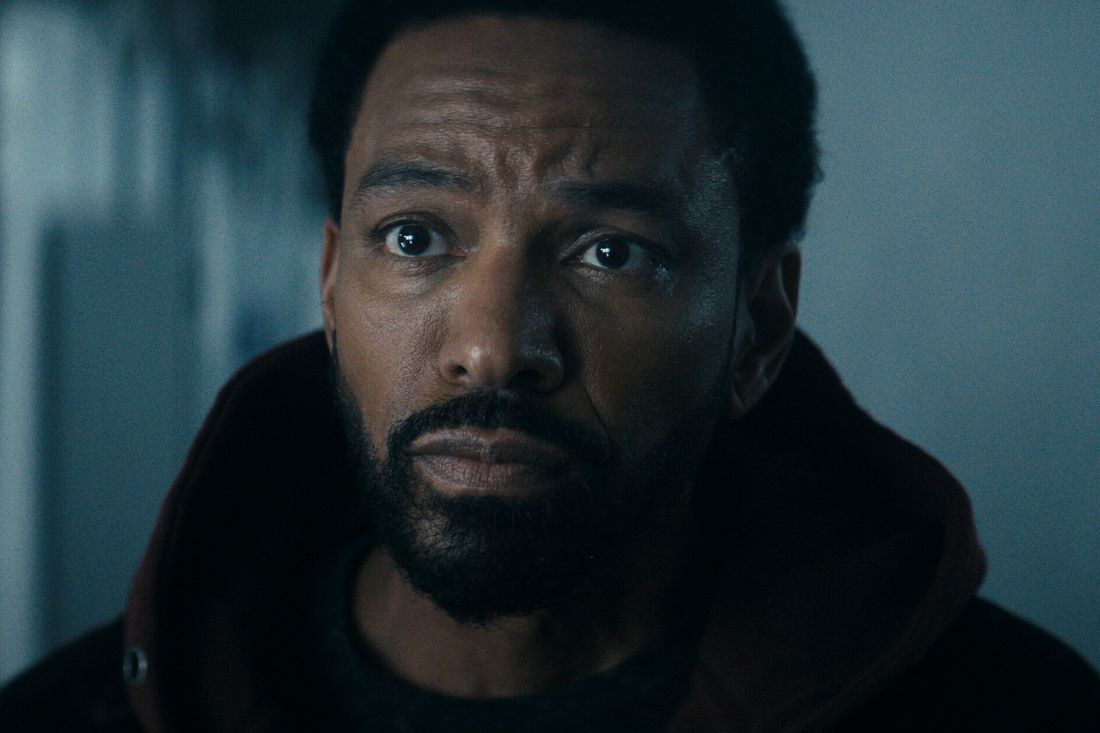
What’s compelling about introducing Annie’s long-lost father, Rick January, is how it explores a familiar story: a child reconnects with a parent who left, only to find they’ve built a new life. We see all the expected themes, like Annie’s jealousy towards her teenage half-brother, Mason, who had a father figure growing up. Annie initially hoped for resolution, but she’s realizing her father didn’t reject fatherhood entirely—he simply wasn’t present in her life. Thankfully, spending time with Rick, Mason, and Kathy allows Annie to build connections with them. She even recognizes a similarity between herself and her father—a tendency to avoid difficult situations. This realization, and Rick’s reminder that loving someone isn’t a weakness, ultimately helps Annie return to Hughie, the man she cares about.
This storyline is unique because it’s far from a typical father-daughter relationship. The daughter is being falsely accused of being a superpowered serial killer by right-wing media, and her father is a law enforcement officer ordered to arrest her supporters, whom they label as terrorists. He’s so far managed to avoid hurting anyone, and secretly collects keepsakes of his daughter, even though they’re estranged. However, maintaining this balancing act is getting harder. He didn’t abandon Annie because he wasn’t ready to be a father; he left when Annie and her mother became convinced she had divine powers.
The show depicts how TikTok and the Homelander Academy are influencing teenagers with Vought’s messaging, as seen with Mason. However, Rick’s new family isn’t blindly loyal to Homelander; they’re simply trying to survive and avoid being sent to a detention camp. They even manage to convince Rick’s coworker, Ed, not to arrest Starlight after Mason briefly falters. It’s a welcome change of pace to avoid a typical, violent outcome, and it’s refreshing to see the impact of these events on ordinary Americans. While focusing on these smaller, personal conflicts might slow things down a bit, it’s a valuable addition to the season.
The trip to Fort Harmony was supposedly to find V-One and achieve immortality, but it turned up empty-handed. Instead, they found evidence of heroin use and a broken safe with empty vials, suggesting Bombsight – a former teammate of Soldier Boy who already took V-One – stole the last doses decades ago. This feels like a plot twist designed to prolong the V-One storyline, especially since Sage mentioned Bombsight last episode, and likely sets him up to appear in the upcoming Vought Rising spin-off.
However, the mission primarily serves as a way to expose the growing conflict within the Boys. Geoff Aull’s script cleverly uses the airborne toxoplasmosis to bring out the worst in everyone. Hughie, frustrated with Annie’s sudden departure, insults her with harsh language. He also confronts Butcher about his handling of Ryan and criticizes MM for giving in to Butcher’s demands. Kimiko, in turn, angrily accuses Frenchie of being jealous and treating her like an animal. Frenchie remains largely unchanged, as his long-term drug use has already affected his brain.
The situation becomes even more dangerous as it’s revealed that everyone who died here was killed in a fit of uncontrollable rage. Homelander and Soldier Boy are also after V-One, prompted by a conversation with Stan Edgar, but the Boys are too busy arguing about leaving—which quickly escalates into a real fight. It’s mostly entertaining, though the dark setting makes it hard to see what’s happening (at least in the version I watched). Luckily, Frenchie manages to trigger a reaction from Soldier Boy that destroys the source of the problem: Quinn, an early Vought experiment. Surprisingly, Soldier Boy even apologizes afterward.
The latest episode of Fort Harmony felt a little underwhelming, as things largely stayed the same. Kimiko and Frenchie’s conversation left their relationship uncertain, mirroring the cliffhanger from the previous week. Hughie continues to see Butcher as a heartless villain, while Butcher and MM remain friendly, though their bond has limits. And, as always, Homelander and Butcher are still locked in a deadly battle to the finish.
The most significant relationship development in the story revolves around Homelander and Soldier Boy. Soldier Boy arrived seeking a way to avoid being trapped on Earth with Homelander forever, as Sage had warned him. He initially tries to trap his son in a special uranium chamber to prevent him from getting the V-One substance. Personally, Soldier Boy also wants to destroy the Vought-created samples that caused him so much suffering. After encountering Quinn, Soldier Boy becomes unusually vulnerable, and Homelander surprisingly avoids killing him with his laser vision.
Honestly, this latest episode was…fine. It was enjoyable enough to spend time with the characters and see what they’re struggling with, but it didn’t really do much to move the story forward. I’m hoping the rest of the season picks up the pace and gives us something truly exciting. I’m still invested, but I’m definitely wanting more!
Extra Frames
It seems Black Noir’s odd behavior was just him staying in character as part of his role, which wasn’t a surprise. While I enjoy watching him and The Deep argue, I’d like to see their storyline develop with more than just a brief scene each episode.
Okay, so Ryan’s at it again – running away from things, and his pop culture knowledge is… questionable, to say the least. Honestly, when he mentioned Harrison Ford in Star Wars, he called him ‘that guy from Regarding Henry!’ It was a truly baffling moment. And get this – he legitimately didn’t know Darth Vader is Luke Skywalker’s father! It’s moments like these that make you wonder what world this guy is living in.
Hughie finally admits that Annie turned his experience with the shapeshifter into being about her own feelings, which is something I discussed in my previous reviews and an essay about sexual assault involving look-alikes.
These are some engaging conversations between a father and son, focusing on Clara Vought, also known as Stormfront. They’re wondering if she might still be alive, or if she’ll cause trouble for them even after her apparent death.
I really appreciate the way Butcher and MM’s story concludes. It’s interesting to see them cooperating and enjoying each other’s company while still harboring some resentment – it’s a really unusual dynamic.
I overheard someone compare this to The Last of Us, and another person immediately dismissed it as just The Walking Dead with a fungal twist. It felt like they were talking about shows instead of actually discussing this one, but honestly, The Last of Us did pop into my head too.
This line playfully criticizes those in positions of power, suggesting they focus on data while pointing out the lack of transparency from a fictional streaming service – a clear nod to how real-world streamers operate.
• “No wonder the Lamplighter: Light of Justice finale got a D- on A.V. Club.”
Read More
- Netflix’s Little House On The Prairie Reboot: Release Date, Cast & Everything We Know
- Off Campus Season 1 Soundtrack Guide
- YouTuber arrested after viral AI bodycam videos spark real police complaints
- Silver Rate Forecast
- Prime Video’s New R-Rated Spy Thriller Is Officially No.1 On Streaming Despite Poor Reviews
- Brent Oil Forecast
- Peaky Blinders: The Immortal Man’s Tommy Shelby Is a Better Father Than Michael Corleone
- EUR ZAR PREDICTION
- Gold Rate Forecast
- Bulgakov’s Take: Koreans Bet the Farm on Chips, Crypto, and Chaos
2026-04-23 00:07