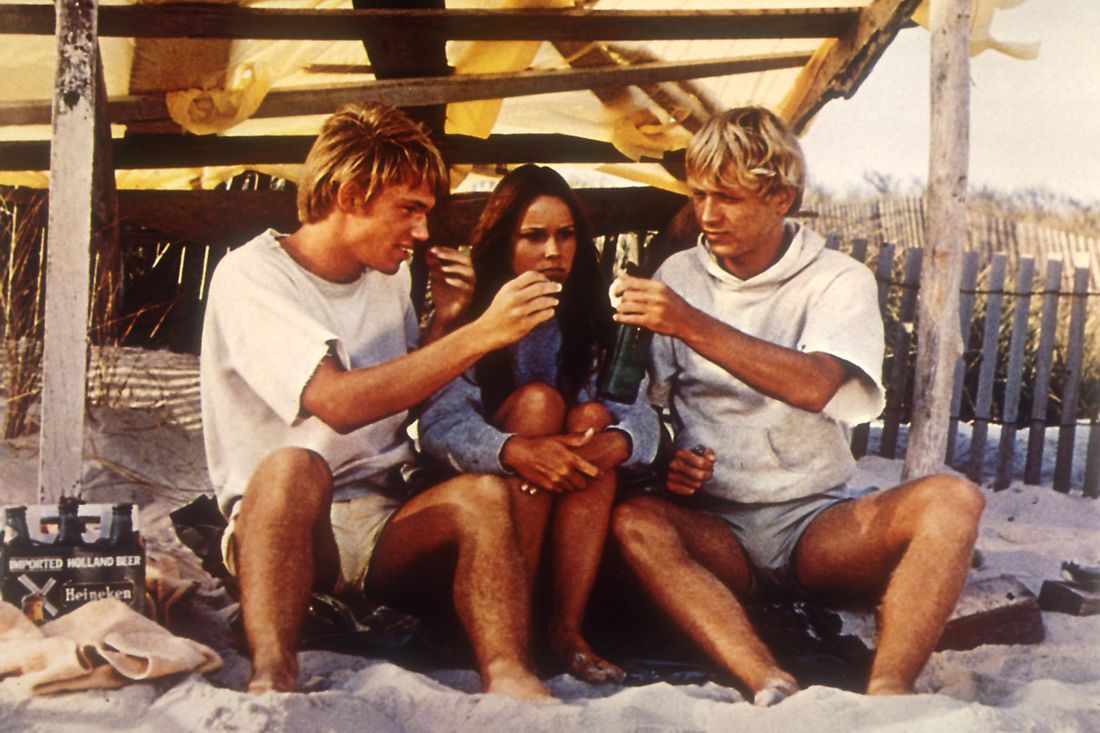
A beautifully restored version of Frank Perry’s 1969 film, Last Summer, will be shown in New York this Sunday, May 3rd, at the Paris Theater. While copies have existed over the years, this screening marks a significant event because the film hasn’t been officially released on DVD or Blu-ray – until now. Warner Archive will release it later this year, responding to long-standing requests from fans. Although a print was discovered in Australia, this restoration allows audiences to finally experience this wonderful film as it was meant to be seen, in excellent quality – something that’s been rare until now. It wasn’t truly ‘lost’, but it certainly deserves this renewed attention.
I first became interested in the film Last Summer around 2008 while researching the movies made by Frank Perry and his wife, Eleanor, who co-wrote the screenplays. They created a truly impressive series of films, beginning with the Oscar-nominated David and Lisa (1962) and continuing with intense dramas like Ladybug Ladybug (1963), and moving adaptations of Truman Capote’s stories, A Christmas Memory (1966) and The Thanksgiving Visitor (1967). They also made The Swimmer (1968), starring Burt Lancaster – probably their most famous film – and the powerfully honest Diary of a Mad Housewife (1970), which came out as their marriage was falling apart. While their films received praise when they were released, they’ve largely been forgotten, maybe because they didn’t quite align with the more experimental style of other American films from that time. Frank brought a traditional theatrical sensibility to his directing, while Eleanor, with her background in social work and psychology, had a deep understanding of complex human behavior in both children and adults. Their films are beautifully balanced and subtly powerful; they draw you in with their understated grace, and then deliver a devastating emotional impact.
Last Summer beautifully showcases the strengths of its creators, offering a warm, nostalgic feel despite portraying a strange and unsettling world. The film, adapted from Evan Hunter’s 1968 novel, centers on three teenagers spending a summer on Fire Island. Peter and Dan are already friends when they meet the carefree Sandy, who enlists their help in caring for an injured seagull. As they grow closer, Sandy playfully flirts with both boys, and they begin sharing personal stories through lighthearted games. However, when something tragic happens to the seagull, the boys surprisingly overlook it, caught up in their infatuation with Sandy and a shared, distorted view of reality.
The girls’ carefree summer is disrupted when Rhoda (played by Catherine Burns, an Oscar nominee) joins their group. Unlike them – tanned, confident, and bubbly – Rhoda is quiet and sad. Just as they had nursed a wounded seagull back to health, only to essentially destroy it, they initially help Rhoda come out of her shell, but ultimately turn on her in a deeply upsetting scene. What begins as a sweet recollection of childhood freedom slowly transforms into a much darker and more disturbing story.
I think what really struck me about Eleanor’s book compared to Hunter’s is how she stripped everything back. Hunter gave you a lot of background – the parents, the community – but Eleanor focuses entirely on the kids and their experience. It’s like the adults barely exist, and when they do, the kids just tune them out – I always pictured them sounding like those adults in Peanuts with that ‘wah-wah’ voice! It’s brilliant because she doesn’t try to make a point about modern kids; instead, she shows us something raw and terrifying about what people are capable of, and it’s so much more powerful coming from these teenagers. You get little glimpses of the world changing around them – they even try computer dating, which is funny – but it doesn’t define what’s happening. The story isn’t about the world, it’s about what’s inside these kids, and it’s just incredibly clear and unsettling.
The film Last Summer stays with you long after you’ve seen it, because its calm exterior hides a surprisingly dark story. That’s why this new restoration is so great – now audiences can appreciate how beautifully it’s made, as well as what it’s about. For years, the film seemed incomplete because the original footage for the ending was lost. Luckily, screenwriter Larry Karaszewski (known for Ed Wood and The People vs. Larry Flynt) spearheaded the restoration, piecing together the ending from three different sources. He’ll be discussing the film with star Richard Thomas after Sunday’s screening. This restoration might also help people remember the talent of director Frank Perry, whose 1972 adaptation of Joan Didion’s Play It As It Lays was also recently re-released. It’s wonderful to have this classic American film back where it belongs, and available for everyone to enjoy.
Read More
- Netflix’s Little House On The Prairie Reboot: Release Date, Cast & Everything We Know
- Off Campus Season 1 Soundtrack Guide
- YouTuber arrested after viral AI bodycam videos spark real police complaints
- Silver Rate Forecast
- Prime Video’s New R-Rated Spy Thriller Is Officially No.1 On Streaming Despite Poor Reviews
- Brent Oil Forecast
- Gold Rate Forecast
- Bulgakov’s Take: Koreans Bet the Farm on Chips, Crypto, and Chaos
- Peaky Blinders: The Immortal Man’s Tommy Shelby Is a Better Father Than Michael Corleone
- EUR ZAR PREDICTION
2026-04-30 16:54