DeFi has gobbled back a gargantuan $95 billion in total value locked. The figure is dazzling, a treasure chest of glitter, but the tale behind it is even more delicious than the numbers themselves.
A little report from CryptoQuant, purring with DeFiLlama data, has spotted a recovery that goes beyond the return of capital. After the post-2021 correction washed away the speculative froth, the $95 billion now locked in on-chain protocols reflects something the 2021 peak did not: sustained inflows driven by real demand rather than yield-chasing mania. The capital has returned. This time, it seems to be staying.
The structural shift the report identifies beneath the TVL figure is the more consequential development. DeFi is no longer just a playground for high-flying bets. It is being disinfected and polished as financial infrastructure-a replacement for the intermediary layer that traditional finance tries to pawn between you and your assets. The distinction is fundamental: in traditional finance, institutions guard assets for you. In DeFi, you guard your own assets with clever contracts. Trust moves from people in suits to lines of code.
At the center of that shift is self-custody-and in Japan, that shift is stepping off the page and into real life. Hashport Wallet is unfurling a friendly banner, lowering the barrier to owning private keys for everyday folks, making the self-custody engine accessible to a nation that used to keep its money snug in grand old banks.
The DeFi Infrastructure Is Coming Together. Japan Is Watching Closely
The report points to stablecoins as the connective tissue that makes DeFi work rather than merely dream. Price-stable assets solve the rickety problem that prevented crypto from replacing traditional payment rails: volatility.
When the medium of exchange zigzags 10% in a session, it cannot stand in as a backbone for payments, transfers, or lending. Stablecoins remove that wobble. Their global rise isn’t a passing crypto fad-it’s a real settlement layer that the world of finance increasingly leans on.
The Ethereum network data provides the on‑chain nod. Transaction activity has surged lately-and the report draws the crucial line: when activity grows alongside rising prices, it signals organic demand rather than speculative positioning. People aren’t just betting on Ethereum. They are using it. That combination-growth in activity and price moving together-reads as a strengthening on‑chain economy, not a careless bubble.

Japan is translating these giant global tremors into a homegrown financial model with a particular choice of architecture. JPYC-a yen‑denominated stablecoin-makes the entire DeFi stack practically accessible to Japanese users and institutions in local currency. The friction of currency conversion, the drag of dollar‑denominated protocols, the regulatory tangle of foreign stablecoins-JPYC tackles all three at once.
What JPYC and Hashport are building together isn’t some flaky crypto gadget. It is a national financial access layer: self‑custody gear paired with a local‑currency settlement asset, delivering the full shimmer of global DeFi to a country that still holds some of the world’s largest household savings. That mix-accessibility, sovereignty, and local denomination-is what the report calls a uniquely viable model for regulated economies stepping on to the on‑chain stage.
Stablecoin Domination Takes a Breather After a Big Jump
Stablecoin dominance has slipped into a cosy consolidation after a starry run that defined late 2025 and early 2026. The chart shows a merry leap from roughly 7% to above 13%, a sign that capital is ducking into the safe harbor of stablecoins when the seas get a bit rough. The image below captures that splash.
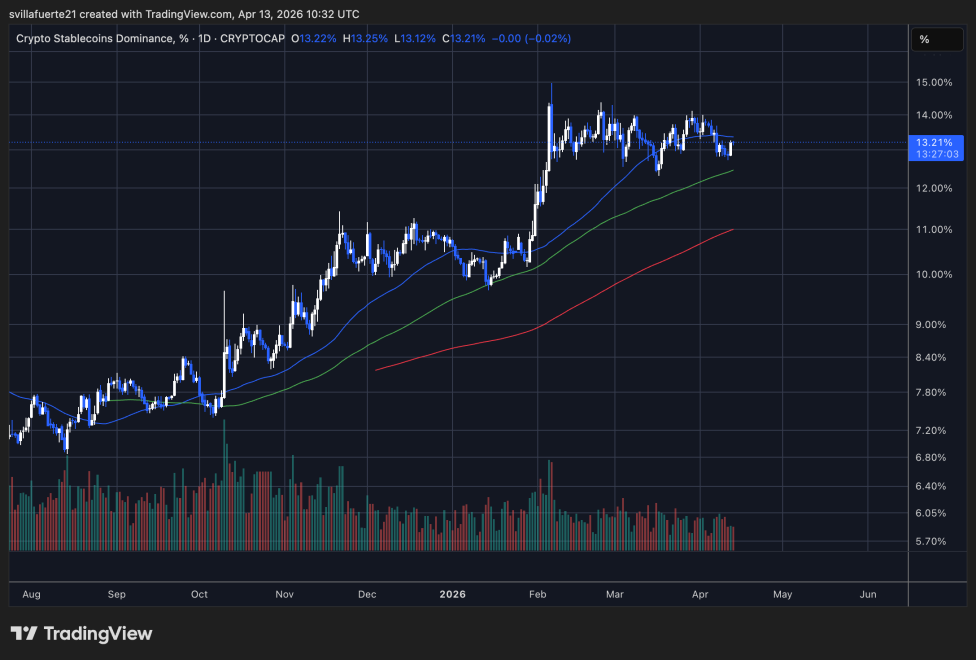
Since peaking near the 14% region in February, dominance has settled around 13.2%, forming a neat little horizontal range rather than marching higher. This shift from expansion to consolidation suggests the initial fear has passed, and the market is now in a hold‑your‑breath pattern rather than racing toward risk‑off again.
Technically, the structure remains spry. Stablecoin dominance sits above its 50‑day (blue) and 100‑day (green) moving averages, both trending upward, while the 200‑day (red) keeps climbing below. This neat alignment says the broader money‑guarding trend is still intact, even if the drumbeat has slowed a notch.
Structurally, this is a plateau at a lofty height. A break above 14% would whisper renewed risk aversion, while a slip below 12% would tell us capital is sneaking back into crypto. For now, the market treads cautiously, not yet ready to sprint into risk‑on territory.
Read More
- Off Campus Season 1 Soundtrack Guide
- Chainsaw Man Volume 24’s Cover Art Reveals a Brand-New Denji
- X-Men ’97 Finally Gave Gambit the Hero Moment He Deserved
- 46 Years Later, The Mandalorian & Grogu Answers A Major Empire Strikes Back Question
- HoI4 fans harsh reactions to the announcement of another DLC pack
- 10 Worst End-Game Couples In Sitcom History
- Gold Rate Forecast
- DoorDash responds after customer uses AI to make food look bad and get a refund
- Emily Henry Says to ‘Trust the Vision’ For Beach Read Adaptation
- Hatsune Miku cosplayer goes viral selling $15 cups of “foot juice” to thirsty anime fans
2026-04-14 00:27