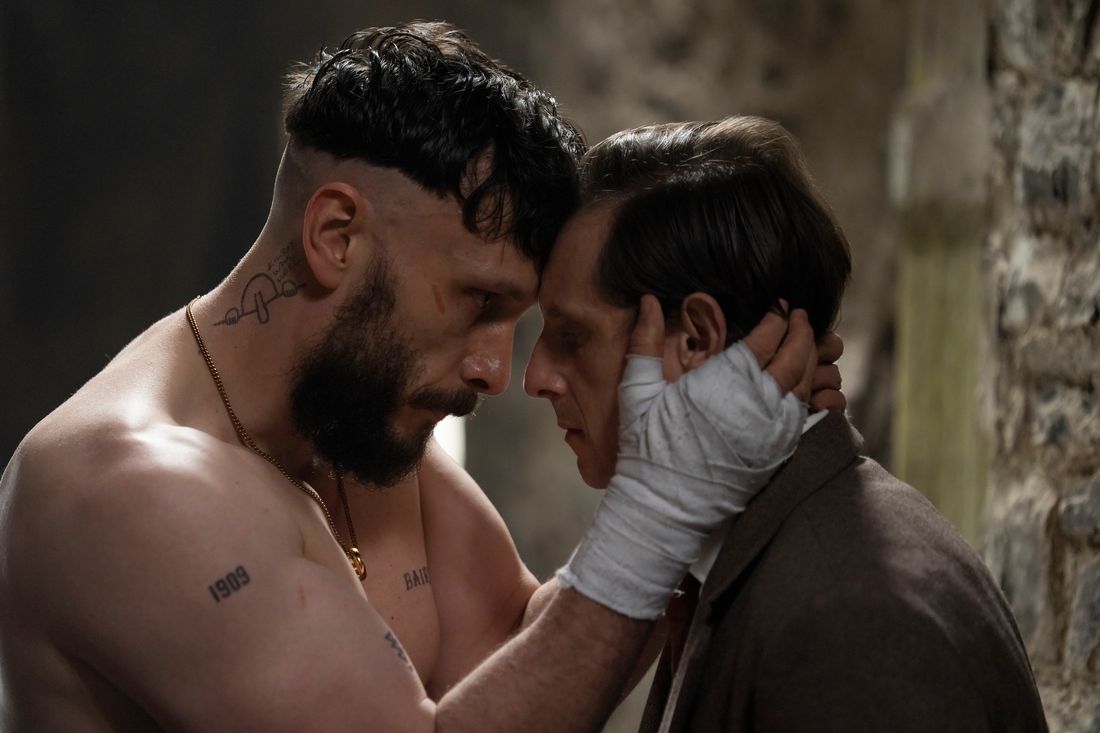
The series Half Man centers around a complex relationship between brothers Ruben and Niall. Ruben, played by Stuart Campbell as a teen and Richard Gadd as an adult, consistently invades Niall’s personal space, often physically, and frequently makes inappropriate advances. These actions – which could be interpreted as bullying, playful teasing, or something more – are intentionally ambiguous. The show is at its most powerful when exploring these gray areas, particularly during the brothers’ youth, when their motivations and feelings are unclear even to themselves.
As the show matures, Half Man seems less willing to explore the complexities it once welcomed, and it starts to feel preachy. It’s as if the series, like the character Niall, is becoming self-protective and withdrawn, and like Ruben, is stumbling over its own boastfulness. It’s fitting that the show presents these two brothers as a single entity, highlighting each of their flaws. However, beyond that clever idea, the series raises fascinating questions about masculinity, sexuality, and self-hatred, but doesn’t offer satisfying answers.
Richard Gadd’s new HBO series, Half Man, begins tonight and follows his hugely successful Netflix show Baby Reindeer. Baby Reindeer, which started as a one-man stage show, became a massive hit in 2024 and won six Emmys, giving Gadd creative freedom for his next project. Half Man continues to explore themes from Baby Reindeer, including the complexities of bisexuality, traditional gender roles in relationships, and the pressures of masculine stereotypes. While not as directly addressed as in Baby Reindeer, issues of abandonment and sexual abuse remain central to the characters’ interactions. The series highlights how difficult it is for anyone to reveal their pain, especially when admitting to being hurt might also mean acknowledging the potential to cause harm. These themes are powerfully portrayed through the evolving, yet damaging, relationship between Niall and Ruben. Although the show eventually becomes overly dramatic with a predictable twist and relies too much on the character’s physical appearance, its exploration of desire, prejudice, and the journey to manhood is both captivating and unsettling.
In the mid-1980s, fifteen-year-old Niall Robertson is losing interest in school, which coincides with increased bullying due to rumors about his sexuality and his unconventional family. He lost his father, a writer, when he was eight and now lives with his mother, Lorraine (played with compelling mystery by Neve McIntosh), and her friend Maura (Marianne McIvor). Their relationship is never clearly explained to Niall, but at school, everyone assumes they are lesbians, and Niall faces taunts because of it. Adding to his worries, Maura’s son, Ruben (Campbell), who is two years older, is coming to live with them after being released from juvenile detention. Ruben, who once made Niall feel inadequate, was sent away for a violent act – biting off a man’s nose – and now he’s moving into Niall’s room and attending his school. Compared to the confident and charismatic Ruben, Niall feels incredibly awkward and out of place.
It’s surprising, then, when Ruben and Niall unexpectedly become close. Ruben playfully calls Niall his “brother from another lover” and fiercely defends him against bullies. Niall gets used to Ruben’s dramatic personality and admires his quick, decisive actions. The show jumps between different time periods, starting with an older Ruben crashing Niall’s wedding and then flashing back, but the series is most compelling when focused on the two teens, thanks to the strong performances of Campbell and Robertson. A particularly striking scene in the first episode shows Ruben tackling Niall to keep him quiet when Niall’s father unexpectedly appears outside their window at night. The next morning, they’re tangled together in bed, and while the show emphasizes the intimacy with a somewhat awkward visual detail, the message is clear: these two boys complete each other. The series repeatedly emphasizes this connection, sometimes in heavy-handed ways, like through comparisons to Dr. Jekyll and Mr. Hyde. However, when the show explores Niall’s attraction to Ruben, despite initially hating and fearing him, it becomes a more nuanced story about how sexuality isn’t always about simple liking or understanding. It suggests that attraction can be a complex, instinctive force, reflecting hidden parts of ourselves that we may not fully understand – and might even be afraid to confront.
The series Half Man starts strong, capturing a raw and surprising exploration of two brothers learning about themselves and each other. However, it loses some of its impact as the brothers mature, and their relationship becomes overly dramatic and predictable. The story expands to include more characters and focuses on issues like aging parents, work struggles, and the possibility of becoming fathers. Unfortunately, the significant time jumps between episodes make it hard to fully believe the characters’ transformations, and the writing relies too heavily on emotional turmoil and lengthy monologues. As Niall and Ruben grow older, the show’s unique comedic chemistry is overshadowed by over-the-top visuals – slow motion, distorted sounds, and exaggerated expressions – which feel unnecessary. While Half Man asks if men can truly be honest with each other, it ultimately avoids a deeper look at harmful masculine behaviors beyond the brothers’ relationship. The series consistently links everything back to past trauma, which feels both trendy and like an easy way out, suggesting the show fears losing the audience’s interest if the characters’ journeys don’t follow a neatly structured path of identifying and resolving problems.
There’s a lot of recent interest in understanding how isolated young boys can become radicalized or violent, and the film Half Man fits into this trend by showing how two troubled brothers, Niall and Ruben, grow increasingly self-centered. However, the film is most compelling when it moves beyond this concern and explores the complicated nature of attraction. Half Man deliberately avoids clearly defining the connection between Niall and Ruben, which is reminiscent of other films like Beach Rats, Beau Travail, and Femme that portray the development of desire within male spaces. This ambiguity allows viewers to interpret the brothers’ relationship – whether their wanting to be each other means they want to be together – based on their own understanding of masculinity. This open-endedness is the film’s greatest strength, letting the actors’ performances define the central relationship rather than the writer’s later explanations. While presenting Niall and Ruben as simply pursuing societal expectations diminishes their complexity, Half Man, like the brothers themselves, ultimately fails to fully realize its initial promise.
Read More
- Netflix’s Little House On The Prairie Reboot: Release Date, Cast & Everything We Know
- Off Campus Season 1 Soundtrack Guide
- YouTuber arrested after viral AI bodycam videos spark real police complaints
- Silver Rate Forecast
- Prime Video’s New R-Rated Spy Thriller Is Officially No.1 On Streaming Despite Poor Reviews
- Brent Oil Forecast
- Gold Rate Forecast
- Bulgakov’s Take: Koreans Bet the Farm on Chips, Crypto, and Chaos
- EUR ZAR PREDICTION
- Peaky Blinders: The Immortal Man’s Tommy Shelby Is a Better Father Than Michael Corleone
2026-04-23 20:02