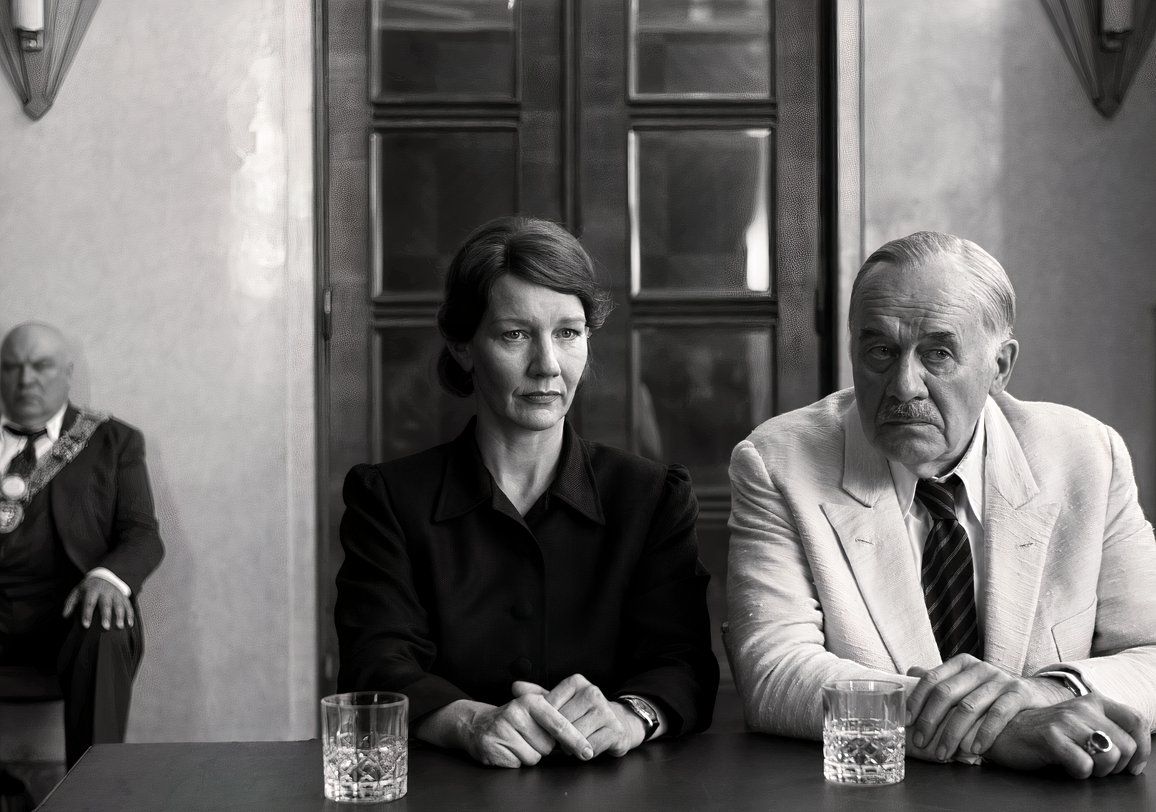
In the final moments of Pawel Pawlikowski’s film, Erika (Sandra Hüller) quietly asks her father, the writer Thomas Mann (Hanns Zischler), to go home. His sharp and dismissive response – “Where is that?” – perfectly captures the film’s bleak and chilly atmosphere. This brief conversation, occurring during their strained journey through post-World War II Germany in 1949, feels entirely consistent with the characters’ difficult and distant relationship.
Despite its short 82-minute length, Fatherland offers a genuine look at human emotions, with moments of happiness, sadness, and hardship. While it doesn’t fully explore these themes in depth, it still provides a rewarding experience, especially when viewed alongside the rest of Pawlikowski’s films. It may not be his strongest work, but it’s definitely worth watching.
Despite Great Performances, It’s Hard To Connect To Fatherland

The movie opens with a phone call between Klaus Mann and his twin sister, Erika, immediately revealing their complicated relationship. Though their family was clearly troubled, it’s apparent they don’t have a close bond. While Erika works for their father, Klaus openly lives as a gay man and passionately supports Communism. The story follows Erika and Thomas as they travel through a divided Germany after Thomas receives the Goethe Prize, focusing on their evolving relationship during the trip.
While Fatherland isn’t entirely without emotion, it doesn’t fully draw the audience in. The film feels rushed and tries to cover too much ground, preventing any single element from truly resonating. The dynamic between Thomas and Erika exemplifies this – Erika is largely presented as a supportive figure, constantly defending her father against accusations and suppressing her own feelings during a difficult period. It’s only when they face a family crisis that their relationship begins to feel genuine and breathe with life.
The script frequently touches on themes of communism and Nazism through the introduction of compelling minor characters. While these appearances effectively remind us of historical mistakes, they don’t deeply connect to the story of the divided country. This is particularly frustrating in Fatherland because these side characters had intriguing links to the main ones – even a short additional 15 minutes exploring those connections would have made the film much stronger.
Łukasz Żal’s Cinematography Matches The Intensity Of Fatherland’s Angst

Although Fatherland doesn’t deliver a strong emotional impact, it’s still a compelling film thanks to several key elements. The stunning black-and-white cinematography by Łukasz Żal is a standout, perfectly complementing the characters’ reserved personalities and subtly referencing a difficult history. Żal’s visuals also enhance the performances of the lead actors, Sandra Hüller and Ulrich Zischler, who both portray their characters with a cool, detached demeanor.
Despite its brief runtime of 82 minutes, Fatherland demands a bit of patience from viewers. The film doesn’t quite connect all its ideas emotionally, and the script feels restrained, especially considering the compelling father-daughter relationship at the heart of the Cold War story. While strong performances from Zischler and Hüller elevate the film, they aren’t enough to make Fatherland truly unforgettable. Fatherland premiered at the 2026 Cannes Film Festival.
Read More
- Netflix’s Little House On The Prairie Reboot: Release Date, Cast & Everything We Know
- Off Campus Season 1 Soundtrack Guide
- YouTuber arrested after viral AI bodycam videos spark real police complaints
- Silver Rate Forecast
- Prime Video’s New R-Rated Spy Thriller Is Officially No.1 On Streaming Despite Poor Reviews
- Brent Oil Forecast
- EUR ZAR PREDICTION
- Bulgakov’s Take: Koreans Bet the Farm on Chips, Crypto, and Chaos
- Gold Rate Forecast
- Peaky Blinders: The Immortal Man’s Tommy Shelby Is a Better Father Than Michael Corleone
2026-05-15 15:31