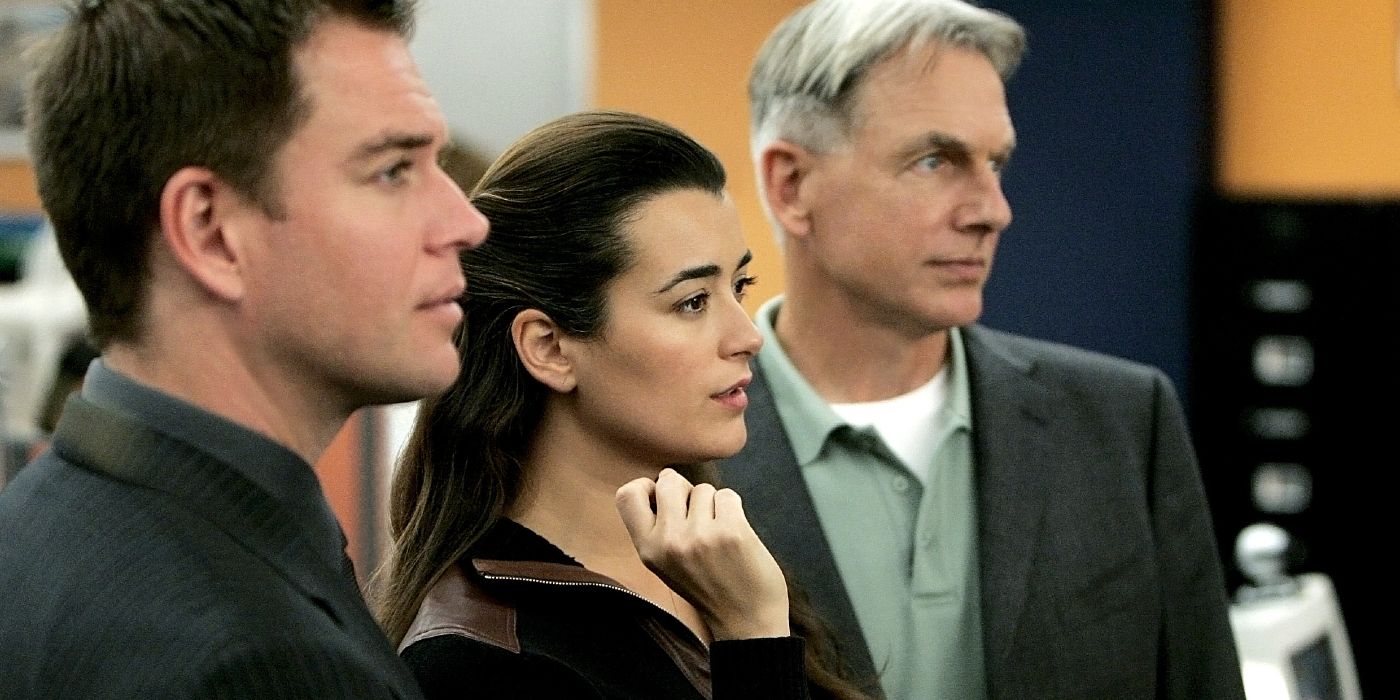
From the beginning of television, networks have worked to develop reliable, interesting shows that would draw people to their channels and encourage them to tune in regularly. These shows often became a fixed part of viewers’ routines, with people scheduling their week around them. Some of the most popular examples are police dramas like and .
NCIS and CSI: Crime Scene Investigation are two of CBS’s most popular shows, and they’ve been a major reason for the network’s success in television ratings, particularly because each show has led to several spin-offs. Interestingly, despite being set in different cities and appearing to focus on different things, the two shows are remarkably similar in how they’re structured and presented.
NCIS and CSI Follow the Same Procedural Formula
Episodes of NCIS and CSI: Crime Scene Investigation typically start with a brief scene showing everyday life that’s suddenly disrupted by a crime or the discovery of a body. This quick introduction grabs the viewer’s attention and leads into the show’s opening credits and the rest of the 43-minute episode.
Starting an episode with a brief, intriguing scene – often called a ‘cold open’ – is a great way to grab viewers’ attention. Networks use this technique to keep people watching and boost ratings. Shows like CSI: Crime Scene Investigation use it by revealing a bit of the crime right away, creating instant suspense and making viewers eager to see what happens next.
The process generally follows a pattern once the investigation starts: the incident comes to light, an investigation begins, followed by an autopsy or lab work. Initial leads often prove false, causing the team to change direction. This eventually leads to the agent understanding the truth, confronting the perpetrator, presenting all the evidence, and finally closing the case.
Most crime procedural episodes follow a main case, but they also often include a secondary storyline focusing on the detectives’ personal lives or a smaller investigation. This helps keep each episode engaging and gives viewers a reason to come back, wondering about things like will-they-won’t-they relationships – for example, will Gil and Sara or McGee and Abby end up together? Tune in next week to find out how these relationships develop alongside the latest case.
The CBS Dramas Have Similar Characters
Both the NCIS and CSI franchises feature a similar type of leader. Leroy Jethro Gibbs and Gil Grissom are both calm, smart, and take charge, trusting their gut feelings even though they’re very experienced. They both play a key role in keeping their teams grounded, offering guidance, and ensuring everything runs smoothly, no matter how stressful the situation.
Both the NCIS team and its spin-offs follow similar patterns. The teams are typically made up of younger agents who are motivated to prove their skills, and each member has a unique area of expertise. To lighten the mood during often difficult cases, both groups also include characters who provide comedic relief.
It’s easy to see the parallels between characters in the different series. For example, Gibbs is similar to Grissom, McGee to Nick Stokes, and Abby to Greg Sanders in the earlier seasons. Later on, DiNozzo and Palmer share similarities with Greg, Ziva David with Sara Sidle, Ducky with Al Robbins, Jenny with Eleanor Bishop, and Catherine Willows. Finally, Nick Torres is comparable to Warrick Brown.
These pairings all have similar personalities and work styles. Whether they’re crime scene investigators or socially awkward detectives, their unique qualities and contrasting approaches make the secondary storyline fun and consistently advance the main plot each week in a very predictable way.
NCIS and CSI Blend Hard Science With Humanity
In 1987, Florida saw the first conviction in the United States based on DNA evidence, marking a turning point in forensic science and criminal justice. This breakthrough later heavily influenced popular TV shows like NCIS and CSI, which often portray forensic science as the key to cracking cases.
As a big fan of police dramas, I’ve noticed something cool. It always amazes me how a tiny piece of evidence – like a single fingerprint, a little fiber, even a blurry photo or a small DNA sample – can completely crack a case that seemed impossible. Shows like NCIS and CSI are full of examples where their agents uncover these little details, and suddenly, everything starts to fall into place. It’s those small clues that really drive the story forward!
Viewers were captivated by the scientific techniques shown on these programs, even though the investigations appeared to happen much faster than they actually would. The immense popularity of CSI led to something called the “CSI Effect” – the belief that real-life criminal investigations should be as swift and conclusive as those seen on television.
Both NCIS and its spin-offs explore serious crimes, but thankfully, the characters generally maintain a sense of hope. The teams frequently use sarcasm, playful teasing, and dry humor to lighten the mood. This approach creates a relatable and authentic experience for viewers, allowing them to connect with the characters on a human level rather than simply being entertained.
Both shows succeeded by finding a good balance between serious drama and lighthearted moments. By not dwelling on violence, they stayed enjoyable for audiences. Characters like Abby and Greg were key to this – their quirky personalities and the interesting cases they solved offered a welcome break from the tension.
In an episode of CSI, Grissom and Warrick are at a crime lab investigating a child’s death. They interrupt Greg Sanders who is chatting with a colleague. Warrick jokingly gives Greg a lollipop to collect DNA, and Greg quips, “All work and no play makes Greg a dull boy.” Grissom immediately retorts, “All play and no work makes Greg an unemployed boy.”
NCIS and CSI Have Expanded With Spin-Offs
Both CSI and NCIS became very popular, leading CBS to create spin-off shows. CSI gained CSI: Miami, CSI: NY, and CSI: Cyber, while NCIS expanded with NCIS: Los Angeles, NCIS: New Orleans, NCIS: Origins, NCIS: Sydney, NCIS: Hawaii, and NCIS: Tony and Ziva.
With each new version, the shows could build on their existing worlds without being limited by the original stories. By using the same winning formula in new locations, with different cultures and teams, the franchise keeps viewers interested while still giving them something familiar and enjoyable.
Longer seasons and shows create a chance to attract new viewers. Crossover episodes, where characters from different shows appear together, are particularly effective – they connect the storylines and help promote both shows to a wider audience.
In the end, the show wasn’t a groundbreaking hit, but it’s obvious the network used a proven strategy similar to what worked for CSI. CBS has spent years refining this approach, and it’s resulted in many successful, long-lasting crime dramas on television.
Read More
- Off Campus Season 1 Soundtrack Guide
- Chainsaw Man Volume 24’s Cover Art Reveals a Brand-New Denji
- X-Men ’97 Finally Gave Gambit the Hero Moment He Deserved
- 46 Years Later, The Mandalorian & Grogu Answers A Major Empire Strikes Back Question
- HoI4 fans harsh reactions to the announcement of another DLC pack
- 10 Worst End-Game Couples In Sitcom History
- Katanire’s Yae Miko Cosplay: Genshin Impact Masterpiece
- DoorDash responds after customer uses AI to make food look bad and get a refund
- Emily Henry Says to ‘Trust the Vision’ For Beach Read Adaptation
- Hatsune Miku cosplayer goes viral selling $15 cups of “foot juice” to thirsty anime fans
2026-05-31 18:39