The price of Bitcoin recently dropped below $80,000, causing concern in the cryptocurrency market. This decline happened because of increasing economic pressures, a more negative outlook among investors, and a large number of traders closing their positions, which intensified the price drop. Bitcoin struggled to break through the $82,000 level and fell after surprisingly high inflation numbers in the U.S. raised worries that interest rates will stay high for longer.
Bitcoin’s price recently dropped as negative market forces combined and selling pressure increased.
Bitcoin Short-Term Holders Increased Selling Pressure
Bitcoin’s price fell below $80,000 largely because many short-term holders started selling their coins. Data from CryptoQuant shows a significant increase in selling pressure from these holders after Bitcoin struggled to break through the $82,000 level. When the price repeatedly failed to rise further, many short-term holders sold their Bitcoin around the price they originally paid, adding more coins to the market and driving the price down.
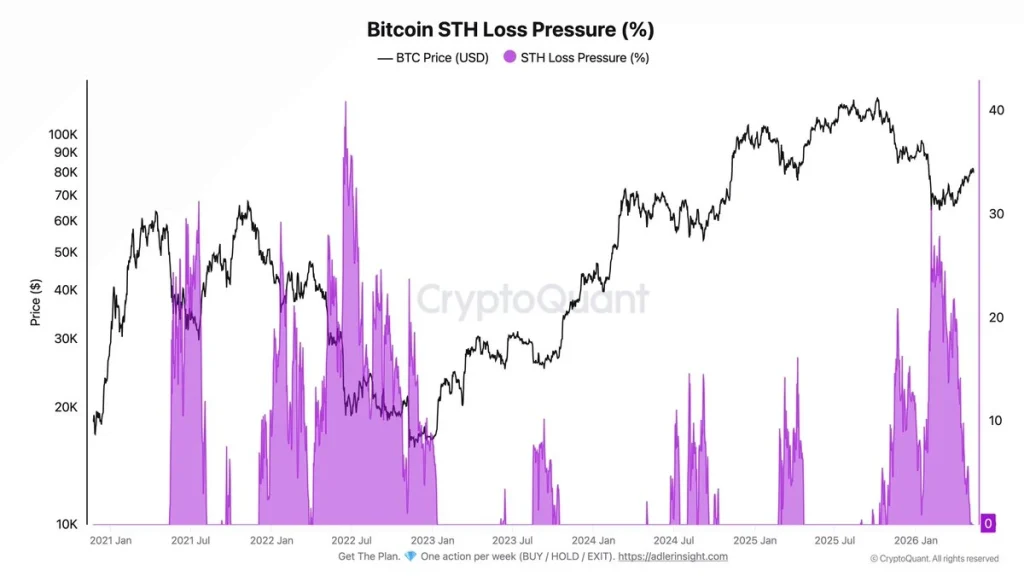
Recent increases in losses for short-term holders (STH) suggest that investors who don’t typically hold for long are selling their Bitcoin. This selling is likely happening because of worries about the economy and a weakening market. This extra selling pressure probably caused Bitcoin’s price to fall below the important $80,000 level. Right now, it looks like people who recently bought Bitcoin are getting nervous as prices become more unpredictable.
Bitcoin ETF Outflows Added More Downside Pressure
Bitcoin’s recent price drop was largely due to a decrease in the amount of money flowing into spot Bitcoin ETFs. This reduced the strong buying pressure from institutions just as the price was trying to break through the $80,000 level. Data from Glassnode indicates that U.S. Bitcoin ETFs actually saw net outflows of funds around the time Bitcoin struggled to stay above $80,000.
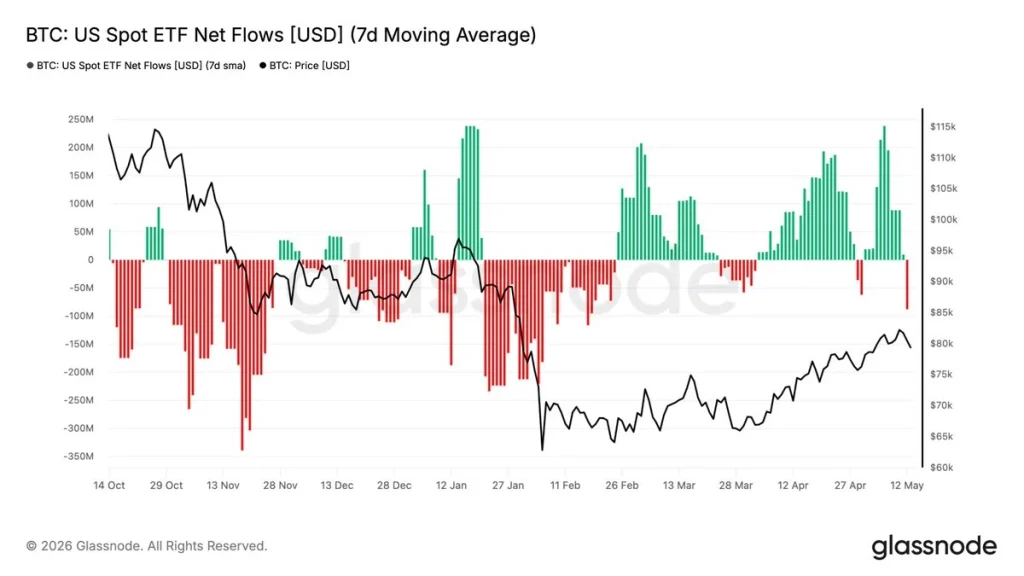
Recent weeks have seen Bitcoin prices rise, largely thanks to strong investment into exchange-traded funds (ETFs). However, this investment has recently slowed down, possibly because of growing economic concerns and Bitcoin repeatedly failing to break through the $82,000 price level. This suggests institutional investors are becoming more cautious.
Bitcoin Faces Another Rejection at the 200-Day Moving Average
Bitcoin recently fell below $80,000 after struggling to break through a key technical level – its 200-day moving average. This average has often acted as a price ceiling when Bitcoin is trending downwards, and traders are worried because similar failures in the past have led to significant price drops. Earlier in the current market cycle, when Bitcoin also failed to surpass this level, the price quickly fell 44%, dropping from recent highs to around $60,000.
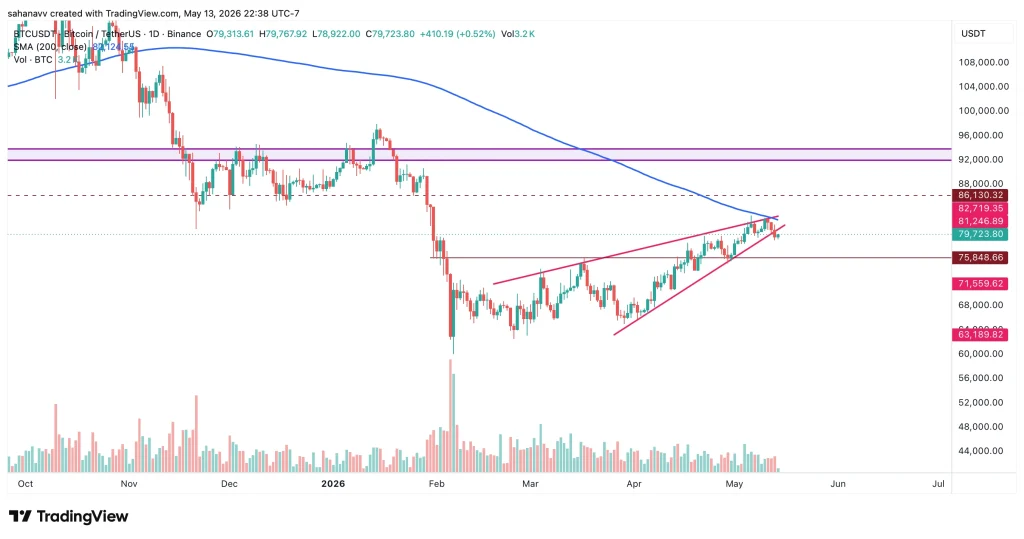
Looking at the charts, Bitcoin seems to have broken down from a rising wedge pattern right after hitting its 200-day moving average. To me, this indicates that the buying pressure really faded as sellers stepped in strongly around that resistance level. The fact that Bitcoin hasn’t been able to convincingly break back above the 200-day MA suggests we might not have the sustained, organic demand needed for a real recovery. If it doesn’t reclaim that level soon, I’m watching for the possibility of another significant downturn – we saw a 44% drop after a similar rejection last time, and that’s a risk we need to consider.
Bitcoin Price Prediction: Can BTC Hold $75K or Is a Bigger Correction Ahead?
Bitcoin’s recent inability to break through its 200-day moving average suggests that sellers now have the upper hand. This is happening alongside decreasing investment into Bitcoin ETFs, increased selling from short-term Bitcoin owners, and growing worries about the overall economy. Because Bitcoin failed to rise above the $82,000-$83,000 price range, its price is now at a key decision point.
If Bitcoin stays below its 200-day moving average, the next key support level to watch is around $75,800, which previously helped push the price higher. If Bitcoin falls below that, it could drop further to $71,500, and a larger sell-off could even push it down to $63,000 – a price level where it stabilized before.
For Bitcoin to show signs of recovery, it needs to climb above $82,000 and stay there, which would suggest the recent downward trend is over. If it can break through this level, prices could potentially rise to around $86,000. However, as long as Bitcoin remains below its 200-day moving average, we can expect continued price swings and the possibility of further declines in the short term.
Read More
- Netflix’s Little House On The Prairie Reboot: Release Date, Cast & Everything We Know
- Off Campus Season 1 Soundtrack Guide
- YouTuber arrested after viral AI bodycam videos spark real police complaints
- Silver Rate Forecast
- Prime Video’s New R-Rated Spy Thriller Is Officially No.1 On Streaming Despite Poor Reviews
- Brent Oil Forecast
- Gold Rate Forecast
- Peaky Blinders: The Immortal Man’s Tommy Shelby Is a Better Father Than Michael Corleone
- EUR ZAR PREDICTION
- Bulgakov’s Take: Koreans Bet the Farm on Chips, Crypto, and Chaos
2026-05-14 09:07