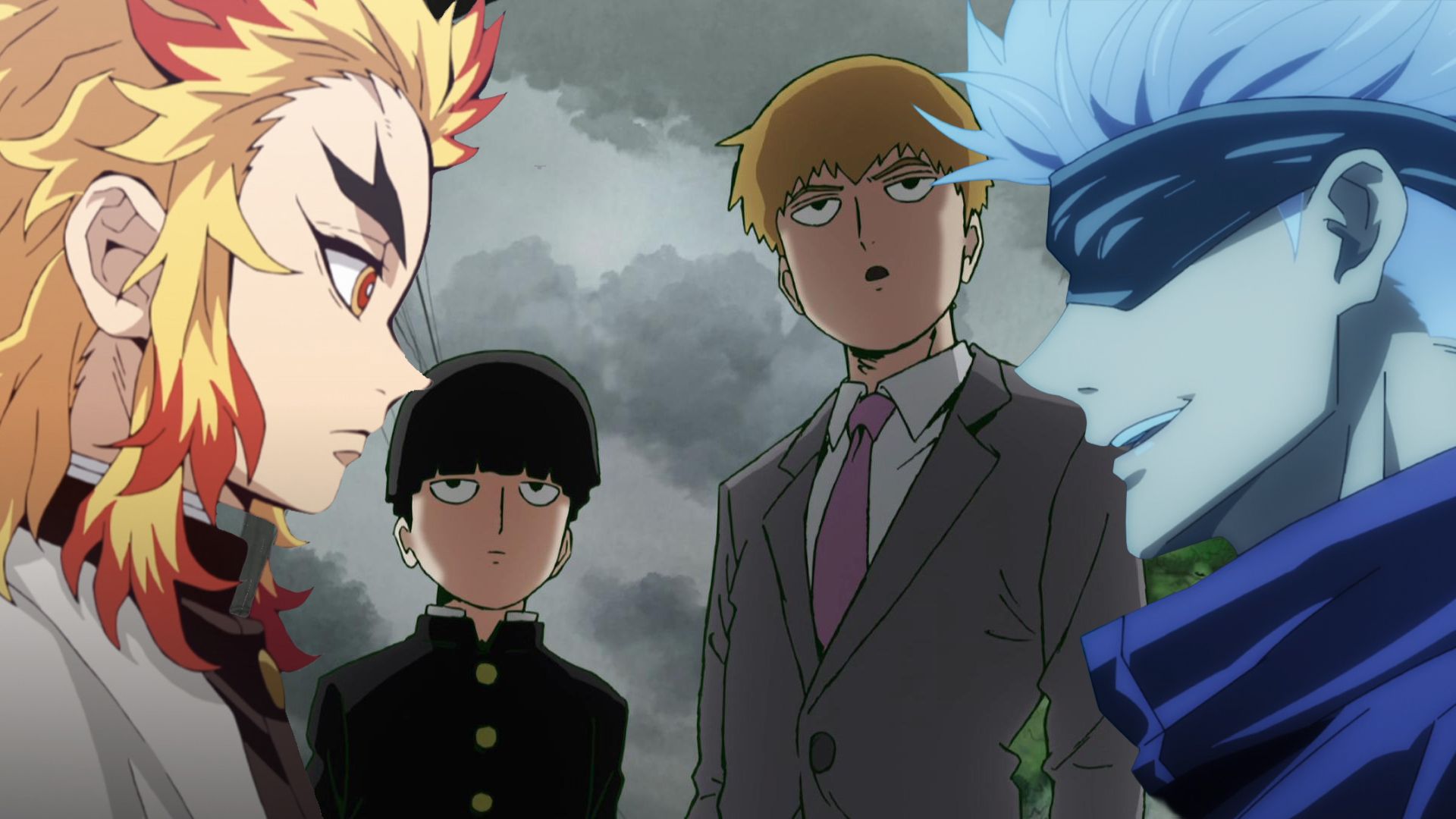
The relationship between a skilled teacher and eager student is a classic storytelling technique in anime, and has fueled many memorable story arcs. Recently, in the 2020s, this dynamic has become more nuanced and emotionally impactful. These newer mentors aren’t just instructors; they’re deeply involved in their students’ lives, struggling with their own flaws, past hurts, and sometimes even making significant mistakes along the way.
Even with everything going on, these mentors consistently supported their students. They played a key role in defining moments, helping students not only improve their skills but also discover who they are. This dedication to fostering growth – seen in many popular stories like shonen and isekai – is a heroic act in itself. And because these relationships develop over time, both the triumphs and setbacks feel incredibly powerful.
I’ve noticed that Satoru Gojo stepped into the world of Jujutsu Kaisen already burdened by the flaws of the system around him. As someone with incredible power – the Six Eyes and the Limitless technique – he surprisingly chose to mentor rather than control. He could have easily enforced a strict training regime, but instead, he really focused on what each student needed. I remember seeing him have Yuji watch movies to help him manage his emotions, and he relentlessly pushed Megumi to break out of his cautious nature, which eventually allowed him to unlock his Domain Expansion. It was a really unique approach to teaching.
Gojo’s commitment went beyond just skill; he risked everything to protect those he believed in. He deliberately misled the Jujutsu organization and hid Yuta Okkotsu to save him from punishment, damaging his own standing both times. This stemmed from the pain of losing Geto, which taught him that strength isn’t enough. Instead of simply being the strongest, Gojo wanted to create a new generation capable of making a real difference in the world, even without his help.
In Frieren: Beyond Journey’s End, Flamme greatly influences Frieren’s choices. She taught Frieren to hide her magical power, a unique skill that allowed Frieren to trick demons for centuries – demons who usually measured strength by what they could detect. Flamme also encouraged Frieren to find value in simple spells, like those that improved the taste of tea or grew lovely flowers, subtly helping Frieren develop an appreciation for humanity.
Flamme’s ideas continued to influence the world long after her death. The magical organization she founded fundamentally changed the relationship between humans and demons. Even Frieren’s remarkable patience and strength in dealing with loss stemmed from a teacher who not only trained her for battle, but also prepared her to persevere through hardship.
Qifrey is a unique teacher who focuses on understanding each student as an individual. He adapts his approach to best help Coco, Agott, Richeh, and Tetia grow. Instead of punishing mistakes, he offers patience, setting him apart from the other strict teachers at the Great Hall.
Despite his kind exterior, Qifrey harbors a secret. He didn’t take Coco in simply out of the goodness of his heart. The Brimmed Caps stole his memories and an eye, and he sees Coco as a potential lead to finding them. This hidden purpose makes their teacher-student relationship more complex. Qifrey is clearly hurting, but he isn’t motivated by malice.
Reigen Arataka is remarkably good at understanding people, and in the world of Mob Psycho 100, that’s all he needs to be effective. He consistently acts as if Mob’s incredible powers are no big deal – like a talent for music or numbers – and this prevents Mob from believing his strength defines his value as a person.
Facing public exposure as a fake psychic, Reigen surprisingly used the opportunity to speak directly to Mob on TV, honestly admitting his shortcomings. While someone else might have tried to deny everything, Reigen took responsibility. This showed how much he’d grown from simply being a con artist – despite having no psychic powers himself, his greatest strength as a mentor was helping Mob become a good person.
Roxy began working as a tutor for the Greyrat family in Mushoku Tensei and was surprised to discover that her three-year-old student, Rudeus, was already a magical prodigy. She quickly recognized his talent and rigorously trained him in all forms of magic – water, earth, wind, and fire – helping him achieve Saint rank by the age of five. Beyond magical instruction, she also provided in-depth lessons at night, teaching him history and general knowledge that profoundly influenced his perspective on his new life.
Roxy’s actions during the graduation test perfectly illustrated her teaching style. She led Rudeus outside his home for the very first time, overcoming his years of fear of open spaces with a single act of faith. Before they left, she gifted him her Migurd pendant, and from that moment on, Rudeus held her in the highest regard. Roxy became his guide to a world he’d been too scared to experience on his own.
Throughout the Mugen Train arc, Rengoku consistently prioritized the well-being of three new demon slayers, making sure they had opportunities to fight alongside him while he primarily defended the train’s two hundred passengers from Enmu. When Akaza offered him immortality, Rengoku immediately refused, firmly stating that protecting those weaker than himself was his duty and that the value of human life was something a demon could never grasp.
His decision to protect the passengers cost Rengoku his life; he died from a fatal wound, but everyone on the train survived, and Akaza was defeated. Rengoku’s final words to Tanjiro – urging him to ignite his spirit and become a source of strength for others – became a central theme for the rest of the Demon Slayer story. Though he never formally trained Tanjiro, Rengoku powerfully demonstrated the meaning of unwavering determination.
I’m still amazed by Silvers Rayleigh! He totally earned his retirement after being the first mate to the Pirate King, but instead, he spent two years on Rusukaina, practically forcing Haki into Luffy! He didn’t just explain it, he pushed Luffy through intense survival training until the basics of both Armament and Observation Haki really clicked. What’s brilliant is he stopped right before revealing everything – he clearly wanted Luffy to grow and discover the rest on his own. It was the perfect blend of guidance and letting Luffy forge his own path!
Rayleigh didn’t fully teach Luffy specific techniques, but instead gave him a strong base to build upon. After the time skip, Luffy’s skills – like Gear Fourth, the ability to see into the future with Observation Haki, and coating his attacks with Conqueror’s Haki – all developed from what Rayleigh had initially shown him.
In My Hero Academia, All Might needed to find someone to inherit his power, and he chose Izuku Midoriya, a boy born without any special abilities who instinctively rushes to help others. Before giving Midoriya his power, One For All, All Might made him spend ten months doing incredibly tough physical labor – cleaning a beach – to get his body strong enough to handle it.
Watching Midoriya push himself so hard, constantly breaking bones with One For All, was intense! But it was amazing to see All Might adapt and help him figure things out. What really struck me was how humble All Might was throughout it all. He didn’t need to be the strongest anymore; he genuinely wanted to see Midoriya surpass him, and happily took on the role of his biggest supporter. It was a beautiful thing to witness!
Kisuke Urahara was the driving force behind many of the most important events in Bleach. When Ichigo lost his powers, Urahara put him in an incredibly difficult situation: either regain them by mastering his Zanpakuto, or succumb to becoming a Hollow. He didn’t offer any help or protection, just the intense pressure needed to push Ichigo to unlock his true potential.
I noticed Urahara didn’t just hand Ichigo power; he created a situation where the kid had to learn and grow on his own. And it wasn’t just Ichigo he helped. During the war with the Quincies, he secretly developed these pills that allowed the Shinigami to get their Bankai back – he basically saved the entire Gotei 13 without anyone even realizing what he’d done.
Keith Shadis starts his job as a trainer for the 104th Training Corps deeply scarred by his past. As seen in Attack on Titan, he’s a demanding leader – he’s tough on cadets like Jean and Sasha, and intentionally breaks down their confidence. He does this not out of malice, but because he knows the real world will be even more brutal, and he’s preparing them for it. His harsh methods are actually a form of rigorous training disguised as punishment.
Floch once ordered new recruits to attack an instructor as a test of loyalty, but Shadis stepped in and let them attack him instead. He took the violence himself to protect his students and ensure they wouldn’t be harmed. Later, he sacrificed himself by blowing up a train to save others, demonstrating his incredible dedication as a teacher and mentor.
Read More
- Off Campus Season 1 Soundtrack Guide
- 46 Years Later, The Mandalorian & Grogu Answers A Major Empire Strikes Back Question
- X-Men ’97 Finally Gave Gambit the Hero Moment He Deserved
- HoI4 fans harsh reactions to the announcement of another DLC pack
- Chainsaw Man Volume 24’s Cover Art Reveals a Brand-New Denji
- 10 Worst End-Game Couples In Sitcom History
- Emily Henry Says to ‘Trust the Vision’ For Beach Read Adaptation
- Hatsune Miku cosplayer goes viral selling $15 cups of “foot juice” to thirsty anime fans
- DoorDash responds after customer uses AI to make food look bad and get a refund
- Katanire’s Yae Miko Cosplay: Genshin Impact Masterpiece
2026-05-31 22:43