At its heart, Star Trek has always celebrated exploring new worlds, discovering alien life, and embracing diversity throughout the universe. Each captain and story has offered a unique take on Starfleet’s core mission and the principles it stands for, often using symbolic storytelling.
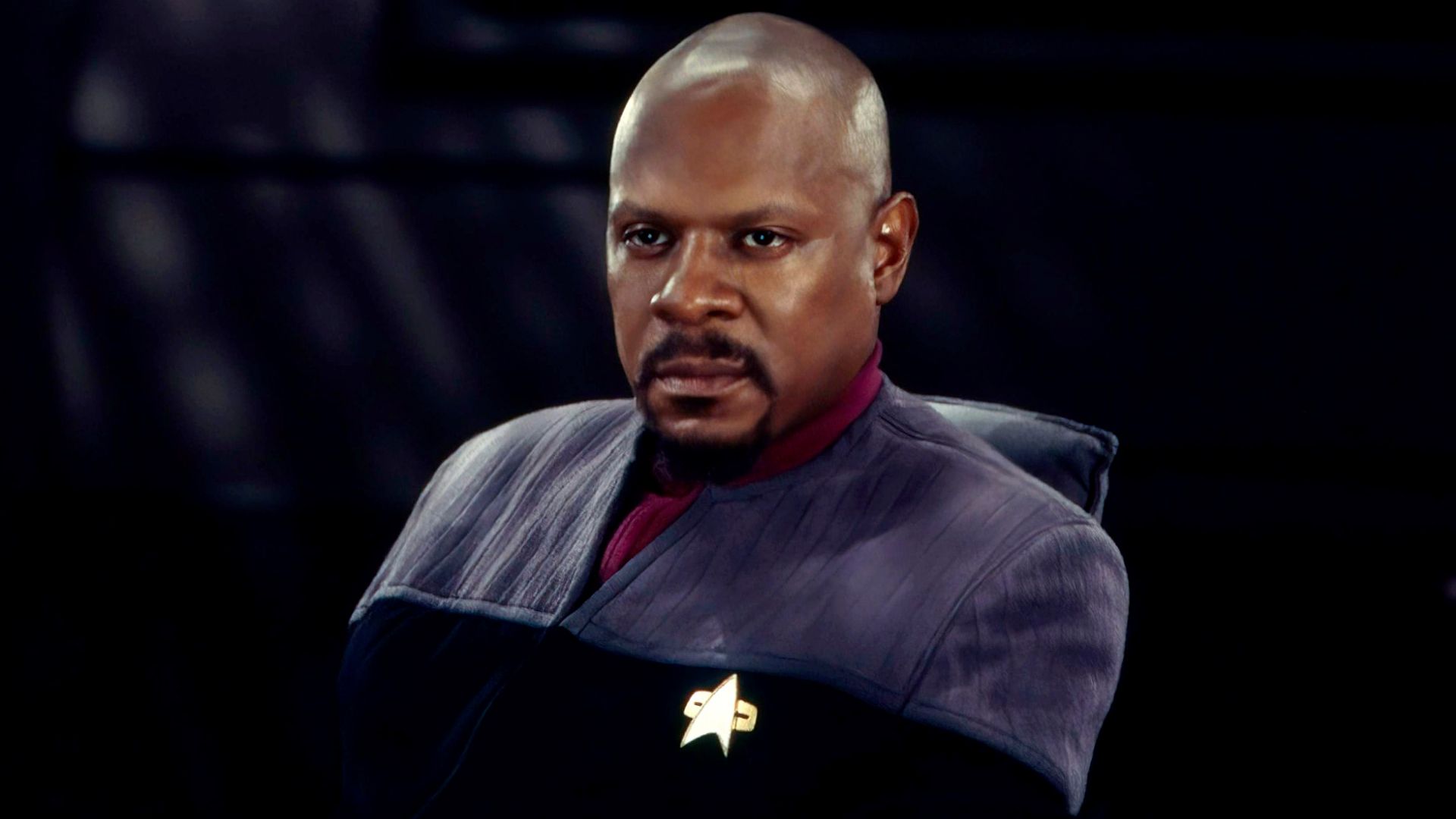
Benjamin Sisko, played by Avery Brooks, clearly expressed Starfleet’s core values. His speech in the very first episode, “Emissary,” better defines Starfleet’s dedication to learning and understanding than anything else in the entire series.
Sisko Uses Baseball as an Analogy for Linear Time in Deep Space Nine
The first episode of Star Trek: Deep Space Nine introduces Commander Sisko as he pilots the USS Rio Grande into a newly found wormhole. There, he encounters the Prophets – beings without physical bodies who appear to him as people he’s familiar with, like his son, Jake (Cirroc Lofton), and his deceased wife, Jennifer (Felecia M. Bell).
Prophets perceive time as a single, unified whole, unlike humans who experience it as a sequence of past, present, and future. Because Captain Sisko experiences time in a linear fashion, the Prophets see him as reckless and unable to grasp the impact of his choices – a view Sisko strongly disagrees with.
Sisko tries to help others understand difficult ideas like cause and effect, and dealing with loss, by sharing his own personal memories. He remembers meeting his wife, Jennifer, and explains that choosing to be with her meant accepting everything that came with it, even the joys and challenges of raising their son.
Realizing the Prophets still didn’t fully grasp the concept, Sisko tried explaining it using baseball. He described how each pitch is unpredictable, and players react to whatever happens, shaping the game as it goes. The beauty of baseball, he explained, is that no one knows how it will end.
When asked about why he prefers not knowing what the future holds, Sisko explained that the uncertainty of life is what makes us human. He put it simply: “We’re always looking for answers, but even more, we’re searching for new things to question.”
He clarifies that humans are driven to explore the galaxy, not to conquer, but to learn and grow. He emphasizes he’s offering ideas, not weapons, hoping they can live together peacefully.
Star Trek Has Always Been About the Pursuit of Knowledge and Understanding
As a huge film buff, what’s always struck me about Star Trek – and it’s right there in its original mission statement – is its core message: it’s all about boldly going where no one has gone before, not with fear, but with genuine curiosity and respect for whatever – or whoever – you might find. It’s a show about expanding our understanding, embracing new experiences, and ultimately, striving for peace throughout the galaxy. That’s what really resonates with me.
This is best understood through Starfleet’s primary rule: avoid attacking or making contact with new civilizations unless absolutely necessary.
This concept has appeared repeatedly throughout the series. There have been instances where the rule was broken, like in the Star Trek: The Original Series episode “Miri,” where Kirk vaccinated children on a planet, violating the principle of non-interference with cultures that hadn’t developed warp drive. However, these exceptions were always made to protect people or save lives.
Throughout the various Star Trek series, the crews of Starfleet have always prioritized gaining knowledge. This commitment to exploration and understanding is a recurring theme, highlighted by memorable quotes. For example, in the first episode of Star Trek: The Next Generation, Captain Picard famously states, “Let’s see what’s out there,” perfectly capturing Starfleet’s core mission: to explore, observe, and learn.
In Season 5’s episode, “The First Duty,” Captain Picard tells Wesley Crusher that a Starfleet officer’s most important responsibility is always to tell the truth – whether it’s about science, history, or even personal matters. Patrick Stewart delivers this line with his characteristic strength, emphasizing Starfleet’s dedication to honesty and seeking understanding, even when facing challenging or unclear situations.
Starfleet officers always approach new cultures and people with respect, valuing their unique qualities. For example, when encountering a seemingly hostile alien miner, they didn’t attack. Instead, they tried to communicate and figure out why it was behaving that way, ultimately learning it was simply protecting its offspring.
In the Star Trek: The Next Generation episode “Who Watches the Watchers” (Season 3, Episode 4), the Enterprise crew observes the Mintakans, a civilization that hasn’t yet developed warp drive, in order to learn about their culture. Similarly, in the Deep Space Nine episode “Captive Pursuit” (Season 1, Episode 6), O’Brien studies the Tosk, an alien species, and the customs of those who hunt them, collecting information about their traditions before getting involved.
Throughout the series, the characters consistently rely on logic and reason to make choices. Every mission starts with a desire to learn – whether it’s about a new culture, a scientific mystery, or the secrets of the galaxy.
Sisko’s Line in Deep Space Nine’s Opening Episode Sums Up Starfleet’s Purpose
Many people consider Picard a strong moral leader, and that’s understandable given his focus on ethics. However, other Starfleet captains, particularly Benjamin Sisko, demonstrate equally strong moral character.
The monologue best captures the overall meaning of the series by clearly connecting the characters’ experience of time passing with the mystery at the heart of the story.
Sisko embodies Starfleet’s ideals by explaining why exploration is important, rather than simply stating it. While Picard famously declared the mission of exploration, Sisko demonstrates its value. He highlights that our uncertainty about the future is actually a strength, allowing us to discover things we otherwise couldn’t.
Just like the unpredictable nature of a baseball game, life’s uncertainties create opportunities for growth and the potential for harmony. As seen with characters like Lokai and Bele in Star Trek: The Original Series (“The Paradise Syndrome”), a guaranteed outcome would eliminate both the challenge and the chance for peace. Starfleet’s mission is built on the idea that knowledge and understanding are the keys to peaceful coexistence between different species.
Sisko’s speech beautifully captures the heart of Star Trek: the belief in humanity’s ability to learn, adapt, and overcome obstacles through intelligence and empathy. It embodies the show’s enduring message that there are limitless possibilities for discovery, growth, and progress.
Read More
- Off Campus Season 1 Soundtrack Guide
- DoorDash responds after customer uses AI to make food look bad and get a refund
- Jon Bernthal Explains Why Marvel Let Him Make The Darkest Punisher Story Ever
- Umamusume has been transformed into a D&D game with new race
- Gold Rate Forecast
- How to Get to the Undercoast in Esoteric Ebb
- 10 Most Universally Beloved Sci-Fi Movie Villains, Ranked
- All Golden Ball Locations in Yakuza Kiwami 3 & Dark Ties
- Ethereum Eyes Break Above $2,420 as Rally Hangs in the Balance
- The Strongest Battlegrounds codes (May 2026)
2026-05-23 16:38