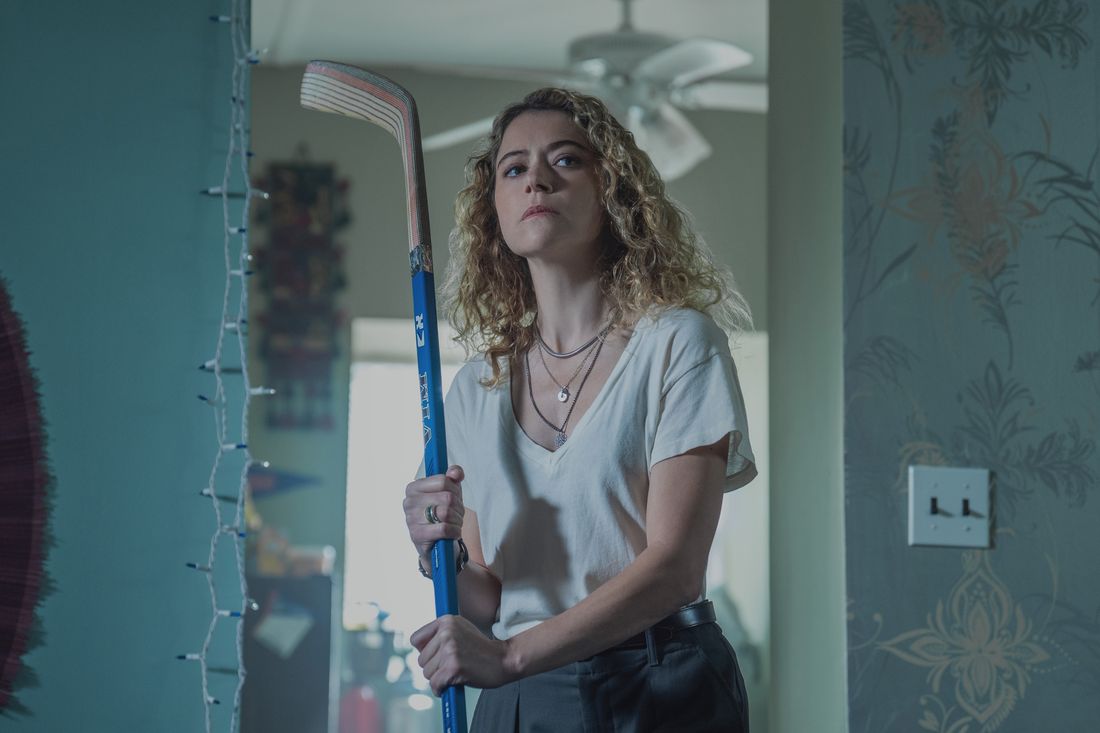
Paula Sanders, a dedicated fact-checker for a magazine (played by Tatiana Maslany in Apple TV+’s Maximum Pleasure Guaranteed), is facing multiple challenges at once. She’s repeatedly passed over for a promotion, caught in a difficult custody fight with her ex-husband, and trying to prove herself as a mother by overcommitting to her daughter’s soccer team. To deal with feeling alone, Paula has also become interested in a cam performer named Trevor (Brandon Flynn). However, things take a dark turn when Trevor is attacked and kidnapped live on camera during a session Paula is watching. Paula captures the assault on video, reports it to the police (who are skeptical, believing it’s a scam), and then receives a ransom demand. Driven by impulse, she begins her own investigation and, in a shocking twist at the end of the first episode, discovers Trevor’s body.
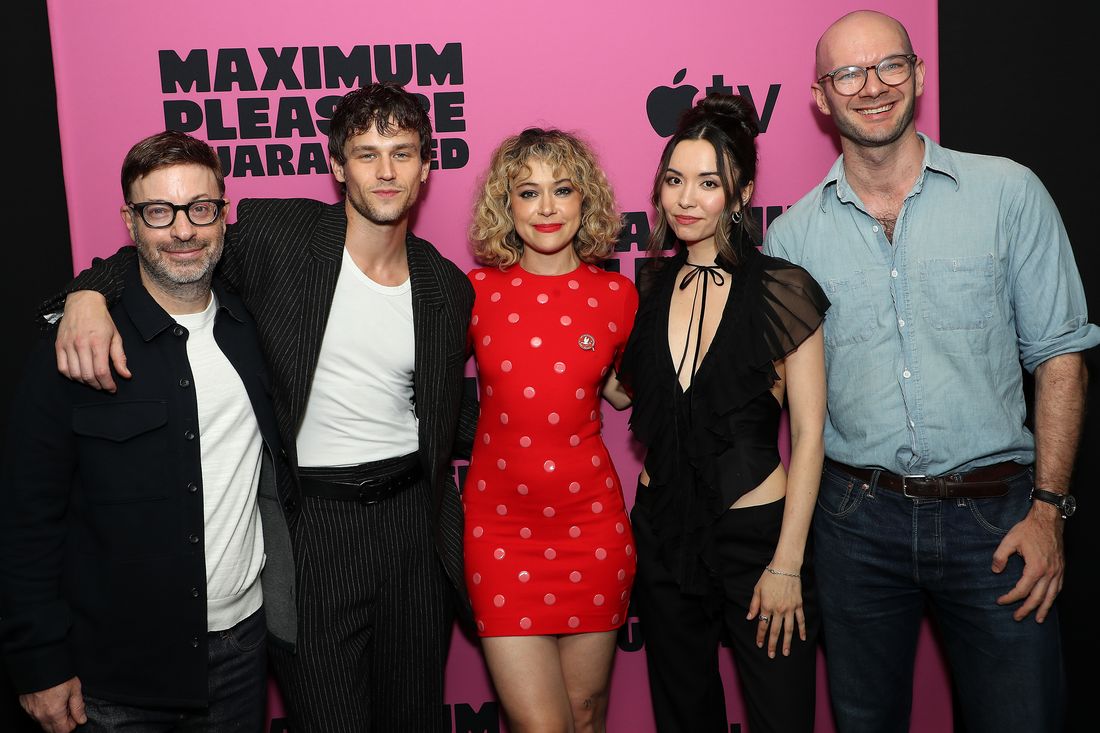
The series Maximum Pleasure Guaranteed launches Maslany’s character into a complex and increasingly unsettling mystery. This impacts her colleagues at the magazine (played by Kiarra Hamagami Goldberg and Charlie Hall), intensifies her custody dispute, and steadily increases the pressure on her. Following a screening, a Vulture-hosted panel featuring series creator David J. Rosen, Maslany, Flynn, and Goldberg discussed the show’s blend of horror and humor, the challenges of filming Zoom scenes, and how the story taps into a contemporary desire for human connection.
This show covers a lot of ground – murder, online intimacy, custody disputes, kids’ soccer, and even fact-checking. I was curious about where the initial idea came from. David J. Rosen explained that he’d been thinking about the growing problem of loneliness, and how the very devices meant to connect us with loved ones can also isolate us. He envisioned a single, working mother, coming home late and seeking some connection or happiness, who gets drawn into a mysterious situation reminiscent of the film Rear Window through her computer.
Around the same time, I received an email. Feeling lonely, I checked my spam folder, hoping it might be a message that ended up there by mistake. I found one from a Canadian pharmacy with the subject line “Maximum Pleasure Guaranteed,” and I thought it was a clever title.
What were they offering?
D.J.R.: It was definitely some sort of Viagra.
The interviewer asked Tatiana Maslany about the character Paula, noting her search for connection, and what Maslany focused on when playing her. Maslany admitted she initially struggled with the audition, feeling awkward and disconnected from the character even while reading the scripts. She did two auditions with the director, David, and felt clumsy both times. She realized the strong writing was challenging her to portray a woman who had lost her sense of self and stability, describing Paula as vulnerable and lost, like a baby deer. This feeling of being unsure and unable to find the right tone became a fascinating mystery for Maslany to explore as an actor.
What was it like seeing those auditions? T.M.: Yeah David, how bad did I do?
D.J.R. said she thought it was a fantastic performance, and they just asked her to do it repeatedly so they could enjoy watching without having to pay.
T.M.: Before you paid.
D.J.R.: Exactly.
That’s a great transition to talk about your character, Trevor. He’s presenting a false image to Paula, and we quickly learn he’s not being genuine. How did you tackle playing someone like that?
Brandon Flynn: I didn’t have the full picture of what was going to happen when we started filming, and honestly, that helped. I knew Trevor was likely scamming Paula, but I didn’t know all the details or where the story would go. So, my focus was just to be what Paula needed him to be. I’ve always seen Trevor as a really skilled actor himself – someone who can be fully present for the other person and react authentically. And the scripts deserve credit, because they don’t ask for a lot of obvious scheming or hidden motives. The show works because you genuinely believe in what’s happening. It’s fun to just show up and play the scene as it’s written.
When filming the intimate scenes over Zoom, were the actors physically nearby, perhaps in the next room, or were they reacting to a pre-recorded video? B.F. explained that they were all in a soundstage, each in their own room with a laptop and webcam.
T.M.: But it was in real time. And our director, David Gordon Green, wanted that, right?
David Gordon Green came up with the idea. It’s surprisingly difficult to film with two people because of a slight timing issue. We had to position them far enough apart so they couldn’t hear each other, but close enough that I could direct both of them simultaneously. I also really like the way the footage quality drops when we film something using the Wi-Fi connection – it adds a lot of interesting layers to the project.
As a journalist, I was happy to see fact-checkers represented in this show. Kiarra, you and Charlie Hall play Paula’s colleagues in the fact-checking department who begin to uncover the complexities of her life. What was it like getting involved in her complicated story?
Kiarra Hamagami Goldberg: Like Brandon said, I didn’t know much of the plot when I started. I read the first script and auditioned, and I was immediately hooked, wondering what would happen next. Every plot twist was a surprise. Charlie Hall, who plays Rudy, and I were genuinely curious to see how things would unfold. So, our characters’ nosiness felt very natural. And working with Tatiana was amazing – she’s incredibly captivating. Charlie and I often just watched her perform and reacted in the moment, which was a real pleasure.
Did you investigate how fact-checking actually works, or speak with people who do it professionally?
K.H.G.: David shared some articles with me initially. I asked him to explain what a fact-checker’s job is like on a daily basis. I realized then that they don’t spend most of their time directly fact-checking, but rather apply those skills in different ways.
D.J.R.: They’re doing so much of their job, but just not in the 30 or so minutes of the episode.
That’s right. It’s a really fascinating job, and I think it’s brilliant that David included the process of finding the truth and facts in the show. It creates a great setup for solving a mystery that actually impacts one of the characters.
The show blends mystery, comedy, and suspense while Paula investigates the murder. I was asked about how we balanced these different tones. Well, the writers and I decided to focus on creating a strong thriller first. We felt that leaning too heavily into comedy would ruin the suspense. So, we aimed for a genuinely thrilling story and then filled it with relatable, somewhat goofy characters. We wanted the humor to come naturally from who these people are, rather than forcing funny situations.
We filmed each scene multiple ways because the script offered so many possibilities – a moment could be funny, sad, intense, or gentle. The writing allowed for a lot of creative exploration, and the editing really captures the feeling of being inside someone’s complex and turbulent thoughts.
Everyone involved with the show understood the editing style we were aiming for – quick, impactful cuts. We intentionally avoided drawn-out scenes. As the season progresses, especially as Paula becomes more agitated, you’ll really notice this fast-paced editing come to life.
One of the things that makes the show enjoyable, and is somewhat unusual for this genre, is that the character Paula is portrayed as reasonably capable and intelligent. While she often finds herself in risky situations, she generally makes sensible decisions – she doesn’t do things just to move the plot forward that a normal person wouldn’t. The creators spent a lot of time focusing on making her actions feel realistic. For example, they struggled with why Paula wouldn’t immediately call 911. They built up the scene with Hazel, the cleats, and Carl’s threats to explain her hesitation. It would have been easier for the writers to have her deny everything to the police, but they felt that would frustrate viewers. A normal person would tell the police, so they prioritized consistent, believable behavior, and if Paula acted otherwise, they made sure there was a strong, character-driven reason.
I noticed depictions of cam work in shows like Euphoria and other films. Brandon, how did you approach portraying the reality of Trevor’s involvement with that world?
Brandon: Trevor is a fighter, and he believes everyone is, too. He feels entitled to fight for what he wants. He’s good at what he does – creating compelling content – and he’s doing really well, making a lot of money. He’s figured out how to work outside the traditional system. I was also thinking about the show’s editing style, which feels very current and reflects how overwhelmed we all are by social media these days.
The characters in this show are struggling both emotionally and financially. It consistently highlights how vulnerable everyone is, whether they work in publishing, sex work, or, like Dolly de Leon’s character, have a problem with gambling. Money is a major source of stress for Paula. Her ex-husband, Carl, is now financially secure thanks to his new marriage, which gives him a lot of advantages and protects him from criticism for past mistakes. Paula, on the other hand, is broke and faces much harsher judgment for any decisions she makes, even if they’re driven by desperation, a need for connection, or simply desire. What’s compelling about Paula is her intelligence and logical nature. Despite her breakup, she trusts her instincts and follows where they lead her, even when those instincts have been shaken.
I was immediately struck by how much the characters’ desires drive the story. They all want something badly, and while you might not always agree with the choices they make, the writing does a great job of explaining their motivations.
This show really captures the feel of New York City, and you filmed it all on location. Paula discovers Trevor’s body in a house on City Island, a neighborhood I’ve always been curious about. What was it like filming throughout the city?
D.J.R.: It was amazing! I love shooting on location in New York. It’s always tricky depending on where you are – City Island isn’t the easiest place to reach. We were filming the end of episode two, where Dennis finds the cleats, and we were running late on a Friday night. Suddenly, ten helicopters showed up with spotlights! It turned out to be a search and rescue operation in the water, and it was incredibly loud. Luckily, it was a false alarm. That’s just New York – there’s always something unexpected happening. But for a show like ours, filming in real locations, like an actual magazine office, really helps make it feel authentic and grounded.
It really reminded me of my old workspace – I thought it might even be our former office. K.H.G. shared a funny story about how, on our first day, David Rosen surprised us in the green room with art supplies – markers, paper, sticky notes – and encouraged us to decorate. We ended up making a lot of the decorations ourselves. Apparently, Charlie even drew a really detailed picture of someone playing basketball, which might not ever be seen by viewers, but it was worth mentioning!
What can you share about what happens later in the season?
D.J.R.: Things are going to get difficult. A lot of unexpected twists and turns are coming. By the end of the second episode, Paula finds herself being stalked by someone dangerous who leaves behind mysterious clues. This person will actively try to track her down. Meanwhile, Detective Gonzalez is suspicious of Paula and doesn’t trust the situation. On top of that, the fight over custody will intensify, putting even more pressure on Paula.
Read More
- Off Campus Season 1 Soundtrack Guide
- Euphoria Season 3’s New R-Rated Sydney Sweeney Scene Proves The Show Is Trolling Us
- Gold Rate Forecast
- All Golden Ball Locations in Yakuza Kiwami 3 & Dark Ties
- DoorDash responds after customer uses AI to make food look bad and get a refund
- Jon Bernthal Explains Why Marvel Let Him Make The Darkest Punisher Story Ever
- Dutton Ranch Review: Paramount+’s New Western Takes All The Best Parts Of Yellowstone & Makes Them Better
- Taco Bell combines two fan-favorite menu items in new Cantina Chicken Mexican Pizza
- YouTuber arrested after viral AI bodycam videos spark real police complaints
- 10 Most Universally Beloved Sci-Fi Movie Villains, Ranked
2026-05-20 16:56