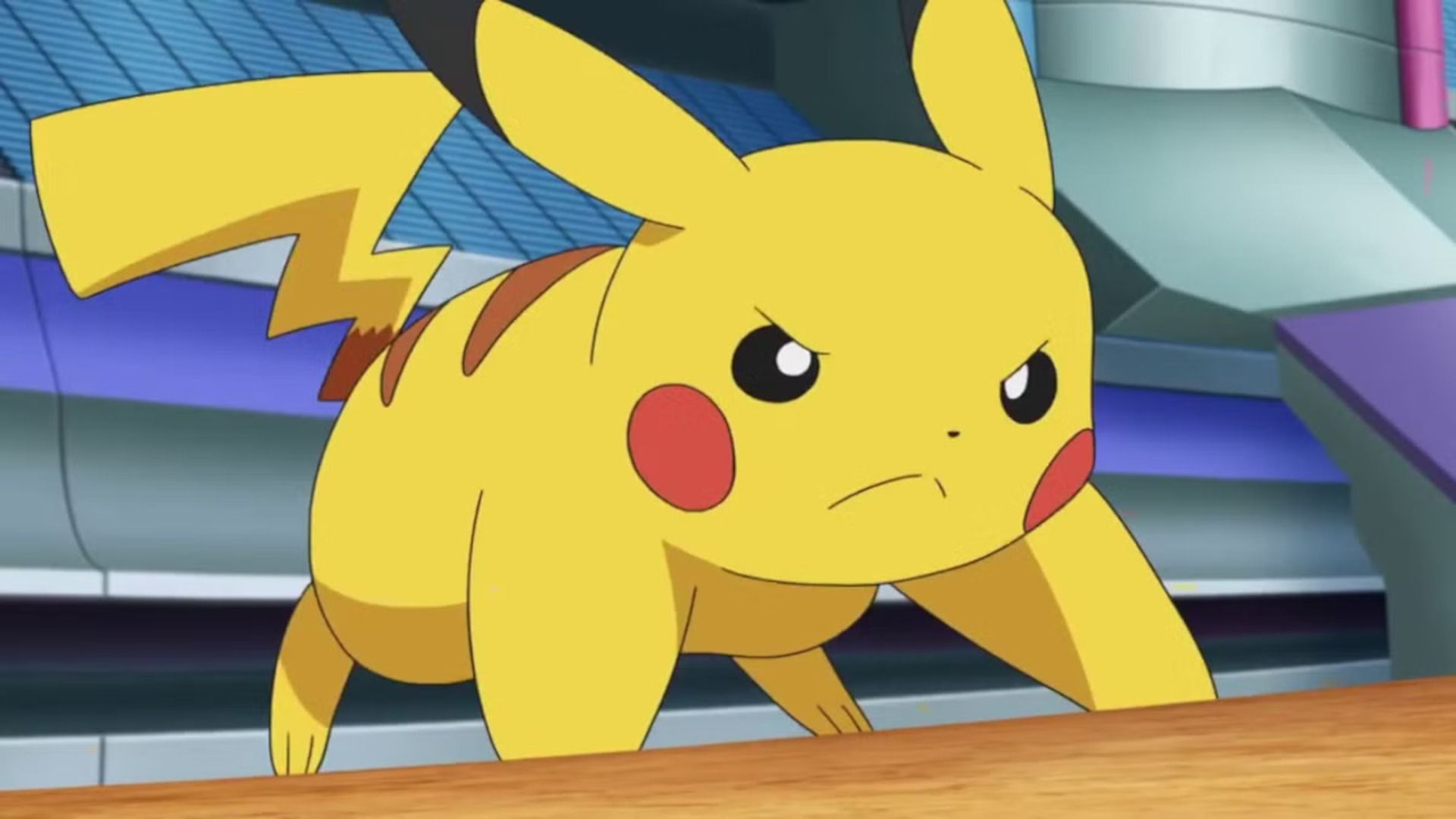
Pokémon became incredibly popular in the 1990s for a lot of reasons. The original Pokémon Red and Blue games were huge successes, and the trading card game and animated series also contributed significantly. However, people often overlook the many spin-off games. While none of these games were as popular as the main role-playing games, they were still fun and helped build a thriving Pokémon world.
Not all of these games are created equal, and Hey You, Pikachu! stands out in a unique way. While it’s arguably the simplest – some might say most basic – of the early Pokémon spin-off games, it’s also surprisingly ambitious and, in certain ways, more impressive than the others.
Hey You, Pikachu! Was Thought of as a Toy More Than a Nintendo 64 Game
Back in the 1990s, a Japanese game company named Ambrella began working on a game you’d control mostly by speaking. Many people doubted the idea at first, but they kept at it. The team sourced parts from Akihabara – a famous Tokyo district known for its electronics – and built a working model.
The team created software that allowed players to talk to a character on screen using a microphone – this technology would eventually become the voice recognition system for the Nintendo 64. Because Ambrella had a working relationship with Nintendo, they decided to feature Pikachu as the character players would interact with.
The anime’s popularity led to two major Pokémon products in Japan in 1998: the Pocket Pikachu, a handheld digital pet similar to a Tamagotchi, and Pokémon Yellow Version: Special Pikachu Edition, a game inspired by the anime. Because Pikachu was so beloved by fans, it was a smart move for Ambrella to focus on similar products.
The game was named Pikachu Genki Dechū, a playful take on the Japanese phrase meaning “Pikachu is doing well.” Tsunekazu Ishihara, founder of Creatures and a producer on the game, explained the reasoning behind this choice.
He described the game as the perfect gift for Pikachu enthusiasts, noting its large fanbase. The gameplay was straightforward: players talk to Pikachu using a microphone and enjoy spending time with their virtual companion. The game could understand many different phrases, and Masaru Ishihara pointed out that its voice recognition was as good as, or even better than, the voice control systems found in cars at the time.
He aimed to make the game stand out from other video games by envisioning it as a sophisticated toy. He wanted Hey You, Pikachu! to be remarkably simple, allowing even young children to easily play and enjoy interacting with the virtual world.
Even though games where you raise virtual pets were already popular, the creator of Hey You, Pikachu! wanted something different. He didn’t want players to raise Pikachu, but to have a conversation with him – to treat him like a friend. He hoped adults would enjoy having a conversational companion, and that children would find it similar to having a more interactive version of playing with their toys and pretending to talk to them.
This Pokémon Game Is Shallow, but the Ending Is Actually Pretty Moving
The game starts with you waking up at home, and your mom reminds you that you need to meet Professor Oak for an exam. Shortly after, near Viridian Forest, Oak asks you to learn how to use the PokéHelper – a device that came with the game – by communicating with a wild Pikachu. The PokéHelper translates what Pikachu says.
Okay, so in this game, you basically hang out with Pikachu, and it’s surprisingly deep! Pikachu actually understands around 200 different things you can say to it, which is how you get stuff done. It’s not about battling or a big story, though. Instead, you’re doing everyday things – like finding food for Bulbasaur, or even babysitting Caterpie! The whole point is to build a bond with Pikachu by just chatting and helping out. You earn ‘Pika Points’ for everything you do, and you can spend those on cool toys and decorations to personalize things.
The game doesn’t have a strong storyline, but it does offer a touching conclusion. After a year of gameplay, Oak explains that Pikachu has grown to love the player, but it’s time to prioritize the well-being of all wild Pokémon and allow Pikachu to return to its natural habitat in the forest. It emphasizes the bond they’ve formed while encouraging letting go.
The game asks players to repeatedly say goodbye to Pikachu, who visibly gets upset each time. Finally, a heartbroken Pikachu leaves to join other Pikachus. However, this emotional moment is immediately reversed after the credits roll, as Pikachu unexpectedly returns and the game continues as normal. Despite this, many children were likely moved to tears by the scene.
Hey You, Pikachu! Wasn’t a Hit but Is Worth Remembering as a Cult Classic
The game was first released in Japan on December 12, 1998, as the second spin-off title in the Pokémon series. It came to North America a couple of years later, on November 6, 2000, originally under the name Pikachu VRS (which stood for “voice recognition system”). The name was later changed to Hey You, Pikachu! to avoid confusion.
Released near the end of the first generation of Pokémon games and after many other related titles, Pokémon Snap wasn’t a major success. Among Pokémon games for the Nintendo 64, it sold fewer copies than all but two: the original Pokémon Stadium and Pokémon Puzzle League. However, those two were only released in Japan and the United States, respectively.
The high price of Hey You, Pikachu! probably contributed to its poor sales. Most Nintendo 64 games cost between $50 and $60, but this game, due to the Voice Recognition Unit, was priced at $80. It’s not surprising that many parents chose a cheaper option instead.
It’s unfortunate that Hey You, Pikachu! didn’t succeed as much as it could have, because the game was actually quite innovative. It was the first game in Japan to use voice control, and nothing else quite like it existed back then.
As a retro gaming fan, I always found it amazing that this game was the only one released here in North America that actually used the Virtual Reality Unit! Apparently, there was one other in Japan – a train simulator called Densha de Go! 2 Kōsoku-hen – but we never got that over here. It’s wild to think that they originally planned to add VRU support to The Legend of Zelda: Majora’s Mask too, but they ended up cutting it before release. It’s cool to learn about these little ‘what if’ moments in gaming history!
It’s not surprising that Hey You, Pikachu! isn’t widely remembered, and its influence is subtle. While it didn’t get a direct sequel, a few games share a similar feel. Pokémon Channel for the GameCube is one example – like Hey You, Pikachu!, it features Pikachu and focuses on relaxed, simple gameplay. Both games prioritize a peaceful and atmospheric experience.
These new games aren’t exactly like the main Pokémon titles, but they do feature Pikachu and appear to be designed for younger players. They unofficially continue the Pokémon tradition. At the same time, the developer Ambrella kept creating Pokémon games, including Pokémon Channel and, more famously, the Pokémon Rumble series.
Revisiting Hey You, Pikachu! today might feel a bit awkward compared to modern games, especially considering how much voice recognition has improved since the 1990s. Despite not being very successful at the time, it was a technically ambitious game and deserves recognition as a unique part of the initial Pokémon craze.
Read More
- Off Campus Season 1 Soundtrack Guide
- Euphoria Season 3’s New R-Rated Sydney Sweeney Scene Proves The Show Is Trolling Us
- Gold Rate Forecast
- 5 Horror Shows I Knew Would Be 10/10 Masterpieces After The First 10 Minutes
- The Best Switch RPGs to Play Using Switch 2 Handheld Boost Mode
- What is Omoggle? The AI face-rating platform taking over Twitch
- Why is there no Jujutsu Kaisen this week? Missing Season 3 Episode 8 explained
- Crimson Desert Guide – How to Pay Fines, Bounties & Debt
- Jailbreak codes (April 2026)
- Lord Of The Flies Review: Near-Perfect Adaptation Is A Reminder Of Classic Novel’s Haunting Power
2026-05-14 06:42