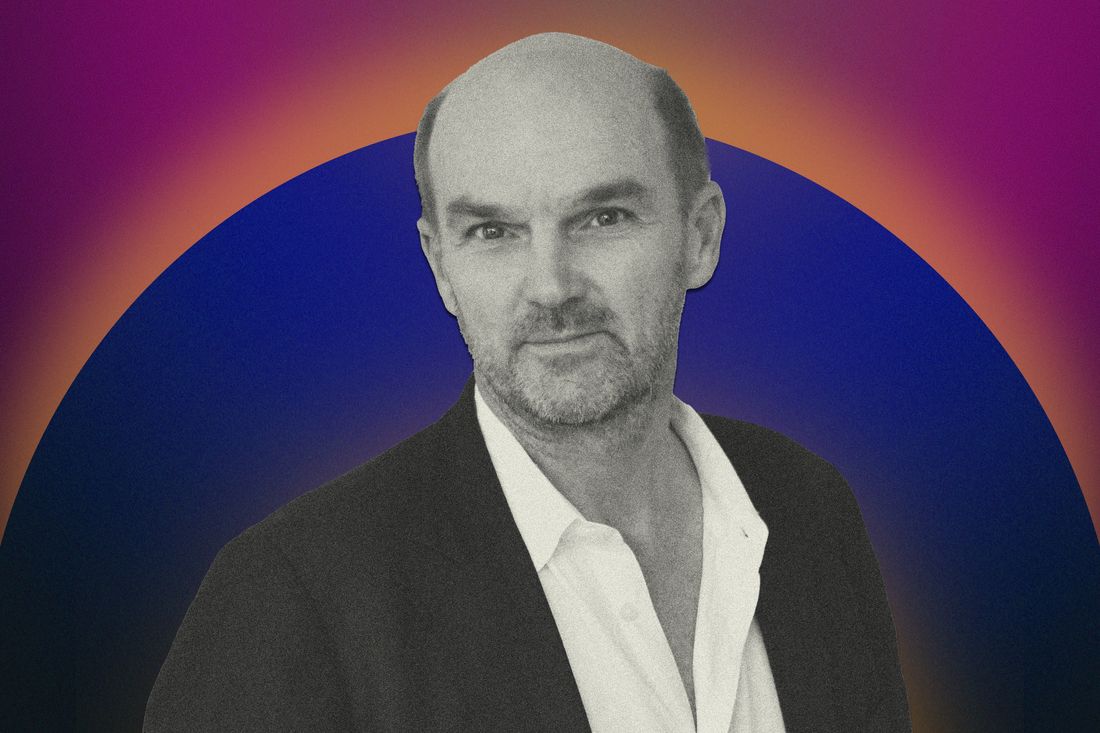
Stephen Lambert wasn’t being arrogant when he predicted The Traitors would be successful even before it premiered. The experienced British producer, who oversaw the show’s production for Peacock and the BBC, says his four decades in television gave him a strong feeling the show would resonate with viewers in both the US and the UK. He explains, “After so many years in this business, you usually have a good sense of what will connect with audiences.”
Reality Masterminds
Reality Masterminds
Our inaugural celebration of the most powerful people in unscripted television.

Stephen Lambert’s confidence likely stems from his successful track record since founding Studio Lambert in 2008. He’s responsible for several hit shows, including both versions of The Traitors, as well as early Netflix successes like The Circle and the massive hit Squid Game: The Challenge. Before Studio Lambert, he oversaw long-running shows Undercover Boss and Wife Swap, which were adapted for audiences worldwide. In the UK, Lambert has also produced popular series like Gogglebox, Race Around the World, and Faking It.
Sharon Vuong, an executive at NBC who was key in bringing The Traitors to Peacock, believes Lambert and his team consistently succeed because they excel at creating incredibly detailed and captivating environments – like the social media world of The Circle or the dramatic setting in The Traitors castle. Vuong also notes that Lambert is deeply involved in all aspects of his shows, especially casting. He enjoys meeting the contestants and personally selecting who will play the roles of the ‘Traitors,’ and doesn’t want to leave those decisions to others.
Studio Lambert, the company behind the hit unscripted show The Traitors, is now even more popular with streaming services. This year, they secured deals to create reality competitions based on the video game Fallout Shelter for Prime Video and the board game Monopoly for Netflix. They’ve also started filming The Mob, a new reality show with celebrities, for Hulu. As a leading figure in the reality TV world, Lambert reflects on The Traitors’ success and aims to replicate it with The Mob.
Let’s discuss how The Traitors came to be. It originally started in the Netherlands, but how did it catch your attention? And what steps did you take with your team to bring it to life?
We have a strong relationship with All 3 Media International, who handle distribution and rights for our company. They recognized the show’s potential after its initial success in Holland and approached us with the opportunity to acquire the American and British rights. Coincidentally, around the same time, both NBC and the BBC also expressed interest, having heard about the show through All 3. It was a unique situation – we had networks coming to us wanting to buy the rights, which is usually the other way around.
Was there never any competition to acquire this project? Was the plan always to bring it to the BBC and Peacock? We realized there would be significant advantages to filming both versions in the same location – we could share resources and save money. This would allow us to deliver a better product to both broadcasters than if we had produced them separately.
The main hurdle was the BBC’s desire to produce the show alongside strict UK regulations about regional content. They needed to film a portion of the program in Scotland and insisted we base the entire production there. We were also hoping to create a version simultaneously with NBC, but they were considering an Italian villa as the location. Surprisingly, we convinced NBC that Scotland – despite the midges, cold weather, and rain – was actually the ideal place to film. Thankfully, they agreed! Having Alan Cumming, who has Scottish heritage, as the host really reinforced the logic of filming in Scotland for NBC.
Regarding the idea to approach Alan Cumming for the show, someone at NBC mentioned it originated with Studio Lambert. I’m not sure who specifically suggested him, but the team quickly agreed it was a great idea. Our main concern was whether he’d be interested, as he’s a well-known actor who hadn’t hosted an unscripted show before. He was hesitant at first, but then he realized he could approach it as an acting role – playing the character of the castle’s host. That really put him at ease and gave him a clear vision for what he was doing. He’s turned out to be fantastic at it. We were all hoping he’d be as good as he is, but it was a risk since he had no prior reality hosting experience.
How challenging was it to work with two different broadcasting companies right from the start? And how did you successfully adapt a show that was a huge hit in the Netherlands for these new audiences?
We immediately recognized the show’s potential. Filming both versions in the same location allowed for a significantly larger budget, which broadened our creative scope. We began making adjustments, starting with the missions. The original Dutch version didn’t strongly connect the missions to the core goal of uncovering the Traitors, so we focused on building missions that would directly contribute to that. It took some time to get it right, but over the seasons, we’ve improved how the missions drive the plot, influence banishments, and reveal character – elements that weren’t as prominent in the original. We also enhanced the finale. We wanted a dramatic ending, so we created a system where the contestants themselves decided how the game ended: if they all chose not to banish anyone, the show would stop.
The casting process for the Peacock and BBC versions of the show differed quite a bit. How did that happen? Well, we’re known for strong casting choices. The BBC specifically wanted everyday people – contestants without any existing fame – because they wanted the prize money to be truly life-changing for them. Peacock initially agreed, but closer to filming, they started to worry about how to make the show stand out. The US market is more competitive, and Peacock is a newer platform compared to BBC One in the UK. Ultimately, Peacock decided that including celebrities would help generate more attention for the show.
The original show had a unique mix of everyday people and celebrities – specifically, those who became well-known through long-running reality TV. We embraced this combination for the second season. The celebrities featured on the Peacock version are different from those we had on the BBC’s The Celebrity Traitors U.K., which launched when the BBC’s regular version of the show was already very popular. Britain, especially the BBC, has a strong history of attracting big names to unscripted or factual programs, making it easier to get celebrities who might not participate in similar shows in America. The first season of Celebrity Traitors on the BBC featured some truly famous faces.
The American version of the show gained a lot of traction, especially after its ratings climbed and it won the Emmy for Best Reality Competition two years running. This led people to consider creating a version with regular, non-celebrity contestants, similar to how we started on the BBC. Starting with civilians in the UK helped us find highly competitive participants, which made for great drama and allowed us to cast strong celebrities later on. In America, going with celebrities first was likely crucial to building the show’s popularity. Now that the American version is well-known, a civilian version could be really interesting. Many popular shows successfully feature non-celebrities, so why couldn’t this one be just as successful?
How did you realize The Traitors was successful in the U.K.? Usually, I can tell a show will be a hit by the energy of the team making it. It’s when everyone – even the editors and publicists – gets excited and starts watching it themselves. You typically know during the final stages of production if a show is going to be popular. Of course, there are surprises sometimes, and a show might not immediately take off. But if you believe in it, positive word-of-mouth can really help it grow.
Casting is incredibly important for our shows because we don’t use scripts or writers. Everything our cast members say is completely unscripted and comes from them. If we don’t choose the right people, the conversations won’t be engaging. A lot of the shows really depend on the dynamic between the cast members. We start with people we’re excited about and then carefully build the group, finding who complements each other. It’s like building something delicate, like a house of cards. Sometimes, even talented people don’t quite fit the existing group.
We usually look for people who aren’t already seeking fame on TV. While that’s not quite the case with The Traitors on Peacock – those contestants are already comfortable in front of the camera – generally, we believe people who aren’t actively trying to be on TV are far more compelling. A great example is Gogglebox, which has become Channel 4’s biggest original show in the UK. We’ve never held open auditions for it. Instead, we actively scout for interesting people and convince them to participate. This approach is key to the authenticity of Gogglebox and many of the other shows we produce.
The U.K. and U.S. versions of the show, while both featuring celebrities, feel quite different. This might be because the U.S. cast is largely made up of reality stars, while the U.K. version includes people from a wider range of backgrounds. A big part of the difference comes down to nationality – the American contestants are American, and the British ones are British. The show itself, with its dramatic, gothic style focused on deception and betrayal, naturally encourages over-the-top behavior. This seems to come more easily to Americans, especially those known from shows like The Real Housewives or competition series. In contrast, someone like Celia Imrie, a well-known British actress, is more accustomed to performing in classic plays like Hamlet than appearing on reality TV. Many of the celebrities on the British version had never even been on a reality show before, which is a key distinction.
Did anything signal that the show was becoming popular in the U.S.? It was the quick media coverage. When Peacock released the first few episodes all at once, then switched to weekly releases, and people started hosting watch parties, that was a really good sign. There was also a lot of excitement from everyone working on the American version of the show.
Peacock has had success with two popular shows, Love Island and The Traitors. Having two hits is a big advantage, as it shows viewers that Peacock delivers high-quality content and encourages them to explore what else the platform offers. A single successful show might not have the same impact.
We’re figuring out the best length for each episode of the US version of The Traitors. The UK and streaming versions have full hour-long episodes without commercial breaks, and sometimes even run longer. However, traditional broadcast TV usually has around 42 minutes of show content within an hour to allow for commercials. We’re considering how much we pack into each episode and if some content could be spread across multiple episodes. The BBC often gives us extra time, but US networks might air a 90-minute episode or show two episodes in a row. So, we need to balance that with the shorter 42-minute runtime for broadcast.
We usually decide where each episode will end, rather than following a fixed structure. Because our episodes are 42 minutes long for NBC, we have to carefully consider these ending points.
Will each episode definitely be 42 minutes long? We’re still discussing this with NBC. They understand the issue, but we’re focused on the fact that the British version, and versions in other countries, have had episodes lasting at least 60 minutes, given their success. We’re very aware of this difference.
What do you think about all the shows that seem to be following The Traitors‘ lead? Is it just a natural part of television?
While it’s often said that imitation is the sincerest form of flattery, I wouldn’t necessarily call these shows “copycats.” They aren’t exact copies. At some point, a popular show sets a trend and influences what kinds of ideas get pitched and purchased. We saw something similar when Wife Swap premiered – Fox quickly launched Trading Spouses, which was a clear copy. But I don’t think the current shows inspired by The Traitors are quite that straightforward.
The show’s popularity comes from the simple fun of watching people play a game. Viewers enjoy knowing who the ‘Traitors’ are while watching the ‘Faithful’ confidently try to figure out who’s lying – and often being wrong! It’s fascinating to see how people build theories and present them with such conviction. Players also love it because, unlike other reality shows, being deceptive is part of the game. Usually, bad behavior on reality TV feels like a reflection of someone’s true character, which can be unpleasant to watch and feel bad for the person involved. But The Traitors is more like a poker game – lying isn’t seen as a flaw, it’s praised as skillful gameplay. It’s about playing the game well, not about being a ‘bad’ person.
From what I gather, Netflix approached the idea of creating a reality competition based on Squid Game, but you were initially hesitant to develop it. How did you eventually land on the show’s format?
Brandon Riegg at Netflix spoke with several production companies, and we all shared a similar concern: Squid Game was Netflix’s biggest hit. While the premise of a game naturally lent itself to an unscripted version, there was a real risk of damaging such a popular and valuable show if it didn’t work out. That was the core challenge we faced.
One of our biggest challenges was figuring out how to get viewers invested in so many players – 456, to be exact! We spent a lot of time creating detailed backstories and sharing them throughout the show. The goal was to help people connect with around 20 to 30 players and care about what happened to them. As producers, we knew players would be eliminated, and we had to quickly shift focus to other characters to keep viewers engaged. We looked to shows like Band of Brothers as inspiration. Even though characters died unexpectedly in that series, it always managed to make you care about someone new. If we could achieve that same effect – which is difficult – it would keep the show feeling exciting and unpredictable.
We’re excited to share that a celebrity version of Squid Game: The Challenge is coming soon, and it’s going to be fantastic!
I understand Studio Lambert operates under the principle of “Fewer, bigger, better.” Could you explain how that works in reality? My partner, Tim Harcourt, and I noticed a shift a few years ago: broadcasters in the UK and US began prioritizing large-scale shows. Back when I started in television in the 90s, people predicted a decline in mid-range programming, believing only big hits and niche shows would survive – but that didn’t happen. The middle ground remained stable for a long time. However, recently that’s changed, and we’re now seeing mid-range shows disappear.
High-profile TV shows are the ones that really grab attention, but they come with a hefty price tag. When a buyer invests tens of millions of dollars in a show, a failure would be a major setback. Because of this, buyers are increasingly focused not just on the show’s concept, but also on the team creating it. They need to trust experienced producers with a proven history of success – there are only a few of them, and being one of them is a very advantageous position.
Our approach has proven successful. The Circle was our breakthrough show, starting on Channel 4 and then running for seven seasons on Netflix. It was a huge production, requiring a lot of cameras and complex technology, and the results speak for themselves—Netflix rarely continues unscripted shows for that long. More importantly, its success established us as a reliable production company, allowing us to take on other large-scale projects.
The success of Squid Game led us to explore unscripted reality shows based on popular scripted series, and that’s become a key part of our strategy. We’re now applying this approach with Fallout Shelter, working with the creators of the scripted show and the original video game designers, alongside Amazon Prime. We’re really enthusiastic about both Squid and Fallout Shelter, and we’re also thrilled to be producing a reality show based on Monopoly. While Monopoly isn’t a traditional scripted series, it’s a globally recognized and beloved game.
I’m excited about my new show on Hulu, called The Mob. The title might make you think of the game Mafia, which, as you mentioned, has influenced The Traitors. While The Mob does intentionally nod to Mafia, the show is very different. It’s not about figuring out who’s lying; it’s really about the dynamics of power and who can maintain control.
Are we talking about a release later in 2026? That depends entirely on when Hulu chooses to make it available.
What are the main differences when creating shows for the big TV platforms today? I’ve worked with Netflix, Peacock, ABC, Hulu, Amazon Prime, and several channels in the U.K., and each one is unique. The biggest difference is how they handle rights. Netflix and Amazon essentially buy the rights to show a program everywhere in the world. Traditionally, production companies hoped to first succeed in one country or a few, and then expand if the show became popular, which could be very profitable. With these global streamers, that potential for huge international profits isn’t there. However, they do offer large budgets, order a lot of content, and reach massive audiences, which is also very rewarding.
Read More
- Gold Rate Forecast
- What is Omoggle? The AI face-rating platform taking over Twitch
- Wartales Curse of Rigel DLC Guide – Best Tips, POIs & More
- The Strongest Mortal Kombat II Movie Characters, Ranked
- Audible opens first ‘bookless bookstore’ in New York
- How To Grow Money Trees In Animal Crossing: New Horizons
- The Devil Wears Prada 2 Cameos You May Have Blinked and Missed (Plus Lady Gaga)
- What is Managed Democracy? A Helldivers Guide
- Daughter asks Warner Bros. to keep father’s ashes in prop house
- 10 Classic 2000s Anime That Aren’t As Good As You Remember
2026-05-08 16:03