
Science fiction thrives on imagination, and the most memorable sci-fi movies really push that boundary. Surprisingly, many of these films didn’t just imagine the future – they actually foreshadowed it. They presented technologies, social trends, and political changes before they happened, letting audiences experience a world where those things were still possibilities – whether exciting or frightening, depending on the story.
Over time, classic movies often spark conversations about how predictions of the future are becoming reality, both shaping and dismantling our world. Older science fiction films, in particular, anticipated things like computers, AI, constant surveillance, predictive policing, sensationalized news, and the increasingly close relationship between government and large corporations. It’s often unsettling how many ideas from these apocalyptic, dystopian, and utopian stories actually come to pass.
Many science fiction movies have accurately predicted technologies that came true within a few decades, astonishing those who initially dismissed them as unrealistic. Others eerily foreshadowed the cultural and political landscape of the 21st century, making the original dystopian stories even more unsettling. What these films share is that they’ve moved beyond simple fiction and now feel like cautionary tales for audiences.
2001: A Space Odyssey (1968)

Stanley Kubrick’s 1968 film, 2001: A Space Odyssey, explored space travel and the mysteries of the universe’s beginnings. Even after more than fifty years, the film’s ideas remain incredibly imaginative and forward-thinking. With a 90% rating on Rotten Tomatoes, it was clearly a hit with critics and continues to be celebrated and shown in theaters today.
A remarkable aspect of the film is its surprisingly accurate prediction of future technology. For example, the movie featured astronauts using thin, portable tablets to read the news – devices very similar to modern iPads. Interestingly, during a legal battle between Apple and Samsung, Samsung’s lawyers actually used a scene from 2001: A Space Odyssey as evidence, arguing that Apple didn’t originate the idea for tablet computers (according to Far Out Magazine). The film also showcased concepts like video calling and voice-activated assistants, which are commonplace today.
Minority Report (2002)

Steven Spielberg’s film Minority Report was a huge success, earning $358 million and receiving an 89% rating on Rotten Tomatoes. The movie, based on a story by Philip K. Dick, stars Tom Cruise as John Anderton, a police detective in the future. A key visual effect, showing Anderton reviewing evidence, was designed by MIT researcher John Underkoffler as an early concept, as reported by Wired.
Underkoffler later developed the concept at his company, Oblong Industries, and launched it as a product in 2012. This technology pioneered gesture-based computing, appearing on screen before it became a reality. The film also explored the idea of predictive policing, a concept that gained traction in the real world a few years after the movie’s release, though without the psychic abilities featured in Minority Report.
Her (2013)

In 2013, director Spike Jonze released the film Her, a science fiction story set in a near future that feels remarkably similar to today. The movie follows Joaquin Phoenix as a lonely, divorced man who finds companionship in an artificial intelligence program on his computer, turning to it when real-life relationships prove difficult. When Her came out, voice assistants like Siri were the most advanced AI available, making the film’s AI character, Samantha, seem like a far-off dream.
AI companions are now a reality, with platforms like Replika creating personalized AI partners for emotional support and even romance. As of August 2024, Replika had over 30 million users (according to The Verge). Interestingly, another element from the movie Her has come to life: Theodore’s job of writing letters for others. Many people now offer similar services on platforms like Fiverr.
The Truman Show (1998)

Released in 1998, The Truman Show imagined a world where a man named Truman was the unwitting star of a 24/7 reality show. Born into this fabricated world, Truman believed his life was real, unaware that everyone around him was an actor and his every move was being filmed. The show was a massive hit within the film’s universe and came before the surge in popularity of actual reality television.
Reality TV was starting to emerge with shows like The Real World, but those were mostly competitions. The Truman Show really captured the public’s fascination with watching everyday people live their lives on screen, and it foreshadowed the success of shows like Survivor and Big Brother, which both debuted soon after the film. It even predicted the rise of social media influencers, who continue to share their personal lives for entertainment today.
Network (1976)

While The Truman Show is often credited with foreshadowing the popularity of reality TV, the film Network, released 22 years prior, was the first to really highlight the concept of television personalities with influence. Directed by Sidney Lumet and written by Paddy Chayefsky, Network centers on Howard Beale, a news anchor who has a public breakdown on live television. When ratings unexpectedly soar, the network executives decide to exploit his outbursts, regardless of the emotional toll it takes on him.
It feels all too common now for TV news to intentionally feature people likely to cause a public outcry. While the character Howard Beale from the film Network was genuinely furious, the way the producers tried to exploit his anger for ratings foreshadows much of today’s media landscape. We see it in shows like Jerry Springer and Howard Stern, and even in social media platforms that profit from generating and capitalizing on outrage.
Blade Runner (1982)

As a huge cinema fan, one film that really stuck with me is Ridley Scott’s Blade Runner. It presents a future where incredibly lifelike artificial people, called Replicants, are created simply to do the jobs nobody else wants. But when these Replicants start to feel and want more out of life, special police officers – blade runners – are tasked with tracking them down and essentially eliminating them. What I found most powerful, though, wasn’t just the action, but the way the film depicted these massive, all-powerful corporations looming over everything, making the ordinary people feel completely insignificant.
The story foresaw the success of companies like Apple, Google, and Amazon, which are now worth more than many countries. Its depiction of a damaged environment, with animals disappearing and the rich escaping to space, still feels relevant today, reflecting the growing gap between the wealthy and the poor. The constant presence of digital advertising in cities, a common sight now, was also accurately predicted.
WarGames (1983)

The movie WarGames, directed by John Badham and starring Matthew Broderick and Ally Sheedy, had a surprising impact on political thinking soon after it came out. The film tells the story of a young hacker who unintentionally accesses a top-secret government defense system, nearly starting a global conflict. It was ahead of its time in predicting the rise of hacker groups and their potential to compromise previously unhackable secure systems.
The movie’s lasting impact came when President Ronald Reagan saw it. About a year and a quarter later, he signed NSDD-145, the first presidential order focused on protecting computers, as reported by The New York Times. This also led to the Computer Fraud and Abuse Act of 1986. While inspired by a fictional plot, the movie’s themes remain relevant today, as experts now recognize the difficulty of distinguishing between simulated and real cyberattacks.
Idiocracy (2006)
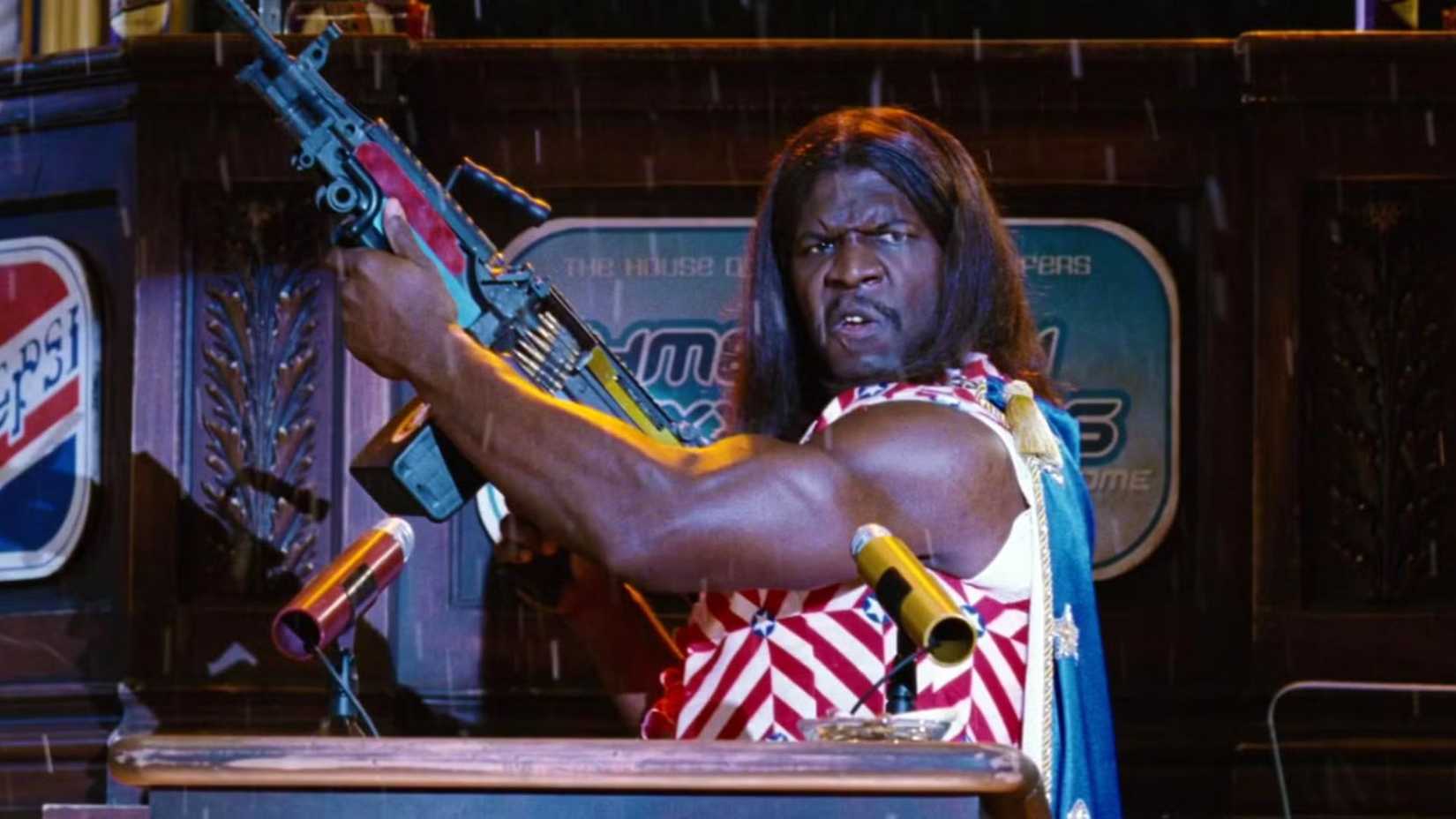
Mike Judge’s film, Idiocracy, wasn’t initially successful in theaters. The studio didn’t promote it well, and it earned less than $500,000 worldwide. However, it found a huge audience through home video and DVD rentals, becoming a beloved cult classic and a remarkable Hollywood comeback story. Despite its later success, many critics originally disliked the film, finding its plot too outlandish and unrealistic.
This movie remarkably foresaw a future where voters prioritize celebrity and entertainment over real issues. It became eerily relevant, with political analysts on television even referencing it when talking about elections and policy. The film also anticipated a decline in respect for intelligence and increasing corporate influence on political choices.
Total Recall (1990)

Paul Verhoeven’s sci-fi film Total Recall, starring Arnold Schwarzenegger, tells the story of a man who gets false memories implanted to experience an adventurous life. However, he starts to wonder if those memories are real. The movie included futuristic concepts that seemed far-fetched at the time, but remarkably, it accurately predicted technologies like self-driving cars with its depiction of fully autonomous robotic taxis.
The company in the movie, Rekall, foresaw advancements in altering memories and connecting the brain directly to computers. The film’s ideas also anticipated current discussions about things like widespread internet access, space colonization funded by wealthy individuals, powerful corporations controlling society, and the possibility of eventually living on Mars.
They Live (1988)
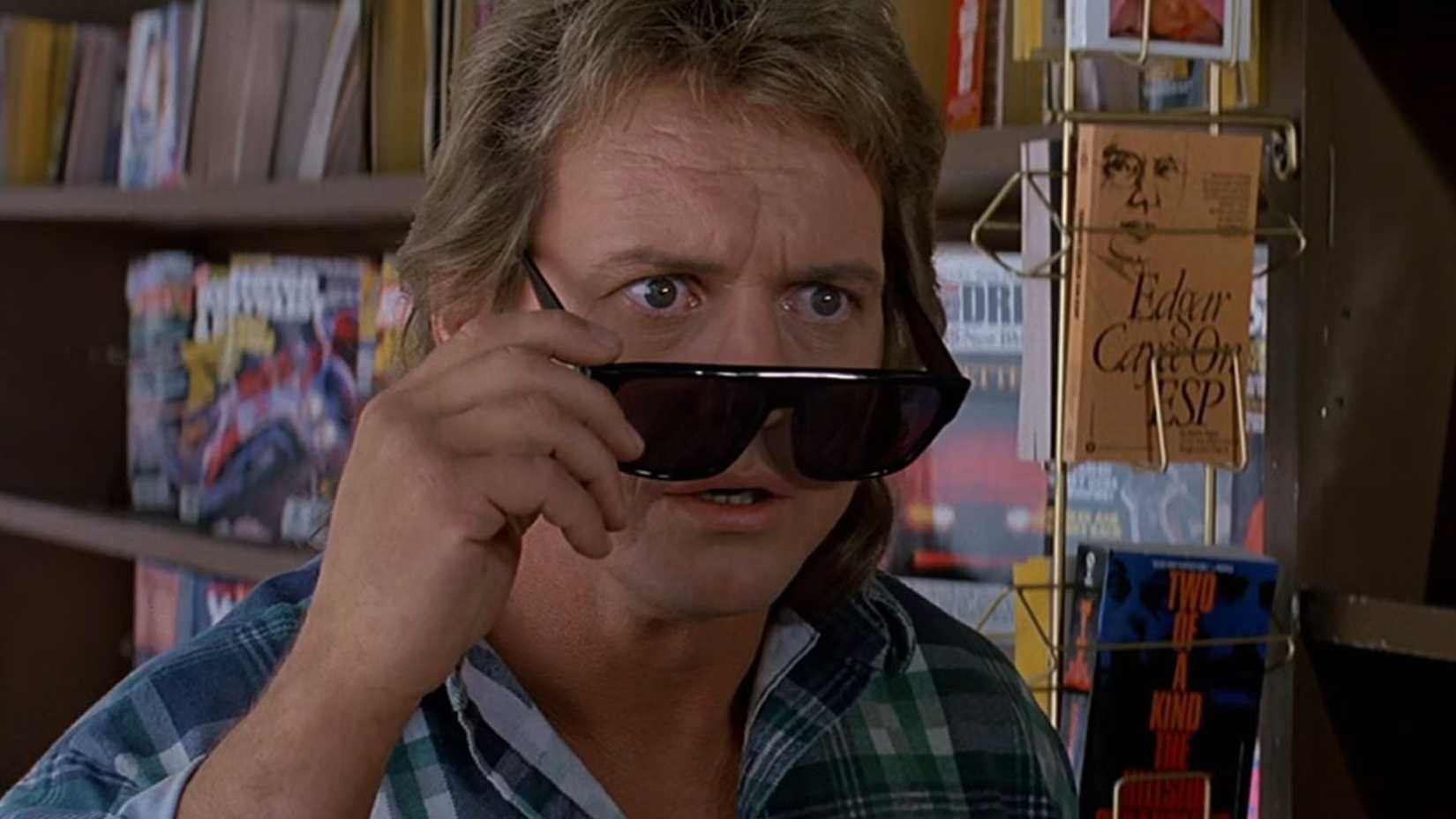
John Carpenter’s They Live is a beloved sci-fi film starring “Rowdy” Roddy Piper as a wanderer who unexpectedly discovers that aliens are secretly living among us, disguised as humans. These aliens are manipulating politics and business to gain complete control of Earth. The film’s central idea is that the aliens use advertising to subtly influence people, compelling them to act against their own interests.
It’s now clear that advertising companies use techniques similar to those shown in the movie They Live. While the film depicted hidden messages like “Obey” and “Consume,” today’s ads subtly influence us in the same way. What once seemed like a fictional trick now relies on data-driven A/B testing to find the most effective wording. The concept of a powerful, controlling force influencing the population remains relevant, just as it was when John Carpenter explored it in his film.
Read More
- Scientology speedrun trend escalates as viewers map out Hollywood facility
- How to Get to the Undercoast in Esoteric Ebb
- All Golden Ball Locations in Yakuza Kiwami 3 & Dark Ties
- What Fast Mode is in Bannerlord and how to turn it on
- Noah Beck’s mom suspended from teaching duties after “inappropriate” TikTok with son resurfaces
- Jenna Ortega’s Jurassic World Series On Netflix Is The Franchise’s Best Since 1993
- Untangling Cause and Effect in Complex Networks
- Insider Trading? Not on Our Watch! Governors Crack Down on Prediction Market Shenanigans
- Seeing the Big Picture: AI and Climate Change Communication
- 10 Best Modern D&D Inspired TV Shows & Movies, Ranked
2026-05-03 05:41