Anime from the 2000s became incredibly popular and influential, building huge online communities and setting the standard for the medium for many years. However, it’s easy to look back with rose-tinted glasses. These shows gained their reputation at a time when there were fewer options available and fans weren’t as discerning as they are now.
Looking back at beloved shows and movies can be surprising. While some truly live up to the hype, it’s common to find that they don’t quite hold up to our memories. Things like outdated visuals, problematic storylines, and disappointing finales often become noticeable when we revisit them. A few of these classics remain worthy of their praise, but others simply feel like relics of a different era.
Love Hina Invented the Template for Uncomfortable Harem Comedy
Released in 2000, Love Hina was one of the first anime to popularize the ‘harem’ genre, but it didn’t quite set the standard. The show relied heavily on humor from Keitaro constantly finding himself in awkward situations and then being physically punished by the women around him. While presented as lighthearted slapstick, this dynamic actually involved problematic and normalized harassment.
When people revisit Love Hina today, it often doesn’t hold up well. The constant slapstick and what was once presented as humorous sexual harassment now feel very dated and problematic. What seemed exciting or funny in 2000 now appears as a collection of tired and harmful clichés.
Chobits Squanders Its Own Philosophical Ambitions
The story of Chobits started with a fascinating idea: what happens when someone falls in love with a robot, and what does that tell us about how people connect? While the original manga explored these questions in a complex and sometimes challenging way, the anime version focused more on lightheartedness. Unfortunately, the main character’s frustrating actions often distracted from the deeper, more meaningful themes the series was trying to address.
The anime version significantly changed the manga’s ending, and unfortunately, it didn’t work as well. This weakened the story’s important ideas about life and what it means to be human. While the character of Chii is still memorable, the anime as a whole feels disappointing because a great idea was simplified. The series asks interesting questions about artificial intelligence and real emotions, but the answers it provides aren’t as satisfying as they could be.
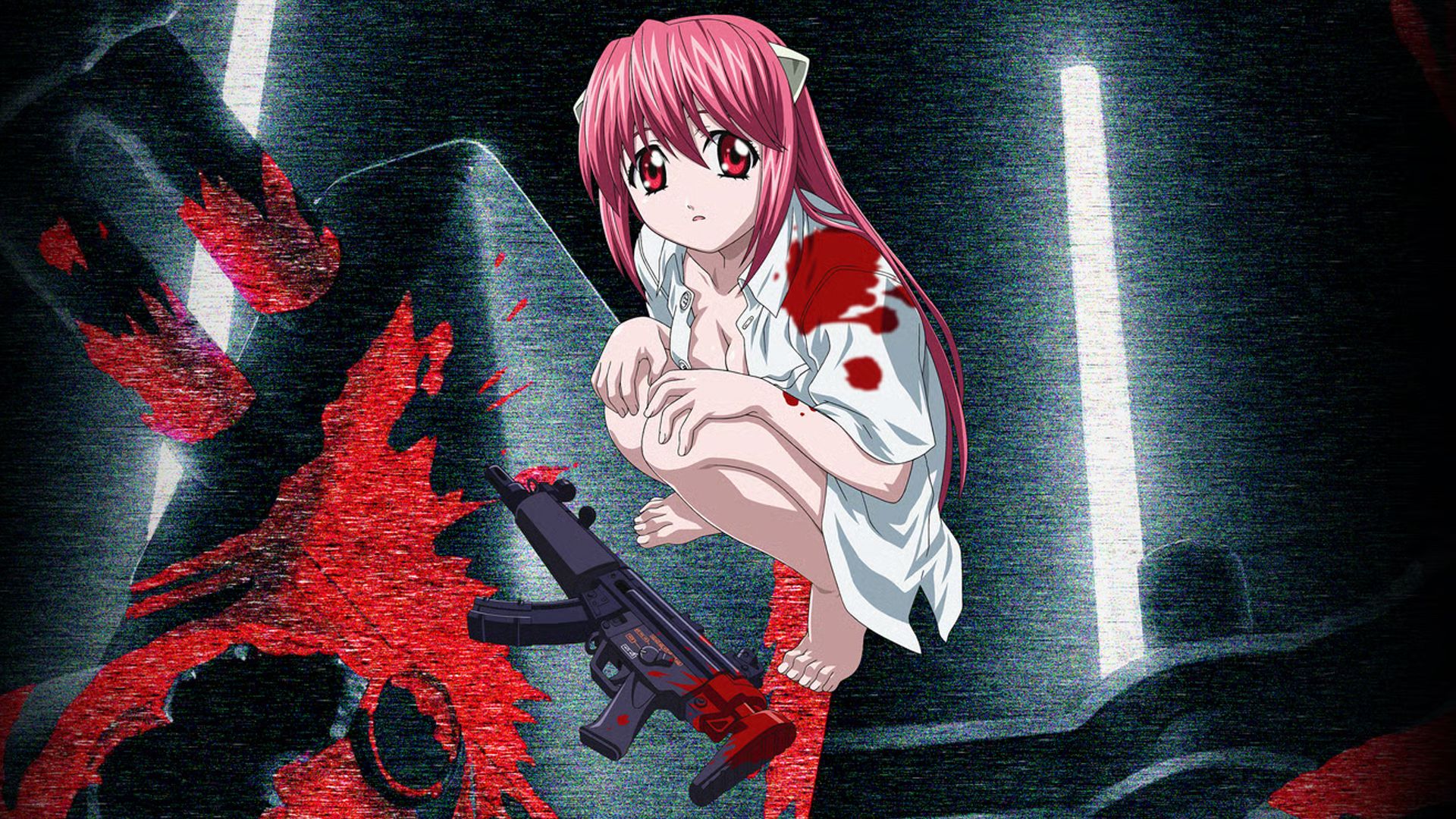
Elfen Lied Mistakes Cruelty for Depth
When Elfen Lied debuted in 2004, it seemed like a complex and thoughtful psychological anime, boasting unique mythology, troubled characters, and a memorable opening. However, looking back, many critics now see it as trying too hard to be shocking. Its over-the-top violence and awkward handling of serious themes haven’t held up over time.
The show’s violence felt gratuitous and didn’t really enhance its deeper messages about difference and mistreatment. While Lucy/Nyu’s dual personality started as a compelling idea, it ended up just being a convenient plot tool. Adding to the issues, the animation hasn’t aged well, so moments intended to be shocking now feel underwhelming.
Shuffle! Earns Its Dark Turn But Barely Survives Its Own First Half
Shuffle! is often called a typical and somewhat dull harem anime, especially in its beginning. This criticism is understandable if you weren’t familiar with visual novels when it first came out. The main character, Rin, doesn’t have a strong personality and seems to attract women for no clear reason. The first few episodes quickly introduce familiar character types, feeling a bit formulaic.
While the series does get darker as it goes on, many modern viewers struggle to connect with the main character, Rin, before the more compelling parts of the story begin. Although Shuffle! was daring for a 2005 harem anime by shifting towards psychological themes, it couldn’t overcome its slow and repetitive start.
The Melancholy of Haruhi Suzumiya Peaked Too Early and Stumbled Too Hard
In 2006, The Melancholy of Haruhi Suzumiya truly stood out and had a major impact on anime. The main character, Haruhi, was captivating, unpredictable, and felt like a breath of fresh air. The series rightfully became a cultural phenomenon. But, looking back at popular anime from that era, Haruhi is often mentioned as one that has lost its audience the most over time.
The “Endless Eight” storyline, where a very similar episode was repeated eight times with only slight changes, is the main reason watching Haruhi feels like work now instead of fun. While Kyoto Animation might have intended it as an artistic choice to stretch eight pages of the original novels into eight full episodes, many viewers felt it was disrespectful and frustrating.
Code Geass R2 Trades Its Strengths for Spectacle
The first season of Code Geass quickly gained a strong reputation thanks to its complex main character, Lelouch, and its smart blend of political strategy and exciting mecha action. However, Code Geass R2 is often seen as a letdown. It moved away from the thoughtful politics of the first season, opting instead for over-the-top plot twists, catering too much to fans, and a needlessly complicated system of power.
The second season of Code Geass prioritizes emotional impact over the complex moral conflicts that made the first season so strong. While the ending, Zero Requiem, is moving, the story leading up to it relies too much on contrived plot points. The finale tries to make up for earlier weaknesses, and it satisfies many viewers, but getting there requires a lot of patience.
Death Note Falls Apart the Moment Its Best Character Dies
For the first half of its run, Death Note is a remarkably clever and suspenseful anime focused on a battle of wits between two brilliant characters, Light Yagami and L. Their intense rivalry creates a level of tension that’s rarely been equaled in the genre.
While the show starts strong, many viewers and critics agree that the quality noticeably dips after the first 25 episodes. The new characters, Near and Mello, aren’t as compelling as L, and Light’s personality shifts, making him less strategic and more impulsive—which undermines what made the show so captivating in the first place. Death Note is truly excellent for a while, but that sudden decline in quality impacts how enjoyable it is to watch again.
Black Butler Has a Core Problem That Gets Harder to Ignore
When Black Butler first came out in 2008, it quickly became very popular, especially with younger fans in Western countries who loved its Victorian setting, dark comedy, and the intimidating character of Sebastian. However, recent critics have noted that the series contains uncomfortable sexual themes, which they believe are a major reason why it’s struggling to gain new viewers today.
The show uses Ciel’s mistreatment to create a dark mood, but doesn’t really question whether it’s wrong. Sebastian’s dedication to Ciel often feels controlling, even though the show presents it as loyalty. While the series remains visually appealing and can be humorous, it becomes increasingly difficult to ignore its troubling themes.
Soul Eater Ends Before Its Story Does
For a large part of its run, Soul Eater is a genuinely exciting action series. The main characters, Maka and Soul, are engaging, the world of Death City is uniquely designed, and the initial story arcs feel focused and well-paced. The animation was also impressive for its time and still looks good today. However, Soul Eater is often remembered for its ending, which was created by the anime studio because the original manga hadn’t finished yet, and proved to be quite controversial.
The anime’s abrupt ending strayed quite a bit from the original manga, leaving many viewers disappointed, especially those who were invested in the story’s rich lore. Asura, as the ultimate villain, deserved a more impactful conclusion than what was delivered. Ironically, the Soul Eater NOT! series and the completed manga provide more satisfying endings, making this anime – the one that initially drew many Western fans to the franchise – ultimately the most disappointing version.
Lucky Star Is a Perfect Snapshot of a Fandom That No Longer Exists
More than a comedy, Lucky Star feels like a snapshot of anime fandom in the mid-2000s. The show’s humor depended heavily on references to things like The Melancholy of Haruhi Suzumiya, dating sim games, and the Comiket convention – things that resonated with viewers who were part of that scene at the time. However, many of these jokes don’t land for modern audiences unfamiliar with that specific era and its pop culture.
Even without understanding the cultural references, Lucky Star still boasts beautiful animation and a charming group of characters. However, these strengths aren’t quite enough to sustain a 24-episode series. What truly made Lucky Star special was how deeply connected it was to the specific time and culture it came from – the show’s appeal and its moment in history were inseparable.
Found an error? Send it so it can be corrected.
Read More
- Scientology speedrun trend escalates as viewers map out Hollywood facility
- How to Get to the Undercoast in Esoteric Ebb
- All Golden Ball Locations in Yakuza Kiwami 3 & Dark Ties
- What Fast Mode is in Bannerlord and how to turn it on
- Noah Beck’s mom suspended from teaching duties after “inappropriate” TikTok with son resurfaces
- Jenna Ortega’s Jurassic World Series On Netflix Is The Franchise’s Best Since 1993
- Untangling Cause and Effect in Complex Networks
- Insider Trading? Not on Our Watch! Governors Crack Down on Prediction Market Shenanigans
- Seeing the Big Picture: AI and Climate Change Communication
- 10 Best Modern D&D Inspired TV Shows & Movies, Ranked
2026-05-03 05:19