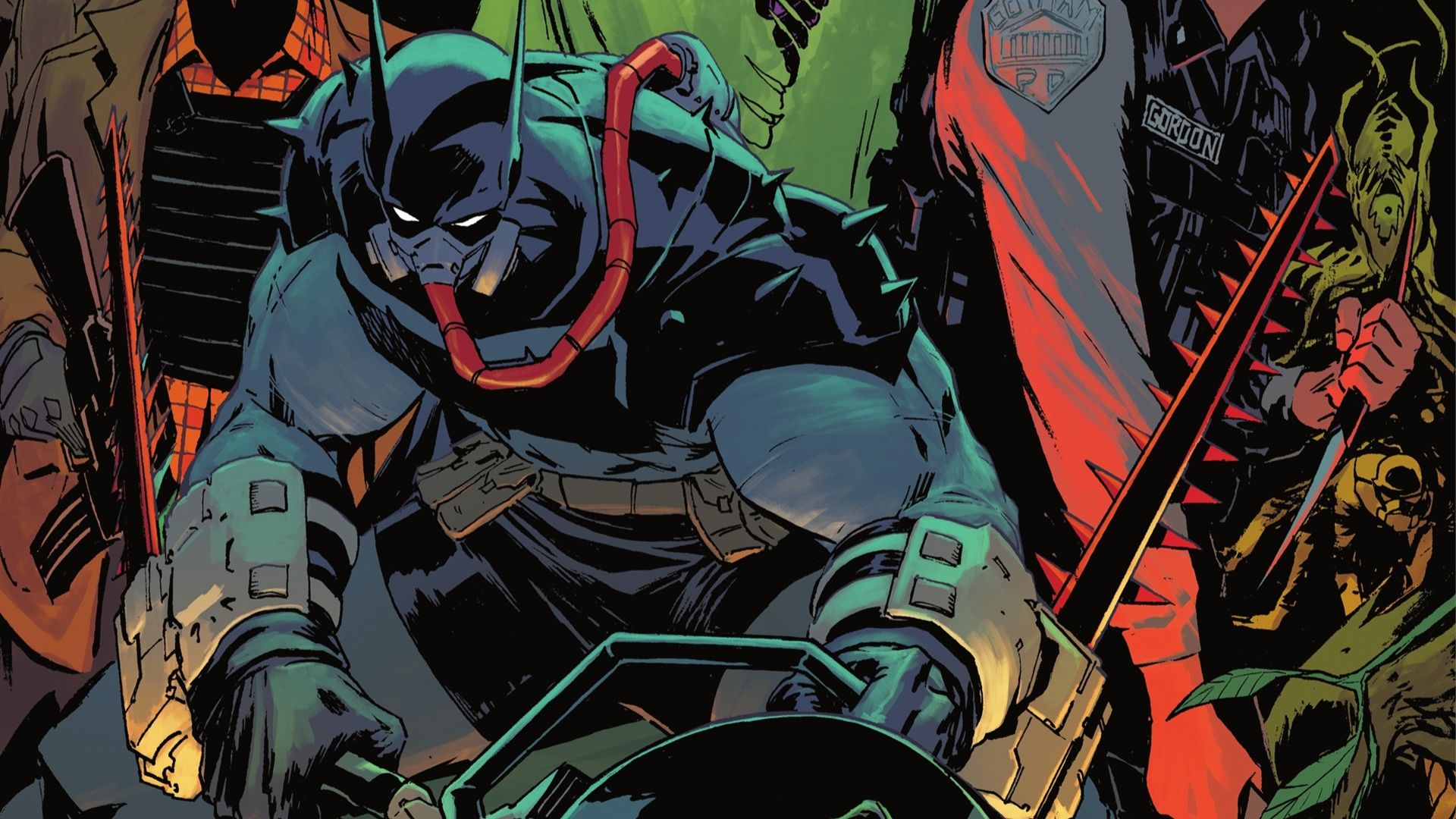
When the Absolute Universe was first being created, I spoke with three of its main creators – Scott Snyder, Jason Aaron, and Kelly Thompson. Thompson explained that her work on Wonder Woman focused heavily on…
What I really dig about Scott Snyder’s Batman run is how he shows that Batman isn’t just some lone wolf. He’s actually built this whole crew of quirky characters around him – they’re like a messed-up family, and honestly, they’re what keep him grounded and sane. It’s cool to see that side of the character, that he needs those connections.
In the Absolute Universe, Batman’s life is quite different. He has a strong network of support, including childhood friends and his mother, Martha Wayne, who is still alive. These friends were incredibly important to Bruce Wayne, so when Bane tried to manipulate Batman, he targeted them.
When faced with a difficult situation, Batman tries to distance himself emotionally.
Issue #18 of Absolute Batman features writing by Scott Snyder, art by guest artist Eric Canete, colors by Frank Martin, and lettering by Clayton Cowles. This issue continues the story introducing Poison Ivy to Gotham City, as part of a two-part arc.
How does the Court of Owls factor in the comic?
I’ve added details about how this issue affects the characters, and it’s a big impact. The Court of Owls are a secret group that secretly controls Gotham City, operating from the shadows.
As readers of Absolute Batman know, the Joker has become a master manipulator in Gotham City. This version of the Joker, known as Jack Grimm and seemingly immortal, has been secretly controlling events since the 1800s, and has completely driven the Court of Owls out of the city.
Despite being thought gone, the Talons still exist, and surprisingly, Martha Wayne was one of their top operatives and assassins. She’s now rejoined them following the upheaval in Gotham City caused by Batman’s arrival. While she cares about her son, Bruce, her primary concern is that Batman seems capable of truly changing Gotham.
She boldly asks the Court to join her in Gotham and assist in stopping the Joker, mirroring Batman’s fight. Her return is met with strong disapproval – she was previously warned that returning would mean her death, highlighting the immense importance of this mission to her despite the danger.
This issue’s central conflict between Poison Ivy and Batman revolves around uneasy alliances forming in the fight against Jack Grimm.
How does Batman betray Poison Ivy?
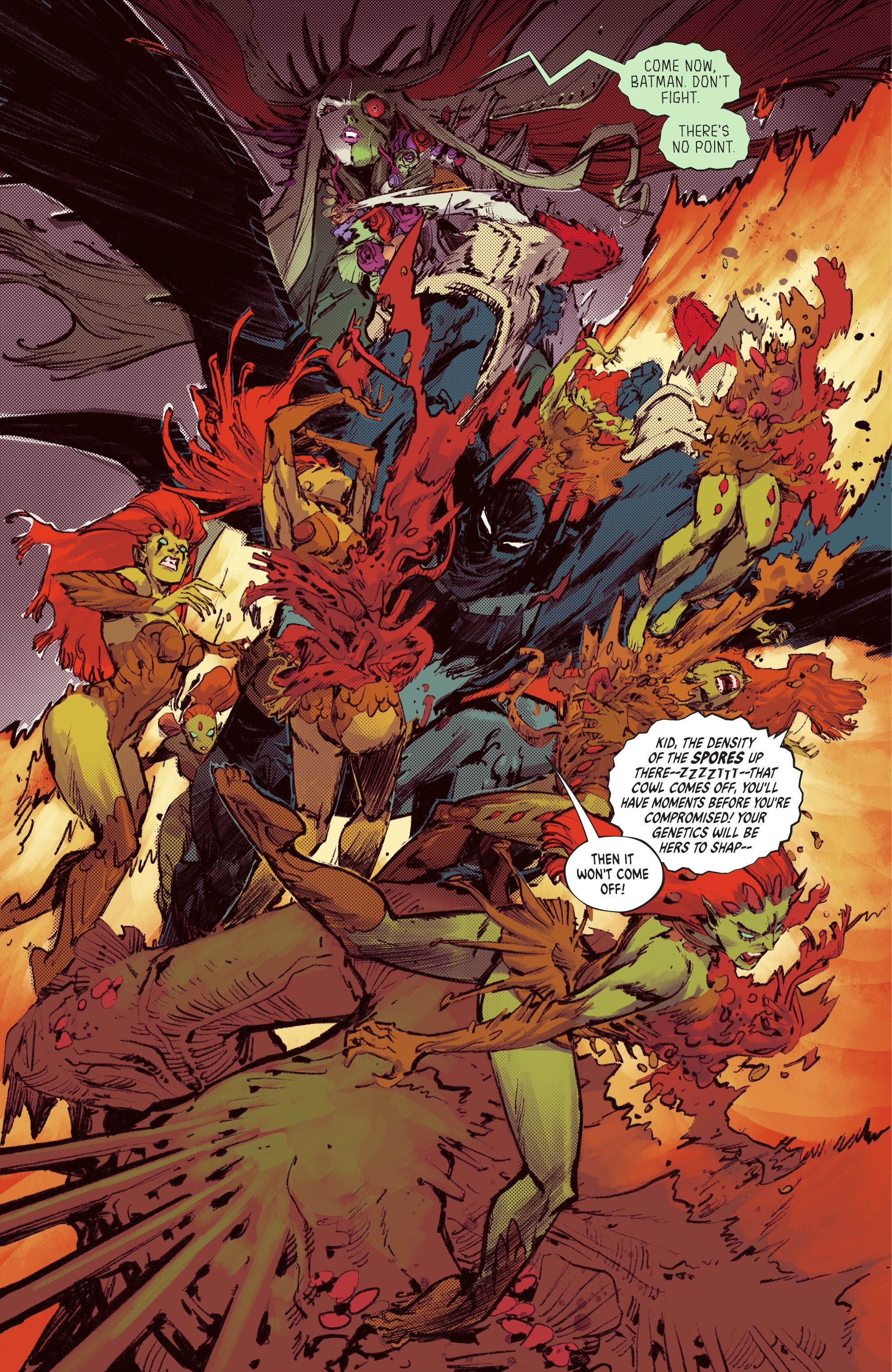
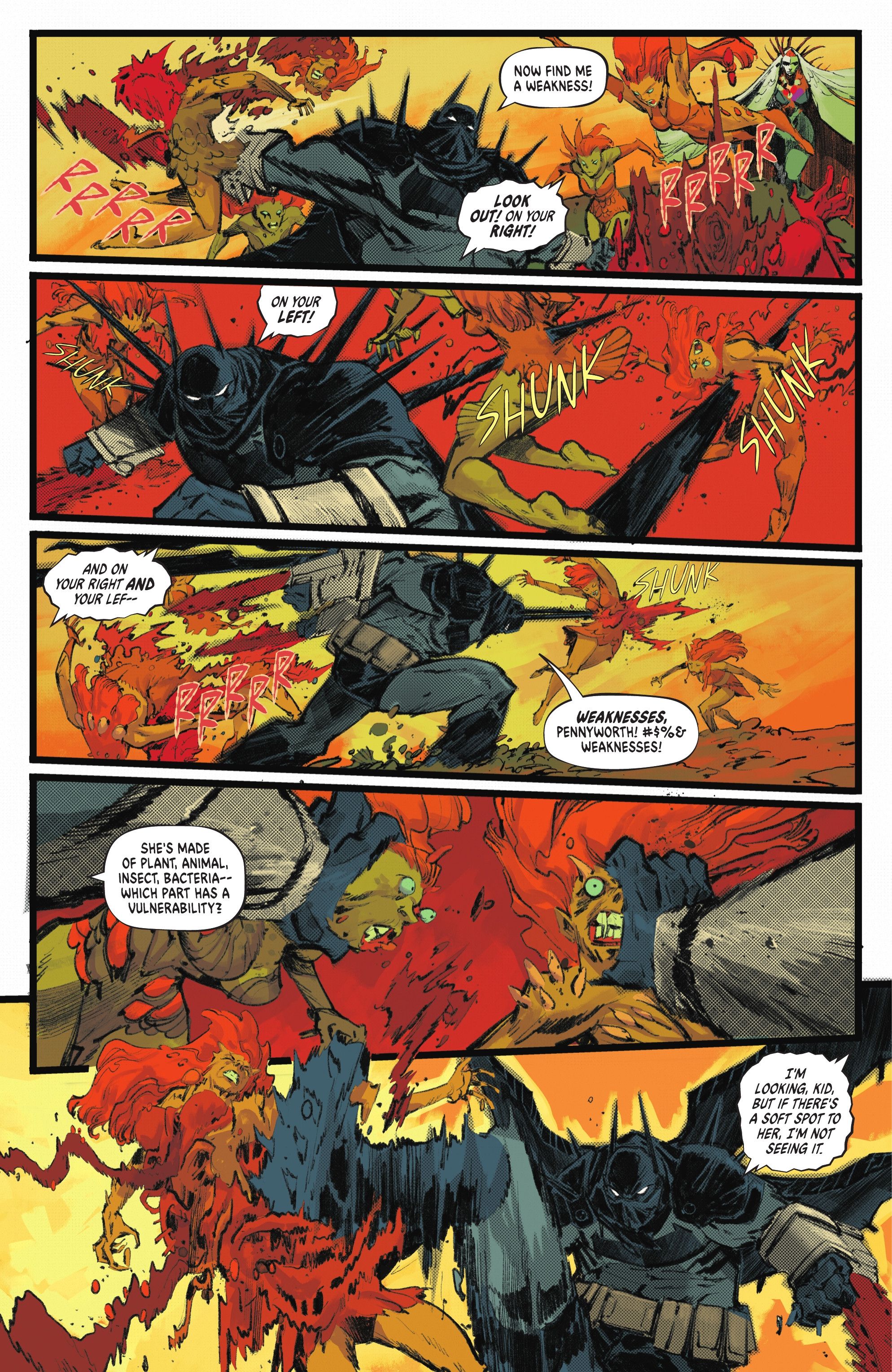
This story centers on Bruce Wayne grappling with the fallout of a terrible event: his friends were horribly transformed into monsters, and they hold him responsible. He’s also deeply saddened by the apparent loss of Waylon, who became a mutant crocodile. However, it’s revealed Bruce wasn’t even present when Waylon transformed, and Waylon has begun to recover his humanity thanks to a sacrifice Bruce made while teaming up with Wonder Woman.
The Joker captured and tortured several of Batman’s former enemies, using a special chemical called Ark M to try and control them. Poison Ivy managed to escape his control and is now determined to get revenge, but her plan recklessly endangers thousands of innocent people in Gotham City.
Batman is overwhelmed by the situation and naturally confronts her. The core of the conflict, though, is that Batman has become emotionally detached, while this villain is powerfully motivated by her heart – both literally, as her body has grown around her still-beating heart, and figuratively, because that heart represents her last connection to her mother, whom she desperately tried to save.
In the end, Batman rejects the idea of needing emotional connection. After defeating Poison Ivy, he destroys her artificial heart, then symbolically destroys his own by deleting a cherished message from his mother – a source of hope he’d held onto throughout the story. Snyder delivers a truly impactful moment, reminiscent of classic Greek tragedies. It’s particularly poignant that Batman doesn’t realize he has actually saved Waylon Jones’s humanity, believing his efforts were unsuccessful when, in fact, they weren’t.
Okay, so Canete’s take on Poison Ivy is seriously amazing. This whole series has been incredible for wild character designs – I mean, look at their Joker, it’s genuinely creepy! But Poison Ivy takes it to another level. Because she’s mostly plant-based, she doesn’t even need a normal body, you know? It’s like she’s a plant becoming human, so things like a head or arms aren’t essential. She doesn’t have to look traditionally humanoid all the time, and that freedom makes the design so cool and unique.
It’s great when an artist gets complete creative freedom, and this resulted in a really fun two-part story. Although, it does show Bruce Wayne becoming increasingly isolated from everyone around him.
Read More
- All Itzaland Animal Locations in Infinity Nikki
- Paramount CinemaCon 2026 Live Blog – Movie Announcements Panel for Sonic 4, Street Fighter & More (In Progress)
- Cthulhu: The Cosmic Abyss Chapter 3 Ritual Puzzle Guide
- Persona PSP soundtrack will be available on streaming services from April 18
- Raptors vs. Cavaliers Game 2 Results According to NBA 2K26
- Spider-Man: Brand New Day LEGO Sets Officially Revealed
- Focker-In-Law Trailer Revives Meet the Parents Series After 16 Years
- The Boys Season 5 Spoilers: Every Major Character Death If the Show Follows the Comics
- Gold Rate Forecast
- Rockets vs. Lakers Game 1 Results According to NBA 2K26
2026-04-21 19:57