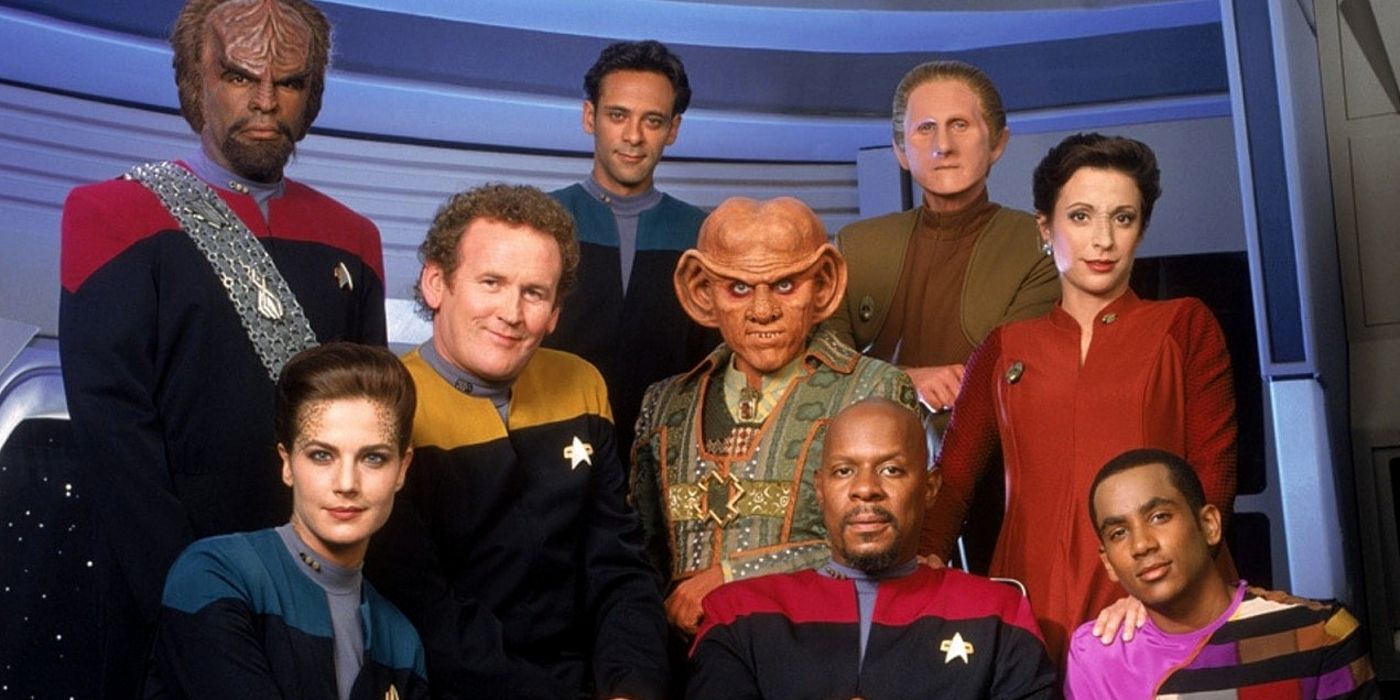
As a lifelong Star Trek fan, I was really struck by how timely some episodes felt in 2024, especially the two-parter that dealt with time travel. The crew accidentally ended up in San Francisco just before a major riot broke out – it was wild! That story, “Past Tense,” is one of the most politically charged episodes Star Trek ever did, and honestly, it still feels incredibly relevant today as this alternate-reality tale.
Though Star Trek often uses futuristic settings to explore social issues and tell hopeful stories, Deep Space Nine took a more realistic and challenging approach. The crew of DS9 weren’t perfect heroes like those on the USS Enterprise-D. However, the episode “Past Tense” stood out by presenting Captain Sisko and his team as clearly ethical figures. They acted this way for two key reasons: first, to follow the Temporal Prime Directive and avoid changing history, and second, simply because it was the morally correct thing to do.
Star Trek: Deep Space Nine Went Political in ‘Past Tense’
This episode presents a disturbing 2024 where a key law was overturned, and society simply gave up on addressing widespread poverty. Instead of solutions, those experiencing homelessness or lacking healthcare were forced into designated ‘Sanctuary Districts’ – initially intended as temporary camps within abandoned areas of San Francisco. However, once someone entered a Sanctuary District, they and their families were effectively trapped, with no hope of ever leaving.
The idea for this story started with Robert Hewitt Wolfe, a TV writer who imagined Captain Sisko being sent back in time. He pictured Sisko trying to explain he was a space station commander from the future, only to be dismissed as delusional and either drugged or put in an institution. While the story could have focused on themes of social indifference and homelessness, showrunner Ira Steven Behr steered it in a different direction with the idea of the Bell Riots, inspired by a historical event. This ultimately expanded the story into a powerful two-part episode that feels even more relevant today, over three decades later.
Given the nature of Deep Space Nine, Commander Sisko couldn’t simply appeal to people’s sense of right and wrong to resolve the situation. Instead, his actions led to the death of Gabriel Bell, the leader of the original riot, at the hands of someone living in the Sanctuary. To ensure history unfolded as it should, Sisko was forced to take charge of the uprising, even fighting alongside the person who actually killed Bell.
This episode shows that “B.C.” wasn’t a senseless killer. He and the other residents of the Sanctuary Districts turned to violence because the government and society refused to acknowledge their struggles.
DS9 Got More Overtly Political Than Usual for This Era’s Star Trek
Even though evidence suggested otherwise, people in the 1990s generally believed they were more caring and understanding than people in the past. Many ethical dilemmas presented in Star Trek: The Next Generation and Deep Space Nine didn’t have simple solutions, encouraging viewers to consider different perspectives and form their own opinions. However, the episode “Past Tense” didn’t follow this pattern. The people living in the Sanctuary District were largely portrayed negatively, making it difficult to sympathize with them.
Despite the historical context, Sisko and Doctor Bashir understood the Bell Riots were ultimately an act of desperation, a last resort in the fight for fundamental rights. This didn’t change their view of the struggle itself.
Despite the violence of the revolt, Gabriel Bell is considered a hero for attempting to rescue the hostages held by the people of the Sanctuary District. Those hostages include Vin and Calvera, the cruel guards we’ve seen throughout the series.
Finally, heavily armed police and National Guard troops arrived to confront the armed residents of the Sanctuary District. The resulting violence was a massacre that deeply affected both Vin and Calvera. Sisko and Bashir rescued them, mirroring how Bell had saved them before. Vin helped Sisko and Bashir get away by placing their identification cards on a deceased person. True to historical records, Gabriel Bell died during the riot while trying to help others.
The Star Trek: Deep Space Nine Episode’s Message Is Timeless
Although Deep Space Nine accurately captured the difficult economic times and lack of concern for those struggling – themes very relevant to 2024 – the show surprisingly missed the mark when it came to technology. The writers failed to anticipate the rise of smart devices and how media would change. Interestingly, they did correctly predict that San Francisco would continue to be a major center for wealthy tech industry leaders who control media. Chris Brynner, the owner of Channel 90 and a key player in the Bell Riots, exemplifies this prediction.
While Bashir and Sisko were hiding in the Sanctuary District, Brynner located Jadzia Dax. Impressed by her, the affluent businessman chose to assist her instead of turning her over to the authorities there. She had lost her combadge, which someone had stolen. After Brynner helped her recover it, she discovered what Sisko and Bashir were dealing with. Although they could have left, Sisko felt compelled to stay and witness the Bell Riots, believing he wouldn’t survive. Dax was determined to ensure his willingness to sacrifice himself wouldn’t be in vain.
Dax persuades Yul Brynner to let Bell and her team use his broadcast to reach a wider audience. Though hesitant, Brynner agrees, and the resulting broadcast successfully brings attention to the issue of Sanctuary districts, ultimately helping to abolish them. The story, “Past Tense,” suggests that people will act justly when confronted with unfairness and can’t ignore it.
The show Deep Space Nine really demonstrated this, even in episodes like “Past Tense.” Another episode, “Far Beyond the Stars,” was a thought-provoking story about the darker parts of human history, and thankfully, a history that has largely been overcome.
While the show Deep Space Nine featured “Sanctuary Districts,” these don’t really exist in real life. However, they’re a good way to think about how many people are trapped by the US justice system – the country imprisons more of its citizens than any other. The show actually painted a more hopeful picture than reality, because even though many cities and states have laws that criminalize homelessness, they don’t offer any real solutions for where those people are supposed to go.
Protests against oppressive governments and excessive police force also receive a lot of media attention. However, public reaction isn’t as strong or widespread as the creators of the 2024 Star Trek series predicted.
What set this show apart was its willingness to confront difficult truths about society. Despite classic episodes in The Original Series that promoted tolerance and fairness, humanity still struggles with these important lessons.
Read More
- All Itzaland Animal Locations in Infinity Nikki
- Paramount CinemaCon 2026 Live Blog – Movie Announcements Panel for Sonic 4, Street Fighter & More (In Progress)
- Cthulhu: The Cosmic Abyss Chapter 3 Ritual Puzzle Guide
- Persona PSP soundtrack will be available on streaming services from April 18
- Rockets vs. Lakers Game 1 Results According to NBA 2K26
- Raptors vs. Cavaliers Game 2 Results According to NBA 2K26
- Spider-Man: Brand New Day LEGO Sets Officially Revealed
- Focker-In-Law Trailer Revives Meet the Parents Series After 16 Years
- The Boys Season 5 Spoilers: Every Major Character Death If the Show Follows the Comics
- Gold Rate Forecast
2026-04-21 19:34